
Manifestation Meditation for Sleep: Bedtime Reflection Routine


Manifestation meditation for sleep is a bedtime reflection practice that combines breathing, gratitude, gentle visualization, and one low-pressure intention. Its purpose is to settle the body and quiet mental activity, not to guarantee sleep or make a particular life outcome happen. The useful parts are familiar relaxation tools: a body scan, pleasant imagery, and a believable statement about how to approach tomorrow.
MindTastik is a wellness app with guided meditations, sleep tracks, breathing practices, and self-hypnosis sessions for adults seeking support for rest, anxiety, and everyday calm. For bedtime reflection, keep the routine simple: choose one intention, picture it briefly, then release it and return attention to rest. There is no need to repeat a statement until it feels convincing or to check whether it worked.
The bedtime essentials
- Use bedtime manifestation meditation as a wind-down ritual focused on calm reflection, not forced results.
- The most useful parts are evidence-aligned relaxation tools: breathing, body scans, guided imagery, gratitude, and realistic affirmations.
- Choose one intention, visualize it briefly, let it go, and return attention to rest.
Manifestation meditation for sleep in one calm bedtime answer
Manifestation meditation for sleep is bedtime reflection that blends slow breathing, gratitude, visualization, and one gentle intention before rest. The aim is to settle your body and soften the mental noise, not to guarantee sleep, money, love, promotions, or any exact outside result.
Treat it like a gentle evening reflection built around hopeful language. You might take a few slow breaths, recall one moment that felt steady, imagine tomorrow meeting you with more ease, and then release the image without trying to force sleep. In a quiet room with dim light, the practice works best when it feels supportive rather than demanding.
Tools like MindTastik can provide guided audio for this routine, but the value comes from calm repetition and realistic expectations.
How bedtime manifestation meditation works during the wind-down window
Bedtime manifestation meditation works by lowering cognitive and physical arousal before sleep. In plain terms, it gives your brain fewer problems to chase and your body fewer signals that it needs to stay alert.
The useful mechanisms are familiar from relaxation training and mindfulness practice. Slow breathing can reduce the feeling of urgency. A body scan moves attention from planning into physical sensation. Gentle visualization gives the mind a simple image to hold, such as walking through tomorrow with patience instead of replaying every unfinished task.
A 2019 meta-analysis of randomized controlled trials found that mindfulness- and meditation-based interventions improved sleep quality with a moderate effect size compared with control conditions. Source: Rusch et al., Annals of the New York Academy of Sciences, 2019: PubMed research: 30575050. That does not prove that manifestation causes outside events. It does suggest that the relaxation parts of the practice can help some people unwind.
Guided imagery is especially practical when worry loops start. One calm scene is easier to follow than a dark room full of calendar worries.
Five facts about manifestation before bed and sleep anxiety
- Sleep hygiene still comes first. A consistent schedule, dark room, reduced notifications, and less late-night screen stimulation create the base for any bedtime manifestation meditation.
- The strongest parts are not magical. Breathing, body scans, and guided visualization come from established relaxation and mindfulness tools.
- Manifestation before bed cannot guarantee outcomes. It will not force money, love, promotions, or a specific message to arrive by morning.
- One intention is usually enough. A single realistic focus is easier on the nervous system than five goals competing for attention.
- Letting go is part of the design. The routine should end with rest, not more checking, planning, or mental bargaining.
Insomnia is common enough that a calmer wind-down matters. About 30-40% of U.S. adults report insomnia symptoms in a given year, and 10-15% experience chronic insomnia, according to a 2018 review. Add the specific review URL here, or replace this with a sourced prevalence sentence from the American Academy of Sleep Medicine: aasm reference: insomnia.pdf.
The pocket check is real.
How to use guided sleep manifestation audio in MindTastik
Guided sleep manifestation audio works best when it reduces decisions, not when it turns bedtime into another task list. Set up the room first, then press play once and stop interacting with the phone.
- Set a sleep-friendly environment with dim light, quiet, and Do Not Disturb turned on.
- Choose one short guided sleep manifestation audio session, preferably 5 to 15 minutes if you are already tired.
- Breathe slowly and release body tension before visualizing, especially around the jaw, shoulders, and belly.
- Picture one realistic intention as already emotionally meaningful, not as a demand the night must deliver.
- Release the goal and let the audio fade into rest, without scrolling, checking notifications, or brightening the screen afterward.
If you want a broader app-based routine, a manifestation meditation app can help keep the sequence simple. The real boundary is the moment after pressing play. A manifestation meditation app comparison can help you weigh audio options before choosing a simple bedtime routine.
Best intentions for sleep visualization for goals
The best bedtime intentions are internal states you can practice, not rigid outcomes you must control. Broad intentions such as self-compassion, patience, confidence, resilience, and peaceful follow-through are often more sleep-friendly than “I must get this exact result by Friday.” For more examples, a manifestation affirmations list can offer wording to adapt into one believable bedtime intention.
Try one of these:
- Self-compassion: “I can meet tomorrow with less self-criticism.” For gentler self-talk, explore affirmations and emotional healing, keeping each statement compassionate rather than pressuring yourself to feel better.
- Patience: “I can move at a steady pace and still make progress.”
- Confidence: “I can handle the next step without needing the whole path.”
- Resilience: “I can recover from setbacks without turning on myself.”
- Peaceful follow-through: “I can do what matters and then rest.”
For sleep visualization for goals, treat the image as gentle rehearsal. It is not an attempt to control life while asleep. If you want a daytime version, visualization meditation for goals can carry more active planning.
Best-fit users and caution cases for bedtime manifestation meditation
Bedtime manifestation meditation fits people who want a calm reflection ritual, but it is not the right standalone answer for every sleep problem. Use the table as a quick filter before making it your nightly routine.
| Best for | Not for |
|---|---|
| Beginners who want a simple guided starting point | Severe or chronic insomnia as a standalone solution |
| People with bedtime worry or looping thoughts | Untreated sleep apnea symptoms, such as choking, gasping, or loud snoring |
| People who like guided audio more than silent meditation | People who feel activated or distressed by visualization |
| People wanting gratitude, reflection, and low-pressure intention-setting | People seeking guaranteed external outcomes |
Chronic or severe sleep problems may need professional evaluation, especially when sleep loss affects driving, mood, work, or safety. Clinicians typically recommend cognitive behavioral therapy for insomnia, often called CBT-I, as a better-supported approach for chronic insomnia. The American College of Physicians recommends CBT-I as the initial treatment for chronic insomnia in adults: acpjournals reference: M15 2175.
MindTastik bedtime manifestation meditation routine
A useful bedtime manifestation routine should move from body settling to gentle meaning, then back toward sleep. MindTastik can be used as a meditation app for guided sleep audio, breathing exercises, self-hypnosis sessions, anxiety support, and everyday calm.
For this specific bedtime use case, MindTastik offers guided audio, breathing cues, and short wind-down sessions in one place. It is still a support tool, not a medical treatment or a guarantee that you will fall asleep.
A simple sequence is: breathing, body scan, gratitude, visualization, affirmation, then letting go. Keep the visualization short. If you are already drowsy, a 5-minute breathing session may work better than a 20-minute body scan in the app library.
Over time, pay attention to patterns in mood, anxiety, and sleep. You are not scoring the night or judging how well you practiced. You are learning what feels workable, perhaps with a journal open nearby and one steady breath marking the end of the day.
Sleep hygiene foundations before manifestation before bed
Manifestation before bed works best after basic wind-down habits are already in place. A steady sleep schedule, cool dark room, lighter evening meals, reduced alcohol near bedtime, and fewer screens give the practice a better chance of feeling restful.
Using an app at night should mean dimming the screen, pressing play, and stopping there. It should not become browsing, comparing sessions, reading comments, or checking one more message. That tiny decision matters when the thumb is hovering over bedtime audio.
Occasional insomnia is common, and many adults struggle with chronic insomnia. The American Academy of Sleep Medicine estimates that 10-30% of adults have chronic insomnia, and up to 50% experience occasional insomnia.
For people who prefer direct intention work outside bedtime, intention setting meditation may be better earlier in the day.
Common mistakes with manifestation meditation for sleep
The most common mistake is turning a calming ritual into a test you have to pass. Manifestation meditation for sleep should make the night feel simpler, not loaded with checking, proving, or forcing a result.
A useful reset is to make the routine smaller and less dramatic:
- Notice when you are monitoring outcomes, such as wondering whether the intention is “working” or whether sleep has arrived yet.
- Choose shorter, quieter audio when you are already tired; a long cinematic track can feel impressive and still keep your mind switched on.
- Limit the session to one intention, because stacking love, money, healing, confidence, and tomorrow’s schedule can turn rest into mental admin. If waiting for results makes rest harder, consider how impatience and manifestation can turn reflection into repeated checking.
- Dim the phone before pressing play, then leave it alone so bright screens do not restart the alert cycle.
- Stop visualization if it raises anxiety, grief, panic, or trauma memories, and return to breathing, grounding, or a neutral body scan instead.
The practice is allowed to be plain. Some nights, the kinder choice is one slow exhale and no visualization at all.
Playing affirmations during sleep is not proven belief training
Sleep supports memory consolidation, but that does not mean an affirmation track can install new beliefs while someone sleeps. A meta-analysis of targeted memory reactivation found benefits when researchers replayed cues associated with material participants had already learned. Those experiments concern specific memories formed before sleep, not generic statements about confidence, money, or relationships. They do not establish that overnight manifestation audio produces desired outcomes.
For this bedtime practice, treat a spoken intention as a waking reflection rather than a message the sleeping brain must absorb. Direct evidence that bedtime affirmations improve objective sleep is limited, as discussed in the Sleep Foundation’s explanation of sleep affirmations. A believable sentence can accompany slow breathing or muscle relaxation, but there is no established requirement to keep affirmations playing all night. The routine can end when the reflection ends.
Image caption for a guided sleep manifestation audio session
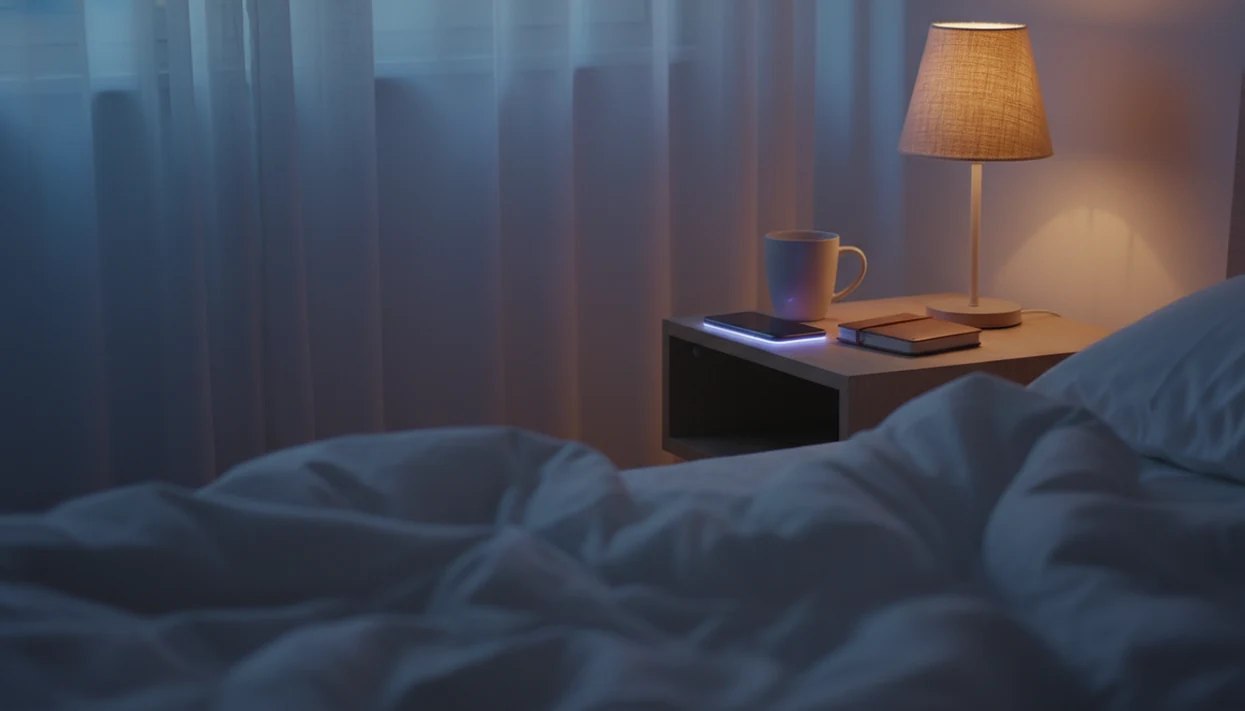
Caption: A person lies in a dark bedroom using guided sleep manifestation audio with the phone on Do Not Disturb, practicing calm breathing, quiet gratitude, and one low-pressure intention before rest.
The image should feel ordinary, not mystical or overly staged. Cool sheets, a dim screen, and relaxed posture tell the story clearly. Manifestation meditation for sleep belongs in that small bedtime space where reflection is allowed, but pressure is not.
No result needs to be promised. The scene is about ending the day with a steadier mind.
Choosing audio that leaves less to think about
MindTastik’s breathing exercises, gratitude sessions, and guided meditations suit a bedtime routine built around settling down rather than pursuing results. A familiar session from the guided meditation library can provide spoken cues without requiring an elaborate visualization.
People who find goal-focused imagery stimulating may prefer a sleep story or breathing exercise instead. Those with persistent insomnia or possible sleep apnea need assessment rather than another reflection routine. MindTastik can support a wind-down habit, but it is not a medical treatment.
What bedtime manifestation cannot promise
Manifestation meditation can be supportive, but its limits matter. Keep these caveats in view before making it your main sleep strategy.
- It does not guarantee external outcomes such as income, relationships, promotions, messages, or opportunities.
- It does not replace medical care for serious insomnia, sleep apnea, depression, anxiety disorders, trauma symptoms, or safety concerns.
- Rigid expectations can increase pressure and make sleep harder, especially if you start monitoring whether the practice “worked.”
- Some visualization practices may feel activating for people with trauma histories; simpler breath practices may be safer.
- Long, dramatic, or stimulating audio can delay sleep instead of helping you wind down.
- CBT-I and professional evaluation are better-supported for chronic or severe sleep problems.
- Relaxation therapies, meditation, and guided imagery are often described as first-line non-drug treatments for chronic insomnia because they reduce arousal and support sleep routines.
Shorter is often kinder at night.
A Bedtime Decision Guide
If the mind is still negotiating tomorrow’s problems, manifestation meditation for sleep works best when it starts smaller than ambition. A common mistake is treating the practice like a late-night productivity session instead of a soft landing: dim the lamp, choose one low-pressure intention, and let the slow exhale do more work than the wording. The best bedtime intention is one your tired mind can hold without effort.
Before Bed
- If you feel wired, begin with a body scan before visualization; a calmer body usually makes intention-setting feel less forced.
- If you replay conversations, use one sentence such as “I can return to this tomorrow” rather than building a full future scene.
- If you like guidance, choose a short sleep story or guided meditation instead of browsing several options after the lights are low.
- If your bedroom feels too stimulating, reduce inputs first: dim lamp, quiet audio, phone face down, and one repeatable practice.
- If you tend to chase a perfect outcome, make the goal relaxation, not certainty; bedtime is better for soft direction than mental pressure.
Three ways to settle before setting a bedtime intention
| Technique | Best for | Minutes |
|---|---|---|
| Slow exhale reset | settling racing thoughts before an intention | 3-5 min |
| Body scan with gratitude cue | turning attention from planning to rest | 8-12 min |
| Sleep story visualization | keeping imagery gentle and low-effort | 10-20 min |
Bedtime manifestation questions
What should I visualize during manifestation meditation for sleep?
Choose a pleasant, low-effort scene or one manageable moment from tomorrow, such as approaching a conversation with patience. Avoid turning the image into a detailed plan with deadlines and required outcomes. If future scenes bring up worry, leave visualization out and return to breathing or a body scan.
How long should a bedtime manifestation meditation last?
A short session of about 5 to 15 minutes is a practical starting point, not a scientifically established dose. The routine only needs room for settling, one brief intention, and letting go. If it starts feeling like work, shorten it rather than treating completion as a condition for sleep.
Can I listen to manifestation affirmations while sleeping?
Listening while asleep is not proven to install beliefs or deliver desired outcomes. Sleep research on replayed cues mainly concerns information learned before sleep, not generic affirmations. For a wind-down routine, a brief statement while awake is enough; there is no established need to keep the recording running overnight.
What is a good affirmation to use before sleep?
Use a statement that feels believable and does not demand an immediate result: “I can let this day end; I will handle tomorrow one step at a time.” Say it briefly, then return attention to breathing. Direct evidence for affirmations improving objective sleep is limited, so treat the words as support, not treatment.
Why does bedtime manifestation sometimes make me more anxious?
Setting goals can become another form of planning, checking, or worrying about results. Visualization can also feel activating rather than calming for some people. Remove the goal-focused part if it increases pressure. Try simple breathing or a body scan instead, and seek support if the practice brings up persistent distress.
Can manifestation meditation treat chronic insomnia?
It should not be the sole response to chronic insomnia. A calming routine may support rest, but persistent sleep problems need assessment rather than stronger affirmations or longer sessions. Choking, gasping, or loud snoring also warrant medical attention because a reflection practice does not address possible sleep apnea.