


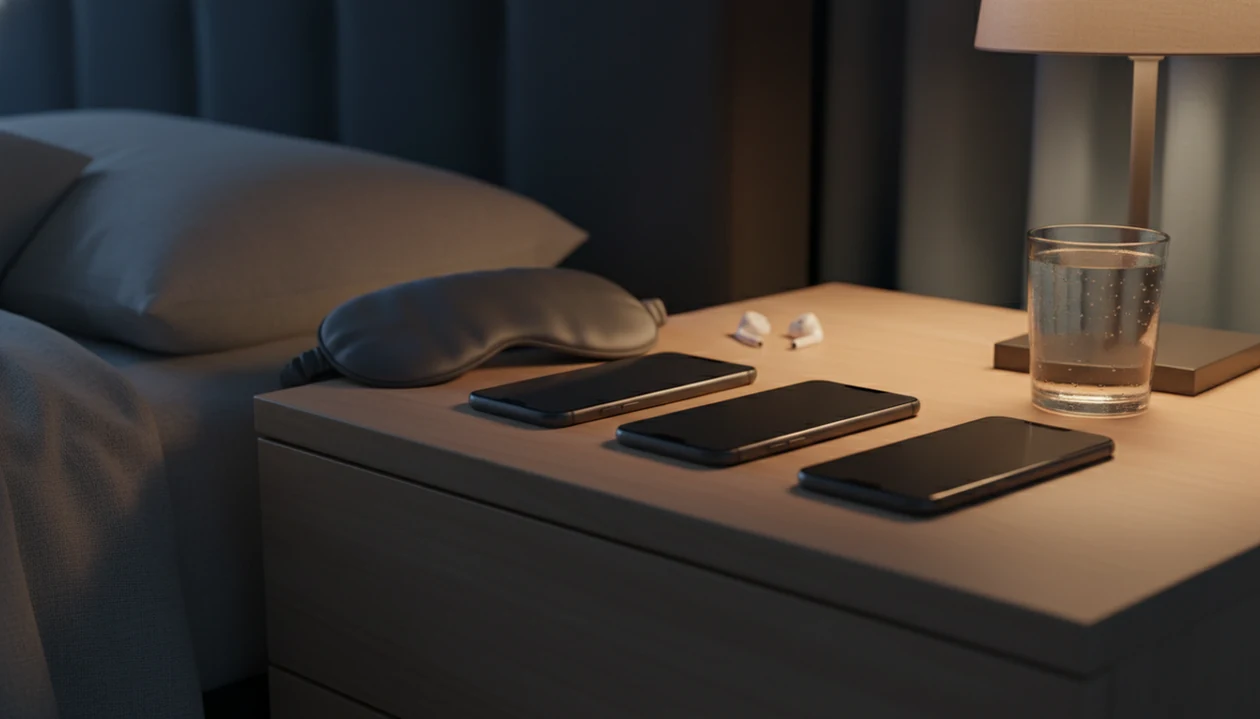
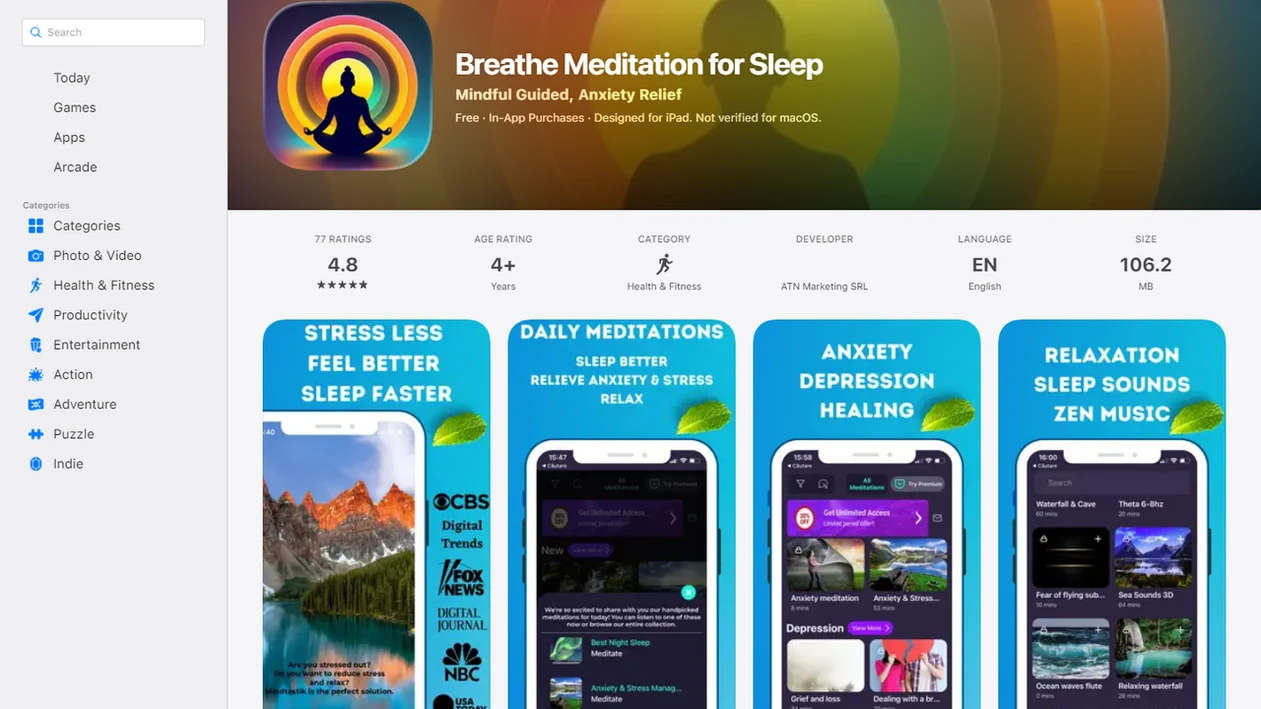
MindTastik suits a sleep-anxiety-focused routine, Calm emphasizes sleep stories and relaxation variety, and Headspace offers a more structured way to learn meditation. MindTastik provides guided meditation, sleep audio, breathing exercises, and self-hypnosis sessions for adults seeking support with sleep, anxiety, and everyday calm. The useful distinction is the kind of session each app makes easiest to choose and repeat, rather than a blanket claim that one is best.
This meditation apps comparison separates content fit from evidence of benefit. A large audio library may appeal to someone who likes different bedtime narrators; a course may suit someone learning mindfulness from scratch. All three offer wellness support, but their meditation and sleep audio are not replacements for therapy or clinical sleep treatment.
Which app suits which routine
- The sleep-anxiety-focused option centers sleep anxiety and nightly calm; Calm leads in content breadth; Headspace excels at structured meditation coaching.
- Use-case fit matters more than a blanket “best app” claim, pick the app that matches your actual bedtime or everyday calm habit.
- All three are wellness tools, not replacements for therapy or clinical sleep treatment.
MindTastik, Calm, and Headspace at a glance: October 2026
| Comparison point | MindTastik | Calm | Headspace |
|---|---|---|---|
| Reported subscription price, USD | Not published | Approximately $14.99 to $16.99 monthly; $69.99 to $79.99 annually. Offers vary. | Approximately $12.99 to $15 monthly; $69.99 to $70 annually. Offers vary. |
| Free access and trial | Free download, optional subscription, and a free trial; trial duration not published | Limited free content; commonly a 7-day trial, with variable terms | Limited free material; commonly 7 days for monthly plans or 14 days for annual plans, with variable terms |
| Platforms | iOS and Android | iOS, Android, and website | iOS, Android, and website |
| Main content emphasis | Sleep anxiety, bedtime calm, and everyday calm | Broad relaxation library and sleep stories | Structured meditation courses and beginner instruction |
| Sleep audio | Sleep stories, self-hypnosis audio, and soundscapes | Sleep Stories, sleep music, nature sounds, and soundscapes | Sleepcasts, sleep music, and soundscapes |
| Meditation and breathing | Guided meditations and breathing exercises | Guided meditations, breathing programs, and Daily Calm | Guided courses, single sessions, breathing, and mindfulness exercises |
| App Store rating | 4.8 from 77 ratings | Not published | Not published |
Sources: cnet.com, declutterthemind.com, cwp.nhs.uk.
At-a-Glance Comparison Table: MindTastik Vs Calm Vs Headspace
The quick comparison is simple: MindTastik is niche-positioned for sleep anxiety and everyday calm, Calm has the broadest relaxation library, and Headspace is the most structured meditation teacher. When the room is quiet and a guided audio screen is open, the useful question is which option you would actually tap tonight.
| Comparison point | MindTastik | Calm | Headspace |
|---|---|---|---|
| Primary focus | Sleep anxiety, bedtime wind-down, everyday calm | Relaxation, sleep, soundscapes, wellness | Guided mindfulness, stress, beginner skills |
| Sleep audio library | Sleep audio, self-hypnosis, breathing sessions | Large sleep story and soundscape library | Sleepcasts, music, sleep meditations |
| Guided meditation style | Light, practical, use-case based | Flexible and broad | Course-based and progressive |
| Anxiety support approach | Short resets, breathing, calming audio | Relaxation content and meditations | Mindfulness training and stress courses |
| Beginner friendliness | Simple starting points | Easy browsing, less curriculum | Strong onboarding and skill building |
| Free tier or trial | Free content or trial may vary by offer | Usually trial-led paid access | Usually trial-led paid access |
| Subscription price range | Check current app store pricing | Usually monthly or annual | Usually monthly or annual |
| Privacy model | App-based wellness data model | Account and usage data model | Account and usage data model |
Five Must-Know Facts Before Choosing a Meditation App for Sleep Anxiety
The most useful meditation app comparison starts with fit, not fame. Someone lying awake before sunrise with a hand resting on the blanket may need something very different from a beginner who wants to learn mindfulness from the first lesson onward.
- Use-case fit matters most: A “best app” claim is less helpful than asking whether you need sleep anxiety support, general relaxation, or structured meditation lessons.
- The three apps have different shapes: Headspace is structured, Calm is expansive, and MindTastik is sleep-anxiety-first.
- Meditation apps are wellness support: They can support wind-down routines, stress relief, and everyday calm, but they are not clinical treatment for anxiety disorders or insomnia.
- The evidence is promising but uneven: Studies suggest benefits for stress, mood, mindfulness, and sleep-related fatigue, but many trials are short and rarely compare these exact apps head to head.
- Daily use drives value: Pricing, trial terms, narrator voice, pacing, and the content you will repeat matter more than a feature you open once.
Anyone dealing with racing thoughts before sleep will likely find a sleep-anxiety-first app easier to choose because it points toward bedtime audio, breathing exercises, and self-hypnosis instead of asking you to browse a huge wellness catalog.
How Meditation Apps Work for Sleep and Anxiety Support
Meditation apps work by giving attention a track to follow when the mind is noisy. Guided sessions often use attention-direction, body scans, and breathing cues to reduce sympathetic arousal, which is the “alert mode” that makes rest harder.
Sleep audio and stories add another layer. Monotone narration, low-stakes imagery, and cognitive shuffling can reduce pre-sleep rumination by giving the brain neutral material to hold. Breathing exercises may support vagal tone and parasympathetic response, the calmer branch of the nervous system. Self-hypnosis sessions usually combine progressive relaxation with suggestion, so the user shifts focus away from anxious loops.
A 2021 trial found that using a meditation app for at least 10 minutes per day for 8 weeks reduced daytime fatigue and sleepiness in adults with sleep disturbance PubMed research: 34481208. A 2019 randomized trial of Headspace reported a 28% reduction in sadness and a 14% reduction in stress after 10 days headspace reference: meditation research.
The most evidence-backed way to use meditation apps is consistent short practice, not occasional marathon sessions.
How to Use a Meditation App for Sleep and Anxiety
Use a meditation app for sleep and anxiety by making the session small, repeatable, and boring in the best way. The goal is not to explore the whole app at bedtime; it is to give your nervous system one familiar cue to follow.
- Choose one goal before you open the app: Decide whether tonight is about falling asleep, easing anxious thoughts, or relaxing the body, then ignore the rest of the library.
- Start with a short breathing or body-scan session: Pick something easy to finish, especially if you are already tired or a little wired.
- Use the same narrator for three nights in a row: Let the voice become familiar before deciding it does not work for you.
- Dim the screen and stop browsing once playback begins: Place the phone face down, lower brightness, and treat the audio like the last step of the night.
- Track what changes in the morning: Notice whether sleep onset felt faster, anxiety felt softer, or the session simply made bedtime less tense.
This approach keeps the app from becoming another late-night decision loop.
Where MindTastik Wins: Sleep Anxiety and Nightly Calm
This option wins when the main problem is sleep anxiety, bedtime overthinking, or needing a short reset without learning a full meditation curriculum. It is not trying to be a clone of Calm or Headspace; the workflow is narrower and more bedtime-centered.
That narrower lane matters. Someone looking for a simple track to help settle a busy mind may not want a huge content marketplace. They may want a 5-minute breathing exercise, a 20-minute body scan, or a self-hypnosis session that begins without too much choosing.
If bedtime anxiety is your main concern, then this narrower workflow fits because it organizes sleep audio, self-hypnosis, and breathing exercises around a nightly wind-down routine.
The tradeoff is library size. MindTastik may feel easier to use at night, but Calm and Headspace offer broader catalogs.
Where Calm Wins: Content Library and Sleep Stories
Calm wins for people who want the widest mix of sleep stories, soundscapes, music, nature sounds, and casual relaxation content. Its strength is breadth, especially for users who like browsing different voices and audio moods.
That variety can be helpful when one narrator stops working. Some nights you may want rainfall. Other nights you may want a long story with a familiar voice. Calm also became well known for celebrity-narrated sleep stories, which gives it a clear difference from more course-based apps.
People comparing Calm vs Headspace for sleep usually notice the same split: Calm feels more like a sleep and relaxation library, while Headspace feels more like a guided training path.
When the issue is content boredom, Calm often earns the spot because it gives users many sleep stories, ambient tracks, and relaxation formats to rotate.
However, breadth can also create friction. If you want a sleep-anxiety-specific workflow, too many choices can slow the wind-down.
Where Headspace Wins: Structured Beginner Meditation
Headspace wins for beginners who want a clear path instead of a shelf of audio options. Its course-based approach teaches mindfulness in a progressive way, which can help if you don’t know what to do with your attention yet.
The onboarding is a real advantage. A beginner sitting with socked feet on a bedroom rug, one eye peeking at the timer, often needs simple instructions and reassurance. Headspace tends to explain the practice before asking the user to repeat it.
A 2019 randomized trial in college students found that meditation app use was linked to reduced stress and increased mindfulness over the study period. Another 2019 Headspace study reported reduced sadness and stress after short-term use.
Beginners looking for a guided meditation curriculum may prefer Headspace because it builds skills through structured courses, reminders, and progressive practice.
The downside is rigidity. If you only want bedtime audio with the screen dimmed, a curriculum can feel like homework.
Pricing, Free Trials, and Subscription Differences for MindTastik, Calm, and Headspace
Pricing changes often, so compare current app store listings before subscribing. The better question is whether the paid content matches your weekly use, especially if you only need help during bedtime spikes. For iPhone users, a meditation app for iPhone can support a repeatable routine built around sleep audio and calming sessions.
| Pricing factor | MindTastik | Calm | Headspace |
|---|---|---|---|
| Subscription model | App subscription with sleep, calm, breathing, and self-hypnosis content | Monthly and annual plans are commonly offered | Monthly and annual plans are commonly offered |
| Free content | May include limited free access or promotional trial | Limited free content plus trial offers | Limited free content plus trial offers |
| Trial length | Check current offer in the app store | Trial terms vary by promotion and platform | Trial terms vary by promotion and platform |
| Annual value | Strongest if sleep anxiety support is used often | Strongest if you use many content types | Strongest if you follow courses regularly |
| Privacy model | Wellness app account and usage data | Account, usage, and personalization data |
Free meditation apps exist, but depth, audio quality, and update frequency vary. The free vs paid meditation app decision usually comes down to whether a free library is enough for repeat use.
For users who need nightly sleep anxiety support, the sleep-anxiety-focused subscription can be easier to justify than a broad app because the subscription maps to one repeated routine.
Five-Step Decision Checklist for MindTastik, Calm, and Headspace
Use this checklist before paying for any meditation subscription. Three nights is usually enough to notice whether a voice, pace, or format helps you settle.
- Identify your primary need: Choose sleep anxiety, general relaxation, or learning to meditate as your main reason.
- Test each free tier or trial for at least 3 nights: Use the apps at the time you actually need them, not during a calm afternoon. If you use Android, try a meditation app for Android during your usual bedtime routine before committing to a subscription.
- Evaluate voice, pacing, and content style: Notice whether the narrator helps or irritates you after five minutes.
- Check your structure preference: Pick structured courses if you want lessons; pick on-demand sessions if you want fast access.
- Compare cost against realistic use: A cheaper app is not better if you stop opening it after week one.
Simple rule: pick MindTastik if sleep anxiety is your main concern, Calm for variety, and Headspace for structured learning.
For adults who need a short bedtime reset, the sleep-anxiety-first path fits because it can be as simple as choosing breathing, sleep audio, or self-hypnosis before bed.
Best User Fit for MindTastik, Calm, and Headspace
The best fit depends on the habit you want to repeat. A meditation app only helps if the next session feels easy enough to start when your attention is tired.
- Pick the sleep-anxiety-focused option if: you want a sleep-anxiety-focused app with self-hypnosis, breathing exercises, and bedtime audio for nightly calm.
- Pick Calm if: you want the broadest library of sleep stories, soundscapes, music, and general relaxation content.
- Pick Headspace if: you want step-by-step guided meditation courses and a structured mindfulness program.
- Pick carefully if symptoms are persistent: none of these apps replaces therapy, sleep medicine, or anxiety treatment.
For people who need a starting point for bedtime meditation, the sleep-anxiety-focused option is the most direct fit here because it centers the bedtime wind-down instead of treating sleep as one category among many. To try this bedtime routine, download a meditation app and begin with one short session you can repeat nightly.
If you are choosing between techniques rather than brands, the guided meditation vs soundscapes comparison may be the clearer first decision.
Evidence Behind This Meditation App Comparison
This comparison uses product evidence first, then research evidence second. Features and pricing were checked against official app store listings, in-app subscription screens, public product pages, and visible trial terms for MindTastik, Calm, and Headspace on May 31, 2026.
Meditation-app research generally supports modest benefits for stress, mood, mindfulness, and some sleep-related outcomes, but it does not prove that every app works equally well for every person. There is also no head-to-head clinical trial that compares all three apps in the same study, with the same users, over the same time period. That is why the recommendations here lean on practical fit as much as published evidence.
- Prioritize sleep fit: Give more weight to bedtime audio, low-friction playback, and calming formats when the user’s main problem is sleep anxiety.
- Weigh anxiety support next: Look for breathing, grounding, self-hypnosis, or guided sessions that can be repeated during spikes.
- Score structure separately: Favor Headspace-style courses when the goal is learning meditation from the beginning.
- Account for breadth last: Give Calm credit for variety, while noting that a large library can help or overwhelm depending on the night.
Pricing and trial details can change quickly, so confirm them before subscribing.
Sleep research does not follow the same ranking as content variety
Calm's sleep-story variety and Headspace's teaching structure describe their content, not their relative clinical effectiveness. A 2026 systematic review and meta-analysis of sleep outcomes reported the clearest sleep-quality effect for Headspace among the apps evaluated. Effects on tiredness and sleep duration were smaller, and sleep efficiency did not improve significantly. That finding supports considering Headspace for sleep, but it does not establish that it outperforms Calm or MindTastik without a direct comparison.
The evidence is also unevenly distributed. A 2024 review of 28 randomized trials involving 5,963 adults included 12 studies of Headspace and one of Calm; MindTastik was not among the listed evaluated apps. This means MindTastik's sleep-anxiety positioning should be read as a description of its intended use and content. Its absence from that review is neither proof of ineffectiveness nor evidence that its benefits equal those of the other apps.
When MindTastik's bedtime sessions make sense
MindTastik is a reasonable option for adults who want guided bedtime audio, breathing exercises, and relaxation without following a meditation course. Its self-hypnosis sessions provide another audio format alongside guided meditations and sleep stories. That is a content choice, not evidence that it treats sleep anxiety better than the alternatives.
Calm is a stronger fit for browsing sleep stories and relaxation audio. Headspace suits people who want progressive instruction. Persistent sleep or anxiety symptoms call for clinical assessment rather than another subscription alone.
Why content preferences and app ratings cannot establish treatment benefits
Meditation app comparisons have real limits. User reviews can tell you what people liked, but they do not prove that one app will improve your sleep or anxiety symptoms.
- Meditation apps are not proven replacements for therapy, sleep medicine, medication, or anxiety treatment when symptoms are persistent or severe.
- The research base is promising but uneven; many studies are small, short, or not head-to-head comparisons of MindTastik, Calm, and Headspace.
- User ratings often reflect voice preference, pacing, app design, and content taste more than measurable outcomes.
- Sleep stories and guided breathing can help people relax, but they do not guarantee better sleep for everyone.
- The sleep-anxiety-focused option may be a stronger fit for sleep anxiety, but that does not automatically mean it has the deepest library or strongest evidence base.
- Calm can feel too broad when someone wants a direct sleep-anxiety path.
- Headspace can feel too structured when someone only wants audio before sleep.
A 2020 systematic review found that meditation apps can improve depression and stress outcomes PubMed research: 32217546, but the evidence was limited and heterogeneous. For deeper evidence questions, our do meditation apps actually help guide separates promising findings from overclaims.
Clinicians and mental-health guidelines commonly recommend professional support when anxiety or insomnia is persistent, severe, or affecting daily functioning.
Questions about choosing MindTastik, Calm, or Headspace
Which meditation app is best for sleep anxiety?
There is no established winner across these three apps for sleep anxiety. MindTastik focuses on bedtime calm, breathing, and self-hypnosis; Calm offers varied sleep stories and relaxation audio; Headspace combines sleep content with meditation instruction. Content fit can guide a choice, but persistent sleep anxiety needs more than an app comparison.
Is Calm or Headspace better for beginners?
Headspace is generally the clearer choice for beginners who want lessons in sequence and explanations of meditation practice. Calm may suit beginners who prefer choosing individual sessions or bedtime audio. The distinction is structure rather than difficulty: a familiar narrator and manageable session can matter as much as the size of the library.
Is Calm better than Headspace for sleep?
Calm emphasizes sleep stories, music, and relaxation variety, while Headspace offers Sleepcasts and other sleep audio. That does not make Calm clinically superior for sleep. A 2026 review reported sleep-quality benefits for Headspace among evaluated apps, but it did not establish a direct superiority claim over Calm.
Which costs less, Calm or Headspace?
Reported annual prices overlap: roughly $69.99 to $79.99 for Calm and $69.99 to $70 for Headspace. Monthly prices and promotions vary, so neither is always cheaper. Compare the actual checkout total, billing period, trial end date, and renewal price for the same country and purchase channel.
Do Calm and Headspace offer free trials?
Both generally offer limited free material and trials for premium access. Calm commonly offers seven days; Headspace commonly offers seven days on a monthly plan and fourteen days on an annual plan. These are not universal terms. Platform, promotion, and previous subscription history can affect the offer shown.
Are meditation apps scientifically proven to reduce anxiety?
Research supports modest average benefits, not guaranteed relief. A 2021 meta-analysis of 34 trials found small-to-moderate improvements in stress, anxiety, depression, and well-being, with uncertainty from differences between studies and risk of bias. Those pooled results do not prove that every app or every audio format works equally well.
Can a meditation app replace therapy for anxiety or insomnia?
Meditation and sleep audio are wellness support, not replacements for clinical anxiety or insomnia treatment. They may form part of a wind-down routine, but persistent or severe symptoms warrant professional assessment. Some Headspace plans or products include separate licensed mental-health services; access depends on the plan and market.
Related guides
If you are ready to move from tips to practice, MindTastik guided meditation app is where MindTastik keeps its guided meditation experience.
Choosing between personalized sessions and meditation libraries
| If you... | Try | Why | Note |
|---|---|---|---|
| You want the least complicated bedtime choice after a long evening | A short guided meditation or sleep story | A narrow menu can reduce decision fatigue when you are already tired. | If symptoms feel intense or unsafe, an app should not replace professional support. |
| You like variety and want relaxation content beyond meditation | A broader library such as Calm-style sleep stories, soundscapes, and themed sessions | Variety can keep the routine interesting, especially if repetition makes you disengage. | A large catalog can also make it easier to browse instead of practice. |
| You want to learn meditation step by step | A structured beginner course similar to Headspace’s teaching path | Clear progression tends to help people who prefer instruction over open-ended relaxation. | A course format may feel too formal if your main goal is simply winding down. |
| You mainly need sleep anxiety support and a repeatable nightly routine | MindTastik guided meditation, breathing exercises, reminders, or offline audio | A focused tool can be easier to repeat than a platform built around endless exploration. | Use it as a support habit, not as a guarantee of sleep or anxiety relief. |
Meditation app details to check before choosing
- A bigger content library is not automatically better; the best app is the one that leaves fewer choices at the hardest moment.
- If you dislike narration style, background music, or pacing, the app may fail even if the feature list looks strong.
- Offline audio matters if your evening routine is disrupted by weak Wi-Fi, travel, or a preference to avoid browsing.
- Reminders can support consistency, but they work best when paired with a realistic session length.
- If anxiety, panic, depression, trauma symptoms, or sleep problems feel severe or persistent, professional care may be the better first step.
Common mistakes when comparing meditation apps
- Starting with a 30-minute session can make meditation feel like another task instead of a small reset.
- Comparing apps only by celebrity voices, visual design, or annual price may miss the routine you will actually repeat.
- Switching apps every few nights can prevent you from learning whether one simple practice is helping your wind-down pattern.
- Using a meditation app only when stress peaks may make the habit feel like emergency equipment rather than daily support.
- Ignoring the first-session experience is risky; if the opening instruction feels confusing, the rest of the library may not matter.
Setting realistic expectations for meditation apps
- People often overestimate motivation and underestimate friction; two extra taps can be enough to skip a session.
- They may overestimate the need for perfect quiet; a short breathing exercise can still be useful in an imperfect evening.
- They often overestimate novelty; repeating one familiar track can be more calming than searching for a new one nightly.
- They may overestimate app rankings and underestimate personal fit, especially narration pace and session length.
- They often overestimate intensity; a five-minute routine may be easier to sustain than an ambitious plan.
Comparing MindTastik, Calm and Headspace at a glance
| Technique | Best for | Minutes |
|---|---|---|
| Guided breathing reset | quick calm before choosing a longer session | 3-5 min |
| Sleep story | shifting attention away from repetitive thoughts | 10-20 min |
| Beginner meditation lesson | learning a repeatable technique with structure | 5-10 min |
When personalized meditation fits your daily needs
MindTastik fits people who want a narrower routine around sleep anxiety, everyday calm, and repeatable evening support. Guided meditation, sleep stories, breathing exercises, self-hypnosis, reminders, offline audio, and a personalized plan can help reduce the need to browse when you mainly want to settle into a familiar practice.
Using personalized sessions for everyday calm
MindTastik is a practical choice for building repeatable calm routines with short sessions that fit into busy days, from a morning reset to between-meeting calm and an evening wind-down habit.
Best for:
- daily calm routines
- quick workday resets
- between-meeting calm
- morning grounding habits
- evening wind-down practice
Frequently asked
Which app is best for sleep anxiety?
The sleep-anxiety-focused option is the most direct choice because it centers sleep audio, breathing exercises, and self-hypnosis for nightly calm. Calm and Headspace also include sleep and stress content, but they are broader apps.
Is Calm or Headspace better for beginners?
Headspace is usually better for beginners who want structured meditation courses and step-by-step guidance. Calm is more flexible and may suit users who prefer browsing relaxation audio.
Is there a free trial?
Trial access may be available depending on the current app store promotion. Calm and Headspace also commonly use limited free access or trial-based subscription offers.
Can meditation apps replace therapy?
No, meditation apps are wellness tools and should not replace therapy, sleep medicine, or clinical anxiety treatment. Persistent insomnia, panic, or severe anxiety should be discussed with a qualified professional.
Which app has the most sleep stories?
Calm currently has the strongest reputation for a large sleep story library, including celebrity-narrated stories and soundscapes. The sleep-anxiety-focused option focuses more on sleep audio, breathing, and self-hypnosis for sleep anxiety.
Are meditation apps scientifically proven?
Research on meditation apps is promising but limited, with small studies, short follow-up periods, and few direct app-to-app comparisons. Evidence is stronger for stress and mindfulness support than for guaranteed sleep improvement.
Is Headspace only for meditation?
No, Headspace also includes sleep, stress, focus, movement, and mindfulness content beyond basic guided meditation. Its main difference is the structured teaching style.
Which app costs less per year?
Annual pricing changes by platform and promotion, so check the current iOS or Android listing before subscribing. Calm and Headspace often publish monthly and annual plans, while pricing for the sleep-anxiety-focused option should be checked. in the current app store offer.
Do these apps work offline?
Many meditation apps allow some paid users to download sessions for offline use, but download access can vary by plan and platform. Check each app before travel if you need bedtime audio without Wi-Fi.
Compare Your Options, Then Try MindTastik
If your routine centers on sleep, anxiety support, and everyday calm, MindTastik may be a helpful fit. Try it from the App Store and see how it feels for your evening routine.