


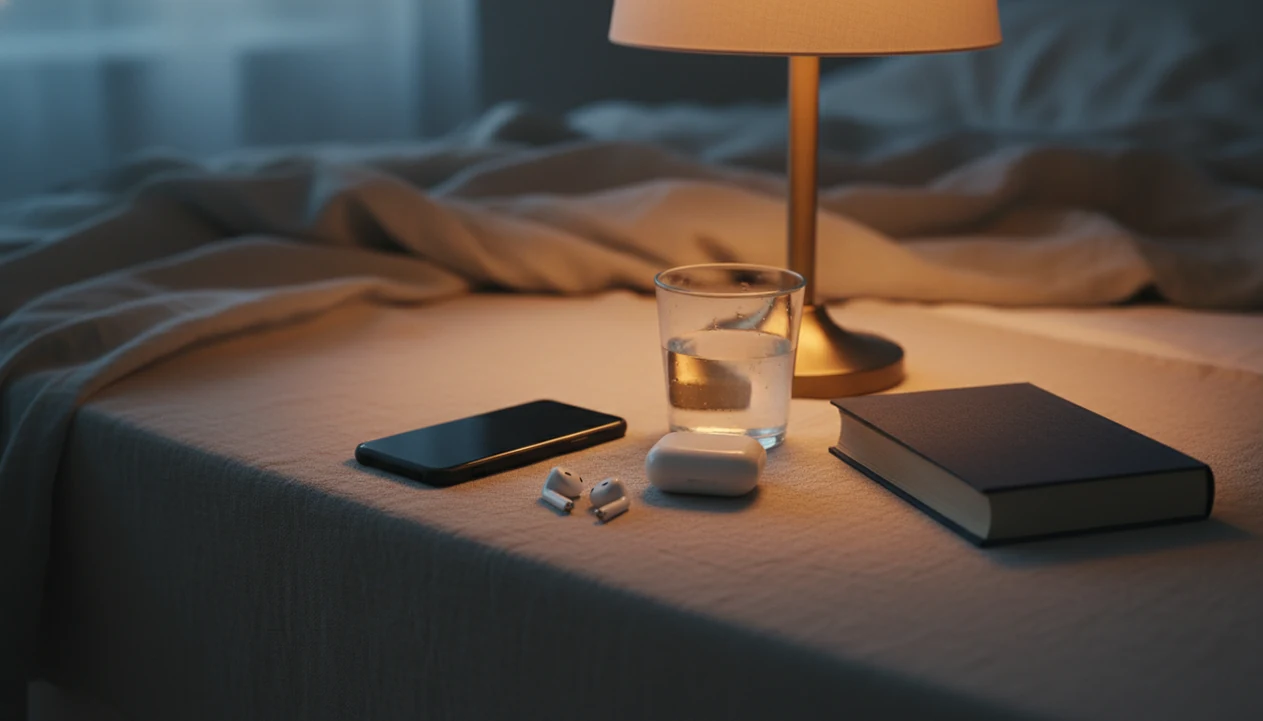
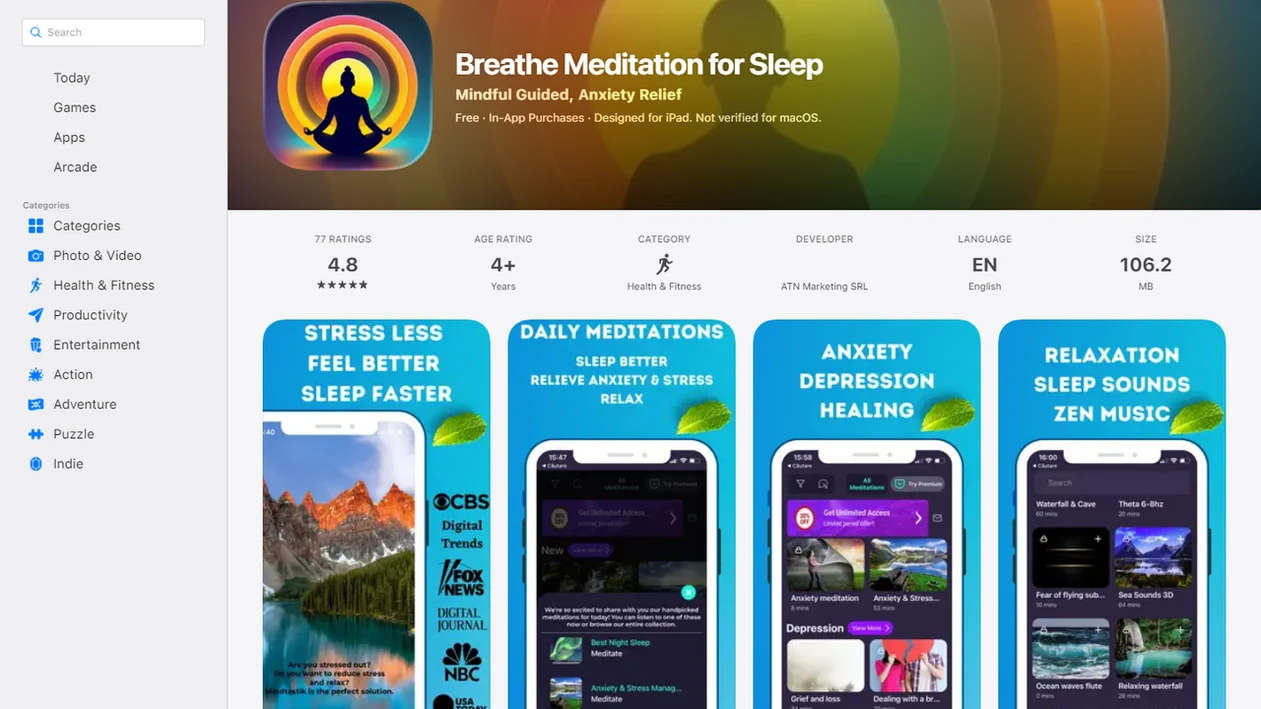
A sleep stories app plays calm, narrator-led bedtime stories for adults, designed to ease rumination and help listeners settle toward sleep. The story gives attention something gentle to follow instead of another worry to solve. Slow pacing, simple scenes, and little conflict suit this purpose better than suspenseful plots that encourage listening for the ending.
MindTastik places sleep stories alongside guided meditation, breathing exercises, and sleep hypnosis, so the bedtime routine can use more than one format. Audio-only listening avoids the screen light of continued scrolling once playback starts. These stories work best as part of a consistent wind-down routine, not as a standalone cure for insomnia. The aim is quieter attention, not finishing every story.
The bedtime basics
- Sleep stories gently occupy attention so racing thoughts lose their grip at bedtime.
- MindTastik pairs sleep stories with guided meditation, breathing exercises, and sleep hypnosis in one app. To compare another app option for meditation and relaxation, see our Medito alternative for daily calm overview.
- Audio-only playback avoids the blue-light problem of nighttime scrolling.
- Works best as part of a consistent bedtime routine, not as a standalone insomnia cure.
- Simple, slow-paced, low-conflict narratives outperform complex or suspenseful content for sleep.
At a Glance: MindTastik Sleep Stories App Feature
- MindTastik sleep stories are audio-only bedtime stories for adults, with soothing narration and ambient soundscapes. If you are comparing bedtime audio options, our Aura alternative for sleep overview offers another way to assess your preferences.
- The feature sits beside guided meditation, breathing exercises, and sleep hypnosis, so bedtime does not depend on one format.
- Auto-stop timing helps playback fade or end without requiring another phone check.
- Offline playback supports screen-free listening when Wi-Fi drops or notifications would break the calm.
- These are sleep stories for adults with stress, rumination, or sleep anxiety, not children’s bedtime content.
If your priority is fewer racing thoughts after lights out, MindTastik fits because the Sleep Stories category gives you a story, timer, and low-light listening path in the same bedtime workflow.
The phone can stay face-down.
How Sleep Stories Calm Racing Thoughts at Bedtime
Sleep stories calm racing thoughts by giving working memory something gentle to follow, so worry loops have less room to repeat. The mechanism is simple: attention gets lightly occupied, arousal drops, and the brain has fewer hooks to chase.
A sleep story is intentionally less interesting than a podcast. That matters. Thrillers, interviews, and true-crime episodes often create open loops, volume jumps, or “one more episode” pressure. A bedtime stories app should do the opposite. Slow narration, low-frequency soundscapes, and monotone delivery support the relaxation response, which is the body’s shift away from alertness.
Direct research on sleep stories alone is still limited. However, a meta-analysis of randomized controlled trials found that mindfulness-based interventions can produce moderate improvements in sleep quality (Sleep Medicine Reviews: peer-reviewed research: S1087079214000482). Therapists and mental-health guidelines commonly recommend relaxation skills, stimulus control, and calmer bedtime routines for sleep difficulty, not more stimulating media.
Deep into the night, a plot twist may be the last thing the body wants.
On days your calendar worries keep replaying in the dark, MindTastik earns a place because the story format is deliberately low-conflict, with sleep pacing rather than entertainment pacing.
App sleep research does not prove that stories treat insomnia
Evidence for an app's overall sleep benefits is not necessarily evidence for its bedtime stories. An eight-week randomized trial of Calm in adults with elevated insomnia symptoms found improved sleep quality and progressively shorter self-reported time to fall asleep. Those findings do not isolate sleep stories as the cause, establish the same benefit for MindTastik, or show that a general relaxation app is equivalent to clinical insomnia treatment. For a broader comparison beyond individual trial results, see our Calm alternative for daily calm overview.
The distinction matters when choosing help for ongoing insomnia. A trial of a CBT-I-based Headspace Sleep Program found improvements in sleep efficiency, time to fall asleep, and wakefulness after sleep onset. That program incorporated cognitive behavioral therapy for insomnia techniques, rather than narration alone. CBT-I addresses sleep habits and beliefs as well as arousal. A story may make bedtime feel calmer without addressing the patterns that keep insomnia going.
5 Steps to Use Sleep Stories in MindTastik
Use MindTastik sleep stories as a short wind-down routine, not as background noise you start while still scrolling. The goal is to make the first minute boring, repeatable, and easy.
- Open MindTastik and tap the Sleep Stories category.
- Choose a story by length, voice tone, or theme, such as nature, travel, or everyday calm.
- Set the sleep timer so playback fades or stops automatically.
- Put your phone face-down or on a nightstand to reduce screen light.
- Breathe slowly through the opening minute and let the narrator carry attention.
On restless nights, start with breathing exercises, then move into a story. Some users prefer a five-minute breathing exercise before a 20-minute body scan or bedtime narrative. Notice what feels manageable.
For adults who need a simple start, MindTastik works because the Sleep Stories category removes the nightly decision spiral and turns bedtime audio into a repeatable sequence. When comparing apps for a repeatable evening practice, our Balance alternative for daily calm overview can help frame your choice.
Best Times to Use Bedtime Stories for Sleep Anxiety
“Should I use a sleep story when I can’t stop thinking?” Yes, especially when rumination is the main reason sleep is delayed. Sleep stories are often a better starting point than silent meditation for adults who feel more anxious when the room gets quiet.
About 30% of adults report short-term insomnia symptoms and roughly 10% meet criteria for chronic insomnia (Sleep Foundation: Sleep Foundation guide: insomnia facts and statistics). The National Sleep Foundation has also reported high rates of electronic-device use near bedtime, which is why audio-only routines can be a healthier swap than scrolling (NSF Sleep in America poll archive: thensf reference: sleep in america polls).
Good meditation app for sleep anxiety and everyday calm should deliver repeatable cues for the nervous system, not a promise to switch sleep on like a light.
Use stories with a regular schedule, dim lighting, and a cool room. If your thumb is hovering over bedtime audio after checking messages, dim the screen first. Small friction matters.
MindTastik Sleep Stories Library and Playback Design
MindTastik builds the sleep stories library around adult-focused themes: quiet travel, nature scenes, simple routines, and low-stakes evening imagery. The point is not drama. The point is giving the mind a soft place to land.
Voice tone, pacing, and volume are calibrated for sleep rather than entertainment. That means fewer sharp transitions, no cliffhanger structure, and enough predictability that attention can loosen. The dark-mode, minimal-tap interface also helps reduce screen exposure before playback starts.
Offline listening matters more than it sounds. One notification can pull the brain back into problem-solving mode. The related offline meditation downloads option supports bedtime routines during travel or weak Wi-Fi.
If the priority is a full wind-down routine, MindTastik covers more than stories because guided meditation, sleep hypnosis, and ambient sound can be layered around the same bedtime moment. If you are also comparing meditation options for daytime use, consider our Plum Village alternative for daily calm overview.
Sleep Stories App Feature vs. Podcasts and Audiobooks
Sleep stories differ from podcasts and audiobooks because they are designed to become less engaging over time. General audio often rewards attention; sleep audio should let attention fade.
| Audio option | Bedtime strength | Common drawback |
|---|---|---|
| MindTastik sleep stories | Slow arcs, soothing voices, timer-based playback | Some listeners may still follow the plot too closely |
| Podcasts | Familiar voices and long catalogs | Ads, jokes, debate, or topic shifts can wake the mind |
| Audiobooks | Comfortable for readers who like narration | Plot tension can encourage one more chapter |
| Calm or Slumber-style stories | Similar bedtime story formats | Feature mix may vary by app and plan |
Per the CDC, 35.2% of U.S. adults reported sleeping less than seven hours per night in 2014, underscoring the size of the sleep-shortfall problem dedicated sleep audio tries to support: CDC guidance: mm6506a1.htm. For people comparing broader support, our best meditation app for sleep anxiety guide explains how story audio fits beside meditation and breathing. For a wider look at bedtime audio and relaxation options, explore our meditation and sleep app comparisons before choosing.
Related MindTastik Features for Better Sleep
Sleep stories work better when they are part of a wider bedtime routine. These related features help you choose the right starting point on different nights.
- Guided sleep meditation: A guided meditation app session helps when you want step-by-step body relaxation.
- Self-hypnosis for sleep anxiety: Self hypnosis sessions use suggestion-based audio for calmer sleep cues.
- Breathing exercises: Short breathing sessions support pre-sleep relaxation when the body feels keyed up.
- Ambient soundscapes and white noise: Sound can mask traffic, hallway noise, or a restless apartment.
- Layered routine: Meditation first, story second, timer last. Simple.
For listeners who want calming audio ready when the mind feels busy, MindTastik can be a practical fit because the library includes multiple bedtime formats that stay within the sleep routine.
When a story and a breathing session fit together
MindTastik suits adults who want narrated stories and other relaxation audio in one library. A short session from its breathing exercises can precede a story when physical tension accompanies repetitive thoughts. Guided meditation offers another option when following a narrator's plot feels too demanding. Listeners who keep trying to catch every detail may prefer soundscapes instead. Persistent insomnia calls for more than a choice of calming tracks; the app is not a medical treatment.
What sleep stories cannot establish or treat
Sleep stories can support bedtime calm, but they are not a medical treatment. Set expectations before using any bedtime stories app as your main sleep tool.
- MindTastik does not treat severe insomnia, sleep apnea, clinical depression, or panic disorder; professional care may be needed.
- Some listeners find narratives too engaging, especially if the story has too much detail or novelty.
- Screen exposure can backfire if you browse categories with full brightness before bed.
- Direct research on sleep stories as a separate intervention is limited; most evidence applies to broader mindfulness, relaxation, or sleep-hygiene practices.
- Audio works better with basics like a consistent schedule, low light, and a cool room.
- Some users become dependent on bedtime audio and feel unsettled without it.
- A partner may dislike speaker playback, while headphones can feel uncomfortable during side sleeping.
Use the timer. Then stop managing it.
A Bedtime Decision Guide
A sleep story tends to work best when the next decision is the problem: which thought to follow, which worry to solve, or whether to keep checking the room. A small setup ritual can matter more than the story length: dim lamp, phone face down, comfortable pillow, and one slow exhale before pressing play. The best bedtime audio is not the most impressive track; it is the one that makes the next step obvious.
When a body scan or breathing exercise beats a sleep story
Your body feels tense, but your mind is not especially busy.
A body scan may fit better than a sleep story because it gives attention a physical route to follow. Stories are useful for rumination, while a scan can be simpler when the main issue is jaw, shoulder, or chest tension.
You keep restarting the same story to catch every detail.
That can turn bedtime audio into a comprehension task. A breathing exercise or very familiar story may be a better fit because the goal is to let attention soften, not to follow a plot perfectly.
You want background sound while doing chores before bed.
A podcast or audiobook may be more satisfying earlier in the evening. A sleep story works best once the routine has already narrowed: dim light, reduced choices, and a clear signal that the day is ending.
Sleep stories app questions
Do sleep stories help adults with racing thoughts?
A calm narrative can give attention something simple to follow when repetitive thoughts dominate bedtime. It may feel easier than sitting in silence, but the effect varies. If listening becomes a task, with pressure to remember details or reach the ending, a familiar story or non-narrative sound may fit better.
Can a sleep stories app cure insomnia?
Sleep stories are a relaxation tool, not a cure for insomnia. Research on broader app programs cannot establish that stories alone treat the condition. Persistent sleep problems may need professional assessment and a treatment such as cognitive behavioral therapy for insomnia, which addresses more than bedtime tension.
How long should a sleep story play at bedtime?
There is no established story length that works for everyone. Choose a track that fits the wind-down routine and use a timer if continued playback becomes distracting. Finishing the story is not the goal. A familiar, shorter recording may be more useful than a long story that keeps attention on the plot.
Are sleep stories better than podcasts for falling asleep?
Sleep stories are designed to let attention fade, while podcasts often reward staying engaged. Interviews, jokes, advertisements, and topic changes can interrupt a quiet routine. A familiar, calm podcast may still suit some listeners, but low-conflict narration is a more deliberate choice when interesting content keeps bedtime listening going.
Should I choose sleep stories or white noise?
Choose a story when repetitive thoughts are the main distraction and gentle narration feels calming. Soundscapes or white noise may fit better when outside sounds are the problem or words hold attention too strongly. Neither format is universally better, and feeling relaxed does not necessarily mean sleep will improve.
Can I listen to sleep stories without headphones?
Headphones are not essential for following a narrated story. A phone or bedside speaker can provide the audio if it is clear at a comfortable volume and does not disturb someone else. Set playback before settling down so adjusting the device does not become another reason to check the screen.
Does downloading sleep stories improve sleep?
Downloading can make listening more reliable when connectivity is poor and reduce the need to manage streaming at bedtime. It is a practical convenience, not a proven treatment benefit. The cited app studies do not show that offline playback itself shortens the time to fall asleep or improves sleep quality.