
Mindful Exercise Workout: 3 Ways to Get Off Autopilot
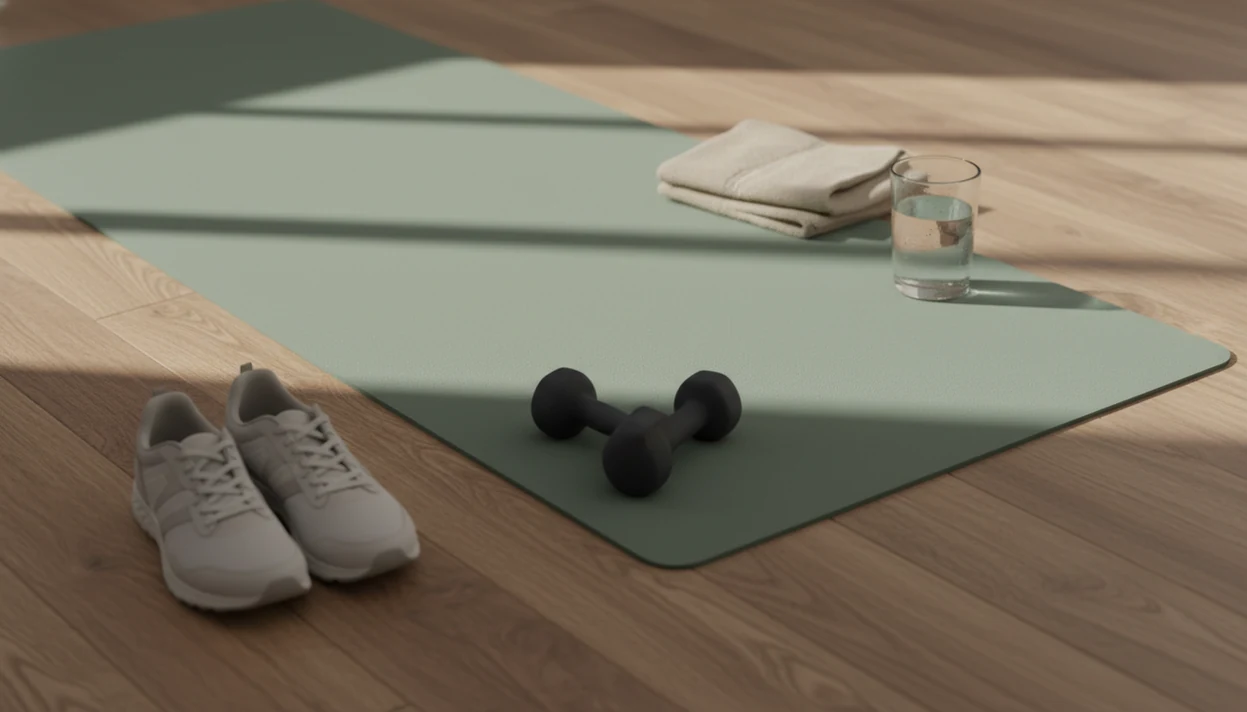


A mindful exercise workout is physical movement practiced with deliberate, nonjudgmental attention to breathing, body sensations, posture, effort, and emotions. It is not a separate workout style. Walking, yoga, strength training, stretching, and cardio can all become attention practice when the focus shifts from replaying thoughts to noticing what is happening during movement.
A simple session starts with one intention and one physical anchor, such as footsteps, hand position, or breathing. Distractions will still happen; noticing them and returning to that anchor is part of the practice. A brief body check can guide adjustments for stress, soreness, and recovery. Ending with a short calm-down, with or without guided breathing or body-scan audio, gives the workout a clear finish.
The essentials
- Mindful exercise is not a separate workout style; it is a way of paying attention during almost any workout.
- The simplest method is to set an intention, remove distractions, anchor attention to the breath, scan the body, and adjust intensity based on stress and recovery.
- Guided recovery tools can support the calm-down side with meditation, sleep audio, breathing exercises, and body-scan cues for adults who want sleep, anxiety, and everyday calm support.
Mindful exercise workout meaning and quick benefits
A mindful exercise workout means paying attention on purpose, in the present moment, without judgment while you move. It can happen during walking, yoga, stretching, strength training, running, cycling, or low-intensity cardio.
The shift is simple but noticeable. Instead of finishing a workout while replaying emails, you notice your breathing, jaw, shoulders, stride, grip, and effort. The workout becomes both a physical session and a mental reset. You can also practice mindfulness for productivity when returning to everyday tasks, using the same gentle attention to distractions.
A 2014 JAMA Internal Medicine meta-analysis of 47 trials found that mindfulness meditation programs had moderate evidence for improving anxiety, depression, and pain, with lower evidence for stress and mental-health-related quality of life JAMA Internal Medicine study: 1809754. That does not mean mindful exercise fixes everything. It means attention training is a reasonable support practice.
Caption suggestion: “A mindful exercise workout uses breath, posture, and body awareness to turn movement into a calm reset.”
5 mindful exercise workout facts beginners should know
- Breath, sensation, and movement are the anchors. You return to the inhale, foot strike, hand position, muscle tension, or posture when your mind drifts.
- The goal is not an empty mind. The practice is noticing thought loops, then coming back without self-criticism.
- Mindful workouts can be intense. Running hills, lifting weights, or cycling can be mindful when attention stays with breath, cadence, effort, and recovery.
- Benefits usually build gradually. Most people notice more change after repeated practice over weeks, not one unusually calm session. Alongside repeated practice, consider the relationship between rest and creativity when planning time for exercise, recovery, and demanding work.
- Guided audio can help beginners. Cues for breath pacing, transitions, body scans, and recovery routines reduce the “what do I do now?” feeling.
The pocket check is real. If your hand keeps reaching for the phone between sets, that is useful information, not failure.
Before you start a mindful exercise workout
Before you start, make the workout safe, familiar, and easy to pay attention to. Mindfulness works better when you are not learning a brand-new movement, chasing metrics, or overriding obvious warning signs.
- Choose a movement you already know how to do well, such as walking, simple mobility, familiar strength exercises, or easy cardio. Keep the first session low-risk and repeatable.
- Check your body state before the first rep: sleep, soreness, old injuries, new pain, caffeine, and current stress level. Let that check change the plan if needed.
- Pick one anchor before you begin, such as breath, feet, hands, posture, or the feeling of effort. Do not wait until the workout gets chaotic to decide where attention should land.
- Set your tools ahead of time: phone on silent, playlist chosen, timer ready, and tracking screen simplified. Then leave them alone as much as possible.
- Stop and get help if you feel dizzy, have chest pain, feel faint, or notice symptoms that seem frightening or unusual. A mindful workout should make you more responsive to safety signals, not less.
How mindful exercise workout attention works in the body
Mindful exercise works by giving attention a clear place to return: breath, feet, hands, posture, muscle tension, or movement rhythm. This is attention anchoring. In plain language, you stop letting the mind roam without noticing, and you give it a repeatable landing spot.
Interoception is the other key term. It means noticing internal signals such as heart rate, breathing speed, fatigue, warmth, tightness, and tension. Nonjudgmental monitoring means observing effort, discomfort, distraction, and emotion without instantly calling them good or bad.
That combination can support self-regulation. You may pace a run better, stop pushing through dizziness, or choose lighter weights after poor sleep. Clinicians typically recommend professional care for significant anxiety symptoms, but mindfulness-based interventions have evidence as a support. In a 2022 JAMA Psychiatry trial, an 8-week mindfulness-based intervention reduced anxiety symptoms in adults with anxiety disorders; that is not proof that exercise cures anxiety.
Meditation evidence is not proof of a better workout
The evidence needs a clear boundary: research on mindfulness meditation does not automatically establish benefits from adding awareness cues to exercise. The 2014 meditation evidence review found moderate improvements in anxiety, depression, and pain, but did not show meditation to be superior to active treatments such as exercise. Those results do not establish that a mindful workout outperforms the same workout without mindfulness cues.
Evidence for attention also depends on the intervention and outcome measured. A 2024 review of 28 randomized trials involving mindfulness apps reported favorable results for attention regulation, repetitive negative thinking, and decentering, while several other outcomes were mixed. That review studied apps, not mindful exercise. Returning attention to a stride or repetition is a reasonable practice goal, but a guaranteed improvement in work concentration is not an established result. For a structured attention routine beyond workouts, try these steps to achieve deep focus during your next work session.
How to use a mindful exercise workout guide
Use this mindful exercise workout guide during your next session, not after you have rearranged your whole routine. Keep it small enough to repeat.
- Set one intention before moving, such as calm, strength, energy, or recovery.
- Silence notifications and choose one physical anchor, such as breath, feet, hands, or core engagement.
- Start slowly for two minutes and notice breathing, posture, and tension.
- Match breathing to movement, such as exhaling during effort and softening the jaw on recovery.
- Scan the body between sets or intervals and adjust intensity based on sleep, soreness, stress, and energy.
- End with stillness for three to five minutes, guided breathing, or a short body scan.
For beginners, a short repeatable sequence is often easier than a long routine because it reduces decisions while attention is still untrained.
Best mindful exercise workout types for different goals
The right mindful workout depends on your goal, energy level, and nervous system state that day. A hallway walk after tense meetings is not the same as a Saturday strength session, and it should not feel the same.
| Workout type | Best for | How to make it mindful | Not ideal for |
|---|---|---|---|
| Walking | Beginners, racing thoughts, low-energy days | Use footsteps and breathing as anchors | People who need high training stimulus |
| Yoga or mobility | Flexibility, tension release, body awareness | Use slow transitions and body scans | Anyone aggravated by long holds or certain positions |
| Strength training | Focus, confidence, controlled effort | Use steady reps, breath timing, and rest-period check-ins | People likely to ignore pain to hit numbers |
| Low-intensity cardio | Steady mood support and gentle conditioning | Use cadence, heart rate, and relaxed shoulders | Days when fatigue signals need rest |
| High-intensity intervals | Experienced exercisers who know their limits | Use short attention cues and stop at warning signs | Anxious, sleep-deprived, injured, or overtrained people |
Mindful movement usually works best when intensity matches recovery, while harder training fits people who are rested and can read body signals accurately.
Mindful exercise workout tips for anxiety, focus, and sleep
Match the workout to the problem in front of you. Anxiety, focus, and sleep all need different pacing.
For anxious energy
Try a 10- to 20-minute walk with longer exhales, relaxed shoulders, and one thought label: “planning,” “worrying,” or “remembering.” Then return to footsteps. Back against a hallway wall for one slow breath can be the whole reset before you start.
For focus before work
Use strength training or brisk walking with one attention target per set or block. Count the first three reps, feel the feet, or track the exhale. If work focus is the bigger pattern, pair movement with focus meditation for work.
For sleep at night
Choose gentle stretching, slow walking, or mobility instead of late-night intense intervals. A 2015 meta-analysis found that regular physical activity was associated with better sleep quality PubMed research: 25596964, and a 2015 JAMA Internal Medicine randomized trial found mindfulness meditation improved sleep quality in older adults with sleep disturbances JAMA Internal Medicine study: 2110998. Guided breathing or sleep audio can support the wind-down after movement.
Common mindful exercise workout mistakes to avoid
A mindful workout is not a test of whether you can feel calm the whole time. Some sessions feel choppy. Some are full of planning thoughts, tight calves, and impatience.
The first mistake is treating mindfulness as a mood requirement. The second is believing it must be slow, spiritual, or yoga-based. The third is using mindful language to ignore pain, dizziness, injury signals, or exhaustion. Please do not breathe through warning signs.
Distraction is another common trap. If the phone stays open for messages, music changes, and fitness metrics, attention never gets a clean lane. One useful compromise is to pick the playlist before starting, then leave it alone. When messages repeatedly interrupt your day, consider how deep work and focus depend on managing distractions outside exercise, too.
Finally, do not expect one mindful workout to fix anxiety, insomnia, or burnout. Success is the return. You noticed the drift, and you came back.
MindTastik support after a mindful exercise workout
After movement, many people need a clear next step. Otherwise the workout ends, the phone opens, and the nervous system never gets a quiet landing.
MindTastik offers guided sessions for meditation, sleep, breathing practice, and self-hypnosis for adults looking for support with rest, stress, and daily calm. It can fit naturally after exercise, during a warm-down, before bed, or anytime beginners prefer clear audio cues over figuring it out alone.
Try a 3- to 5-minute breathing session after workouts. At night, choose a longer sleep audio session when it fits your schedule.
Tools like MindTastik, Calm, Headspace, and mindful.org can reduce decision fatigue by giving users one clear next step after movement. For work-heavy routines, deep work meditation can also help connect body-based attention with single-tasking.
Guided breathing for the post-workout pause
MindTastik’s guided breathing exercises suit the quiet pause after walking, yoga, strength training, or cardio. Audio cues can give beginners a clear task once movement ends, without turning the workout itself into a complicated routine.
A focus meditation is another option before returning to desk work. People who prefer silence can use an unguided pause instead. Anyone needing exercise instruction, injury assessment, or treatment for anxiety or sleep problems should choose qualified support rather than a meditation app.
What mindful exercise cannot treat or replace
Mindful exercise is supportive, but it has real limits. Use it as one part of a wider care and recovery plan.
- Mindful exercise is not a substitute for medical care, psychotherapy, trauma treatment, or treatment for severe anxiety, depression, or sleep disorders.
- Research is positive, but many studies are short-term, so the best long-term dose is still being studied.
- Body-focused attention can feel uncomfortable for some people with trauma histories, panic symptoms, or high stress.
- Mindful movement cannot compensate for poor sleep habits, excessive caffeine, late-night screens, untreated pain, or underlying medical issues.
- High-intensity exercise is not always the right choice for anxious, sleep-deprived, injured, or overtrained people.
- Results vary, and benefits usually require repeated practice over weeks rather than one session.
- Guided audio can help, but it should not pressure you to continue a movement that feels unsafe.
If symptoms feel severe, persistent, or frightening, professional support matters.
Mindful workout questions
How do I start a mindful exercise workout?
Start with a familiar movement, such as walking or a simple strength exercise. Choose one anchor: footsteps, hand contact, posture, or breathing. Begin slowly, notice when attention drifts, and return to that anchor. Check soreness and effort before increasing intensity, then finish with a brief quiet pause.
Can running or hard cardio be mindful?
Yes. Mindfulness describes how attention is used, not how slowly the body moves. During running or cycling, breath, cadence, and effort can serve as anchors. Awareness should support pacing rather than distract from surroundings or warning signs. A familiar, manageable session is a better starting point than an unfamiliar hard workout.
How do I practice mindfulness while lifting weights?
Use familiar exercises and focus on one concrete cue during each set, such as grip, foot contact, or controlled movement. Between sets, notice breathing, muscle tension, and fatigue. The aim is attentive movement, not constant self-evaluation. Mindfulness does not replace proper technique or justify continuing through pain or dizziness.
Do I need to control my breathing during exercise?
Breathing can be an attention anchor without becoming a strict pacing task. Notice its rhythm alongside effort and posture. The guide suggests exhaling during effort and relaxing unnecessary tension during recovery. If breath counting makes movement harder to follow, use footsteps or hand contact instead and save guided breathing for the calm-down.
What should I do when my mind wanders during a workout?
Notice the distraction and return to one physical sensation, such as the next footstep or the position of the hands. There is no need to restart the workout or force an empty mind. Planning thoughts and impatience can be present while the practice continues; the useful action is returning attention without self-criticism.
Can mindful exercise help with anxiety?
It can be used as a supportive self-regulation practice, but research on meditation is not direct proof that mindful workouts treat anxiety. Meditation reviews have found moderate anxiety improvements. Body-focused attention can also feel uncomfortable for some people with panic symptoms or trauma histories, so persistent or worsening symptoms call for professional support.
Will a mindful workout improve sleep?
A gentle session followed by a calm-down can be part of an evening routine, but better sleep is not guaranteed. The cited meditation review found low or insufficient evidence for sleep benefits. Mindful movement cannot compensate for poor sleep habits or replace assessment and treatment when sleep problems are persistent.
How long should a mindful workout last?
There is no established ideal duration for mindful exercise in the evidence summarized here. Start with a short, repeatable period within a familiar workout rather than adding a demanding routine. The guide uses a slow two-minute start and a three- to five-minute calm-down, with attention practice during the movement between them.