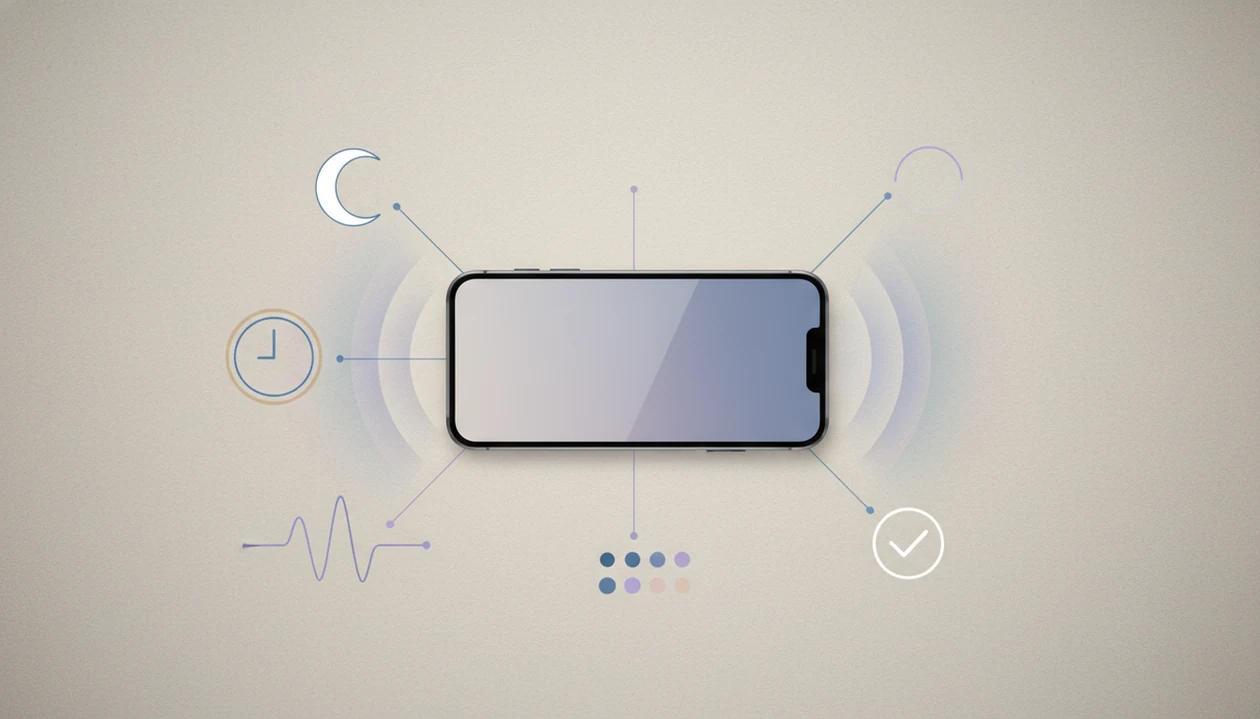
An AI meditation app uses information such as goals, mood, preferences, session history, and feedback to recommend guided practices or generate personalized sessions for sleep, anxiety support, focus, and everyday calm. A personalized meditation app builds and refines a practice plan around those inputs. Some systems adjust session length, style, or difficulty; others mainly help select the next recording from an existing library.
MindTastik includes personalized AI-generated meditation sessions alongside recorded guided practices. The practical appeal is less time spent choosing what to play. That convenience should be separated from treatment claims: a session matched to a stated goal does not guarantee better sleep or reduced anxiety, and evidence for meditation apps does not automatically establish the effectiveness of AI personalization.
What Makes a Personalized Meditation App Different from Generic Apps
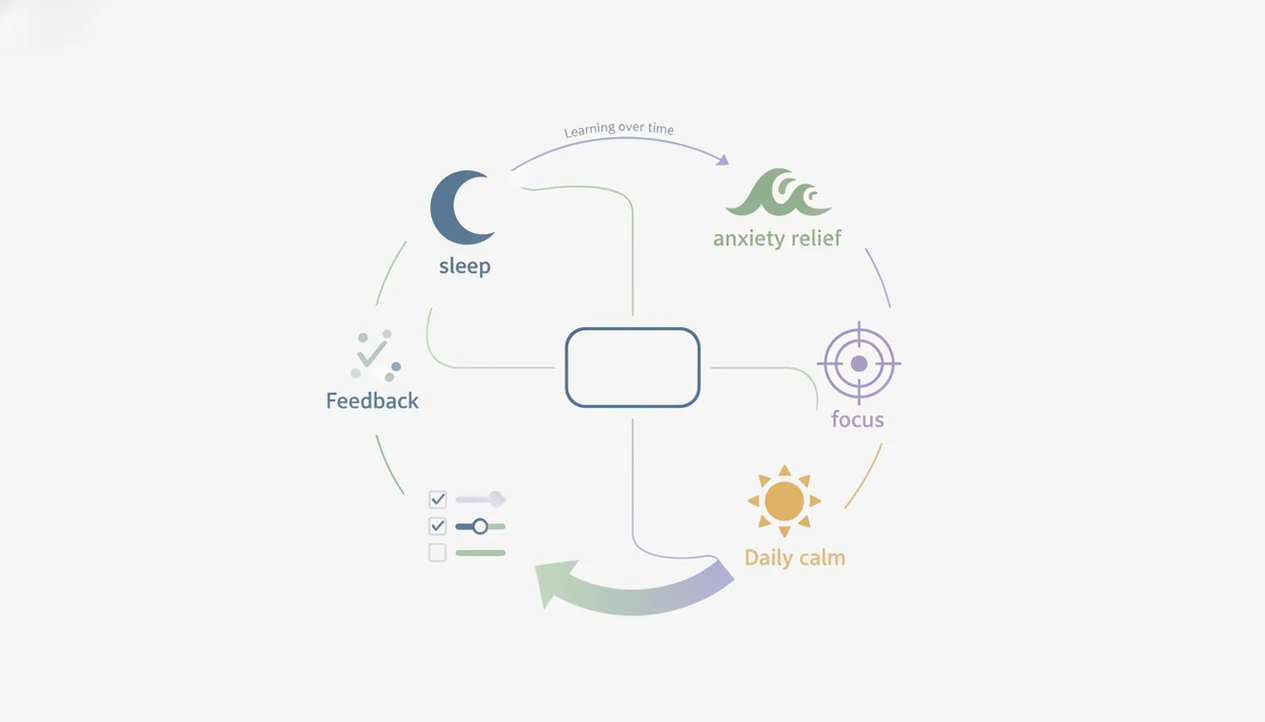
A generic meditation app is mainly a searchable library; a personalized meditation app is a guided decision system that recommends what to play next. The difference shows up when browsing feels like too much. You need a calm session ready to start when your mind feels crowded.
A library might offer “sleep,” “stress,” and “focus” categories. An adaptive app asks what you need, how long you have, how experienced you are, and what helped last time. Then it uses that information to suggest a 5-minute breathing exercise, a 20-minute body scan, or a sleep hypnosis session.
The feedback loop matters. Mood ratings, session ratings, sleep check-ins, and skipped sessions all tell the app whether a recommendation fit the moment. For beginners, personalization is often easier than browsing because the app narrows the first choice before motivation drops.
The real test is not content volume. It is whether goals, feedback, and practice history change what the app recommends next. A tool qualifies when guided meditation, hypnosis, courses, and quick resets are matched to sleep, anxiety, focus, and calm needs rather than parked in one static catalog.
Personalized Meditation App Comparison: MindTastik vs. Happier vs. Balance
The main personalized meditation apps differ less by topic and more by how they choose your next session. Compare your options by recommendation method, content type, and whether the app can support both short resets and longer routines.
| App | Personalization Method | Use Cases (sleep/anxiety/focus/calm) | Content Types | Hypnosis/Self-Hypnosis | Session Length Options | Free Tier |
|---|---|---|---|---|---|---|
| MindTastik | Goal intake, user preferences, practice history, and adaptive recommendations | Sleep, anxiety, focus, everyday calm, phobias, PTSD support routines | Guided meditation, sleep audio, breathing, music, courses | Yes, including sleep hypnosis and self-hypnosis style sessions | Short resets through longer guided programs | Limited free access with paid upgrades |
| Happier Meditation | Teacher-led guidance and topic-based learning paths | Anxiety, relationships, habits, everyday mindfulness | Lessons, guided meditations, talks | Limited compared with hypnosis-first apps | Mostly short to medium sessions | Limited free content |
| Balance | Structured onboarding and customized daily plans | Stress, sleep, focus, beginner practice | Guided meditations, plans, singles | Not a main focus | Flexible short and longer sessions | Often offers trial-based access |
Someone who wants structured teacher guidance may prefer Happier. A beginner who likes daily plans may like Balance. A user comparing hypnosis, bedtime audio, and anxiety support should also read the AI meditation app vs Calm vs Headspace comparison before choosing.
How a Personalized Meditation App Works Behind the Scenes
A personalized meditation app works by turning small user signals into better content matches over time. The technical layer is usually a recommendation engine, which means software that ranks sessions based on your goals, behavior, and feedback.
- Onboarding creates the first map. The app asks about sleep, anxiety, focus, experience level, preferred length, and sometimes voice or music preference.
- Feedback updates the map. Session ratings, mood check-ins, and sleep quality logs help the app learn what felt useful.
- Content matching narrows the choice. The app can surface a breathing exercise before a presentation or sleep audio when bedtime use is common.
- Curated content still matters. AI-driven suggestions work better when the underlying sessions are well labeled, human-reviewed, and organized by goal.
- Privacy needs plain language. Users should know what data is collected, why it is collected, and whether it can be deleted.
That last point is not small. A trial reminder on a phone screen is one thing; sharing mood and sleep patterns deserves more care. For a deeper plain-language explanation, read how AI meditation personalization works.
Check privacy before sharing mood and sleep details
Personalization can involve information that feels private, including mood check-ins, sleep reports, and descriptions of distress. Before entering those details, check whether the policy explains what is collected, why it is needed, where it is stored, and who receives it. The Centre for Addiction and Mental Health's app-selection guide recommends looking for clear answers to these questions, including how personal data can be deleted.
A useful privacy check also covers whether data can be downloaded or deleted and whether the requested information is necessary for the service. An unclear or outdated policy is a reason to pause, especially when an app asks for sensitive details. Separately, check who developed the app and what research supports it. A personalized interface is not evidence of clinical oversight, and a treatment claim needs more support than a convincing session recommendation.
How to Use a Personalized Meditation App for Best Results
Use a personalized meditation app like a small daily routine, not a one-time fix. The app learns faster when your inputs are honest and your practice is consistent.
- Set your primary goal. Choose sleep, anxiety, focus, or everyday calm before exploring extra categories.
- Complete the onboarding quiz honestly. Include your usual session length, experience level, and common triggers.
- Follow the recommended first session. Avoid skipping around during the first few sessions, even if curiosity pulls you into the library.
- Rate each session afterward. Log your mood, sleep quality, or focus level while the experience is still fresh.
- Review progress weekly. Notice whether the app is suggesting better lengths, voices, or session types.
- Explore new content types when prompted. Try hypnosis, breathing exercises, courses, or music after the app has a reason to suggest them.
Small friction is normal. One eye peeking at the timer does not mean you failed. If you keep rating sessions, the recommendations usually become more practical and less random.
Best Personalized Meditation App Use Cases: Sleep, Anxiety, Focus, and Calm
The strongest use cases for a personalized meditation app are sleep, anxiety support, focus, and everyday calm because each need changes by time, body state, and available attention. Good tools deliver guided routines and practical repetition, not a cure or a replacement for care.
Personalized Sleep Meditation Sessions
Sleep personalization should connect bedtime timing, preferred audio length, and sleep quality feedback. A 2020 insomnia trial found a 4-point greater improvement in Insomnia Severity Index scores for an app-based mindfulness program compared with control. That supports the idea that steady app use can help sleep habits, but it does not make every night easy.
At 2:13 a.m., the lock screen can feel rude.
Sleep sessions may include bedtime wind-down sequences, sleep hypnosis, body scans, and insomnia-specific programs. If bedtime is your main concern, our custom meditation for sleep guide goes deeper into timing and session structure.
Personalized Anxiety and Focus Sessions
Anxiety support often works best as a short reset before the spiral builds. That might mean box breathing, a 3-minute grounding track, or a guided session before a presentation.
Focus routines are different. They usually pair a short concentration exercise with a timed work block. Everyday calm sits between the two, with morning routines, gratitude practices, and mid-day resets. A 2021 trial reported anxiety and depression symptom reductions after 8 weeks of app use, which points to consistency more than novelty. For anxiety-specific planning, use custom meditation for anxiety as a starting point.
Clinical Evidence for Personalized Meditation App Benefits
Clinical evidence suggests meditation apps can help anxiety, depression, stress, and sleep, but the effects are usually moderate and tied to regular use. Clinicians typically recommend app-based meditation as a supportive practice, not as a substitute for therapy, medication, or urgent mental health care.
- A 2021 randomized controlled trial found measurable symptom changes. Participants using a meditation app for 8 weeks showed a 31% reduction in anxiety symptoms and a 46% reduction in depressive symptoms compared with controls JAMA Internal Medicine study: 2784896.
- A 2018 systematic review found small to moderate effects. Across 15 randomized trials, smartphone mindfulness apps improved stress, depression, and anxiety with Hedges g values around 0.3 to 0.5. PubMed research: 30143404.
- A 2019 meta-analysis found smaller but significant effects. Mobile mindfulness interventions reduced depression symptoms at g=0.26 and anxiety at g=0.24. PubMed research: 31045420.
- A 2020 insomnia trial found sleep improvement. App-based mindfulness produced a 4-point greater Insomnia Severity Index reduction than control.
- The NCCIH notes possible benefits for anxiety, depression, and sleep. Its overview says mindfulness meditation may help these areas based on systematic reviews NCCIH mindfulness overview: mindfulness meditation what you need to know.
The most common medically supported way to use meditation apps is as an adjunct habit combined with consistent sleep, stress, or mental health support.
App benefits are not proof that AI personalization works better
Research on established meditation apps helps explain their possible benefits, but it does not isolate the value of AI personalization. A Calm trial involving 1,029 adults reported improvements in depression, anxiety, and insomnia symptoms compared with a wait-list control, according to a review summarizing meditation-app trials. That comparison cannot show whether adaptive recommendations or generated sessions work better than a fixed library.
Evidence specifically concerning AI personalization is earlier-stage. The 2026 MindfulAgents preprint describes a formative study with 13 participants and a four-week deployment with 62 participants, reporting improvements in engagement and mindfulness-related measures. It was not identified as a peer-reviewed clinical trial and did not directly compare the system with Calm or Headspace. These findings support further study, not a claim of clinical superiority or evidence about MindTastik itself.
Who a Personalized Meditation App Is Best For - and Not For
A personalized meditation app is best for adults who want guided structure for mild-to-moderate sleep problems, situational anxiety, focus struggles, or a everyday calm routine. It is also useful for beginners who open an app and freeze at the first menu.
Best for
- ✓ Adults who want help choosing a starting point without reading every session title.
- ✓ Beginners who need step-by-step guidance and short practice lengths.
- ✓ People building a wind-down routine, workday reset, or focus ritual.
- ✓ Users who will rate sessions and practice several days per week.
Not ideal for
- ✕ Severe depression, bipolar disorder, active PTSD symptoms, psychosis, or crisis situations without professional care.
- ✕ Anyone expecting an app to work without regular use.
- ✕ People who feel worse during meditation and do not have support.
There is a gray area. A personalized app can complement professional treatment when a clinician agrees it fits the plan. It should not carry the whole plan alone.
When to Seek Professional Help Instead
Seek professional help right away if symptoms feel unsafe, severe, or beyond what a self-guided app can hold. Meditation can support mental health, but it is not emergency care, diagnosis, therapy, or medication management.
Crisis signs include thoughts of suicide or self-harm, fear that you might hurt someone else, hallucinations, delusions, mania, inability to sleep for days, severe panic that feels unmanageable, or trauma flashbacks that leave you disoriented. In those moments, contact emergency services, a crisis line, or a trusted clinician rather than trying another session.
Meditation can also backfire for some people. Sitting quietly may intensify panic sensations, pull attention toward traumatic memories, or feed rumination when the mind keeps rehearsing the same fear. If practice regularly leaves you more agitated, numb, unsafe, or unable to function, pause and get guidance.
- Stop the session if distress is escalating instead of settling.
- Ground yourself with light, movement, water, or a familiar person.
- Contact a therapist, doctor, psychiatrist, or crisis service for severe or persistent symptoms.
- Use apps only as a complement when your clinician agrees they fit your care plan.
Common Misconceptions About Personalized Meditation Apps
Personalized meditation apps are helpful tools, but they are easy to overestimate. The biggest misunderstanding is that personalization turns meditation into a guaranteed mental health outcome.
One myth says an app can cure anxiety or depression alone. Research supports symptom reduction for some users, not a cure. Another myth says more AI means better outcomes. In practice, motivation, session quality, evidence-based content, and honest feedback matter more than a fancy recommendation label. For a critical look at AI-driven persuasion, consider how AI brainwash for better decisions differs from meditation support.
A third myth is that every personalized session should feel relaxing right away. Early meditation can feel awkward. You may notice muscle tension, boredom, or thoughts that seem louder than before. Screen paused after a restless start. That happens.
The fourth myth is that all meditation apps for sleep and anxiety work the same way. They do not. Some are libraries. Some use onboarding quizzes. Some include hypnosis or long-form courses. If that distinction matters, the personalized meditation vs guided library apps breakdown is worth reading before you subscribe.
MindTastik for guided practice with a clear goal
MindTastik combines personalized AI-generated sessions with guided meditations, sleep stories, self-hypnosis audio, and soundscapes. Its breathing exercises offer another starting point when a short, structured practice fits better than a longer meditation. Adults seeking sleep support or a focus routine can choose between personalized guidance and recorded content.
People who prefer silence and complete control over their practice may find a simple timer more suitable. Those seeking treatment for persistent insomnia, severe anxiety, or trauma symptoms need clinical assessment rather than an app recommendation.
What AI personalization cannot establish or treat
Personalized meditation apps have real limits, especially when claims move faster than evidence. The safest approach is to treat them as supportive practice tools and keep clinical care separate when symptoms are serious.
- Many specific apps and AI personalization systems do not have independent randomized clinical trials.
- App recommendations are only as good as the user’s self-reporting, content labels, and engagement history.
- Mood and sleep check-ins can be noisy. A bad meeting or late meal can distort the signal.
- Data collection raises privacy concerns, so users should review policies before entering sensitive information.
- Results are usually moderate, not dramatic, and often require sustained daily practice.
- Apps are not adequate stand-alone care for severe depression, bipolar disorder, active PTSD, psychosis, or suicidal thoughts.
- No app can replace a human therapist’s judgment in complex, high-risk, or crisis situations.
Personalization usually works best when the user practices consistently, while a static library fits people who already know exactly what they want.
AI meditation app questions
What is the difference between an AI meditation app and a regular meditation app?
A regular meditation app typically offers recorded sessions organized by topic. An AI meditation app may rank those recordings using goals and feedback, generate personalized guidance, or do both. The useful distinction is what actually changes: the recommended recording, the session content, or the practice plan.
Are AI meditation apps more effective than Headspace or Calm?
The sources reviewed here do not establish that AI meditation apps outperform Headspace or Calm. Trials support possible benefits from some fixed-library apps, while research on AI personalization remains preliminary. A more relevant recommendation may make practice easier to start, but that is not the same as proven clinical benefit.
Does a personalized meditation app create a new session every time?
Not necessarily. Personalization can mean selecting an existing recording, adjusting a plan, or generating session content. These are different functions, even when they share the same label. Check the app's description for what it changes and whether recorded practices remain available alongside generated guidance.
Can an AI meditation app help with insomnia?
Meditation apps may support a bedtime routine and improve insomnia symptoms for some people. Research on an established app does not prove that AI-generated sleep sessions offer the same benefit. Persistent insomnia or signs of a major sleep disorder need assessment; an app is supportive practice, not a diagnosis or treatment.
What information does a meditation app use to personalize sessions?
Depending on the app, inputs may include goals, preferred session length, experience level, mood ratings, sleep reports, session ratings, and usage history. Not every app collects all of these. The privacy policy should explain collection, storage, sharing, and deletion before sensitive information is entered.
How much should I practice with a personalized meditation app?
Choose a session length that can be repeated rather than treating a longer session as automatically better. A five-minute practice is one possible starting point when attention or time is limited. Regular use matters, but the available research does not establish one ideal schedule for every AI-personalized meditation system.
What should I do if a meditation session makes anxiety worse?
Stop the session rather than treating increased distress as something to push through. Quiet attention can intensify discomfort for some people, and generated guidance is not clinical assessment. Severe panic, disorienting trauma reactions, or persistent worsening symptoms call for professional help. Immediate safety concerns require urgent support, not another app session.