
About MindTastik: Meditation App for Sleep, Anxiety Support, and Everyday Calm
Quick answer: MindTastik is a meditation app for adults who want practical support for sleep, anxiety, stress, and everyday calm through guided audio. Its content is supportive wellness education, not medical care, therapy, diagnosis, medication management, or crisis support. Browse more self-hypnosis for habit change.
> MindTastik offers guided meditation, sleep audio, breathing practices, and self-hypnosis sessions for adults looking for gentle support with rest, anxiety, and everyday calm.
- MindTastik focuses on app-based meditation, sleep audio, breathing, affirmations, and self-hypnosis for everyday stress and rest routines.
- The app is built for beginners, busy adults, and people comparing meditation apps for sleep, anxiety support, and everyday calm.
- MindTastik content is supportive and educational, not a replacement for therapy, medical treatment, medication, or crisis support.
About MindTastik at a glance
MindTastik is a meditation and sleep app, not a general medical platform. It gives adults guided audio tools for everyday calm, bedtime wind-downs, stress moments, and beginner meditation practice.
The core library includes guided meditation, sleep audio, breathing exercises, affirmations, and self-hypnosis. It is built for beginners, stressed adults, poor sleepers, anxious app shoppers, and people trying to keep a calm routine on a phone.
The real use case is simple: open the app, choose a goal, and play something structured instead of guessing what to do. Good meditation apps for sleep, anxiety, and everyday calm deliver repeatable support routines, not diagnosis, guaranteed symptom relief, or emergency care.
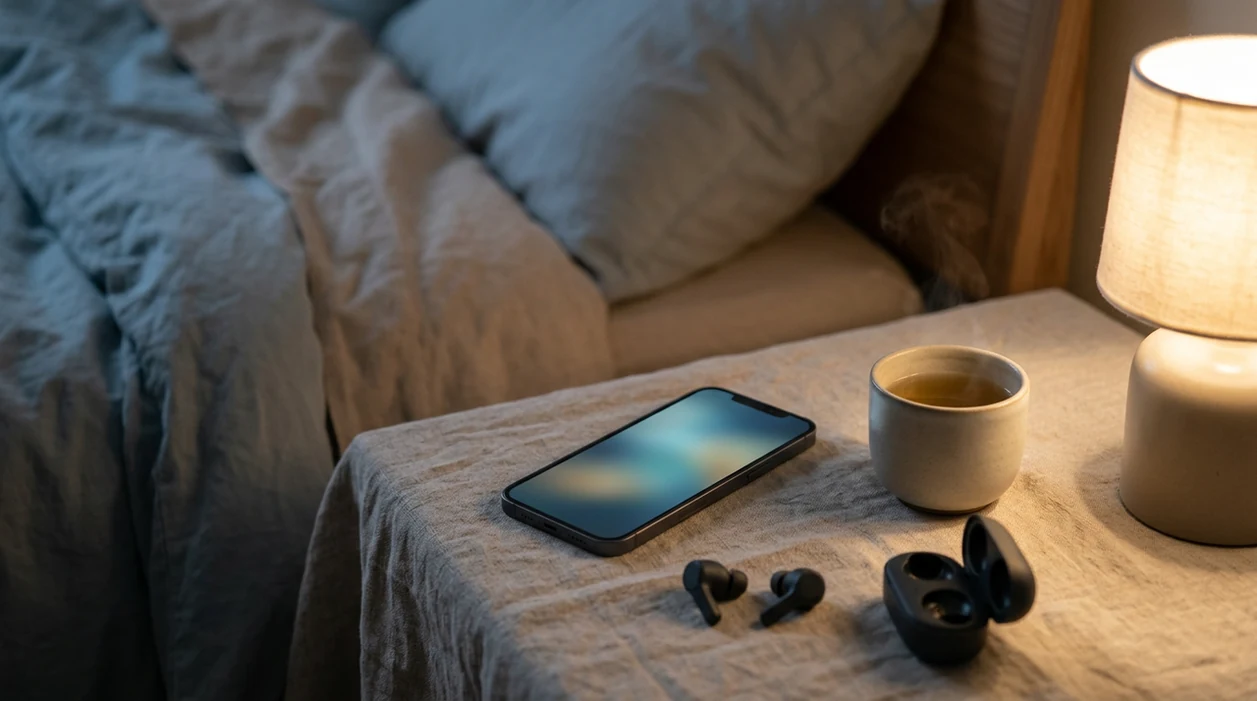
A dimmed screen helps at night.
Five MindTastik facts for app shoppers
- Fact 1: The app is centered on sleep, anxiety support, and everyday calm for everyday users.
- Fact 2: Current app materials describe a library with more than 1,000 guided meditations and related audio tools.
- Fact 3: Sessions are organized by goals such as sleep, stress, focus, confidence, relaxation, and self-improvement.
- Fact 4: The experience is designed for beginners, with plain language, short sessions, and step-by-step guidance.
- Fact 5: The content supports wellness routines but does not diagnose, treat, cure, or replace professional care.
For someone comparing Calm, Headspace, Mindful.org resources, and other app options, the useful question is not just “Which app has more audio?” It is “Can I quickly choose something calming when my mind will not settle?” That matters in a quiet room after midnight, with guided audio open and sleep still out of reach.
How the MindTastik meditation app works
MindTastik uses structured audio sessions to reduce friction for beginners who do not know how to meditate on their own. The app turns a vague goal, like “calm down,” into a guided session with a beginning, middle, and end.
The basic behavioral loop is: choose a goal, play a guided session, practice one repeatable technique, and return to the same cue over time. In plain language, that means the app helps you build a habit loop. The cue might be bedtime, a lunch break, or palms pressed against a desk edge before a difficult call.
Meditation may provide small to moderate benefits for anxiety, depression, pain, and sleep quality, but results vary. A JAMA Internal Medicine meta-analysis found small to moderate improvements in anxiety, depression, and pain from mindfulness meditation programs compared with active controls JAMA Internal Medicine study: 1809754. For beginners, a guided meditation app is often easier than silent practice because the next step is spoken aloud.
How to use MindTastik for a everyday calm routine
Start with one narrow goal. Sleep, breathing, anxiety support, and focus are easier to repeat than a broad promise like “feel better all day.”
- Set one goal for the week, such as falling asleep, taking a short reset, or practicing focus.
- Choose a short beginner session, especially if you are new or restless.
- Play the same type of guided audio at the same time of day when possible.
- Repeat the routine for several days before judging it.
- Review what felt manageable, including voice style, length, and topic.
- Adjust the plan if symptoms are severe, persistent, or unsafe, and seek qualified professional help.
Consistency matters more than intensity. Five minutes you actually use beats a 30-minute session you keep skipping.
MindTastik content library for sleep, anxiety support, and self-hypnosis
MindTastik organizes its library around common goals, so users can find a session quickly instead of scrolling through a long, vague list. The main paths are meditation, sleep, breathing, affirmations, and self-hypnosis.
Guided meditation sessions
Guided sessions support beginners and daily practice by giving spoken prompts, pacing, and a clear endpoint. If you are new, a simple how to meditate guide can help you understand posture, attention, and what to do when the mind wanders.
Sleep audio and bedtime tools
Sleep audio, calming sounds, sleep stories, and bedtime sessions are meant for wind-down routines. A dim light, a quiet room, and a short track waiting on the phone can make the setup feel simple.
Breathing, affirmations, and self-hypnosis
Breathing exercises support short resets during stress. Affirmations and self hypnosis sessions are relaxation and focus tools, not clinical treatment or mind control.
MindTastik user fit for beginners, sleepers, and stressed adults
“Is MindTastik right for me?” It fits adults who want simple guided meditation without a complex spiritual framework, live coaching, or clinical intake.
The strongest fit is a beginner who wants someone to tell them what to do next. It also fits busy adults who want short phone-based calming tools between meetings, errands, or bedtime. Someone choosing between a 5-minute breathing exercise and a 20-minute body scan should be able to choose a starting point without feeling judged.
It may also help people comparing a best meditation app for sleep anxiety guide, sleep app guides, or anxiety app guides. The fit is weaker for people who need diagnosis, therapy, medication management, trauma treatment, or live licensed support.
MindTastik policy and meditation content standards
MindTastik policy and meditation content standards should be clear, cautious, and easy to understand. Meditation content should avoid exaggerated medical claims and should not imply that an app can replace care from qualified clinicians.
Responsible wellness guidance uses plain language, safety-aware framing, and realistic claims. Clinicians typically recommend professional evaluation when sleep loss, anxiety, depression, trauma symptoms, or safety concerns are severe, persistent, or worsening. An app can support a routine, but it cannot assess risk in real time.
Self-hypnosis boundaries matter. These tracks are for relaxation and focus support, not clinical hypnotherapy, unconscious control, or emergency mental health care.
A responsible about MindTastik policy page should connect users to editorial standards, app download pages, app comparison guides, brand facts, press or media details, and relevant safety pages. Users in crisis or immediate danger should contact emergency services or crisis support instead of relying on any app.
How MindTastik Reviews Meditation Content
MindTastik reviews meditation and sleep content through an editorial process focused on clarity, safety, and realistic wellness claims. Writers draft sessions for everyday use, then editors check tone, scope, and fit before updates are made.
The review process is practical rather than clinical. It uses meditation education, sleep-health guidance, anxiety-support resources, behavioral science summaries, and established public-health language as reference points, while avoiding promises to diagnose, treat, cure, or prevent conditions.
- Draft content with plain instructions, calming pacing, and a clear wellness purpose.
- Screen scripts for medical claims, crisis wording, unsafe reassurance, and contraindications such as severe distress, trauma reactions, or persistent insomnia.
- Check sleep, meditation, breathing, anxiety-support, affirmation, and self-hypnosis language against current source types and internal safety standards.
- Review user feedback, support messages, and reported safety concerns for patterns that may require edits, warnings, removal, or escalation.
- Update sessions when language becomes unclear, overstated, outdated, or potentially unsafe.
This review helps keep the app responsible, but it does not make MindTastik clinical care, a therapist, a prescriber, or an emergency service.
Meditation app evidence behind MindTastik’s scope
Meditation apps focus on sleep, stress, and anxiety support because those are common daily problems, but the evidence supports modest claims. The National Academies estimated that 50 to 70 million U.S. adults have chronic sleep disorders or sleep problems NIH research: NBK19961.
Per the CDC, 35.2% of U.S. adults in a 2013 to 2014 survey reported sleeping less than 7 hours per night on average CDC guidance: mm6506a1.htm. Adult meditation use also rose from 8.0% in 2012 to 14.2% in 2017, according to National Health Interview Survey reporting CDC guidance: db325.htm.
NCCIH reports that mindfulness-based interventions may improve sleep quality for people with sleep disturbance, though effects are generally modest and more high-quality trials are needed. The most common medically supported way to address persistent insomnia is clinical evaluation combined with sleep-hygiene and behavioral strategies, not an audio app alone.
That is the scope. Supportive, not curative.
Limitations
MindTastik has important limits, especially for health-related use. These boundaries are part of responsible meditation content standards.
- MindTastik is not a medical device, therapy platform, crisis service, or substitute for qualified care.
- The app does not diagnose, treat, cure, or prevent anxiety disorders, depression, insomnia, PTSD, or other medical conditions.
- Benefits can vary and may be modest, especially without consistent practice.
- People with severe insomnia, major depression, trauma symptoms, suicidal thoughts, or other serious concerns should seek professional help.
- Self-hypnosis tracks are relaxation tools, not clinical hypnotherapy.
- Voice style, session length, language, or content themes may not fit every user.
- MindTastik does not provide personalized clinical assessment, medication management, or live licensed mental health support.
If a session makes you feel more distressed, stop using it and choose another form of support. Sometimes the right next step is not another track.
FAQ
What does the app do?
It provides guided meditation, sleep audio, breathing exercises, self-hypnosis, and everyday calm support. It is wellness content, not medical treatment.
Is MindTastik for beginners?
Yes, MindTastik is designed for beginners using simple guidance, short options, and goal-based audio sessions. It does not require prior meditation experience.
Does MindTastik help with sleep?
MindTastik offers sleep-support audio and bedtime routines that may help users wind down. It does not guarantee sleep or treat insomnia.
Can MindTastik help with anxiety?
MindTastik can support relaxation and anxiety-management routines through guided audio and breathing exercises. It does not treat anxiety disorders.
Is MindTastik self-hypnosis safe?
MindTastik self-hypnosis is intended for relaxation and focus. It is not clinical hypnotherapy, emergency mental health care, or mind control.
Is MindTastik a medical treatment?
No, MindTastik is not medical treatment, therapy, diagnosis, medication management, or crisis support. Users with serious symptoms should contact qualified professionals.