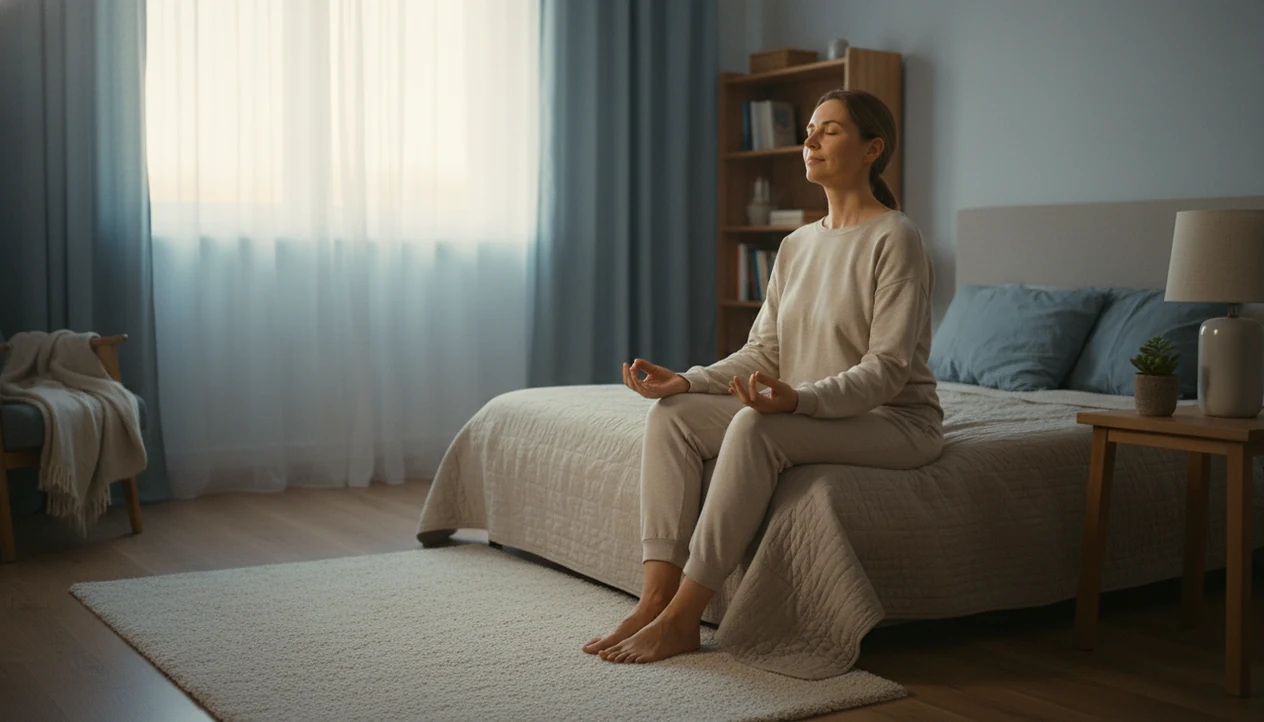
To meditate step by step, get comfortable, choose a focus such as the breath, notice when attention wanders, and gently return to that focus. Meditation trains attention rather than stopping thoughts entirely. A body sensation or guided voice can also serve as the focus. The basic practice is the same: notice distraction and return, without treating a busy mind as a failed session.
A first session can last three to five minutes, seated in a chair or lying down if sleep is the goal. No special equipment or cross-legged pose is required. This guide covers the setup, the steps, and a first-week plan, with practical adjustments for distraction and clear limits on what meditation can do.
Meditation Basics: What It Is and What It Is Not
Meditation means training attention, not forcing your mind to go blank. A beginner session can be as simple as noticing one breath, getting distracted, and returning to the next breath without scolding yourself.
Thoughts will show up. Tomorrow's meeting may loop at midnight, or your mind may replay a text you forgot to answer. That is not failure; that is the exact moment meditation gives you something to practice.
Meditation also is not only for monks, spiritual teachers, or people who can sit cross-legged for an hour. You can do it in a chair, on a couch, or in bed before sleep.
According to the 2012 National Health Interview Survey summarized by NCCIH, 8.0% of U.S. adults reported using meditation; NCCIH also notes that people commonly use meditation for stress, anxiety, depression, and sleep-related concerns (NCCIH).
Beginner Meditation Benefits for Stress, Sleep, and Anxiety
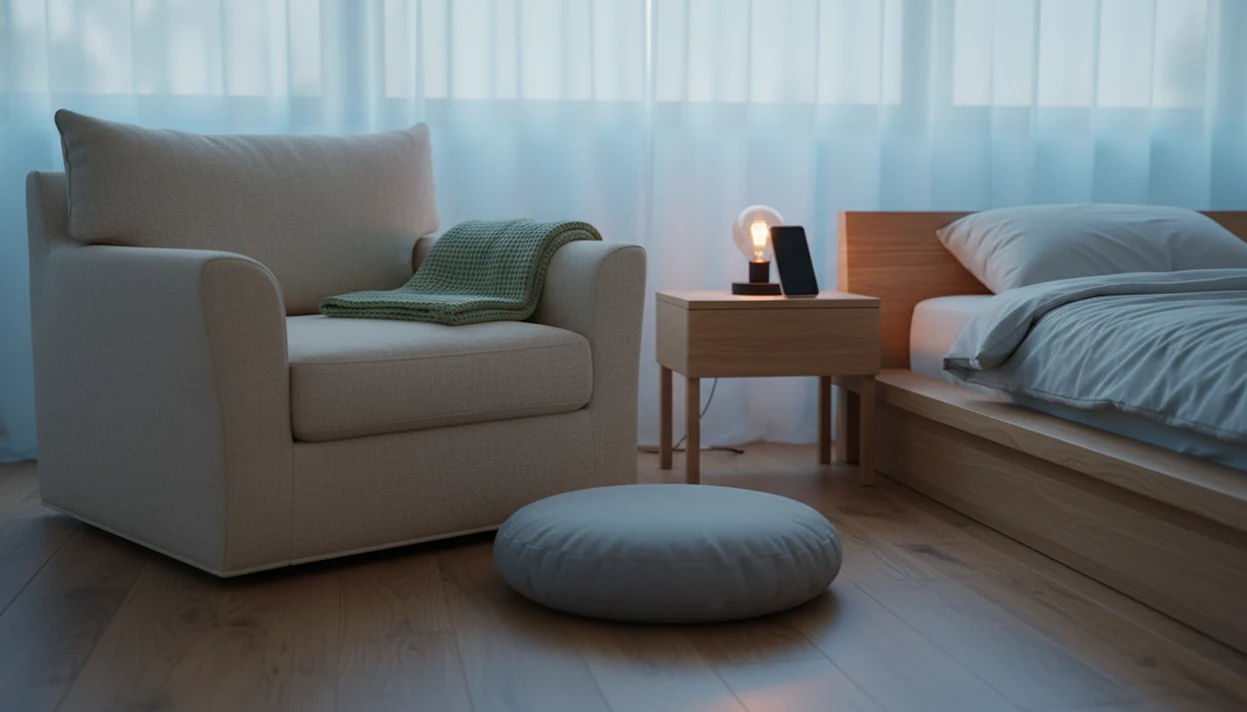
Beginners usually start meditation because they want a steadier way to handle stress, sleep, anxiety, or everyday calm. The evidence is most honest when framed as support, not a cure.
- Stress support: Meditation can help you practice pausing before reacting, which is useful during a tense workday or after a hard conversation.
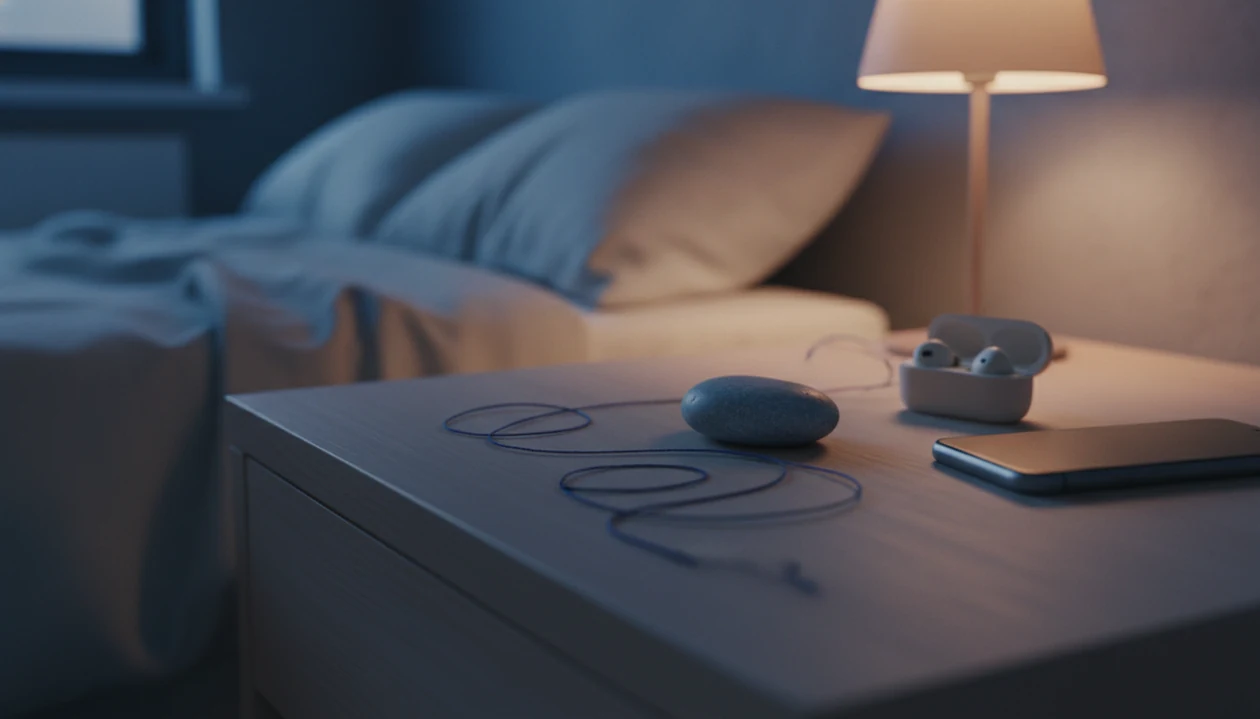
- Sleep support: Bedtime meditation may make a wind-down routine easier, especially when the phone screen is dimmed and the room is quiet.
- Anxiety support: Many people use meditation when their thoughts get loud, but it is not a substitute for professional care when symptoms are severe.
- Common use: In a 2012 national survey, 8.0% of U.S. adults reported ever using meditation.
- Evidence varies: NCCIH says meditation research differs by condition and practice type, and a 2014 JAMA Internal Medicine review found moderate evidence for anxiety, depression, and pain support, not universal cures (NCCIH, JAMA Internal Medicine).
Short sessions are a realistic starting point. For beginners, 3 to 5 minutes of breath focus is often easier than a long silent session because the goal is repeatability.
What research says about anxiety and sleep
Research on meditation programs is not the same as research on a single three-minute session. A 2014 systematic review of meditation programs found moderate evidence for improvements in anxiety and depression, including results measured at eight weeks. Evidence for general stress or distress was weaker. The review found no evidence that meditation was superior to active treatments such as exercise, medication, or other behavioral therapies.
Sleep findings also depend on the comparison group. A 2022 review of 20 randomized trials found that mindfulness-based stress reduction may improve reported sleep quality compared with waiting for treatment, but results varied substantially across studies. It did not improve sleep-related daytime impairments compared with active controls. These findings support modest expectations: meditation may help, but a bedtime session is not a proven replacement for insomnia care.
Who Beginner Meditation Is For
Beginner meditation is best for people who want a short, low-pressure daily practice that can fit into real life. It is especially useful when you need help winding down for sleep, moving between work and home, or steadying mild everyday stress.
It can also be a good match if silent sitting feels too open-ended. A guided voice gives your attention something to follow, which can make the first few sessions feel less like guessing in the dark.
- Choose beginner meditation if you want a repeatable practice of a few minutes, not a major lifestyle overhaul.
- Use it around natural transitions, such as before bed, after closing your laptop, or before a difficult conversation.
- Try guided audio if breath-only practice feels vague, boring, or easy to abandon.
- Pause and use caution if meditation brings up trauma memories, panic, severe insomnia, or worsening distress.
- Seek qualified professional care when anxiety, sleep problems, low mood, or stress begin disrupting work, relationships, or basic rest.
Meditation can support care and daily coping, but it should not be treated as the only tool when symptoms are intense.
Meditation Science: The Attention-Training Loop
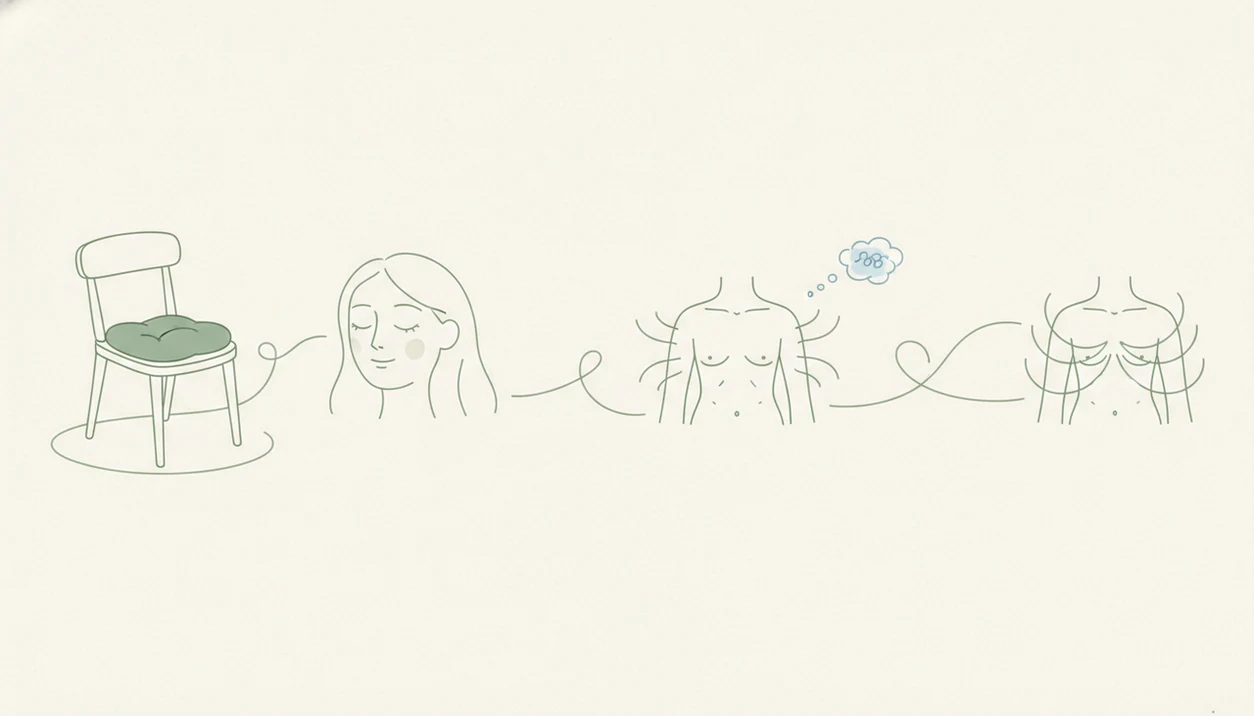
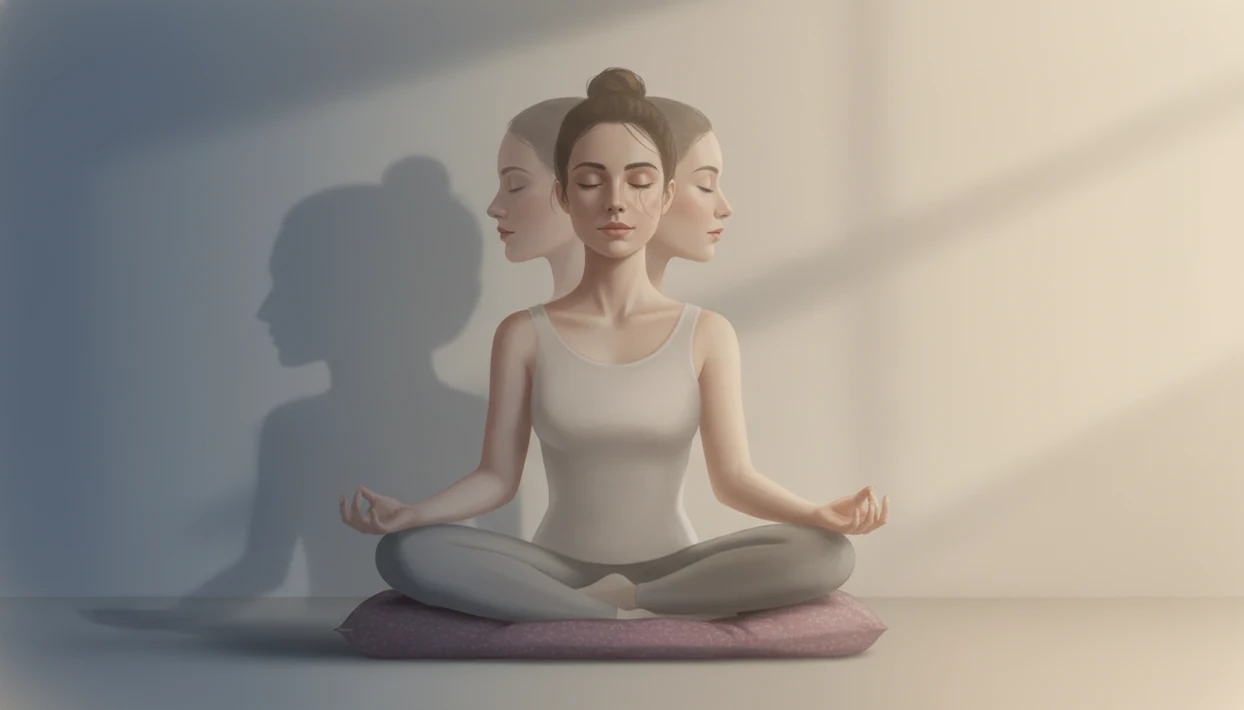
Meditation works through a simple attention-training loop: focus, notice distraction, return focus. That loop is the core skill, not the removal of thoughts.
The breath is the simplest anchor because it is always available. You don't need music, candles, or a certain room. You can feel the inhale, the exhale, or the small pause between them. If breath focus feels too plain, a guided voice, body scan, or visualization can give your attention something clearer to follow.
Tiny reps add up.
Each return to the breath is like practicing a mental reset. Over time, that repetition can make calm attention feel more familiar. Some days will still feel messy. No single meditation method works for everyone, so the useful question is not “Am I doing this right?” It is “Can I choose a starting point and return to it kindly?”
If you want the broader distinction, mindfulness vs meditation vs relaxation explains how these practices overlap.
Meditation Setup: Position, Timer, and Quiet Space
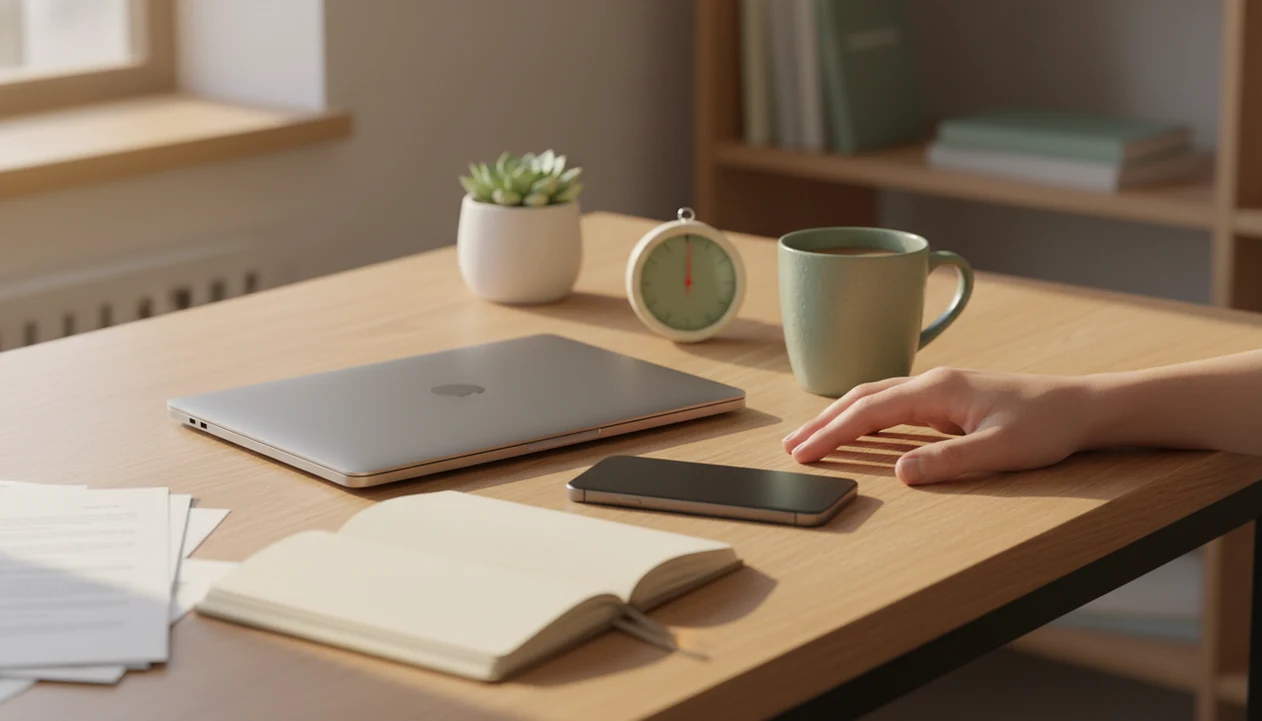
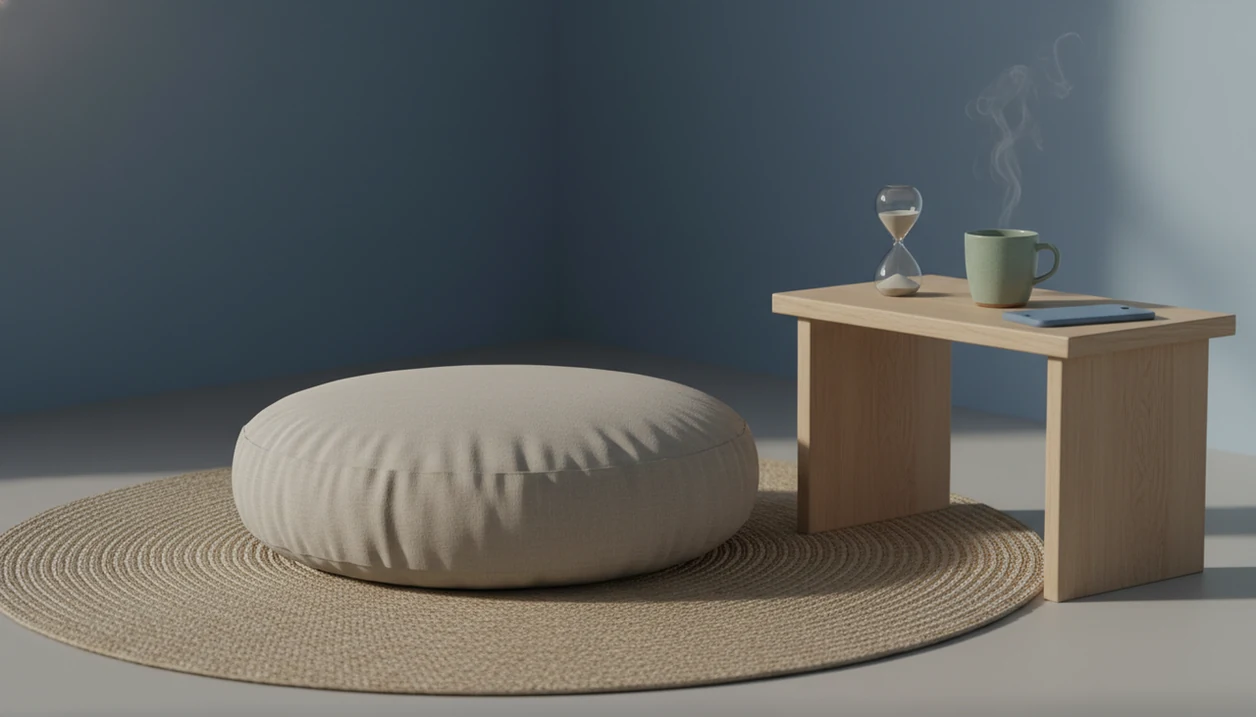
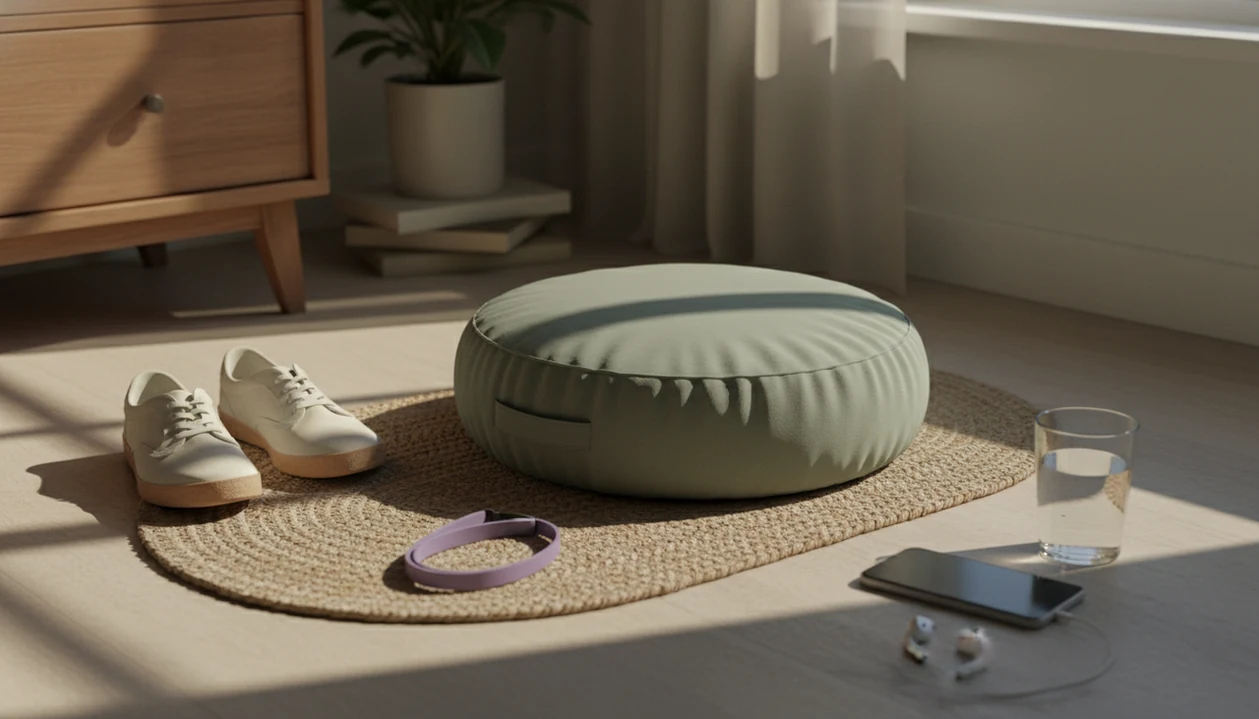
A beginner meditation setup should remove friction: choose a comfortable position, set a short timer, and pick a space that is quiet enough to begin. Special gear is optional.
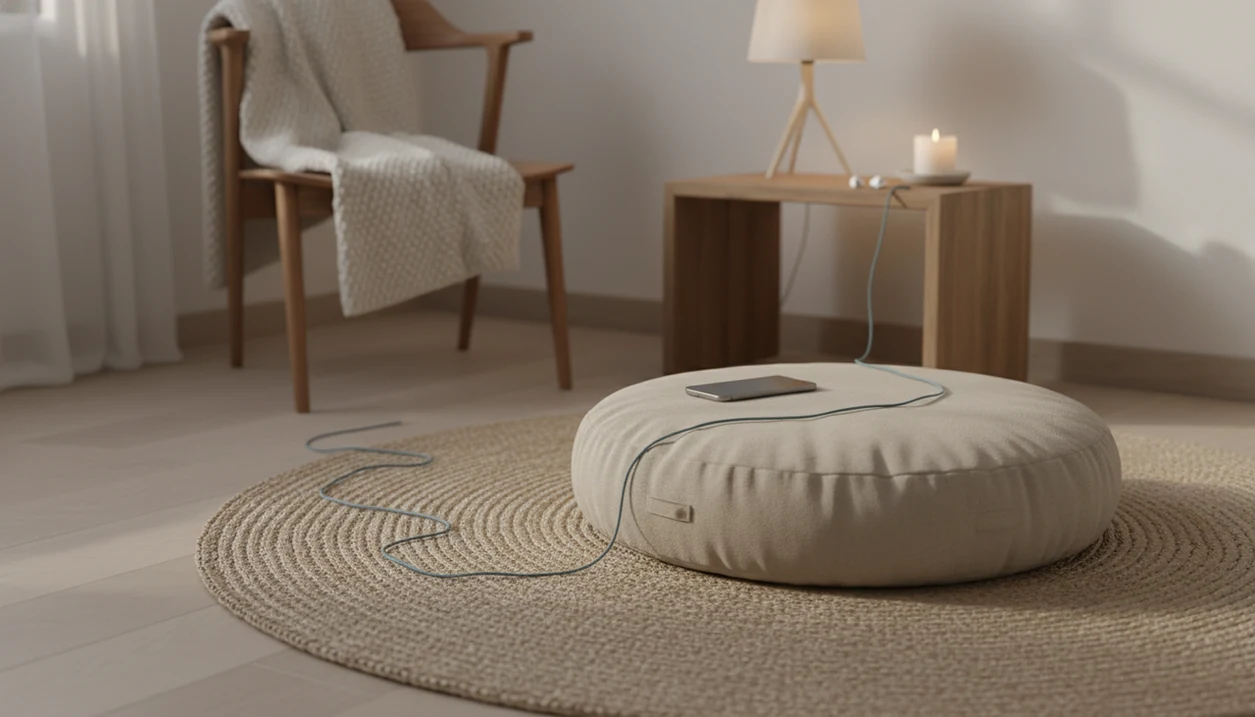
You can sit in a chair, lie down, or use a cushion beneath a stiff back. Comfort matters because pain quickly becomes the loudest object of attention. For daytime meditation, sitting upright often helps you stay alert. For sleep meditation, lying in bed is normal because the intention is to drift toward rest.
Quiet helps, but perfection is not required. A hallway sound, a pet moving around, or a car outside can simply become something you notice and release.
Set a timer for 3 to 5 minutes, not 30. A guided session can also define the length for you, which reduces the awkward first question: “How long has it been?” Apps such as MindTastik, Calm, and Headspace can be useful here when silence feels too open-ended.
How to Meditate Step by Step for Beginners
Here is the simplest beginner meditation guide: get comfortable, notice your breath, return when distracted, and end slowly. These meditation steps are enough for a first session.
- Find a comfortable position. Sit in a chair, rest on a cushion, or lie down if sleep is your goal.
- Close your eyes or soften your gaze. Let your face relax without forcing stillness.
- Notice your natural breathing. Do not change it yet; just feel it moving.
- Follow each inhale and exhale. Use the breath as your attention anchor.
- Return when your mind wanders. Notice the distraction, then come back gently.
- End slowly. Open your eyes and notice how your body feels.
Guided sessions, including MindTastik sessions, walk you through each step with a voice. That can help when you don't want to keep checking whether you are “doing it right.”
7-Day Beginner Meditation Plan
A first-week plan keeps meditation simple enough to repeat. Consistency matters more than session length, especially while you are learning how to start meditating.
Day 1 to 2: Do a 3-minute breath-focus session while sitting. Keep both feet on the floor and use your natural breath as the anchor.
Day 3 to 4: Try a 5-minute guided body scan or breathing exercise. Notice whether body sensations or breath cues feel easier to follow.
Day 5 to 6: Use a 5-minute guided voice session in an app-based format, such as MindTastik. Pick one session before you sit down so you don't scroll through options for ten minutes.
Day 7: Try 7 to 10 minutes using whichever method felt easiest. If 10 minutes feels too long, stop at 5.
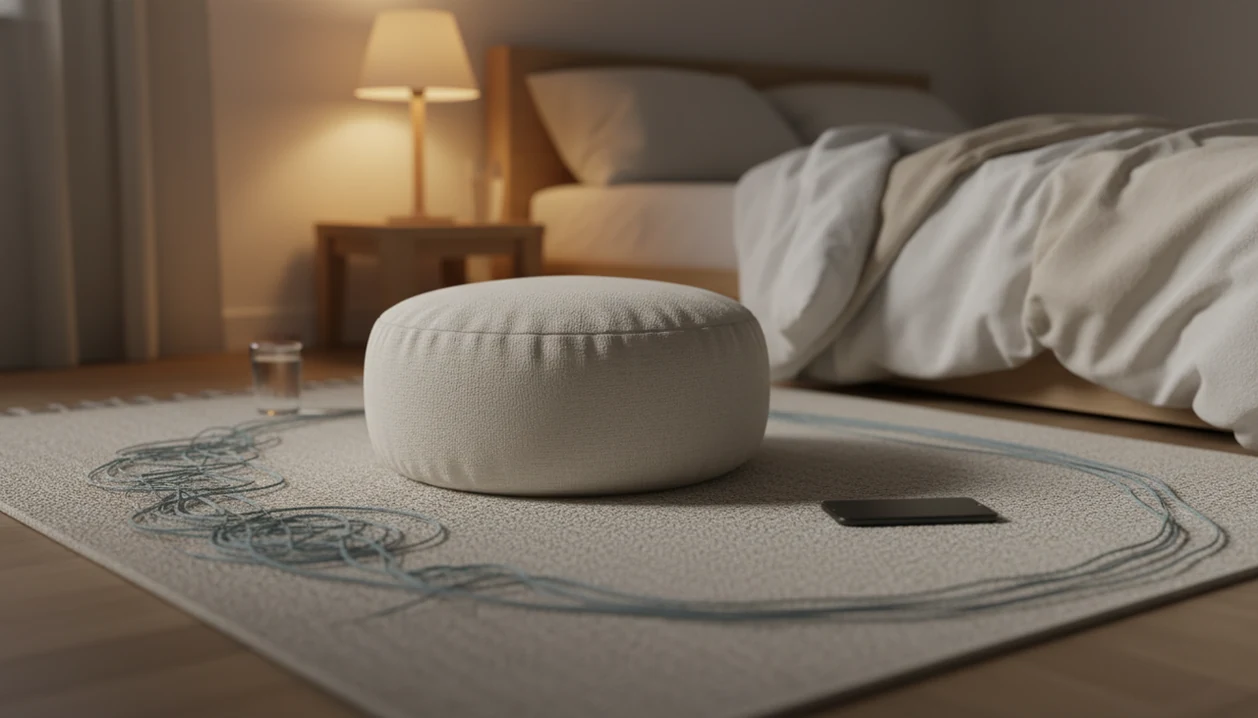
One evening, you might sit in a quiet room with a phone nearby for guided audio, letting the next breath set the pace. For a wider routine, a first week mindfulness plan can help you connect meditation with simple daily cues.
Mind Wandering During Meditation: What to Do
Does mind wandering mean meditation is not working? No. Mind wandering is not failure; noticing it is the practice.
The moment you realize your attention drifted, you have already done the important part. Label the distraction gently, using a word like “thinking,” “planning,” or “remembering.” Then return to the breath without arguing with the thought.
No courtroom needed.
Try not to judge yourself for having an active mind. A beginner may notice distraction every few seconds, especially during stress. That still counts. Guided sessions can help because the voice pulls you back automatically when your mind has wandered into errands, emails, or tomorrow's schedule.
This skill improves across days and weeks. For people with racing thoughts, mindfulness for racing thoughts may feel more realistic than silent stillness at first.
Sleep Meditation vs. Daytime Meditation for Beginners
Sleep meditation and daytime meditation use the same attention-training skill, but the setup and goal are different. Sleep practice aims for rest; daytime practice aims for alert calm.
| Type | Position | Main goal | Guidance style | Beginner note |
|---|---|---|---|---|
| Sleep meditation | Lying down in bed | Drift toward sleep | Softer voice, slower pacing | Good when thoughts get loud at night |
| Daytime meditation | Sitting upright | Calm attention | Neutral voice, clearer prompts | Good before work, study, or transitions |
| Breath practice | Sitting or lying down | Steady focus | Minimal cues | Easy starting point anywhere |
| Body scan | Usually lying down | Relax body awareness | Step-by-step body prompts | Helpful when breath focus feels tight |
Meditation does not guarantee falling asleep, especially when anxiety, pain, or noise keeps your body alert. The small decision of dimming the phone screen before bedtime audio can help signal the shift toward rest.
Good meditation app for sleep anxiety and everyday calm deliver guided routines, breathing support, and repeatable cues, not medical treatment or guaranteed symptom relief.
Beginner Meditation Mistakes and Fixes
Most beginner meditation problems are fixable with smaller sessions and kinder expectations. The goal is to make practice easier to return to.
- The Empty-Mind Trap: Trying to stop thoughts completely creates frustration. Fix it by treating each return to the breath as the main repetition.
- The Too-Long Start: Beginning with 20 minutes can feel like a test. Fix it by using 3 to 5 minutes for the first week.
- The Instant-Result Expectation: One calm session does not prove meditation will always feel easy. Fix it by tracking consistency, not mood.
- The Harsh Inner Coach: Judging every distraction makes practice tense. Fix it with one neutral label, such as “thinking.”
- The Restart Problem: Skipping days can make people feel behind. Fix it by restarting with the shortest session available.
- The Uncomfortable Posture: Pain steals attention. Fix it by using a chair, cushion, or bed when appropriate.
For more ordinary-day options, mindfulness practices can make practice feel less formal.
When discomfort is a reason to stop
Distraction is expected; worsening mental-health symptoms should not be treated as another repetition to endure. The National Center for Complementary and Integrative Health reports that a review of 83 studies involving 6,703 participants found negative experiences in about 8% of participants, most commonly anxiety and depression. That estimate covers varied practices and study settings, not just brief beginner sessions, so it cannot predict an individual's risk.
If an exercise brings rising distress, stop rather than extending the timer. Opening the eyes, changing position, or switching to a brief grounding exercise are practical alternatives to continued silent sitting. Persistent worsening anxiety, depression, trauma symptoms, unusual perceptions, or thoughts of self-harm call for qualified clinical help. People with psychiatric conditions may want professional guidance before intensive practice; thoughts of self-harm require urgent support.
Guided sessions for learning the next step
MindTastik's guided meditation library suits beginners who prefer spoken instructions to an open-ended timer. Breath-focused sessions give attention a clear anchor, while body scans offer another option when following the breath feels unhelpful. Sleep stories suit bedtime listening rather than deliberate attention practice.
A timer may be enough for someone who prefers silence. Anyone whose anxiety or trauma symptoms worsen during meditation should pause and seek qualified support rather than simply choosing a longer session. MindTastik is not a medical treatment.
What beginner meditation cannot promise
Meditation is useful for many beginners, but it has real limits. A trustworthy beginner meditation guide should name those limits clearly.
- Meditation does not work instantly for everyone; repeated practice is usually needed.
- Quiet stillness can feel uncomfortable for people with severe anxiety, trauma histories, or panic symptoms.
- Meditation is not a replacement for medical care, therapy, medication, or emergency support.
- Evidence is stronger for stress and symptom support than for universal cures.
- No single technique, including box breathing, body scans, visualization, or breath counting, works best for everyone.
- Some people may need professional guidance before starting a solo practice.
- Noise, pain, room temperature, and fatigue can make early sessions harder.
- Sleep meditation may support a wind-down routine, but it cannot force sleep on command.
Clinicians typically recommend seeking qualified support when anxiety, insomnia, depression, trauma symptoms, or distress interfere with daily life. Meditation can sit beside care, but it should not be asked to carry the whole load.
When grounding or an eyes-open pause fits better
- If you are driving, cooking over heat, or supervising children, choose a breathing cue you can do with eyes open instead of a full meditation session.
- If strong emotions feel overwhelming, a short grounding exercise may be a better first step than sitting silently with your thoughts.
- If you are extremely tired, a guided voice or sleep story may fit better than trying to maintain upright attention.
- If your main barrier is forgetting, a reminder can be more useful than searching for the perfect technique.
- If silence makes the session feel too open-ended, start with a short session that gives one clear instruction at a time.
Questions about starting meditation
How long should a beginner meditate?
Three to five minutes is a manageable starting point, not a required dose. The first-week plan can gradually extend to seven to ten minutes if that feels comfortable. NHS guidance offers about 20 minutes as a general guide, but beginners do not need to reach that length before their practice counts.
What should I think about while meditating?
Choose something to notice rather than a subject to think through. That might be the sensation of breathing, a body sensation, or a guided voice. When planning or remembering takes over, notice it and return to the chosen focus. A blank mind is not the goal.
Should I control my breathing during meditation?
For basic breath meditation, let breathing stay natural. Notice the inhale and exhale without making them deeper or longer. Silently saying “breathe in” and “breathe out” can give attention a simple cue. Counted breathing exercises are a separate option, not a requirement for learning to meditate.
Can I meditate with my eyes open?
Yes. A soft gaze resting on a neutral point is a reasonable adjustment when closed eyes cause drowsiness, anxiety, or disorientation. The NHS beginner exercise uses closed eyes, but that does not establish that closed-eye practice is more effective. Comfort and the ability to remain attentive matter.
Can I meditate lying down or in bed?
Lying down is an option, especially when the aim is to settle before sleep. For daytime attention practice, an upright, supported position may make staying alert easier. Neither floor sitting nor a cross-legged pose is necessary. A comfortable chair is a valid place to begin.
How do I know if I am meditating correctly?
The useful check is whether attention returned to the chosen focus, not whether thoughts disappeared. Noticing a distraction and returning once is part of the method. Feeling calm can happen, but it is not a reliable pass-or-fail test. Some sessions will feel busy even when the steps are followed.
Is guided meditation better than silent meditation for beginners?
A guided voice can make the next step clearer and provide reminders to return after distraction. Silent practice may suit someone who finds spoken cues distracting or already understands the sequence. Neither format is required. Start with the one that makes a short session easier to follow.
What should I do if meditation makes me anxious?
Stop the exercise if anxiety is increasing rather than forcing a longer session. Opening the eyes or trying a brief grounding exercise may be more manageable. Persistent worsening anxiety or trauma symptoms should be discussed with a qualified clinician. Meditation is optional and does not replace mental-health care.