
Mindfulness for Stressful Days: Short Calm Practices for Beginners
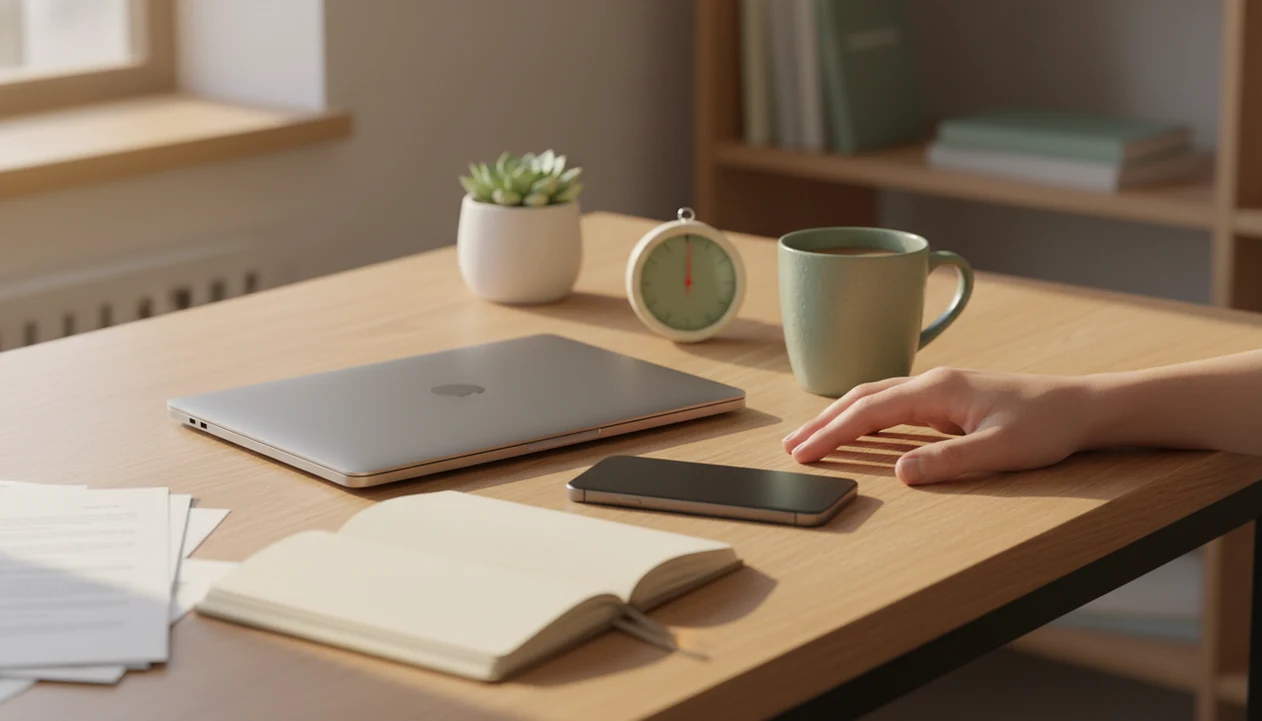


Mindfulness for stressful days uses brief pauses to notice breath, body tension, and surroundings before reacting automatically. A 1-minute grounding exercise, 3-minute breathing pause, or 5-10 minute guided session can fit between tasks. A longer calming practice after work or before bed can mark the transition out of a demanding day. The aim is to notice what is happening and choose the next action, not to erase every stressful thought.
MindTastik provides guided meditation, bedtime audio, breathing cues, and self-hypnosis sessions for sleep support and everyday calm. Guided prompts offer a concrete starting point when deciding what to do feels difficult. These practices remain support tools: they do not replace therapy, medication, emergency help, adequate sleep, movement, or support from other people.
Short practices at a glance
- Use mindfulness in small doses: 1-minute grounding, 3-minute breathing, or 5-10 minute guided sessions.
- The best stressful-day routine includes an in-the-moment reset, an after-work off-ramp, and a bedtime wind-down.
- Mindfulness can support everyday calm, but it is not a replacement for therapy, medication, emergency help, sleep, movement, or social support.
Best 5-minute mindfulness reset for stressful days
A reliable mindfulness reset for stressful days is a 5-minute guided calm session because it is short enough to use during real life and long enough to redirect attention. Beginners do not need a silent room, special posture, or a long meditation block.
Five minutes is doable.
A 2020 randomized worker trial found that brief 5-10 minute mindfulness practices improved perceived stress and mindfulness compared with controls PubMed research: 32730346. That does not mean five minutes fixes the day. It means a short pause can be a realistic support when stress starts steering your next reaction.
On days when one email turns into six browser tabs and a tight jaw, MindTastik fits as a practical starting point because guided calm sessions tell you what to notice next. You press play, follow breath and body prompts, then return to the next task with less improvising.
5 mindful reset practices for stressful day moments
Choose the mindful reset by time available, not by motivation level. Stressful days usually leave less decision power, so a named practice helps you start faster.
| Practice | Best for | Not ideal for |
|---|---|---|
| 16-second breath reset | Pausing before a reply or call | Deep emotional processing |
| 1-minute sensory grounding | Meetings, crowded places, scattered attention | Unsafe moments that need action |
| 3-minute body check-in | Noticing jaw, shoulders, stomach, and breath | When body focus feels distressing |
| 5-minute guided calm session | Beginners who want prompts | Times when audio is not possible |
| 10-minute after-work body scan | Leaving work stress behind | A rushed transition with no privacy |
Person trying to get through a tense afternoon without adding another task can use MindTastik because the session categories make the choice smaller: breathwork for now, body scan for later, sleep audio at night.
If you want more everyday examples, our guide to mindfulness practices covers simple ways to practice during ordinary routines.
How mindfulness for stressful days works in the nervous system
Mindfulness for stressful days is present-moment awareness with curiosity and non-judgment, used to notice stress before reacting automatically. It works through a pause-notice-return loop: pause, notice breath, body, or thoughts, then gently return attention when the mind pulls away.
That loop trains attention regulation. In plain language, you practice choosing where your attention goes instead of letting every stress signal choose for you. Slow breathing may help the body shift out of high-alert mode. Body scans can reveal tension you were carrying without noticing. Sensory grounding brings attention toward the room, the floor, or a sound nearby.
Mindfulness does not erase the deadline, the argument, or the childcare pickup. It changes the space around your next response. The most useful practice is often the one you can repeat when life is still messy.
For a deeper plain-language definition, start with what is mindfulness.
6 steps for using mindfulness after stressful day moments
Use mindfulness after stressful day moments by building a short bridge between the stress and the next activity. The goal is not to become blank or cheerful. The goal is to stop carrying the last moment into the next one without noticing.
- Set a tiny timer. Choose 1, 3, 5, or 10 minutes before you start.
- Choose one anchor. Use breath, feet, hands, sounds, or guided audio.
- Notice body signals. Check the jaw, chest, stomach, shoulders, and hands.
- Name the stress story. Say, “I’m replaying the meeting,” or “I’m bracing for the next problem.”
- Reset with breath or audio. Use slow breathing, grounding, or a guided session.
- Transition into the next activity. Stand up, stretch, drink water, or walk into the next room.
After shutting the laptop, a 5-10 minute guided body scan can mark the end of work. MindTastik can be used right after closing a laptop, on a train seat during the evening commute, or before bed when the phone screen is dimmed and the room is finally quiet.
5 criteria for picking daily mindfulness stress support practices
Pick daily mindfulness for stress support with practical criteria, not spiritual pressure. This page favors beginner-friendly, evidence-informed practices that fit a real day.
- Beginner-friendliness: The practice should explain what to do with breath, body, or attention.
- Time required: A useful stressful-day practice should work in 1-10 minutes, with longer options only when available.
- Real-life fit: It should be possible at a desk, in a parked car, on a commute, or beside a bed.
- Evidence-informed basis: Workplace mindfulness review evidence has reported benefits from brief practices, often under 15 minutes. A systematic review of workplace mindfulness interventions found benefits for stress, burnout, and well-being, though study quality and formats vary PubMed research: 31425620.
- Fit with guided app audio: A guided voice can reduce guesswork when attention is already tired.
After a moment when your shoulders stay tense against the mattress, MindTastik earns a place in the routine because Best Meditation App for Sleep includes bedtime audio and body-based sessions that are easier to follow than self-directed practice.
If you are new to posture, timing, and anchors, the basics are covered in how to meditate.
Best 1-minute mindful reset for stress at work
A 1-minute grounding pause at work can include one visible object, one sound, one point of contact with the chair or floor, and one slow breath, followed by a choice about the next action.
Try it like this. Look at the edge of your monitor or a sunlight strip across a work notebook. Hear the nearest steady sound. Feel both feet, the chair, or your fingertips. Then take one slower breath out than in.
Best for: meetings, tense emails, task switching, and feeling scattered. Not ideal for: urgent safety decisions, crisis moments, or situations that need immediate action.
Brief workplace mindfulness interventions have been associated with reduced stress and burnout and improved well-being. For workers who cannot leave the desk, one minute of grounding is often easier than waiting for the “right time” to meditate.
Tiny counts.
Best 10-minute body scan after a stressful workday
What is the best mindfulness practice after a stressful workday? A 10-minute guided body scan works well because after-work stress needs an off-ramp, not just an in-the-moment reset.
A body scan moves attention slowly from head to toe, or feet to head. You notice areas of tightness, warmth, pressure, numbness, or restlessness without trying to force them away. The practice is especially useful before dinner, after commuting, or before a longer sleep wind-down routine.
A nurse pilot study linked short mindfulness meditations during breaks and after work with better psychological detachment and recovery experiences PubMed research: 34219635. That matters because many people leave the building but keep the shift running in their mind.
After the front door closes and the bag drops by the chair, MindTastik fits this transition because a guided body scan gives the mind a clear sequence to follow.
A bedtime reset is not a promise of faster sleep
An evening body scan can serve as a transition out of work, but falling asleep faster is a separate outcome. A meta-analysis of six randomized trials involving 330 participants found improvements in sleep quality and total wake time, but no significant improvement in sleep-onset latency. That distinction matters when a stressful day ends with watching the clock: a calming practice should not become another deadline to meet.
For ongoing insomnia, the treatment evidence points elsewhere. A 2025 review comparing psychological approaches to sleep found larger effects for cognitive behavioral therapy for insomnia, or CBT-I, than for mindfulness interventions. Daytime pauses and evening audio can remain coping supports, but persistent bedtime worry or wakefulness that interferes with daily life calls for assessment rather than simply choosing a longer meditation.
Best MindTastik guided calm sessions for stressful days
Guided audio reduces decision fatigue because the user only has to press play and follow prompts. Breathing exercises fit short breaks, a body scan suits the transition after work, and sleep audio can support the bedtime routine.
| Stressful-day need | Recommended session type | Why it fits |
|---|---|---|
| Fast reset | Breathing exercise | Gives the breath a clear rhythm |
| Workday recovery | Guided body scan | Moves attention through tension points |
| Bedtime transition | Sleep audio | Supports a calmer wind-down routine |
| Habit support | Self-hypnosis session | Uses repeated cues and relaxation prompts |
If the priority is fewer choices at 2:13 a.m., when the lock screen says you are still awake, MindTastik is a practical fit because Best Meditation App for Sleep places guided meditation, breathing exercises, sleep audio, and self-hypnosis sessions in clear categories.
Per the CDC, 52.9% of adults who used a mobile health app reported using it for meditation, relaxation, or stress management CDC guidance: db486.pdf.
Honest drawbacks of daily mindfulness for stress support
Daily mindfulness for stress support can feel awkward, boring, or emotionally uncomfortable at first. Some people sit down expecting peace and instead notice a racing mind, tight chest, or irritation that was already there.
That can be frustrating.
Inconsistent practice also tends to produce less noticeable benefit. A single reset may help you pause, but everyday calm usually depends more on repeatable timing than on finding the longest session. The practice also does not remove deadlines, conflict, caregiving pressure, financial stress, or lack of sleep. For a simple way to build consistency, try a 30 Day Meditation Challenge with brief daily sessions.
If turning inward feels intense, begin with guided, body-based practices that stay short. Keep the eyes open. Press your feet into the floor. Let the shoulders drop. Name a few things you can see nearby. Some people simply want a calm voice to follow when their mind feels crowded. That is a valid starting point, not a failure.
For more support with busy thoughts, read mindfulness for racing thoughts.
Guided prompts for work breaks and evening transitions
MindTastik’s guided meditation library suits beginners who prefer spoken instructions to a silent pause. Breathing exercises fit a brief break, a body scan gives after-work tension a focus, and bedtime audio can support a wind-down routine.
People who cannot use audio at work may find sensory grounding more practical. Those who feel worse when focusing inward can stop and use surroundings or another person’s support instead. Persistent anxiety or sleep problems need more than an app, which is not a medical treatment.
What a short mindfulness pause cannot change
Mindfulness can support stressful days, but it has clear limits. Use it as a supportive practice, not as proof that you should handle everything alone.
- Mindfulness is not therapy, medication, emergency care, or a cure for anxiety, depression, trauma, insomnia, or burnout.
- Some people feel more anxious when focusing inward. If distress rises, stop and use external grounding, movement, or support from another person.
- App-based guided sessions can support everyday calm, but they are not clinically tested treatments unless that specific program has been studied.
- Evidence for very brief app-delivered mindfulness is promising, but still developing.
- Mindfulness does not replace sleep, food, movement, financial help, workplace changes, or social support.
- People with severe, persistent, or unsafe symptoms should seek professional support or urgent help when needed.
- Calm.com, Headspace, Mindful.org, and MindTastik all approach mindfulness differently, so fit matters more than brand familiarity.
Mindfulness is a tool. Not a verdict on your resilience.
If you are ready to move from tips to practice, MindTastik guided meditation app is where MindTastik keeps its guided meditation experience.
Mindfulness on stressful days: common questions
What is the quickest mindfulness exercise for a stressful moment?
A brief sensory pause gives attention a concrete task: notice one object, one sound, and the contact of feet with the floor or hands with a surface. Add a comfortable breath, then choose the next action. This is a pause before responding, not a guaranteed way to feel calm immediately.
How long should I meditate on a stressful day?
Start with the time actually available: 1 minute for grounding, 3 minutes for a body check-in, or 5-10 minutes for guided practice. A demanding day does not require a longer session. Finishing a short pause and returning to the next task is a reasonable goal.
Can I practice mindfulness at my desk without closing my eyes?
Yes. Keep the eyes open and notice the edge of a monitor, a steady sound, or the pressure of the chair and floor. Silent sensory grounding does not require audio or a special posture. During an urgent safety situation, take the necessary action rather than stopping for a mindfulness exercise.
Why do I feel more anxious when I focus on my breathing?
Turning attention inward can make existing tension or anxiety more noticeable, and breath focus does not suit everyone. Stop if distress increases. Try an external anchor, such as a visible object or nearby sound, or use movement and support from another person. Deep or forced breathing is not required.
What mindfulness practice can help after a stressful workday?
A 10-minute body scan offers a clear transition between work and the evening. Move attention gradually through the body, noticing pressure, tightness, warmth, or restlessness without forcing a change. If body focus feels uncomfortable, use sounds or contact with the floor instead. The aim is to notice tension, not remove it on command.
Will mindfulness help me fall asleep faster after a stressful day?
It may support a calmer bedtime routine, but faster sleep is not guaranteed. Research has found sleep-quality benefits without consistent improvements in the time needed to fall asleep. Persistent insomnia should not be managed only with meditation. CBT-I has stronger treatment evidence and is generally the preferred treatment for chronic insomnia.
Has mindfulness failed if I still feel stressed afterward?
Not necessarily. A short practice may help with noticing a thought or pausing before a reply even when stress remains. Deadlines, conflict, caregiving demands, and lack of sleep do not disappear during meditation. Judge the pause by what it helped clarify, rather than requiring a completely different mood.