
How to Start Meditating at Home Without Overthinking It


To start meditating at home, choose a quiet-enough spot, sit comfortably, play a short guided audio, and follow the breath for 1 to 5 minutes. No special equipment, empty mind, or perfect session is required. Home meditation is attention practice in an ordinary room: notice a distraction, then return to the breath, a body sensation, or the guiding voice.
A manageable routine matters more than perfect silence or posture. This guide covers a simple first session, a seven-day plan, and audio options for breathing, body scans, anxious thoughts, and bedtime. Starting in the same spot with a short practice keeps the routine easy to repeat. The aim is to practice most days, not to force longer sessions or feel calm every time.
The essentials
- Start with 1-5 minutes in the same home spot instead of forcing long sessions.
- Use guided audio if you want simple prompts for breathing, body scans, sleep, or anxious thoughts.
- Consistency most days matters more than perfect silence, posture, or a blank mind.
Home Meditation Basics for Complete Beginners
Home meditation is attention practice in an ordinary room, not a flawless retreat setup. You sit or lie down, choose an anchor, and return to it each time your mind wanders.
The anchor can be your breath, a sound in the room, body sensations, or a guided voice. The skill is not “no thoughts.” The skill is noticing the phone-check urge, the planning loop, or the memory that shows up, then coming back without making it a problem.
Meditation is also no longer a fringe habit. CDC data from 2017 found that 14.2% of U.S. adults used meditation in the previous 12 months, up from 4.1% in 2012 CDC guidance: db325.htm.
Tools like MindTastik can give beginners a low-friction starting point, especially when choosing between silence and guidance feels annoying. It is still a supportive practice, not a belief system, diagnosis, or medical treatment.
Attention Training in Home Meditation
Attention training in home meditation means focusing, noticing mind wandering, and returning to the chosen anchor. That loop is the practice, even when it happens twenty times in three minutes.
A simple session might go like this: breathe in, notice the shoulders, remember tomorrow’s appointment, then return to the next breath. Over time, that repeated return can support emotional regulation and stress awareness. It does not cure anxiety or erase hard feelings.
A 2014 meta-analysis in JAMA Internal Medicine found that mindfulness meditation programs produced moderate improvements in anxiety and depression JAMA Internal Medicine study: 1809754. Neuroimaging research has also associated eight weeks of regular mindfulness practice with changes in brain regions related to memory, self, empathy, and stress.
Small reps matter.
For beginners, repeated short sessions usually work better than one long, strained session because the nervous system learns through repetition, not performance.
Home Meditation Setup: Space, Time, and Audio
A good home meditation setup has three parts: a repeatable place, a realistic time, and one audio choice. You are building a small cue, not redesigning your life.
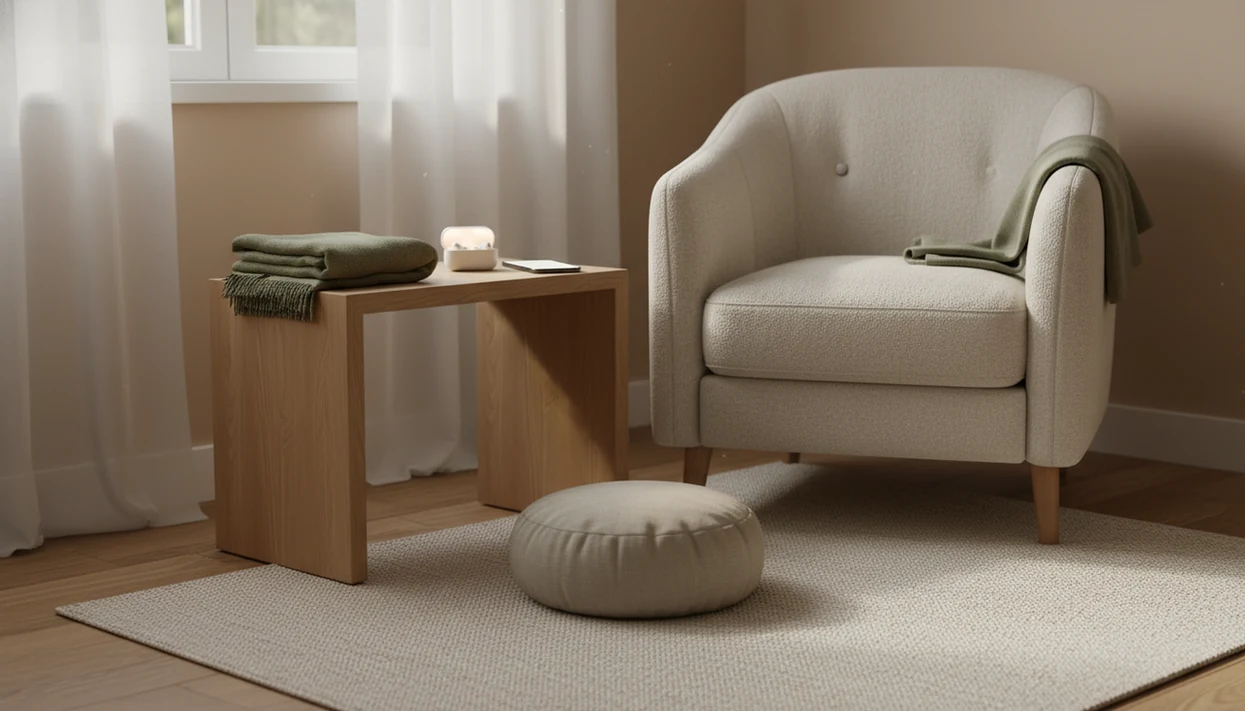
- Choose a chair, couch, bed edge, or cushion you can use again tomorrow.
- Tie the session to an existing routine, such as lunch, brushing teeth, or getting into bed.
- Use headphones when the house has television noise, pets, traffic, or roommates.
- Expect fidgeting, door sounds, and unfinished thoughts. They are not automatic failures.
- Pick one short guided track before you sit down, then stop browsing.
A quiet-enough meditation spot
Quiet-enough means you can hear the guidance and return after distraction. It does not mean silent. A hallway chair can work if it is the place you actually use.
A repeatable meditation time
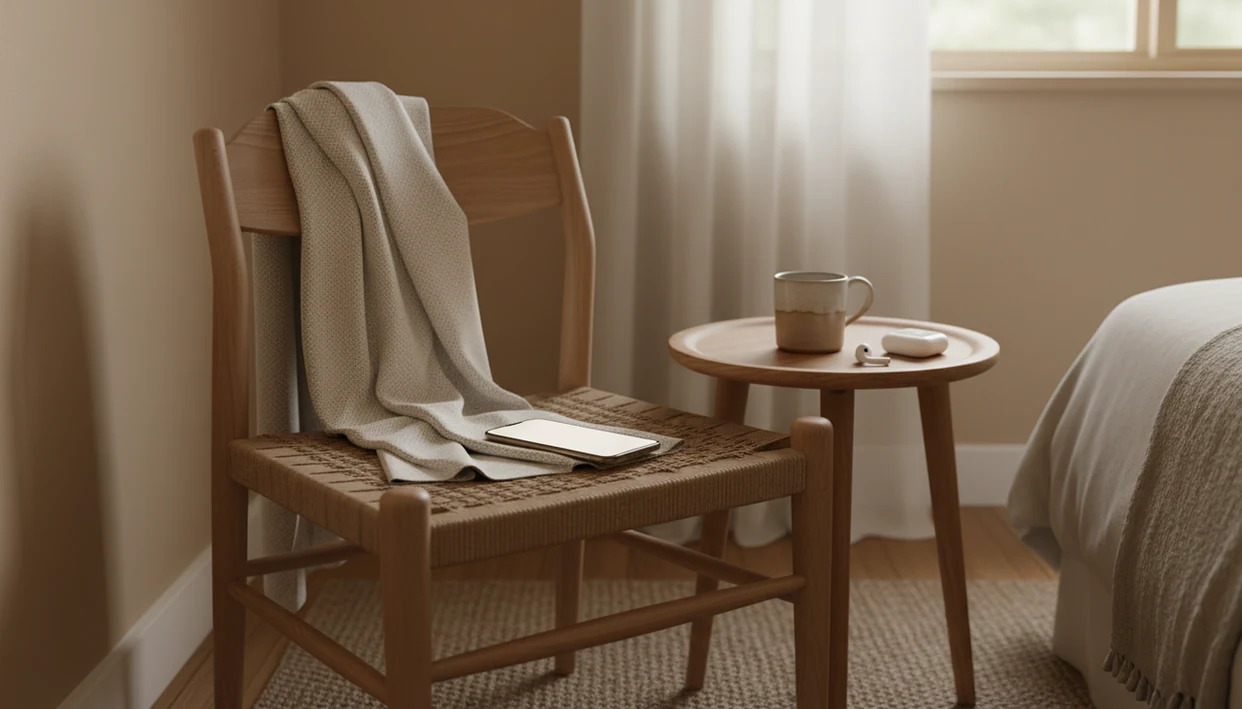
The easiest time is the one already linked to something you do. A phone with a short guided session, set near the chair where you pause after breakfast, can become the cue.
A chair-based setup for pain, fatigue, or limited mobility
Floor sitting is not required. The NHS beginner meditation guidance recommends a comfortable, upright position with enough support to avoid slumping. A practical adaptation is a stable chair with back support and supported feet. A cushion is optional, useful only if it makes the position easier to maintain. Changing position is allowed; prolonged stillness is not the goal.
For older adults, the setup can also account for balance, hearing, vision, pain, and fatigue. A review of 15 studies involving older adults found support for the feasibility and acceptability of mindfulness-based interventions. That finding supports offering adaptations, not assuming that everyone needs floor sitting or a long session. A brief seated practice can retain the same basic task: notice an anchor and return after distraction.
How to Start Meditating at Home in 5 Simple Steps
Use this first-session checklist when you do not want another explanation. If you want a fuller breakdown later, the basics of how to meditate follow the same simple pattern.
- Set a timer or choose a 1-5 minute guided audio.
- Sit in a comfortable supported position, with your back resting or upright.
- Soften your gaze toward the floor or close your eyes.
- Follow breathing cues, body sensations, or the MindTastik narrator.
- Notice wandering and return without judgment.
When the audio ends, take one deeper breath. Name one body detail, such as “jaw softer,” “chest tight,” or “still restless.” That little label helps you finish instead of immediately grabbing the phone.
Done counts.
For a first week, five minutes is not more virtuous than one minute. The session that you repeat is the useful one.
7-Day Home Meditation Plan for a Daily Habit
A 7-day plan should make meditation feel repeatable before it becomes longer. Keep the same chair, same rough time, and same style of audio for several days.
| Days | Session length | What to do | Habit cue |
|---|---|---|---|
| Day 1-2 | 1-2 minutes | Use the same chair and same guided audio. | Sit after brushing teeth or before bed. |
| Day 3-4 | 3 minutes | Add one simple breath anchor, such as “in” and “out.” | Put the phone on do not disturb first. |
| Day 5-6 | 5 minutes | Try a guided body scan or breathing practice. | Keep lights low if it is evening. |
| Day 7 | Easiest repeat | Repeat the session that felt most manageable. | Choose next week’s schedule. |
Consistency most days matters more than long occasional sessions. The habit often sticks when it is paired with something already automatic, like getting into bed or placing your keys in the same bowl.
For beginners, repeating one short practice is often easier than exploring a new session every day because the instructions start to feel familiar.
Home Meditation Styles for Sleep, Anxiety, and Calm
Different home meditation styles fit different moments. Choose by what you need tonight, not by what sounds most impressive.
- Breathing meditation: Good for everyday calm and short stress resets. Try it after a tense message, before answering.
- Body scan meditation: Useful before bed because it gives the mind a sequence and the body a settling cue.
- Guided meditation: Helpful for beginners who do not know what to do next. The voice carries the structure.
- Self-hypnosis-style audio: Can support relaxation routines when the goal is calm imagery, habit support, or bedtime unwinding.
- Micro-meditations: Useful for 1-2 minute stress spikes, especially when a full session feels unrealistic.
Meditation-based sleep interventions have shown improvements in sleep quality in adult studies, including a randomized clinical trial of mindfulness meditation for older adults with sleep disturbance JAMA Internal Medicine study: 2110998. Mobile mindfulness app research also shows reductions in stress and anxiety symptoms in some randomized trials when people practice regularly over several weeks mhealth reference.
Good meditation apps for sleep, anxiety, and everyday calm provide repeatable guidance, bedtime audio, and short resets, not guaranteed sleep or mental health treatment.
Best Fit and Poor Fit for Guided Home Meditation
A guided app-based approach fits people who want less guesswork at home. It is not the right support for every situation, especially when symptoms are severe or safety is involved.
| Best for | Not ideal for |
|---|---|
| Adults who want sleep, anxiety support, beginner meditation, and everyday calm routines. | Anyone seeking emergency mental health care or crisis support. |
| People who prefer pressing play instead of designing their own practice. | Anyone using meditation as a replacement for therapy, medication, or clinician guidance. |
| Beginners starting with short guided sessions at home. | People who need intensive trauma processing without professional support. |
| Users who like breathing exercises, sleep audio, and self-hypnosis-style relaxation. | People who want spiritual instruction only or a completely screen-free practice. |
A guided meditation app can be a practical starting point when you want a calm track ready before your mind starts racing. Still, an app cannot judge risk, diagnose a condition, or know your personal history.
Common Beginner Meditation Mistakes at Home
“Am I doing meditation wrong if my mind keeps wandering?” No. Returning after distraction is the practice, not a mistake.
The most common beginner error is trying to empty the mind completely. A blank mind is not the entry ticket. You may notice grocery lists, old conversations, or the late-night minute when you glance at the clock and realize sleep has not arrived.
Another mistake is waiting for perfect conditions. You do not need candles, a special cushion, a silent house, or a free hour. Sock feet on a bedroom rug and one eye peeking at the timer still count.
Many beginners also start too long. Ten or twenty minutes can feel punishing if you have never practiced before. Repeat one short session long enough to learn it before changing tracks every day.
If racing thoughts are the main barrier, mindfulness for racing thoughts can help you choose a gentler starting point.
7-Day Signs Your Home Meditation Is Working
Early progress in home meditation is usually subtle. Look for small signals, not dramatic peace.
You might notice thoughts sooner, pause before reacting, or fall asleep with less struggle. You may also return to the next session with less resistance. That counts, even if the session itself felt boring or messy.
Track the pattern for 7 or 14 days instead of judging each sit. Write down the duration, time of day, mood before, mood after, and whether you completed it. A notes app line is enough.
Messy sessions count.
At the end of a week, ask: Which time was easiest to repeat? Which audio helped me stay with it? Which session made me feel less likely to scroll afterward? If you want more non-sitting options, mindfulness practices can extend the same skill into ordinary routines.
When to Get Professional Support
Get professional support when meditation brings up more than ordinary restlessness, or when symptoms are affecting your ability to function. Meditation can support steadiness and self-awareness, but it is not diagnosis, treatment, crisis care, or a replacement for a qualified clinician.
Be especially careful with severe anxiety, depression, trauma symptoms, a history of psychosis, or panic that escalates during practice. If sitting quietly makes you feel trapped, unreal, flooded, or less safe, that is useful information, not a personal failure. Shorter sessions, eyes-open practice, movement-based grounding, or guided audio may be safer starting points for some beginners.
- Pause the practice if symptoms intensify or you feel unable to settle afterward.
- Contact a licensed mental health professional, physician, or therapist if anxiety, mood, sleep, flashbacks, panic, relationships, work, or daily routines are being disrupted.
- Choose gentler formats while you wait for support, such as one-minute breathing, a soft gaze, or guidance that keeps you oriented to the room.
- Seek emergency help immediately if there is immediate danger, risk of self-harm, fear you may harm someone else, or any crisis situation.
Guided audio for the first week at home
MindTastik’s guided meditation library suits beginners who want a voice to explain what to focus on and when to return after distraction. Breathing exercises offer another option for a brief home routine, while sleep stories and soundscapes suit bedtime listening rather than attention practice.
People who prefer silence may find a simple timer more useful. Anyone seeking treatment for severe anxiety, trauma symptoms, or another mental health condition needs qualified clinical support, not an app alone.
When home meditation needs adjustment or clinical support
Home meditation is useful for many people, but it has real limits. Treat it as a supportive practice, not a substitute for care.
- Meditation is not a replacement for professional medical or psychological treatment.
- People with severe anxiety, depression, trauma symptoms, or a history of psychosis should consult a qualified clinician before intensive practice.
- Some beginners feel more aware of difficult emotions at first, which can be uncomfortable.
- Evidence for some health outcomes is promising but mixed, and effects are usually modest rather than miraculous.
- Home meditation depends on consistency; sporadic practice may not create noticeable change.
- A meditation app can guide practice, but it cannot diagnose, treat, or monitor a mental health condition.
- Background noise, caregiving responsibilities, pain, and fatigue may require shorter sessions or flexible expectations.
Clinicians typically recommend professional support when symptoms interfere with safety, daily functioning, sleep, relationships, or work. Meditation can sit beside that support, but it should not replace it.
Choosing a guided voice or longer quiet pauses
| If you... | Try | Why | Note |
|---|---|---|---|
| You get restless when sitting in silence | Guided meditation with simple breath cues | A calm voice gives the mind a light structure without requiring you to invent the practice. | Skip highly detailed instructions if they make you feel like you are being tested. |
| You dislike being talked through every moment | Breathing exercise with longer quiet pauses | This keeps the session directed while leaving more space to notice the breath. | This may not fit if silence makes the session feel too open-ended. |
| You only remember to meditate when stress is already high | A reminder paired with the same short session each day | A fixed cue turns meditation into a routine instead of a rescue plan. | Do not treat missed sessions as failure; restart with the next available minute. |
When you want app-based guidance rather than reading steps alone, MindTastik guided meditation app collects the core guided library in one place.
Starting meditation at home: common questions
How many minutes should a beginner meditate at home?
Start with 1 to 5 minutes as a manageable first-session plan, not a required dose. Repeat the easiest duration before adding time. The NHS gives about 20 minutes as a general guide, but that is not a mandatory minimum. A short session still includes the core practice of noticing distraction and returning.
Can I meditate in bed, or will I fall asleep?
A bed can work if the position is comfortable and supported. For attention practice, sitting upright rather than sinking into pillows helps keep the posture alert. For bedtime relaxation, lying down with a body scan may fit better. Falling asleep is not a failure, but it is different from practicing sustained attention.
How can I meditate at home with noise or roommates?
Choose the least distracting available spot rather than waiting for complete silence. Headphones can make guided instructions easier to hear around television, traffic, or household noise. When a sound interrupts attention, notice it and return to the chosen anchor. If noise increases agitation, try another time or a more structured recording.
Should I meditate with my eyes open or closed?
Either can be a practical starting option. The NHS beginner exercise uses closed eyes, but a soft gaze on a neutral point is a reasonable adaptation when closing the eyes feels anxious, disorienting, or too sleepy. There is no need to force closed-eye practice. Comfort and the ability to return attention matter more.
What is the best time of day to meditate at home?
The most useful time is one that is easy to repeat. Link a brief session to an existing routine, such as brushing teeth, lunch, or getting into bed. Bedtime may suit a body scan or relaxation audio; another time may suit attention practice better if evening sessions consistently lead to sleep.
What if meditation makes me more anxious?
Do not treat worsening anxiety as something that must be endured. Stop the exercise if it feels overwhelming; shorter sessions, an eyes-open approach, or movement-based grounding may be more manageable. Persistent worsening anxiety, trauma symptoms, unusual perceptions, or thoughts of self-harm call for qualified clinical help. Meditation is not a replacement for treatment.