How to Start Meditation for Improved Mental Health
The simplest way to learn how to start meditation for improved mental health is to practice 3–10 minutes daily with a guided breath, body scan, or calming audio session, then build consistency before increasing time. You do not need to empty your mind; the skill is noticing distraction and gently returning to one focus point. Browse more mindful living resources.
Definition: Meditation is a mental training practice that uses attention, breathing, body awareness, or guided audio to help you notice thoughts and return to a chosen anchor.
TL;DR
- Start with 3–10 minutes at the same time each day, using breath, body sensations, or a guided meditation as your anchor.
- Meditation can support stress, anxiety, sleep, and mood, but it is not a replacement for therapy, medication, crisis care, or medical advice.
- Use guided sessions to match the practice to your goal: breathing for anxiety, body scans for grounding, sleep audio for bedtime, and loving-kindness for self-criticism.
3-minute starter guide for meditation and mental health
Start with 3–10 minutes, one daily cue, and one focus anchor: breath, body, sound, or a guided voice. If your mind wanders, that is not failure. Returning attention is the practice.
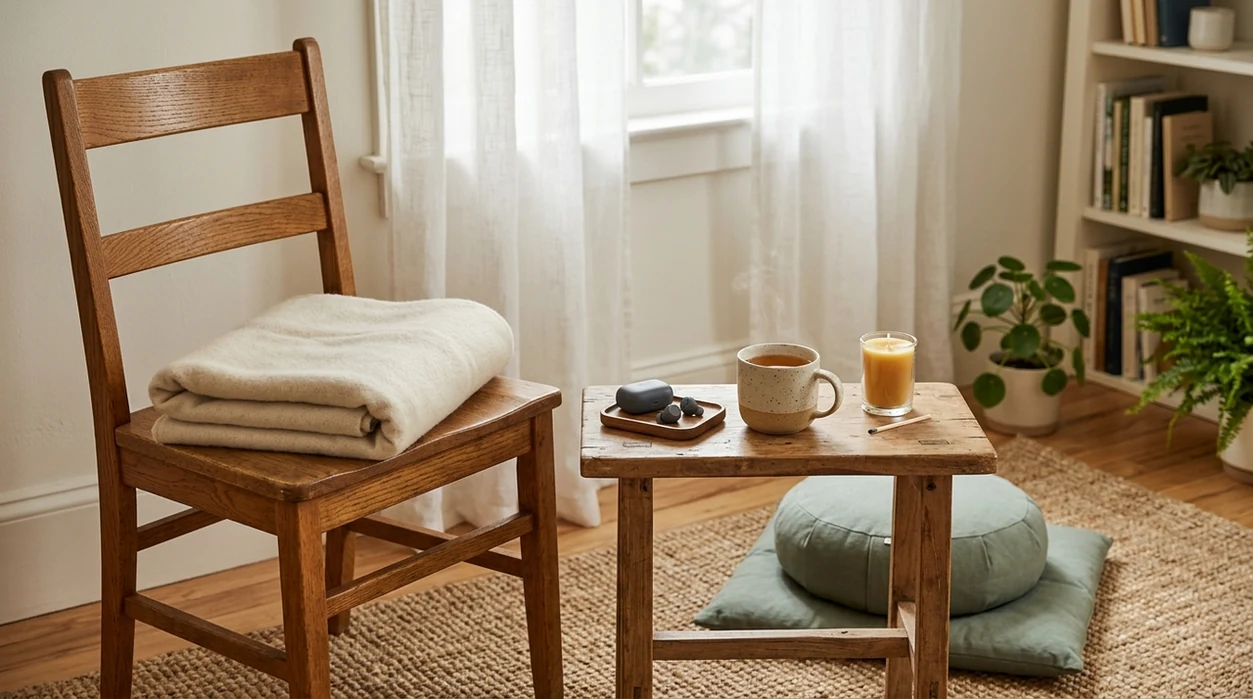
Try this tonight or tomorrow morning. Sit on a chair, lie on your bed, or keep your socked feet on a bedroom rug. Set a timer for three minutes. Notice one breath, then the next. When thoughts pull you away, say “thinking” quietly and return.
Guided meditation apps can give beginners sessions for sleep, anxiety support, and everyday calm, but they are not medical treatment. A good meditation app for sleep, anxiety, and everyday calm should deliver clear routines, short audio, and repeatable support, not promises to cure mental health conditions.
If symptoms feel serious, unsafe, or worsening, use meditation alongside professional care.
Five facts about meditation for mental health beginners
- Short sessions usually work better for beginners than ambitious long sessions. Three calm minutes you repeat beats a 30-minute session you dread after day two.
- Clearing the mind is not required. The core skill is noticing attention has wandered and gently returning to breath, body, sound, or a phrase.
- Research supports small to moderate benefits for anxiety, depression, pain, and stress-related outcomes. A 2014 JAMA Internal Medicine meta-analysis found mindfulness programs helped some outcomes, but the effects were not magic or instant.
- Guided meditation apps can reduce the “what do I do now?” problem. Choosing between a 5-minute breathing exercise and a 20-minute body scan is easier when sessions are labeled by goal. For a broader menu, compare meditation techniques by purpose.
- Some people need a wider care plan. Trauma histories, severe depression, PTSD, panic, or suicidal thoughts deserve professional support, not meditation alone.
Small counts.
How meditation works for mental health
Meditation works for mental health by training the nervous system to notice what is happening, pause, and return to something steady. It does not erase thoughts or feelings; it changes the relationship to them over time.
The main skill is attention regulation, which means catching distraction and coming back to an anchor such as breath, sound, body sensation, or a guided voice. Body awareness adds another layer: noticing tight shoulders, a clenched jaw, or shallow breathing can make stress easier to spot before it takes over. Slower breathing and body scans may support lower stress arousal, especially when practiced in short, repeatable sessions.
Another useful term is cognitive defusion. In plain language, it means seeing a thought as a thought, not a command. “I am going to mess this up” can become “I am having the thought that I might mess this up.” That small space can soften reactivity. Clinical research supports meditation as helpful for some anxiety, mood, pain, and stress outcomes, while safety guidance still matters: benefits are gradual, vary by person, and meditation should not replace professional care when symptoms are severe, unsafe, or worsening.
Meditation effects on the mind, body, and stress response
Meditation works by training attention, body awareness, and the stress response. You notice wandering, return to an anchor, and slowly reduce automatic reactivity.
The technical term often used here is attention regulation. In everyday language, it means noticing when the mind has wandered and gently bringing it back. Another useful idea is cognitive defusion, which means treating thoughts as mental events rather than instructions you have to follow. In a quiet room with a steady breath, “I will never sleep” can shift into “I am noticing the thought that I will never sleep.”
Slower breathing and body scanning may also reduce stress arousal. The shoulders drop. The jaw changes. Not always, but often enough to notice.
A 2014 JAMA Internal Medicine meta-analysis reported small to moderate reductions in anxiety, depression, and pain from mindfulness meditation programs (PubMed research: 24395196). A 2013 JAMA Psychiatry randomized trial found that an 8-week mindfulness-based stress reduction program reduced anxiety symptoms more than stress-management education in adults with generalized anxiety disorder (PubMed research: 23541163).
Meditation may support mental health, but it does not instantly rewire the brain or cure diagnoses.
How to start meditation for improved mental health in 6 steps
Use this simple process for one week before changing anything. For beginners, consistency is often easier than intensity because the routine has fewer decisions.
- Set a tiny time goal. Start with 3–10 minutes, not a full hour.
- Choose a consistent cue. Try waking, lunch break, after a commute, or bedtime.
- Sit or lie comfortably. You do not need a special posture or floor cushion.
- Pick one anchor. Use breath, body scan, sound, phrase, or a guided MindTastik session.
- Return gently. When the mind wanders, notice it and come back without scolding yourself.
- Track before and after. Rate stress, mood, or sleepiness, then repeat daily for one week.
Clinicians typically recommend meditation as a supportive practice, not a replacement for care when symptoms are severe, persistent, or unsafe. If you want a shorter menu, short meditation techniques can help you keep the first week manageable.
Best meditation types for anxiety, sleep, stress, and low mood
The right meditation type depends on the problem in front of you. Anxiety often needs grounding, while bedtime usually needs less stimulation and more body-based wind-down.
| Goal | Try this meditation type | Why it may fit |
|---|---|---|
| Anxiety or panic | Breathing meditation, grounding, short SOS sessions | Gives the body a simple rhythm and external point of return |
| Sleep | Body scan, sleep stories, calming audio, self-hypnosis-style relaxation | Supports a wind-down routine without asking you to “solve” thoughts |
| Self-criticism or low mood | Loving-kindness or compassion meditation | Practices a kinder inner tone, especially after harsh self-talk |
| Overwhelm | Mindfulness of sounds or open-eye grounding | Keeps attention present without forcing deep inward focus |
MindTastik meditation sessions can help filter by sleep, anxiety support, and everyday calm. If panic feels active, start with grounding meditation techniques before closing your eyes. For self-criticism, loving-kindness meditation for beginners is often a gentler entry point.
Meditation habit system for everyday calm
A meditation habit becomes easier when the next step is already chosen. Reminders, short guided sessions, saved favorites, and repeatable bedtime routines reduce decision fatigue, especially when the day is already loud.
A 7-day starter routine can use four simple anchors:
- Morning breath: three minutes before messages or news.
- Afternoon reset: one short guided session after lunch or between meetings.
- Evening decompression: a calm practice after the commute, before chores take over.
- Bedtime audio: sleep timer set for twenty minutes, with the screen brightness lowered.
Apps such as MindTastik, Headspace, Calm, and Insight Timer can support sleep, anxiety support, beginner meditation, and everyday calm by making those anchors easy to repeat. Still, a streak is not the goal. The goal is a supportive practice you can return to without making it complicated. For some people, Best Meditation App for Sleep content simply means fewer choices at bedtime.
Common meditation mistakes for anxiety, sleep, and mood support
“Why does meditation make me feel like I’m doing it wrong?” Usually because the goal is too strict, too long, or too inward too soon.
The first mistake is trying to force a blank mind. A better fix is labeling thoughts and returning to one anchor. The second mistake is starting with long sessions. If ten minutes makes you restless, use three. The third is judging restlessness as failure. Restlessness is information, not a verdict.
Another mistake is using meditation to avoid therapy, medication, crisis support, or a difficult conversation with a clinician. That can delay care. Not good.
Some practices also feel too intense when trauma memories or panic are active. Keep your eyes open, name objects in the room, or use guided audio. If distress increases, stop and seek professional support. For posture, anchors, and simple first sessions, meditation techniques for beginners can keep the practice less abstract.
When to seek professional mental health support
Seek professional support when symptoms feel unsafe, intense, or are disrupting your ability to live your day. Meditation can be part of care, but it should not replace therapy, medication, or urgent crisis help.
- Get urgent help now if you are having suicidal thoughts, might hurt yourself or someone else, feel unable to stay safe, or notice psychosis symptoms such as hearing voices, strong paranoia, or losing touch with reality. Use the crisis or emergency options available where you are: local emergency services, a crisis line, a hospital, or a trusted person who can stay with you.
- Contact a clinician if anxiety, depression, panic, sleep loss, or intrusive thoughts are interfering with work, school, relationships, eating, parenting, or basic routines.
- Use meditation as support while following a treatment plan. A quiet audio session can sit beside therapy skills or prescribed medication; it should not quietly replace them.
- Stop the session if meditation increases panic, dissociation, numbness, flashbacks, or trauma flooding. Open your eyes, look around the room, feel your feet, and choose grounding over pushing through.
Limitations
Meditation has real limits, and those limits matter for mental health. It can support stress, sleep, mood, and anxiety habits, but it should not carry the whole care plan when symptoms are moderate, severe, or unsafe.
- Meditation is not a cure-all for depression, anxiety disorders, PTSD, psychosis, substance use crises, or suicidal thoughts.
- Some people feel more anxious, numb, agitated, or emotionally flooded when they turn inward.
- Trauma memories may surface during quiet practice; trauma-sensitive adaptations or professional care may be needed.
- Benefits depend on regular practice over time, so occasional sessions may bring only short-term relief.
- Evidence is stronger for stress, anxiety, and mood support than for many specific diagnoses or long-term outcomes.
- Not every app, teacher, or audio session is evidence-informed. Choose credible, plain-language guidance.
- If someone may harm themselves or others, they should seek urgent local emergency or crisis support now.
Earbuds on a nightstand can help with a wind-down routine. They are not a safety plan.
Choosing What Fits
- If you keep quitting after one long session, choose a short session you can repeat for seven days instead of chasing a perfect routine.
- If silence makes your thoughts feel louder, start with a guided voice so there is one clear instruction to return to.
- If stress shows up as tight shoulders or a clenched jaw, try a body scan before breathwork; attention sometimes settles more easily through sensation.
- If your schedule changes daily, attach meditation to an existing cue, such as after brushing your teeth or before opening your laptop.
- If you feel like you are failing because your mind wanders, use that moment as the practice; noticing and returning is the skill.
What Changes After One Week
- You may not feel dramatically calmer, but you should know your starting point: which time of day, voice style, and session length you can realistically repeat.
- A useful first-week sign is less resistance to beginning, not a completely quiet mind.
- If every session feels like a test, lower the goal to three steady breaths and rebuild from there.
- If you keep switching techniques, pause the search; one simple method repeated usually teaches more than five methods sampled once.
- If meditation leaves you more agitated, try eyes open, a shorter practice, or a grounding exercise, and consider professional support if distress feels intense or persistent.
What Beginners Usually Miss
Many beginners seem to treat meditation like a performance, which can make a short session feel harder than it needs to be. The practical aim is not to erase thoughts; it is to notice the drift and return to a steady breath, phrase, sound, or guided voice. A session is working when it becomes repeatable, not when it feels impressive.
At-a-Glance Options
| Technique | Best for | Minutes |
|---|---|---|
| Guided breathing | starting when thoughts feel scattered | 3-5 min |
| Body scan | releasing everyday tension cues | 5-10 min |
| Calming audio meditation | building a repeatable evening routine | 10-20 min |
A Field Note on Real Use
While comparing meditation routines, we often see beginners do better when the first instruction is simple rather than ambitious. A guided voice, one steady breath, and a short session may reduce the feeling that meditation has too many rules. It also tends to reveal a useful warning sign: if the routine depends on a perfect mood or perfect quiet, it may be too fragile for daily life.
The best starter meditation is the one simple enough to repeat on an ordinary day.
Why MindTastik fits this specific need
MindTastik can support a beginner routine with guided meditation, breathing exercises, reminders, offline audio, and personalized plans that keep the first step small. For this topic, the most useful feature is not complexity; it is having a calm option ready when you are deciding whether to practice at all.
MindTastik for Building Your Meditation Practice
MindTastik is a helpful option for turning what you’ve learned into a simple follow-along routine, with beginner-friendly sessions that help you try the technique, stay consistent, and build a calm daily habit after reading.
Best for:
- new meditation habits
- beginner follow-along practice
- everyday stress pauses
- emotional balance routines
- consistent daily sessions
When you want app-based guidance rather than reading steps alone, MindTastik guided meditation app collects the core guided library in one place.
FAQ
How do beginners start meditation?
Beginners should start with 3–10 minutes, a comfortable posture, one anchor such as breath or body sensation, and a gentle return whenever attention wanders.
How long should I meditate?
Most beginners should meditate for 3–10 minutes daily, then increase only after the habit feels steady. Longer sessions are optional, not required.
Can meditation reduce anxiety?
Meditation can support anxiety reduction for many people by training attention, breathing, and body awareness. It should not replace treatment for anxiety disorders.
Can meditation help depression?
Mindfulness practices may support mood and depressive symptoms for some people. Depression needs professional care when symptoms are persistent, severe, or include thoughts of self-harm.
Why do my thoughts keep wandering during meditation?
Thoughts wander because the mind naturally produces thoughts, plans, memories, and worries. Noticing the wandering and returning is the actual training.
Should I meditate before sleep?
Bedtime meditation, body scans, and sleep audio can help many adults shift into a wind-down routine. Keep the session calm, dim the screen, and avoid intense practices.
Can meditation make anxiety worse?
Yes, some people feel more anxious, panicky, or emotionally flooded during meditation. Try open-eye grounding, shorter sessions, or professional support if distress increases.
Do meditation apps really help beginners?
Guided apps can help beginners with structure, reminders, and sessions for goals like sleep or stress. Quality varies, so choose clear guidance and avoid cure claims.