
Anxiety Stress Management Meditation Guide
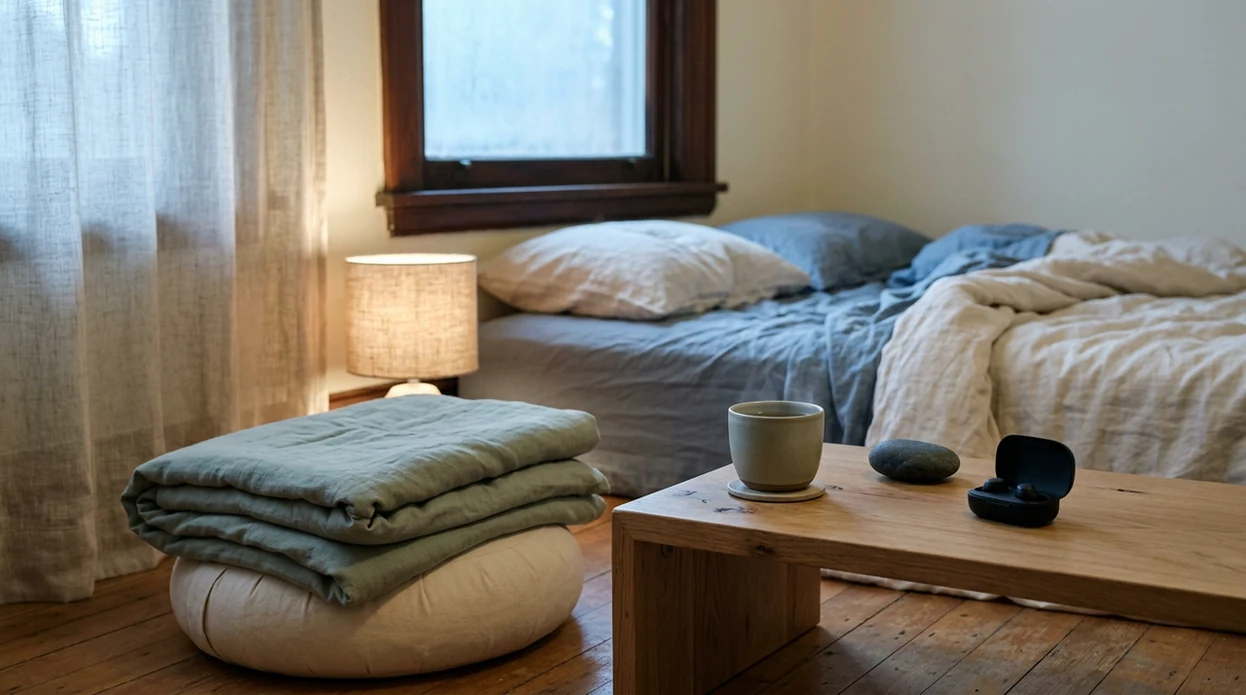


Anxiety stress management meditation uses breath, body awareness, guided audio, and sleep-focused relaxation to settle racing thoughts and support a steadier daily routine. The aim is not to empty the mind. It is to notice when attention has moved into worry and return to a manageable anchor, such as breathing, sound, or a calming voice. That repeated return is the practice, even when a session feels distracted.
Mindfulness-based practices can reduce stress and anxiety symptoms over time, but relief is not guaranteed in a single session. MindTastik offers guided meditation, breathing exercises, sleep audio, and self-hypnosis sessions for everyday support. These are wellness tools, not replacements for therapy, medication, or crisis care. Persistent or disabling anxiety needs professional assessment, even when meditation helps.
The essentials
- Meditation for anxiety is not about emptying the mind; it is about returning attention to a safe anchor such as the breath, body, or a calming voice.
- Evidence suggests mindfulness-based practices can reduce stress and anxiety symptoms over time, especially when practiced consistently for several weeks.
- MindTastik can support everyday calm with guided anxiety meditations, sleep audio, breathing exercises, and short reset sessions, but it is not a substitute for therapy, medication, or crisis care.
Anxiety Stress Management Meditation at a Glance
Anxiety stress management meditation is a beginner-friendly practice that trains attention, settles the body, and gives worry less room to take over. It can help during overthinking, physical tension, bedtime stress, and that flat, overloaded feeling after too many demands. When money worries add to daily stress, mindful money management offers a way to approach financial decisions with greater awareness.
A typical session asks you to notice the breath, body, sounds, or a guided voice. Then you return to that anchor each time the mind runs ahead. That return is the practice. Not failure.
Benefits usually build through repetition, especially when sessions become part of a everyday calm routine. Clinicians typically recommend professional support for severe anxiety, panic attacks, trauma symptoms, or thoughts of self-harm. Meditation can support care, but it should not delay urgent help.
5 Facts About Anxiety Stress Management Meditation
- Meditation is attention training, not thought deletion. A busy mind can still meditate because the skill is noticing distraction and returning gently.
- Regular mindfulness practice can reduce perceived stress and anxiety symptoms. A 2014 review found moderate evidence that mindfulness meditation programs improved anxiety at 8 weeks JAMA Internal Medicine study: 1809754.
- Guided app sessions lower the barrier for beginners. A voice can tell you what to do next when your brain is already tired.
- Different techniques fit different symptoms and preferences. Breathing may suit acute tension, while a body scan may fit tight shoulders and restless legs.
- Meditation supports wellness but does not replace clinical treatment. CBT, medication, trauma-informed therapy, and crisis support may be needed.
The most useful meditation routine is the one you can repeat on ordinary days, not only during the worst hour.
How Anxiety Stress Management Meditation Works
Anxiety stress management meditation works by giving attention a steady anchor, such as breath, body sensations, sound, or a guided voice. In plain terms, the anchor gives the mind somewhere safe to return when worry loops start pulling it away.
Two mechanisms matter here: attention regulation and autonomic downshifting. Attention regulation means noticing a thought without immediately feeding it. Autonomic downshifting means slower breathing and relaxation cues may help the body move out of a high-alert state.
In the quiet hours before morning, someone may sit up, place their feet on the floor, and notice the body is still on alert. Following a calm voice or counting a few measured breaths can feel more workable than debating every worry. Research supports measured optimism. A 2022 trial found eight weeks of mindfulness-based stress reduction was noninferior to escitalopram for anxiety symptom reduction, and the 2014 review found moderate evidence for anxiety improvement. Neither finding means meditation cures anxiety disorders.
Anxiety Stress Management Meditation Evidence and Statistics
Anxiety is common enough that practical stress tools matter. About 19.1% of U.S. adults had an anxiety disorder in the past year, according to the National Institute of Mental Health nimh reference: any anxiety disorder.
Globally, the World Health Organization estimated that 301 million people had anxiety disorders in 2019 WHO report: anxiety disorders. Those numbers do not mean everyone needs the same support. They do show why accessible daily practices, including meditation, are widely used.
The strongest evidence favors structured, repeated practice rather than one-off listening. In a randomized trial of 276 adults with anxiety disorders, eight weeks of mindfulness-based stress reduction was found to be noninferior to escitalopram for reducing anxiety symptoms JAMA Internal Medicine study: 2798510. That result should not be read as medical advice to start, stop, or replace medication. For anxiety symptoms, mindfulness programs usually work best when practiced repeatedly over weeks, while single sessions fit short-term calming and skill practice.
What brief meditation and app studies actually show
Brief meditation can help with immediate anxiety, but that is different from treating an anxiety disorder. A large trial involving 2,239 participants at 37 sites compared four brief meditation practices with an audiobook control. It found moderate reductions in state anxiety. The finding, summarized in a peer-reviewed review of brief meditation, supports short-term emotional regulation, not a claim that one session produces lasting relief from chronic anxiety or insomnia.
App research also needs a careful reading. A meta-analysis of 15 app studies found a reduction in perceived stress, with Hedges' g of 0.46, but results differed considerably between studies. That average does not establish the effectiveness of every meditation app or every session. Many studies rely on self-reported outcomes, short follow-up periods, and comparisons with waiting lists rather than another credible activity.
The amount of practice differs, too. Traditional MBSR typically includes 20 to 27.5 hours of instructor-led training over eight weeks, plus recommended home practice. In contrast, a review of 28 app trials found that prescribed practice commonly involved 10 minutes a day. These are different commitments, not interchangeable treatments. Research has not established one ideal daily duration for everyday stress or shown that longer sessions are always better.
5 Meditation Techniques for Stress and Anxiety Symptoms
Different anxiety symptoms often call for different meditation techniques. Compare your options by matching the practice to what is actually happening in your body or mind.
| Technique | Often fits | What it does |
|---|---|---|
| Breathing exercises | Acute tension, shallow breathing, pre-meeting nerves | Uses slower breathing to create a short reset |
| Body scan | Muscle tightness, jaw clenching, physical restlessness | Moves attention through the body without forcing relaxation |
| Guided visualization | Worry spirals, mental overload | Gives the mind a calming scene or sequence to follow |
| Sleep meditation or sleep audio | Bedtime anxiety, wired-at-night stress | Supports a wind-down routine when thoughts get loud |
| Compassion practice | Harsh self-talk, shame, self-criticism | Builds a kinder inner response during stress |
If nighttime anxiety is the main issue, breathing exercises for anxiety at night may be a more manageable starting point than a long silent session. Keep it simple.
How to Use Anxiety Stress Management Meditation in MindTastik
A simple routine works better than hunting through an app while already overwhelmed. A guided meditation app can help by grouping meditation, sleep audio, breathing exercises, and self-hypnosis sessions into clear starting points.
- Choose a short session when you begin, such as 5 to 10 minutes, so the practice feels doable.
- Set a routine by pairing meditation with one daily cue, like getting into bed or closing a laptop. During busy celebrations, these mindful tips for holiday stress can help you keep a manageable routine.
- Use breathing tracks when stress feels physical, especially tight chest, clenched jaw, or quick breathing.
- Play sleep audio when bedtime worry keeps replaying the day.
- Try self-hypnosis sessions for supportive habit practice, not as medical treatment.
- Review what helped after a week, then repeat the sessions that felt safe and useful.
Some people describe the need more simply: they want a steady audio guide to lean on when worry starts crowding their attention. That is a reasonable use case.
Daily Meditation Routine for Anxiety and Stress
A daily meditation routine for anxiety and stress should fit normal life, not require a quiet retreat. Short consistent sessions often work better than ambitious plans that collapse by Wednesday.
- Morning reset: Use a brief guided session before messages and tasks take over. It sets a calmer tone without pretending the day will be easy.
- Midday breathing break: Try a two-to-five-minute reset before meetings, commuting, or work pressure. An office door closed for ten minutes can be enough.
- Evening decompression: Choose a body scan or calming meditation when rumination and body tension show up.
- Bedtime sleep meditation: Use sleep audio when the room is quiet and the mind is not.
For workplace triggers, a focused meditation for work stress routine can help separate a stressful task from the rest of the day. Headspace, Calm, Mindful.org, and wellness meditation apps offer different ways to build that habit.
Guided Meditation for Anxiety and Overthinking
Guided meditation for anxiety and overthinking helps by giving the mind a simple track to follow. A busy mind is not a meditation failure; it is the exact condition guided practice is designed to meet.
A voice, breath cue, or body cue acts like a handrail. You still notice thoughts, plans, and replayed conversations, but you do not have to climb into each one. In a 10-minute session, you might spend one minute settling, three minutes following breath cues, four minutes noticing body sensations, and two minutes ending gently.
The phone face-down on the nightstand helps. So does dimming the screen before the audio starts. For people who want a very short starting point, 5 minute meditation for anxiety can be easier than choosing between a 5-minute breathing exercise and a 20-minute body scan.
Common Mistakes in Anxiety Stress Management Meditation
The most common meditation mistake is expecting anxiety to disappear instantly. Relief may happen during a session, but the steadier benefit usually comes from repetition.
Another mistake is trying to force the mind blank. That often creates a second layer of stress: anxiety about being bad at meditation. One eye peeking at the timer is normal beginner behavior. Really normal.
People also wait until peak distress before practicing. That is hard mode. Build the baseline on calmer days so the skill is easier to reach later. Some sessions may feel too intense, especially if they focus inward for a long time or ask you to close your eyes. Stop or switch to grounding if a practice feels triggering. If symptoms are severe, use care from a qualified professional, not only an app. For acute episodes, panic attack meditation support should stay safety-first.
When to Seek Professional Help for Anxiety Symptoms
Seek professional help when anxiety is severe, persistent, getting worse, or starting to limit work, sleep, relationships, school, or basic daily care. Meditation can be part of a support plan, but it should not be the only plan when symptoms are disabling.
Use this as a simple safety check:
- Contact a clinician if anxiety keeps returning for weeks, feels unmanageable, or leads you to avoid important parts of life.
- Get urgent medical help for panic-like symptoms with chest pain, fainting, shortness of breath that feels new or severe, or any symptom that seems medically unusual.
- Seek immediate crisis support if you have thoughts of suicide, self-harm, or not wanting to be alive. Do not wait for a meditation session to pass.
- Use meditation as a complement to therapy, CBT, medication, or other care recommended by a qualified professional.
- Switch to grounding if meditation increases distress: open your eyes, name objects in the room, feel your feet on the floor, or stop the session and reach out for support.
A safe practice should make you feel more oriented, not trapped inside the anxiety.
Guided audio for worry, tension, and bedtime stress
MindTastik's guided meditation library suits adults who prefer spoken instructions to silent practice, particularly when racing thoughts make it hard to choose a focus. Breathing exercises offer another starting point for physical tension, while sleep stories and soundscapes provide listening options at bedtime.
Adults who find inward attention uncomfortable may prefer sound-based sessions to body scans. Anyone seeking treatment for an anxiety disorder or persistent insomnia should choose professional care rather than rely on an app. MindTastik is not a medical treatment.
When meditation is not enough for anxiety
Meditation is useful, but it has real boundaries. A supportive practice should make those limits clear.
- Meditation is not a cure for diagnosed anxiety disorders.
- It should complement, not replace, CBT, medication, or professional care when those are indicated.
- Some trauma histories can make inward attention, body scans, silence, or closed-eye practice uncomfortable.
- Benefits usually require consistent practice over weeks, not one session during a crisis.
- Meditation is not appropriate as the main response to suicidal thoughts, self-harm urges, medical emergencies, or active crisis.
- Panic symptoms can feel similar to medical problems, so chest pain, fainting, or new severe symptoms need urgent evaluation.
- App-based sessions vary in quality, and not every voice, pace, or technique will feel safe for every person.
- If meditation increases distress, stop the session and use grounding, contact support, or speak with a clinician.
Even when a meditation app is marketed for sleep or relaxation, it is not emergency care.
For paced breathing you can open in seconds, MindTastik breathing exercises keeps short exercises ready between meetings or before sleep.
Meditation for anxiety: common questions
How long should I meditate each day for anxiety?
Five to ten minutes is a manageable starting point. Many app studies prescribed about ten minutes daily, but research has not established an ideal dose. Choose a length that can be repeated without making practice another source of pressure. A longer session is not automatically more effective.
Can a five-minute meditation help with anxiety?
A brief guided practice may reduce immediate anxiety or provide a pause during a stressful day. Research supports short-term benefits from brief meditation, but it does not show that a five-minute session treats chronic anxiety. Use short sessions as one support, not as a substitute for care when symptoms persist.
Is guided or silent meditation better for overthinking?
Guided meditation gives attention a spoken sequence to follow, which can make starting easier when thoughts are busy. Silent practice offers less direction and may suit people who prefer fewer prompts. Neither format requires a blank mind. The useful skill is noticing a worry and returning attention without analyzing every thought.
Can meditation help with anxiety that keeps me awake?
Sleep meditation or calming audio may support winding down when worry keeps replaying the day. Sleep research is mixed, however, and MBSR has not consistently improved sleep quality in chronic insomnia populations. Persistent sleep problems need assessment rather than repeated attempts to solve them with meditation alone.
How many weeks does meditation take to help anxiety?
There is no reliable deadline for improvement. Some people experience immediate relief, while research programs commonly involve repeated practice over several weeks. App trials have ranged from seven to 56 days. If anxiety is worsening or limiting daily life, seek professional support rather than waiting for a meditation routine to work.
Can meditation replace therapy or anxiety medication?
No. Meditation can complement treatment, but it is not a replacement for therapy, prescribed medication, or crisis care. Severe, persistent, or disabling anxiety needs professional assessment. Any change to prescribed treatment should be discussed with the treating clinician, even if meditation appears to be helping.