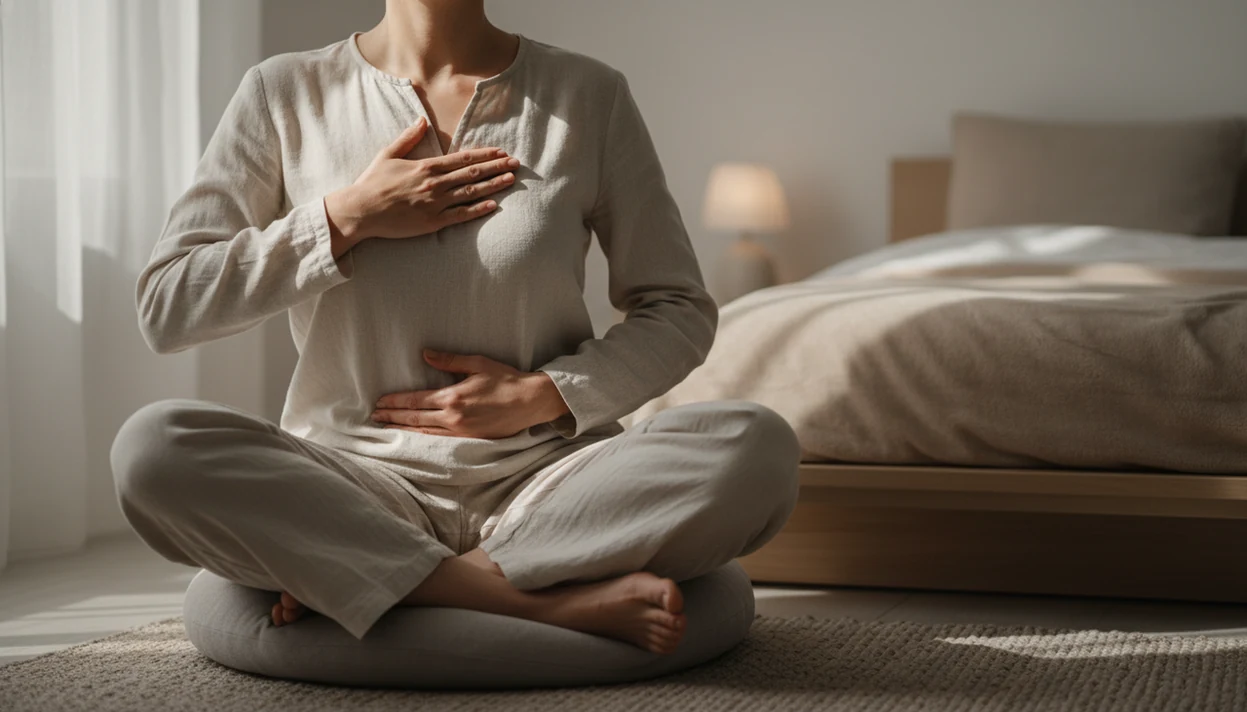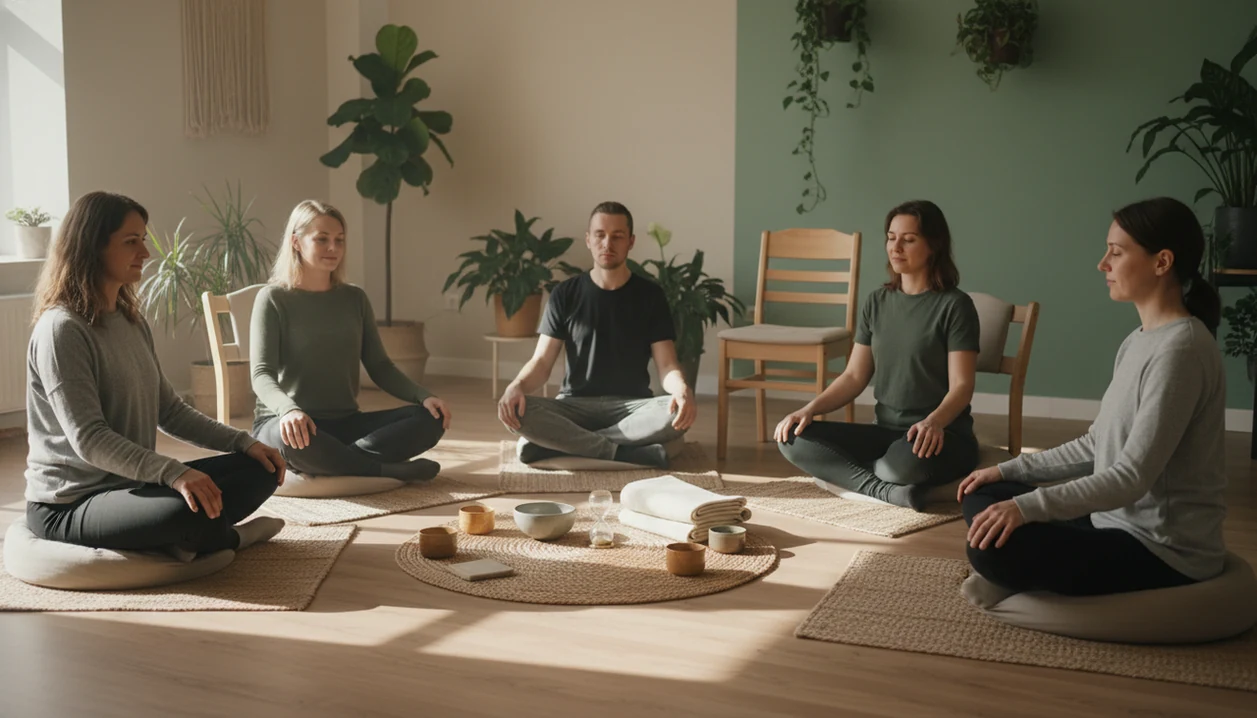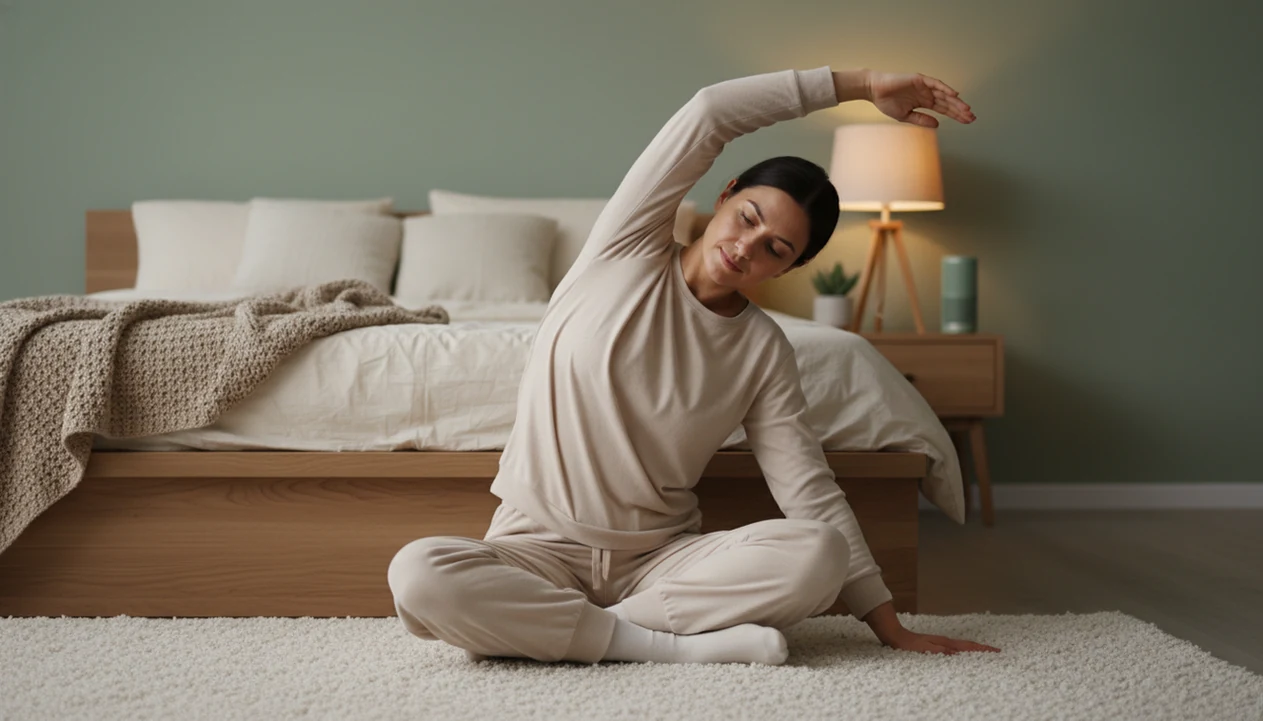
Mindfulness exercises and techniques are structured ways to practise present-moment attention with curiosity and without judgment. Focused breathing, body awareness, and guided meditation help bring attention back to what is happening now rather than following every thought. These practices can support sleep, anxiety relief, and everyday calm, but they are not a requirement to empty the mind or feel relaxed immediately.
The useful starting point is a specific goal: settling at bedtime, managing a stressful moment, concentrating on a task, or noticing emotional patterns. This guide groups exercises by those goals and explains when breathing, body scans, grounding, or movement may fit better. It also separates everyday attention practice from formal mindfulness programmes and identifies when professional support matters more than another exercise.
What Mindfulness Exercises and Techniques Actually Do
Mindfulness is intentional present-moment attention without judgment. It helps you notice breath, body sensations, thoughts, and emotions without immediately chasing them or pushing them away.
That sounds simple. It is not always easy.
Modern mindfulness exercises are usually secular and evidence-informed, even though some practices have spiritual roots. You do not have to sit in silence for an hour or “clear your mind.” The real skill is noticing, “I’m planning tomorrow again,” then returning to the next breath.
Use has grown sharply. In U.S. national survey data, adult meditation use rose from 4.1% in 2012 to 14.2% in 2017, according to the National Center for Complementary and Integrative Health NCCIH mindfulness overview: meditation.
For adults who want structure, guided tools such as Calm, Headspace, Insight Timer, and mindful.org can deliver sessions, timers, breathing practices, and sleep audio without making you build the routine from scratch.
How Mindfulness Techniques Work on the Brain and Body
Mindfulness techniques work by training attention, calming physiological arousal, and changing how you respond to thoughts. In plain language, they give your body fewer alarm signals to follow.
- Focused breathing can shift the nervous system. Slow attention to the breath may support parasympathetic activity, the “settle down” branch linked with lower heart rate and reduced stress arousal.
- Body awareness interrupts rumination. When attention moves to the feet, chest, or jaw, it has less room to replay unread emails behind closed eyes.
- Pre-sleep arousal can soften. Mindfulness does not force sleep, but it can reduce the mental struggle that keeps many people awake.
- Repeated practice builds non-reactive awareness. Over time, you may notice anger, worry, or sadness earlier, before it drives the next action.
- Technique choice matters. A body scan fits cool sheets and restless legs; mindful walking fits a midday slump after two hours at a screen.
Mindfulness usually works best when the practice matches the moment, while generic meditation can feel harder because the body needs something more specific.
What research on brief practice actually shows
Evidence for brief mindfulness practice is encouraging but modest. A meta-analysis of 65 randomized controlled trials, involving 5,489 participants, found a small reduction in negative affectivity with interventions lasting up to two weeks. Most participants had no previous meditation experience. The finding supports short beginner practices, but it does not establish that a single breathing exercise will reliably relieve anxiety or improve sleep.
Formal programmes are a different level of commitment. In a randomized trial of 276 adults with anxiety disorders, eight weeks of Mindfulness-Based Stress Reduction was noninferior to escitalopram on anxiety outcomes. That result concerns a clinician-led programme, not a few minutes of self-directed meditation. It is not a reason to stop prescribed medication or substitute an informal routine for treatment.
6 Mindfulness Activities Categorized by Adult Goal

Different mindfulness activities fit different adult goals. A sleep problem, a stress spike, and an unfocused workday usually need different starting points.
| Goal | Best Technique | How It Helps | Session Length | Available in MindTastik |
|---|---|---|---|---|
| Sleep onset | Body scan | Moves attention from thoughts into physical sensation | 10 to 20 minutes | Yes |
| Middle-of-night awakenings | 4-7-8 breathing | Gives the mind a quiet counting pattern | 3 to 8 minutes | Yes |
| Morning anxiety | Progressive muscle relaxation | Releases bracing in shoulders, jaw, and stomach | 5 to 15 minutes | Yes |
| Daytime stress | Mindful walking | Uses movement to discharge tension without scrolling | 5 to 10 minutes | Yes |
| Focus and productivity | Guided meditation | Reorients attention before a task block | 5 to 12 minutes | Yes |
| Emotional awareness | Breath counting | Builds steady attention while emotions pass through | 3 to 10 minutes | Yes |
Image caption: A categorized table of mindfulness exercises and techniques by adult goal.
Many guides list mindfulness exercises as a flat menu. A goal-based map is more useful when you’re choosing between a 5-minute breathing exercise and a 20-minute body scan.
Mindfulness Exercises for Sleep Onset and Nighttime Calm
Mindfulness exercises for sleep work best when they reduce pre-sleep arousal without turning bedtime into another task. Body scans, breathing, and muscle relaxation are the most practical starting points.
Body Scan for Sleep Onset
Body scan meditation guides attention slowly through the body, often from feet to face. In a 6-week randomized trial, mindfulness meditation improved Pittsburgh Sleep Quality Index scores by 2.8 points versus 1.1 points for sleep-hygiene education PMC research article: PMC4394199.
Breathing Techniques for Nighttime Awakenings
4-7-8 breathing gives the mind a simple count to follow when restlessness interrupts a quiet room. Progressive muscle relaxation helps when tension feels physical, especially in the jaw, hands, or legs.
A 2022 meta-analysis found a small to moderate sleep-quality effect, Hedges g = 0.33 PubMed research: 36018075. An NIH-funded chronic insomnia trial also reported a 27% reduction in total wake time after mindfulness-based stress reduction PubMed research: 25142566.
A bedtime mindfulness routine can sit alongside sleep habits such as dim lighting, less device use, caffeine limits, and a consistent evening schedule. The most common medically supported way to improve sleep is behavioral consistency combined with calming pre-sleep habits.
Mindfulness Exercises for Anxiety and Stress Relief
Mindfulness exercises for anxiety work by giving attention a safe, repeatable anchor. They are support tools, not replacements for therapy, medication, or urgent care.
Breathing Exercises for Acute Anxiety
Focused breathing is the go-to for acute anxiety because it is portable. Box breathing and 4-7-8 breathing can be done in a conference room chair between meetings, or with one inhale timed to a crosswalk signal.
Grounding Techniques for Daily Stress
5-4-3-2-1 grounding asks you to name five things you see, four you feel, three you hear, two you smell, and one you taste. It can help during panic-like moments because it pulls attention into the room.
Guided meditation fits generalized daily anxiety, especially for someone who wants a calm audio cue when worry starts looping. Regular practice is associated with reduced anxiety and depressive symptoms over time.
Some beginners notice more distressing thoughts at first. Start shorter, use guidance, and consider mental health exercises that feel stabilizing rather than intense.
Mindfulness Practice Ideas for Focus and Emotional Awareness
Mindfulness practice ideas for focus and emotional awareness should be short, repeatable, and easy to place inside a normal day. Five to 10 minutes is enough for many busy adults to begin.
Mindful Walking for Daytime Focus
Mindful walking works well when sitting still feels like one more demand. Notice heel, sole, toe, breath, and the space ahead. A lap around the block can reset attention before a hard email or a late-afternoon meeting.
Noting Practice for Emotional Patterns
Noting practice means naming what is happening: “worry,” “tightness,” “planning,” “resentment.” The label is light, not dramatic. For emotional awareness, this creates a pause between feeling and reacting.
Routine activities can also become informal mindfulness exercises. Try three mindful bites at lunch, one quiet minute before commuting, or a breath count before opening a message thread. For deeper reflection, emotional awareness exercises can help you spot repeated patterns without judging them.
Small counts count.
Practising mindfulness during eating or everyday movement
Informal mindfulness uses an ordinary activity as the object of attention instead of setting aside a meditation session. During a meal, that might mean noticing taste, texture, and the physical act of chewing. During walking, it might mean noticing contact with the ground and changes in bodily sensation. NHS mindfulness guidance includes walking and eating as examples of attending to physical sensations.
The purpose is attention practice, not turning every meal or walk into a health intervention. A 2025 systematic review of mindfulness outside standardized clinical protocols found no clear between-group evidence of improved dietary behaviour or physical activity among healthy adults. Mindful eating and walking can be used to notice present experience, but should not be presented as established weight-loss methods or ways to guarantee an exercise habit.
6-Step Daily Routine for Mindfulness Exercises
A daily routine for mindfulness exercises works best when it starts with one goal and one technique. Do not build a complicated plan on day one.
- Identify your primary goal. Choose sleep, anxiety support, focus, or emotional awareness.
- Choose one technique. Match your goal to the category table above, such as body scan for sleep or breath counting for focus.
- Set a consistent time. Pick morning, midday, or bedtime, then start with 5 minutes.
- Open your app. Select a guided session, breathing exercise, or sleep audio that fits the goal.
- Track the habit. Use timers, streaks, or a simple calendar mark, then increase length only when it feels manageable.
- Review weekly. Rotate techniques if your main goal shifts from sleep to stress, or from focus to emotional awareness. For changes between activities, try mindfulness exercises for transitions to settle attention before your next task.
Apps such as MindTastik can make this easier with guided audio, offline downloads, timers, streak tracking, and progressive programs.
Mindfulness Exercises for Adults with Sleep Issues, Stress, or Anxiety
Mindfulness exercises for adults are best suited for mild-to-moderate sleep trouble, everyday stress, situational anxiety, and difficulty unwinding. They also fit beginners who want an accessible entry point through guided audio.
Best for
- Adults who feel wired at bedtime but do not have severe insomnia.
- People with daily stress who need a short reset between responsibilities.
- Beginners who want structure, prompts, and a clear starting point.
- Anyone building a wind-down routine with breathing, body scans, or mindfulness exercises before bed.
Not ideal for
- Severe insomnia used as a standalone approach.
- PTSD, major depression, or diagnosed anxiety disorders without clinical support.
- Panic symptoms that feel unsafe, escalating, or hard to manage alone.
Per the CDC, about 35% of U.S. adults report sleeping less than 7 hours per night CDC guidance: adults sleep facts and stats.html. That scale matters, but mindfulness should complement medical care, therapy, medication, and sleep evaluation when those are needed.
When to Seek Professional Help
Seek professional help when sleep, anxiety, panic, trauma symptoms, or low mood stop feeling manageable or start disrupting ordinary life. Mindfulness can support care, but it does not diagnose conditions or replace treatment from a qualified clinician.
Use a simple escalation plan rather than trying to meditate through symptoms that need more support:
- Notice the pattern. Track insomnia that lasts for weeks, panic episodes, trauma reminders, nightmares, depression, loss of interest, or anxiety that keeps returning.
- Check the impact. Speak with a clinician if symptoms interfere with work, sleep, parenting, school, relationships, driving, or basic daily routines.
- Get urgent support. Seek emergency help right away if you have thoughts of self-harm, feel unable to stay safe, have chest pain, fainting, severe shortness of breath, or panic symptoms that feel medically unsafe.
- Use mindfulness as an add-on. Keep gentle breathing, grounding, or body scans as supportive tools while you follow medical advice, therapy, medication plans, or sleep evaluation when recommended.
A steadier nervous system is useful. So is knowing when not to handle it alone.
Guided sessions for bedtime, breathing, and focus
MindTastik’s guided meditation library suits adults who prefer spoken prompts to silent practice. Its breathing exercises offer another option for short attention practice, while sleep stories and soundscapes can serve as bedtime listening rather than a formal mindfulness exercise. Focus sessions fit a different goal: returning attention to a task. Adults who prefer silence or mindful walking may not need an app. Persistent insomnia, significant anxiety, or trauma-related reactions call for professional guidance, not an audio session alone.
What mindfulness exercises cannot promise
Mindfulness has real benefits, but it has limits. It should be presented as a supportive practice, not a guaranteed fix.
- Mindfulness is not a replacement for medical or psychological treatment for severe mental health conditions.
- Some people notice more distressing thoughts or emotions when starting. Shorter practices, grounding, or professional guidance may help.
- Sleep research shows small to moderate effects overall. Mindfulness does not work equally well for everyone.
- Benefits build gradually and require consistency. There is no instant result.
- Content quality varies widely across apps, videos, and online resources.
- Mindfulness for sleep works best with sleep hygiene, including light control, device boundaries, caffeine timing, and a regular routine.
- Individual results depend on baseline severity, practice consistency, trauma history, and comfort with introspective exercises.
- If a practice makes you feel worse repeatedly, stop and choose a steadier option.
Clinicians typically recommend getting professional help when insomnia, anxiety, depression, trauma symptoms, or panic disrupt daily life or feel unmanageable.
When to switch from breath focus to grounding or movement
- Choose a grounding exercise over breath focus when steady breath feels forced or makes you more self-conscious.
- Choose a short session over a long practice when your main barrier is starting, not understanding mindfulness.
- Choose a guided voice over silent sitting when your attention keeps turning the practice into another problem to solve.
- Choose movement-based mindfulness when sitting still seems to increase restlessness, jaw tension, or looping thoughts.
- Choose professional support when distress feels intense, persistent, or difficult to manage with self-guided routines alone.
Mindfulness exercise questions
What is the easiest mindfulness exercise for beginners?
Sound awareness is a simple starting point: notice sounds nearby without needing to identify or judge each one. When attention wanders, return to listening. Natural breathing is another option, but there is no need to slow or deepen it. External sounds may suit people who find breath or body attention uncomfortable.
How long should a beginner practise mindfulness?
Five to ten minutes is a manageable starting point, and shorter practice is reasonable when concentration or comfort is limited. Research on brief interventions suggests small average benefits, not a minimum number of minutes that works for everyone. Increase the duration only if the practice remains tolerable and fits the day.
Which mindfulness exercise is best for falling asleep?
A gentle body scan is a practical starting point when thoughts keep attention busy at bedtime. It shifts attention toward physical sensations rather than planning or replaying the day. Breathing or muscle relaxation may fit better for some adults. None guarantees sleep, and persistent or severe insomnia needs assessment rather than mindfulness alone.
What should I do if focusing on breathing makes anxiety worse?
Stop the breath-focused exercise rather than forcing it. Try noticing sounds, objects in the room, or contact between the feet and floor. Gentle movement is another option. Marked panic, dissociation, trauma-related reactions, or worsening symptoms are reasons to seek professional guidance before continuing self-directed mindfulness.
Are mindfulness exercises the same as meditation?
Meditation is one way to practise mindfulness, usually with time deliberately set aside for attention practice. Mindfulness can also happen during ordinary activities such as eating, showering, stretching, or walking. The shared skill is noticing present experience and returning attention when it wanders, rather than eliminating thoughts.
Can mindfulness exercises treat an anxiety disorder?
Everyday exercises can support coping, but they should not be treated as a replacement for anxiety care. Research showing outcomes comparable with medication concerned an eight-week, clinician-led Mindfulness-Based Stress Reduction programme. That evidence does not establish that brief informal practice treats an anxiety disorder or justifies changing prescribed treatment.
Can I practise mindfulness if sitting still is uncomfortable?
Yes. Mindfulness can be practised standing, lying down, seated with support, or during gentle movement, with mobility aids as appropriate. Walking, stretching, and listening to sounds offer alternatives to still sitting. The aim is manageable attention practice, not maintaining a particular posture or enduring discomfort.