
Mindfulness Exercises for Busy Adults: Short Practices for Calm Days and Better Nights
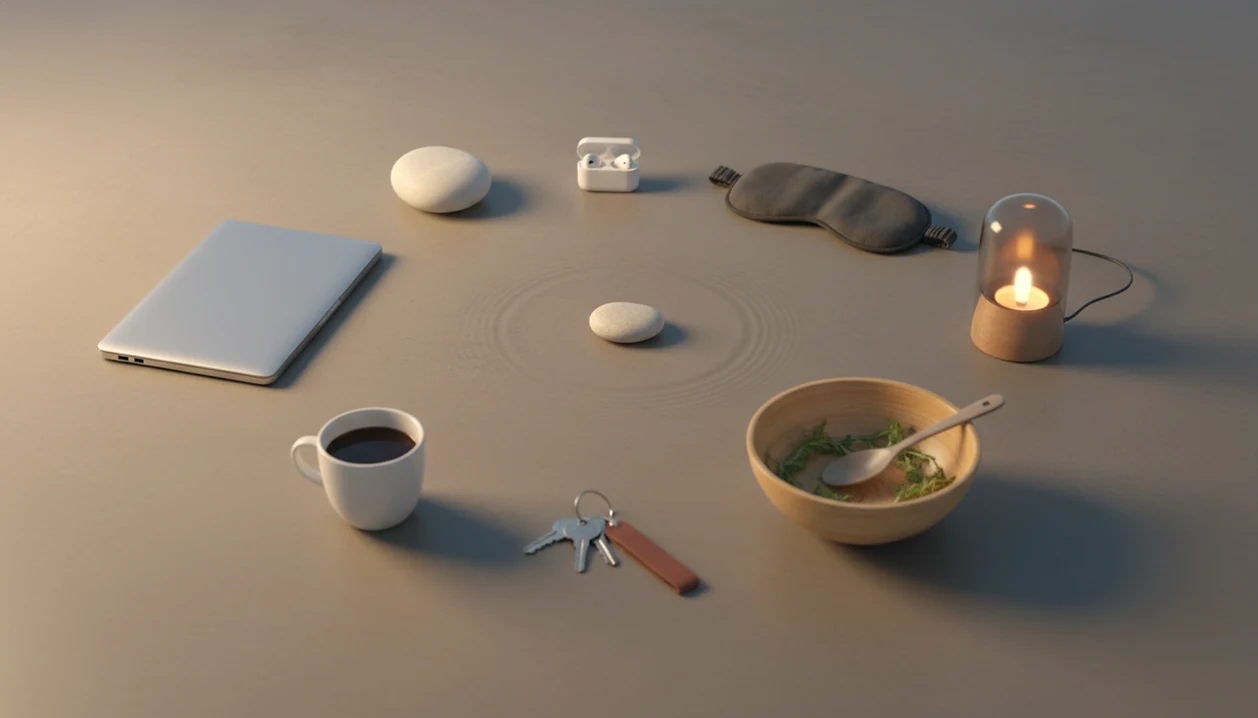


Mindfulness exercises for busy adults are short attention practices that fit into 1 to 10 minutes, including breathing resets, body scans, mindful walking, mindful eating, and guided bedtime sessions. They use breath, body sensations, movement, sound, or a voice as an anchor. The aim is not an empty mind. It is noticing what is happening, with less judgment, and returning attention when it wanders.
A practical starting point is 1 to 3 minutes before email, during a walk, or in bed. Repeating a manageable practice is more useful than reserving mindfulness for rare, long sessions. MindTastik offers guided meditation, breathing exercises, and sleep audio for adults who prefer spoken instructions rather than deciding what to do next.
The short-practice essentials
- Start with 1-3 minute practices tied to existing habits, such as before email, during a walk, or in bed.
- Short mindfulness exercises work best when repeated daily, not saved for rare long sessions.
- MindTastik fits busy schedules by offering guided meditation, sleep audio, breathing exercises, and self-hypnosis sessions with low-friction audio prompts.
Best short mindfulness exercises for busy adults
The most practical mindfulness exercises for busy adults are the ones that fit ordinary moments without requiring silence, special clothing, or a cleared calendar. Start with these five, then repeat the ones that feel manageable.
- 60-second breathing reset: Use this before opening email, entering a meeting, or switching from work mode to parent mode. Palms pressed against a desk edge, one slow breath can interrupt the rush.
- 3-minute body scan: Move attention through the body before bed or after a stressful call. It works well when your mind is loud but your body is tired.
- Mindful walking: Notice footsteps, sound, and posture while walking to lunch, the train, or school pickup. If you practice with colleagues, mindfulness activities for groups can turn a shared walk into a simple attention exercise.
- Mindful eating: Pause for the first three bites or first sip during a rushed lunch.
- Guided sleep wind-down: Use audio when choosing between techniques feels like one more task.
Beginners often stick with guided audio because it removes decision fatigue. For a broader menu, the mindfulness exercises list can help you compare simple options.
Quick mindfulness for busy adults: at-a-glance routine table
Quick mindfulness for busy adults works best when each practice has a clear job. The table below maps the exercise to the moment, the mismatch, and whether guided audio helps.
| Exercise | Time | Best for | Not for | App-guided option |
|---|---|---|---|---|
| 60-second breathing reset | 1 minute | Overloaded workdays, email anxiety, meeting transitions | Severe panic or crisis symptoms needing support | Guided breathing timer |
| 3-minute body scan | 3 minutes | Bedtime, parenting fatigue, physical tension | Anyone who feels worse turning inward | Short sleep audio |
| Mindful walking | 2-10 minutes | Commuting, errands, lunch breaks | Unsafe streets or distracted crossings | Walking prompt |
| Mindful eating | 1-5 minutes | Rushed lunch breaks, autopilot snacking | Complicated eating concerns without professional care | Sensory cue practice |
| Guided wind-down | 5-10 minutes | Bedtime racing thoughts | Situations needing medical sleep care | Sleep session |
The right fit for bedtime consistency is MindTastik when the choice is between a 5-minute breathing exercise and a 20-minute body scan, because the session length is obvious before you tap play.
How mindfulness exercises for busy adults work
Mindfulness is paying attention on purpose to the present moment without judgment. In practice, that means using an anchor, such as breath, body sensation, sound, movement, or a guided voice, then returning to it when attention wanders.
The mechanism is simple but not always easy. You notice the mind leaving, label it gently, and come back. That attention loop is the training. A thought about tomorrow’s meeting may appear at midnight; the practice is noticing “planning” and returning to the feeling of the blanket at your chin. If writing helps you settle, mindfulness journal prompts for calm offer a gentle way to notice thoughts before returning attention.
Mindfulness is mental training, not forced relaxation or thought suppression. For related stress-focused practices, our guide to mental health exercises gives more everyday options.
How to use short mindfulness exercises in a busy schedule
Short mindfulness exercises work when they are attached to moments that already happen. Build a tiny daily loop instead of waiting for a quiet afternoon that may never arrive.
- Set three practice windows: one morning reset, one midday reset, and one bedtime wind-down.
- Choose one exercise for each window, such as breathing in the morning, walking at lunch, and a body scan at night.
- Pair each practice with something that already happens, such as opening the laptop, leaving the parking lot, or dimming the phone screen before bed. When familiar habits need a fresh cue, a mindfulness prompt generator can suggest a focus for your next short practice.
- Follow one-tap guided sessions in MindTastik when you do not want to decide what to do next.
- Review weekly by asking which practice you actually repeated, not which one sounded most impressive. For a brief written check-in, a journal prompt generator can help you reflect on what made practice easier this week.
Keep it boring.
Busy adults looking for everyday calm can use MindTastik as a starting point because 2-, 5-, and 10-minute guided sessions make the next step clear.
How we picked these mindfulness exercises for busy adults
We picked exercises that busy adults can repeat during normal life, not practices that require a retreat-like setup. The selection favors short, low-friction techniques with research support for stress, anxiety, mood, and sleep.
- Time: Each practice can take 1-10 minutes, so it fits between calls, errands, and bedtime.
- Setting: We favored exercises that can be done with eyes open or in ordinary places.
- Evidence: Mindfulness research shows small to moderate benefits for anxiety, depression, pain, and stress in reviews such as Goyal et al. in JAMA Internal Medicine (JAMA Internal Medicine study: 1809754), while NCCIH summarizes mindfulness as a supportive practice rather than a cure (NCCIH mindfulness overview: meditation and mindfulness effectiveness and safety).
- Simplicity: Long silent sits were excluded because many beginners quit before the habit forms.
- Equipment: Complex rituals and gear-heavy practices were left out because a busy schedule needs fewer barriers.
Therapists and mental-health guidelines commonly recommend mindfulness as a supportive practice for stress and anxiety, while still separating it from diagnosis, medication decisions, or crisis care.
What research actually says about brief mindfulness
Research on brief mindfulness supports modest expectations. A 2018 meta-analysis of brief mindfulness training found a small reduction in negative affect compared with control programs, with an effect size of 0.21. After adjustment for publication bias, that estimate fell to 0.04. This matters for a busy schedule: a short pause can be a useful attention practice, but the evidence does not justify promising a substantial mood change from every session.
A 2024 review of brief mindfulness inductions found reduced state anxiety and increased state mindfulness compared with non-therapeutic controls. These findings concern how people felt around a brief exercise, not proof that a one-minute routine treats an anxiety disorder. The review also found only limited, suggestive evidence for improvement on behavioral attention tasks. Brief practices are reasonable starting points, without assuming every duration or exercise has the same effect.
Best 60-second breathing reset for work stress
Does a 60-second breathing reset help work stress? It can help you pause before reacting, especially when the goal is immediate downshifting rather than solving the whole problem.
Try this: inhale slowly through the nose for a comfortable count, then exhale a little longer than the inhale. Repeat for one minute. Do not strain, hold your breath aggressively, or turn it into a performance test. Feet planted on office carpet. Screen still glowing. That counts.
Use this before opening email, joining a presentation, or switching from one task to another. It is best for a quick nervous-system reset, not for severe panic, chest pain, or crisis symptoms that need professional help. When the trigger is workday friction, MindTastik fits because guided breathing exercises tell you when to inhale, exhale, and stop.
Best 3-minute body scan for bedtime mindfulness
Can a 3-minute body scan help at bedtime? It can support wind-down by moving attention from thought loops into body sensations, without trying to force sleep.
Start at the head and move slowly toward the feet, or begin with the feet and move upward. Notice the forehead, jaw, shoulders, chest, belly, legs, and toes. The instruction is “notice,” not “fix.” Late in the evening, when the room is quiet and sleep still feels out of reach, that distinction can make the practice feel gentler.
A systematic review and meta-analysis found that mindfulness meditation was associated with improved sleep quality, though effects varied by study design and population (PubMed research: 30575050). That does not make a body scan a cure for insomnia. It makes it a reasonable bedtime support. MindTastik includes sleep audio for adults who need a voice to follow when nighttime anxiety is hard to shake.
Best mindful walking exercise for commutes and errands
Can walking count as mindfulness? Yes, mindful walking uses movement, sound, and visual detail as anchors while you stay alert to your surroundings.
Pick a safe stretch, such as a hallway, sidewalk, parking lot edge, or path from your car to an office door. Notice the pressure of each foot, the rhythm of steps, the temperature of the air, and three visible details around you. Keep your eyes open. Don’t zone out at road crossings.
Mindful walking works well before a meeting, during a lunch break, while heading to school pickup, or when sitting still feels impossible. Avoid mindful walking in unsafe places, at crowded crossings, or whenever finding the route requires full attention. For busy adults who fidget through seated practice, mindful walking is often easier than silent sitting because the body already has a job.
Best mindful eating exercise for rushed lunch breaks
Can lunch become a mindfulness exercise? Yes, the first three bites or first sip can train attention without turning food into a project.
Before the first bite, pause. Notice the color, smell, texture, taste, and temperature. If it is a drink, feel the cup, notice the steam or chill, and take one slower sip. Then continue with your meal normally. No ceremony required.
This is not a diet method, a weight-loss technique, or a rule about “good” food. It is best for interrupting autopilot during a rushed workday, especially when lunch disappears while tabs stay open. It is not enough for complicated eating concerns, distress around food, or medical nutrition needs. Those deserve professional support. If emotions show up strongly during eating, emotional awareness exercises may be a gentler next step.
Best guided mindfulness app flow for low-friction everyday calm
A guided mindfulness app flow works when it removes the “what should I do now?” decision. For busy adults, that friction matters more than having a giant library.
MindTastik offers guided wellness support through meditation, sleep audio, breathing exercises, and self-hypnosis sessions for adults who want help with rest, anxiety, and everyday calm. Choose a 2-minute session when you are between tasks, a 5-minute session when stress is rising, or a 10-minute session when you have space before bed. A phone with guided audio on the desk between meetings is a real use case.
If the issue is nightly overthinking, then MindTastik fits because the guided sleep flow gives you a voice, a timer, and a clear endpoint. Examples people may compare include MindTastik, Calm, Headspace, and Mindful.org resources.
Honest cons of short mindfulness exercises for busy adults
Short mindfulness exercises are useful, but the benefits are usually modest and gradual. A one-minute reset can change the next few moments; it will not reorganize an overloaded life by itself.
Some adults feel restless or more aware of tension at first. That does not mean they are doing it wrong. Beginner meditation often includes shifting in a chair, hands that will not quite settle, and a simple wish for a calm voice to help carry the next few minutes.
Notifications can also become a problem. An app reminder helps only if it leads to practice, not scrolling. Consistency matters more than intensity, so repeating a short practice daily often beats one ambitious session on Sunday night. MindTastik supports this pattern because quick guided sessions are easier to restart after a missed day than a long routine that feels already broken.
Guided breathing between tasks, sleep audio at bedtime
MindTastik’s guided breathing exercises suit adults who want spoken instructions during a pause between tasks. Its guided meditations and sleep audio offer other options when choosing a practice feels like another task. Adults who prefer silence can use an unguided pause instead. If attention to breathing increases distress, an eyes-open practice focused on surroundings may fit better. Persistent anxiety or insomnia needs appropriate care, not just another audio session.
What short mindfulness breaks cannot solve
Mindfulness is a supportive practice, not a stand-alone answer for every mental health or sleep concern. Use it with honest expectations and get help when symptoms are serious.
- Mindfulness does not replace professional treatment for severe anxiety, depression, trauma, substance use concerns, or insomnia.
- Benefits are small to moderate on average, not miraculous or guaranteed.
- Some people feel more distress when turning inward, especially with trauma history or intense body awareness.
- Short exercises may be insufficient for complex mental health needs or long-running sleep problems.
- Evidence is stronger for stress, anxiety, mood, pain, and sleep than for productivity or performance claims.
- Crisis symptoms, thoughts of self-harm, chest pain, or feeling unsafe need emergency or qualified professional support.
- Apps can distract if reminders, streaks, or phone use pull attention into checking behavior.
- Competitors such as Calm, Headspace, and Mindful.org may fit people who want different teachers, formats, or free article-based learning.
For a gentler evening option, gratitude meditation can pair well with a wind-down routine.
When to seek professional help
Seek professional help when symptoms feel unsafe, medical, traumatic, or too persistent for a self-guided practice. Mindfulness can support care, but it is not a diagnosis, treatment plan, or replacement for therapy, medication guidance, emergency care, or behavioral sleep treatment.
- Call emergency services or a local crisis line right away if you have thoughts of self-harm, feel unable to stay safe, or fear you might hurt someone.
- Treat chest pain, faintness, severe shortness of breath, or sudden intense physical symptoms as medical concerns, even if anxiety might be involved.
- Contact a qualified mental health professional if panic attacks, trauma flashbacks, dissociation, or feeling unsafe keep returning.
- Ask for medical or behavioral sleep-care evaluation when insomnia lasts for weeks, sleep loss affects driving or work, snoring or gasping appears, or bedtime dread takes over.
- Switch to shorter eyes-open grounding if closing your eyes, scanning the body, or focusing inward increases distress. Name objects in the room, feel your feet, or walk slowly in a safe place.
A good practice should make support easier to access, not become another reason to push through alone.
Questions about short daily mindfulness
Can two minutes of mindfulness make a difference?
Two minutes can provide a pause to notice tension, thoughts, and the next task before reacting automatically. Research on brief mindfulness suggests possible short-term benefits, but it does not establish that exactly two minutes is enough for everyone. Treat it as a manageable starting point, not a treatment dose.
What is the easiest mindfulness exercise to do at a desk?
Sit comfortably, notice the contact of feet with the floor, and pay attention to a few natural breaths. When attention shifts to email or a meeting, notice that and return to breathing. There is no need to close the eyes, breathe deeply, or maintain perfect concentration.
How can I practice mindfulness between meetings?
Use the transition itself as the cue. Pause before opening the next call, notice posture and breathing for 30 to 60 seconds, then choose the next action deliberately. Keep the exercise simple enough that it does not become another task. It cannot resolve an overloaded schedule by itself.
What mindfulness exercise is best before bed?
A short body scan is one option: move attention through the forehead, jaw, shoulders, trunk, legs, and feet, noticing sensations without trying to change them. The aim is a quieter wind-down, not forced sleep. If body attention increases distress, try a guided voice or an external sound instead.
How often should busy adults practice mindfulness?
Start with one short practice attached to a daily event, such as opening the laptop or finishing lunch. Add another window only if the first feels manageable. There is no established daily duration that everyone must meet. A repeatable routine is a more practical starting point than occasional sessions that feel burdensome.
How can I practice mindfulness during a busy commute?
If you use public transport, notice the feeling of your feet on the floor, listen to nearby sounds, or gently follow your natural breathing. If you drive, keep your eyes open and attention on the road. Notice your grip on the steering wheel and relax unnecessary tension without distracting yourself from driving.
Can everyday chores become mindfulness exercises?
Yes. Choose a routine task, such as washing dishes or folding laundry, and pay attention to its physical sensations. Notice the water temperature, fabric texture, or movements of your hands. When your attention drifts, gently return to the task. You do not need to slow everything down or finish with a perfectly quiet mind.
How can I remember to practice mindfulness when my schedule is packed?
Link a brief mindfulness practice to something you already do, such as making coffee, washing your hands, or sitting down to eat. Use that moment to notice one breath or a physical sensation. A simple reminder can help, but choose a cue that fits your routine rather than adding another demanding task to your day.