
One-Minute Mindfulness Exercises for Quick Calm
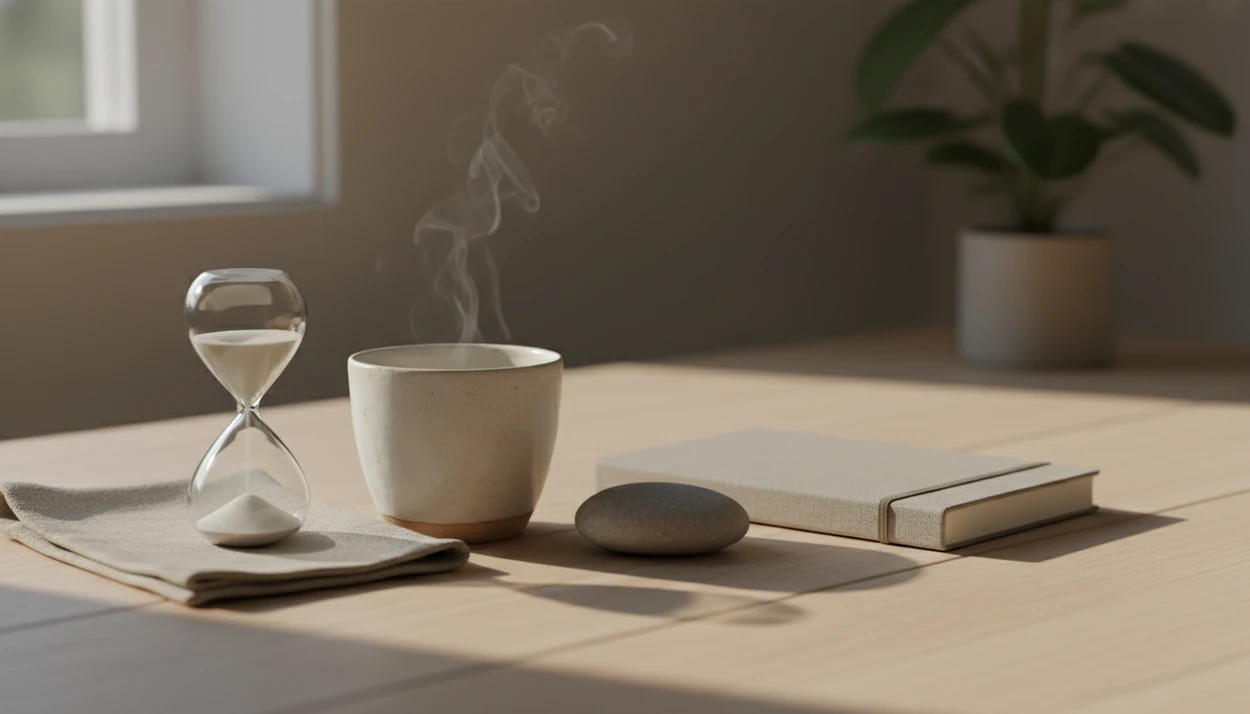


One-minute mindfulness exercises are 60-second practices that direct attention to breathing, body sensations, sound, movement, or the senses. They offer a brief pause during work, commuting, bedtime, or a spell of overthinking. The aim is to notice the present moment and return attention when it wanders, not to become perfectly calm before the minute ends.
These exercises fit ordinary transitions: before a meeting, after a tense email, while waiting safely, or before turning out the light. Repeating a simple practice is more consistent with the evidence than expecting one minute to solve persistent stress. Research on brief mindfulness is encouraging, but a single 60-second session remains under-studied. It is a supportive habit, not a cure for anxiety, insomnia, or ongoing distress.
The essentials
- Use 1 minute mindfulness as a tiny reset at natural transition points: before meetings, after emails, while waiting, or before sleep. For packed schedules, try mindfulness exercises for busy adults that fit into ordinary pauses between tasks.
- The strongest mindfulness evidence supports repeated practice over time, while single 60-second sessions are helpful but under-studied.
- MindTastik can support these micro mindfulness moments with guided breathing, sleep audio, meditation, and self-hypnosis sessions for everyday calm.
5 one-minute mindfulness exercises to try first
These five one-minute mindfulness exercises give you a starting point when your mind feels crowded, your body feels tense, or you need a short reset. Pick one, set 60 seconds, and repeat it often; consistency matters more than feeling perfectly calm.
60-second breathing reset
Breathe in for four counts, breathe out for six counts, and repeat for one minute. This fits work stress, bedtime, or the moment after a tense message lands.
STOP practice
Stop, take one breath, observe your body, then proceed with the next small action. It works well before meetings or when you’re about to reply too fast. Before a shared meeting, try mindfulness activities for groups, giving everyone the option to participate or sit quietly.
Five-senses scan
Name one thing you see, hear, feel, smell, and taste. This is useful for overthinking because it pulls attention into the room.
Mini body scan
Move attention from forehead to jaw, shoulders, hands, and feet. Try this before sleep, especially with the blanket pulled to the chin.
Mindful walking minute
Notice each footstep for 60 seconds. It’s a practical transition between tasks, platforms, rooms, or study blocks.
For more options, the broader mindfulness exercises list can help you rotate without overthinking it.
How 1 minute mindfulness works in the nervous system
A 1 minute mindfulness practice works by shifting attention from worry loops to a simple present-moment anchor, such as breath, sound, body sensation, or sensory contact. The goal is noticing what is happening, not forcing calm on command.
When attention returns to an anchor, the brain gets a brief break from rehearsing problems. That does not erase stress. It can, however, interrupt the loop long enough to choose the next action with more care. Someone standing with their back against a hallway wall may still feel anxious, but they have a steadier place to begin.
The American Psychological Association notes that mindfulness training is associated with reduced rumination and stress, plus improved working memory and focus, based on multiple experimental studies APA research: ce corner. A one-minute version borrows the same attention skill, but in a smaller dose.
Small pause. Real signal.
How to use a quick mindfulness exercise in 60 seconds
Use this quick mindfulness exercise anywhere you can pause safely: at a desk, in a parked car, in a bathroom stall, in a hallway, or in bed. The repeated cue matters more than the setting.
- Set a timer for 60 seconds so you do not keep checking the clock.
- Choose an anchor such as breathing, feet on the floor, room sounds, or one hand on the belly.
- Notice distraction when thoughts pull you into planning, replaying, or worrying.
- Return gently to the anchor without scolding yourself for wandering.
- Name the next action when the minute ends, such as “send the email,” “turn off the light,” or “walk inside.”
Try pairing one practice with one daily cue. The laptop fan during a five-minute pause can become your reminder. So can locking the car, washing your hands, or dimming the phone screen before bedtime audio. If you need fresh ideas for these daily cues, use the mindfulness prompt generator to suggest a practice.
5 facts about short mindfulness practice and evidence
Short mindfulness practice is most evidence-aligned when it is repeated, not treated as one isolated minute that must fix everything. The research is encouraging, but the strongest studies usually involve structured programs or brief sessions repeated over days or weeks. When you have more time, the 20 minute meditation guide offers a longer format for practicing the same attention skills.
- Mindfulness evidence is strongest for repeated programs, not a single 60-second practice done once.
- A 2018 systematic review of 142 randomized controlled trials found small to moderate reductions in anxiety, depression, and pain compared with control conditions JAMA Internal Medicine study: 2629000.
- A 2014 JAMA Internal Medicine review of 47 randomized trials found moderate evidence that mindfulness meditation programs improved anxiety, depression, and pain compared with control conditions JAMA Internal Medicine study: 1809754.
- A review of brief mindfulness-based interventions found promising stress and mood benefits, but study formats varied widely and most interventions lasted longer than a single minute NIH research: PMC9362497.
- One-minute exercises are best framed as small daily resets, not medical treatment or a guaranteed sleep switch.
For people under everyday pressure, micro mindfulness usually works best when it is tied to a repeatable cue, while longer practice fits people who want deeper training.
Brief mindfulness research does not prove a one-minute effect
A 2018 meta-analysis of brief mindfulness training found a small reduction in negative affect compared with control programs, with an effect size of 0.21. After adjustment for publication bias, that estimate fell to 0.04. This matters because positive findings alone can make brief practice look more reliable than the full evidence suggests. The result supports modest expectations, not a promise of noticeable relief after every pause.
A 2024 review of brief mindfulness inductions found reduced state anxiety and increased state mindfulness compared with non-therapeutic controls. Those findings concern immediate experiences after brief exercises, not treatment of an anxiety disorder. They also do not establish that every exercise lasted exactly 60 seconds. A one-minute practice is a practical starting format, but its precise duration should not be presented as a proven therapeutic dose.
When to seek professional help
Seek professional help when distress is intense, recurring, or getting in the way of sleep, work, relationships, or basic daily functioning. One-minute mindfulness can support care, but it should not postpone therapy, medical assessment, or urgent help.
Panic attacks, trauma symptoms, persistent depression, chronic insomnia, or anxiety that feels unmanageable deserve assessment from a qualified clinician. The same is true if a practice makes you feel detached from your body, unreal, flooded, numb, or more frightened instead of steadier. In those moments, the safest mindfulness move may be stopping, opening your eyes, naming objects in the room, and contacting support.
- Stop the exercise if breathing, body scanning, or silence increases distress, panic, or dissociation.
- Ground yourself with external cues: feet on the floor, eyes open, room sounds, a cold glass, or a trusted person nearby.
- Contact a therapist, doctor, crisis line, or local mental health service if symptoms keep returning or impair daily life.
- Seek emergency help immediately if you feel unsafe, might harm yourself, or cannot stay safe until support arrives.
A 60-second reset is a bridge, not a barrier to care.
6 best and not-best situations for micro mindfulness
Micro mindfulness is best for ordinary transition points, not emergencies or situations that require full external attention. Use it to create a pause, then decide what support or action is needed next.
| Situation | Best for | Not ideal for |
|---|---|---|
| Before meetings | Settling breath and posture | Replacing needed conflict planning |
| After tense messages | Pausing before replying | Ignoring serious workplace issues |
| Commuting pauses | Grounding while waiting safely | Driving with eyes closed |
| Bedtime wind-down | Shifting from scrolling to rest | Forcing sleep to happen |
| Waking at night | Noticing breath or room sounds | Treating chronic insomnia alone |
| Study breaks | Resetting attention between tasks | Pushing through burnout without rest |
Adults using apps such as MindTastik, Calm, or Headspace may use guided meditation, sleep audio, breathing exercises, and self-hypnosis support for these moments.
For a bedtime pause, choose one MindTastik breathing track, body scan, or sleep audio session in advance rather than browsing a menu in the middle of the night.
Daily micro mindfulness map for work, commuting, and bedtime
Where should you use one-minute mindfulness during a normal day? Attach the minute to one regular event, such as washing hands, waiting for coffee to brew, parking, or turning out the light.
Workday reset points
Use one breath cycle while a page loads, a five-senses scan after an email, or STOP before opening Slack again. Pairing the practice with an existing cue reduces the need to “remember to be mindful.”
Commute and waiting cues
Try a standing foot-pressure scan while waiting for a train, or time one inhale with a crosswalk signal. Keep your eyes open when the environment needs attention.
Bedtime calm cues
At lights off, choose either a 5-minute breathing exercise or a 20-minute body scan in your app library. If decision fatigue is the problem, short guided sessions can help you start faster. For more sleep-specific ideas, use mindfulness exercises before bed.
One-minute mindfulness image guide for a breathing reset
Use an image that shows a person sitting upright, with one hand on the chest and one hand on the belly. The expression should look neutral, not blissed out. That matters because many people are practicing in a quiet room under dim light, hoping for a quick way to settle without making the moment feel dramatic.
A simple 60-second visual timeline can read: inhale for 10 seconds, exhale for 10 seconds, notice body sensations for 20 seconds, return to breathing for 20 seconds. Keep the sequence plain enough to follow with a short guided audio track and only a steady breath to keep time.
Recommended alt text: “Person practicing a quick mindfulness exercise with one hand on chest and one hand on belly.”
Caption: A one minute mindfulness exercise can use breath, body contact, and gentle returning as a 60-second reset.
Guided breathing for a repeatable pause
MindTastik’s guided breathing exercises suit readers who prefer spoken instructions to counting alone. A breathing session can provide a clear focus for a pause after a meeting or before bed, though this does not mean every track lasts one minute. Readers who find breath awareness uncomfortable should choose a sensory anchor instead. Those needing treatment for persistent anxiety or insomnia should seek clinical care rather than rely on an app.
What a 60-second mindfulness pause cannot do
One-minute practices are useful, but they have clear limits. Treat them as supportive practice, not as a replacement for care.
- Evidence for single 60-second mindfulness sessions is limited compared with longer repeated programs.
- One-minute practices are not a substitute for therapy, medical care, or emergency support.
- They may not be enough for severe anxiety disorders, depression, PTSD, panic, or chronic insomnia.
- Some people feel more restless when they first pause and notice their thoughts.
- Breath-focused practices may feel uncomfortable for some users, so sensory or grounding anchors can be better alternatives.
- Mindfulness should not be done with eyes closed while driving or in unsafe environments.
- Not feeling calm after 60 seconds does not mean the practice failed.
- If a practice brings up intense distress, stop and consider support from a qualified professional.
Clinicians typically recommend professional assessment when anxiety, sleep loss, panic, trauma symptoms, or low mood interfere with daily functioning. A short reset can sit beside that care, but it should not delay it. For stress-support options beyond mindfulness, mental health exercises may be a better next step.
If someone has thoughts of self-harm, feels unsafe, or cannot function because of panic, trauma symptoms, depression, or sleep loss, a one-minute exercise is not the right level of support; they should contact local emergency services or a qualified mental health professional.
One-minute mindfulness questions
How do I do mindfulness in one minute?
Set a 60-second timer and choose one anchor, such as room sounds or the feeling of feet on the floor. Notice that sensation. When thoughts pull attention away, return to it without trying to empty the mind. At the end, name the next action and continue.
What is the easiest one-minute mindfulness exercise for beginners?
A foot-pressure scan is a simple option that does not require controlling breathing. Sit or stand safely and notice where the feet touch the floor. Pay attention to pressure and contact for one minute. When attention wanders, return to those sensations. Feeling calm is not a requirement.
Can one minute of mindfulness reduce anxiety?
It may create a useful pause, but relief is not guaranteed. Research on brief mindfulness exercises suggests improvements in immediate anxiety, while evidence for exactly one minute is limited. Persistent anxiety, panic attacks, or symptoms that interfere with daily life need assessment rather than repeated resets alone.
How often should I do one-minute mindfulness exercises?
Start with one repeatable cue, such as finishing lunch or sitting down at a desk. Additional pauses can fit other transitions if they remain useful. Research supports repeated practice more clearly than an isolated minute, but it does not establish an ideal number of 60-second sessions per day.
Do I need to breathe deeply during a one-minute exercise?
No. Mindful breathing can mean noticing ordinary breaths without making them deeper or holding them. Perfect concentration is not necessary either. If breath awareness brings panic, dizziness, or distress, stop the exercise and use a concrete external anchor, such as naming objects in the room.
Can I practice one-minute mindfulness in bed?
Yes. Notice contact with the mattress, ordinary breathing, or sounds in the room for about a minute. Treat this as a pause before rest, not a task that must produce sleep. Chronic insomnia needs appropriate assessment and care; a brief bedtime exercise is not a treatment on its own.
Why do I feel more restless when I try mindfulness?
Pausing can make thoughts and body sensations more noticeable, so restlessness does not automatically mean the exercise has failed. Try an eyes-open sensory practice instead of focusing inward. If the practice causes panic, feeling unreal, or greater distress, stop and seek support rather than forcing another minute.