
Mindfulness Exercise for Racing Thoughts
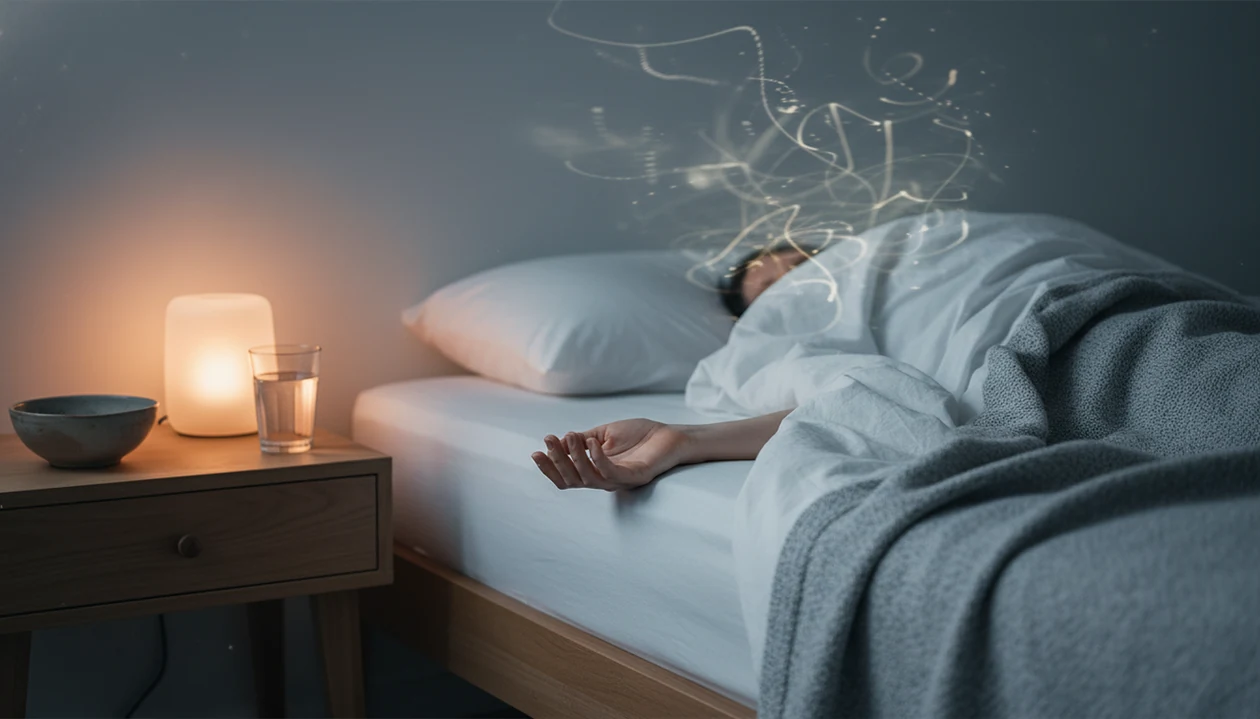


A mindfulness exercise for racing thoughts is a short attention-training practice: choose one anchor, notice rapid or repetitive thoughts, and gently return attention without trying to make the mind blank. The anchor can be breathing, body sensations, sound, touch, or the five senses. The useful action is the return, not the absence of thoughts. A thought can keep appearing while the practice continues.
A five-minute breath-and-body reset gives that process a clear sequence: count breaths, notice physical sensations, label thoughts, and return. It can be used during a daytime spike or before sleep, then repeated daily. Guided audio, including MindTastik sessions, can provide prompts when remembering the steps feels difficult. This is supportive practice, not a promise of immediate calm or a treatment for persistent anxiety or insomnia.
The essentials
- Use one anchor: breath, body scan, sound, touch, or the five senses.
- The goal is not to stop thoughts; the goal is to notice and return.
- Practice for 5 minutes during a spike, then repeat daily for longer-term sleep and anxiety support.
Best Mindfulness Exercise for Racing Thoughts: The 5-Minute Breath-and-Body Reset
The best mindfulness exercise for racing thoughts is the 5-Minute Breath-and-Body Reset: count slow breaths, scan body sensations, label thoughts, and return. Racing thoughts are fast, looping, intrusive, or hard-to-disengage thoughts that keep pulling attention away from the present.
Use the breath first because it gives the mind a steady count. Then use body sensations because they are harder to argue with than thoughts. Cool sheets against restless legs, pressure in the shoulders, the jaw unclenching by one millimeter. Small details count.
Thoughts may continue the whole time. That doesn't mean the exercise failed. For beginners, returning attention is often more useful than trying to win a debate with the mind. If you want more choices later, our mindfulness exercises page gives a broader menu.
Shortlist of Mindfulness Anchors for Racing Thoughts
Choose the anchor that matches the moment. A breath anchor may help anxious loops, while a body or sound anchor may feel better at night.
Breath Counting
Breath counting works well for anxious loops because it gives the mind a simple task: inhale, exhale, count one. When the count vanishes, begin again.
Body Scan
A body scan fits bedtime racing thoughts because it moves attention from mental speed to physical contact. Start at the face, then move down toward the feet.
Five-Senses Grounding
Five-senses grounding helps when thoughts feel panic-fast. Name five things seen, four felt, three heard, two smelled, and one tasted.
Sound or Touch Anchor
Sound or touch works when breath focus feels uncomfortable. Try fan noise, a blanket edge, or feet planted on office carpet. Simple. Noticeable.
How a Mindfulness Exercise for Racing Thoughts Works
A mindfulness exercise for racing thoughts works by moving attention from a thought loop to a present-moment anchor. The training cycle is notice, label, and return: notice the thought, label it as “thinking,” then return to breath, sound, touch, or body sensation.
Mindfulness does not delete thoughts. It changes your relationship to them. The thought can be present without becoming the whole room. To notice the feelings that accompany repeated thoughts, try emotional awareness exercises alongside your attention practice.
Evidence is supportive, but not magic. A 2014 JAMA Internal Medicine meta-analysis of 47 randomized trials found moderate improvements in anxiety and depression from mindfulness meditation programs JAMA Internal Medicine study: 1809754. A separate JAMA Internal Medicine randomized clinical trial found mindfulness awareness practices improved sleep quality more than sleep hygiene education in older adults with sleep disturbance JAMA Internal Medicine study: 2110998. Therapists and mental-health guidelines commonly recommend grounding and attention skills as support tools, not as replacements for care.
How to Use the 5-Minute Mindfulness Exercise for Racing Thoughts
Use this script when the mind is moving too fast to sort. It works best when you stop negotiating with every thought and give attention one small job.
- Set a 5-minute timer and dim the phone screen before you begin.
- Place one hand on the chest or belly, or rest both hands on your legs.
- Count slow breaths from one to ten, then start again when you lose count.
- Scan the body from face to feet, noticing pressure, warmth, tightness, or contact.
- Label each thought with one quiet word, such as “thinking,” “returning,” or “here now.”
- End by naming one next action, such as locking the phone or turning toward the pillow. A short mindfulness exercise before sleep can help you practice returning attention as you settle into bed.
For very short resets, one minute mindfulness exercises can be easier to repeat.
Best Times to Use Mindfulness for Racing Thoughts
When should you use mindfulness for racing thoughts? Use it when thoughts feel fast, repetitive, and difficult to disengage from, not just when you are casually overthinking a decision.
At bedtime, try the exercise before reaching for more input. A quiet wake-up in the early hours can be a cue to feel both feet, soften the jaw, and give attention one calmer place to rest. Insomnia can involve trouble falling asleep, staying asleep, or waking too early, according to NHLBI nhlbi reference: insomnia; racing thoughts often appear during that same alert, hard-to-settle stretch. For more bedtime options, mindfulness exercises before bed offer ways to practice with breath, sensation, or sound.
During daytime anxiety spikes, use it before replying, driving, or entering a meeting. Before focused work, use it as a short reset after muting Slack pings. Racing thoughts usually feel faster and more intrusive than ordinary overthinking. For broader stress support, mental health exercises may help you compare options. When fast thoughts come with intense feelings, try a mindfulness exercise for emotional overload to steady attention.
When bedtime worry needs more than a five-minute reset
Sleep research does not establish that one five-minute exercise treats racing thoughts or insomnia. Studies generally examine structured mindfulness programs. A 2018 review of mindfulness meditation and sleep quality found improvements compared with nonspecific active controls, but no clear advantage over specific active controls. The comparison matters: improvement against one type of program does not establish that mindfulness works better than another targeted treatment.
For persistent bedtime planning, a practical step is to write down worries and next-day tasks before starting the exercise. Assign each task a specific later time, then return to a neutral anchor such as body contact or breathing. This separates a real task that needs attention from the repeated mental rehearsal of that task. The writing step is a practical strategy, not a separately established treatment effect.
If wakefulness turns into growing frustration, CBT-I principles favor leaving bed for a quiet activity in dim light and returning when drowsy, rather than continuing to ruminate in bed. A 2025 review of psychological treatments for sleep problems supports CBT-I as the better-supported first-line behavioral treatment for chronic insomnia. Mindfulness can accompany that care, but should not replace its sleep scheduling and stimulus-control components.
Best For and Not For: Racing Thoughts Mindfulness Fit
Mindfulness fits racing thoughts best when the goal is steadier attention, not instant silence. Good meditation app for sleep anxiety and everyday calm should deliver repeatable anchors and clear guidance, not cure claims or pressure to “empty the mind.”
| Fit | Best for | Not ideal for |
|---|---|---|
| Mild anxious rumination | Repetitive worry loops that still feel manageable | Severe distress that needs professional support |
| Bedtime mental speed | Thoughts that speed up after lights out | Crisis symptoms, unsafe thoughts, or mania symptoms |
| Beginner meditation | People choosing between a 5-minute breathing exercise and a 20-minute body scan | Anyone triggered by breath focus unless they switch anchors |
| Guided support | People who want audio prompts and a timer | People looking for diagnosis or medical treatment |
For beginners who need a clear starting point, MindTastik fits because guided sessions can name the anchor, pace the return, and keep the routine short.
MindTastik Guided Audio for Racing Thoughts
MindTastik offers guided sessions, sleep audio, breathing practices, and self-hypnosis for adults seeking support with rest, anxiety, and everyday calm. It can help make the 5-minute reset easier to repeat with guided audio, timers, reminders, sleep sounds, and offline access.
For someone who wants a calm track ready when worry starts running, MindTastik fills that space with step-by-step prompts instead of asking you to recall the exercise on your own. Save a session ahead of travel, or create a favorites folder for the evenings when a familiar voice helps you settle.
At night, the best meditation app for sleep is the one you can begin with very little effort. Keep a calming session saved, settle your shoulders, take one steady breath, and start the audio without browsing through options.
Five Facts About Racing Thoughts, Anxiety, and Sleep
- An estimated 31.1% of U.S. adults experience an anxiety disorder at some point in life, and 19.1% have one in a given year, according to NIMH nimh reference: any anxiety disorder.
- Insomnia is common in adults and can involve difficulty falling asleep, staying asleep, or waking too early, per NHLBI.
- A 2014 JAMA Internal Medicine review of 47 randomized trials found mindfulness meditation programs produced moderate improvements in anxiety and depression.
- A JAMA Internal Medicine sleep trial found mindfulness awareness practices improved sleep quality more than sleep hygiene education in older adults with sleep disturbance.
- A randomized trial of app-based mindfulness training reported reduced anxiety symptoms after an 8-week smartphone program; effects may depend on adherence and baseline symptom severity JAMA Internal Medicine study: 2766254.
For racing thoughts, consistency usually matters more than session length because the skill is built through repeated noticing and returning.
Guided prompts for the notice-and-return practice
MindTastik’s guided meditation library suits adults who prefer spoken prompts to silent practice when thoughts keep pulling attention away. Breathing exercises offer another option, while soundscapes may suit people who find breath focus uncomfortable. A short guided session can support repetition without requiring every step to be recalled. People seeking treatment for persistent insomnia, severe anxiety, or crisis symptoms need professional care rather than an app alone. MindTastik is not a medical treatment.
When racing thoughts need more than mindfulness
Mindfulness is useful support, but it has real limits.
- Mindfulness is not a replacement for professional medical or mental health care.
- Seek qualified help if racing thoughts come with severe anxiety, depression, PTSD, OCD, bipolar disorder, mania symptoms, unsafe thoughts, or crisis symptoms.
- Benefits are gradual and are not guaranteed from one 5-minute session.
- Breath focus can feel uncomfortable or triggering for some people; sound, touch, or visual grounding may work better.
- Research effects are generally moderate, not curative.
- Phone notifications, late-night scrolling, and bright screens can undermine sleep benefits.
- Apps such as Calm, Headspace, mindful.org resources, and MindTastik differ in style, so the right fit depends on voice, pacing, cost, and routine.
If symptoms keep disrupting sleep, work, or relationships, use mindfulness as one support while getting appropriate care.
What Racing Thoughts Need
Racing thoughts usually do not need a dramatic mental shutdown; they need a small, repeatable place to land. A steady breath, a shoulder drop, or a counted exhale can give the mind something simple to return to without turning the exercise into a test. If thoughts feel overwhelming, frightening, or connected to urges to harm yourself or someone else, mindfulness is not the right standalone support and it is worth seeking immediate help from a qualified professional or local emergency resource.
Adjusting the anchor when counting adds tension
- If counting the breath makes you more tense, switch to feeling the shoulders soften or the hands rest; the anchor should reduce effort, not add pressure.
- If you are trying to solve a real deadline problem, use a brief planning step first, then practice; mindfulness works poorly when it is secretly being used to avoid one clear next action.
- If the first minute feels messy, that may be normal; the opening stretch often contains the most mental noise before the body catches up. If a messy start brings self-criticism, self-compassion exercises for calm can support a kinder response to yourself.
- If a long session feels intimidating, choose a three- to five-minute reset; a repeatable practice usually beats an ambitious one that you abandon.
- If silence makes thoughts louder, a short guided voice may provide enough structure to keep returning without forcing the mind blank.
Racing thoughts and mindfulness questions
What mindfulness exercise helps with racing thoughts?
A simple option is a five-minute breath-and-body reset: count breaths, notice contact or tension in the body, label a thought as “thinking,” and return to the anchor. Thoughts do not need to disappear. The practice is repeated attention, not an attempt to force mental silence.
What can calm racing thoughts in the moment?
Give attention one concrete task, such as feeling both feet against the floor or counting breaths from one to ten. When a thought interrupts, briefly label it and return. This may make the moment more manageable, but immediate relief is not guaranteed and severe distress needs additional support.
Why do racing thoughts feel harder to manage at night?
Bedtime can become a period of repeated planning or worry when attention remains caught in thoughts instead of settling on physical sensations. Racing thoughts can occur alongside difficulty falling asleep or returning to sleep, but they do not establish a diagnosis. Persistent sleep problems deserve assessment rather than repeated meditation alone.
How long should a mindfulness exercise for racing thoughts last?
Five minutes is a practical starting point, not a proven minimum dose. A three-minute reset may be easier to repeat than a longer session. Research usually evaluates structured programs over time, so results from those studies cannot be promised from a single brief exercise.
What should I do if the same thought keeps coming back?
Use the same brief label each time, such as “planning” or “worrying,” then return to the chosen anchor. Recurrence does not mean the exercise has failed. If the thought concerns a real task, write down the next action and a time to address it before resuming practice.
Can mindfulness treat insomnia caused by racing thoughts?
Mindfulness may support sleep and reduce engagement with bedtime worry, but it is not a substitute for insomnia treatment. Evidence for sleep benefits varies across programs and comparison groups. For chronic insomnia, CBT-I is the better-supported first-line behavioral treatment; mindfulness can be used alongside it when appropriate.
When should I seek help for racing thoughts?
Seek qualified help when racing thoughts accompany severe anxiety, depression, mania symptoms, or persistent sleep disruption. Thoughts involving urges to harm oneself or someone else require immediate help from a local emergency resource. A mindfulness exercise is not appropriate as the only support for a crisis.