
Mindful Breathing Exercise for Beginners
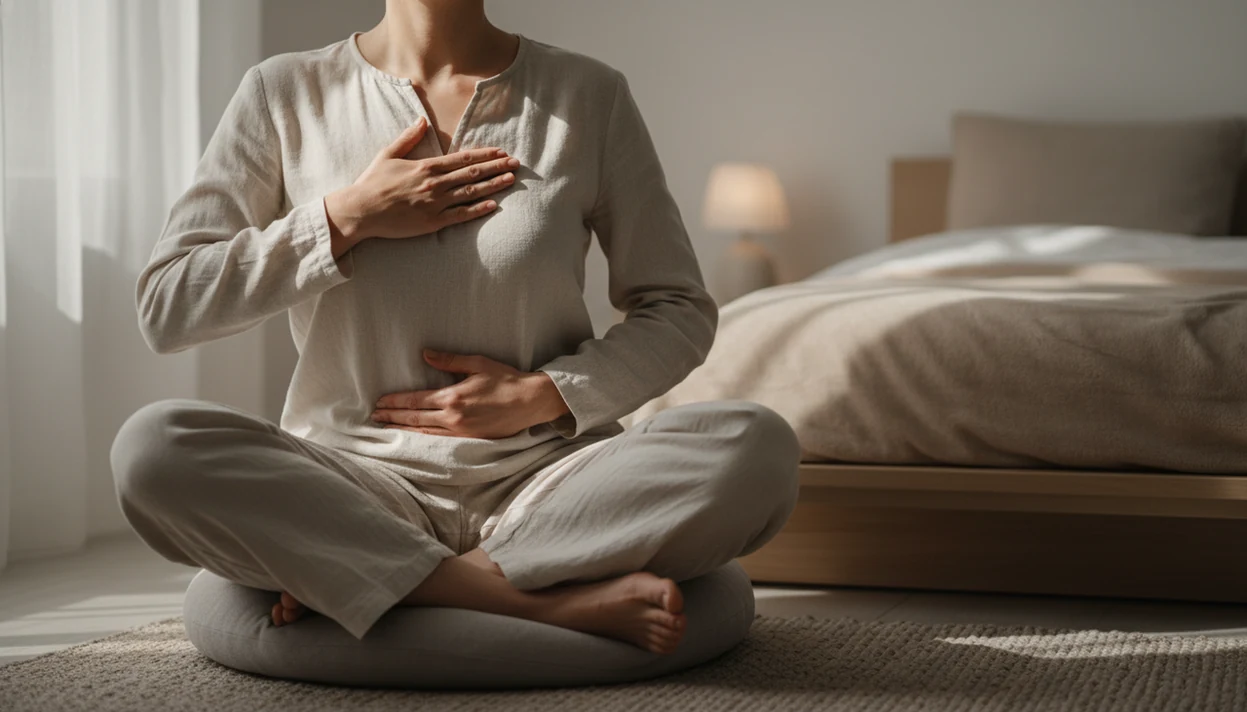


A mindful breathing exercise for beginners means sitting or lying comfortably, noticing the natural inhale and exhale, and gently returning attention whenever the mind wanders. The aim is steady, nonjudgmental attention to breathing sensations, not a perfectly controlled breath. Start with natural breathing before trying counted patterns. Noticing a distraction and returning without self-criticism is the core skill.
A three-minute pause is a simple starting point. The same exercise can serve as a daytime reset, a gentle pause during an anxious moment, or a slower bedtime wind-down. MindTastik offers guided breathing audio for people who prefer spoken cues. The sections below explain how to begin, when counting may help, and when to stop rather than push through discomfort.
The essentials
- Start with natural breathing before trying counted patterns.
- The core skill is noticing distraction and returning to the breath without self-criticism.
- Use the same basic exercise differently for everyday calm, anxiety spikes, and bedtime.
Best mindful breathing exercise for beginners: the 3-minute natural breath reset
The best mindful breathing exercise for beginners is the 3-minute natural breath reset: sit or lie down, soften your body, notice the inhale, notice the exhale, and come back when your mind wanders. It needs no equipment, special belief, or advanced technique.
Start with the breath you already have. Let your shoulders drop. Feel air move at the nose, chest, ribs, or belly. If you lose the breath count after four, that is not failure. That moment of noticing is the practice.
Small reset. Real practice.
MindTastik fits beginners who want audio guidance because it offers guided breathing sessions for sleep, anxiety support, and everyday calm. For a wider practice menu, the same starting point connects well with other mindfulness exercises and techniques.
Beginner breathing exercise shortlist for calm, anxiety, and bedtime
A beginner breathing shortlist should match the moment, not force one pattern into every situation. Use natural breathing for everyday calm, counted breathing for anxious spikes, and slower lying-down breathing before sleep.
- Natural Breath Reset: Best for everyday calm and beginners who overthink technique. Not ideal if you want a strong structured count.
- Slow Counted Breathing: Best for anxious moments; try inhaling for 3-5 and exhaling for 5-6. Not ideal if counting makes you tense.
- Bedtime 6-Breaths-Per-Minute Breathing: Best for sleep preparation, especially with a dim screen and earbuds on the nightstand. Not ideal if it becomes a performance test.
- Guided App Breathing: Best for beginners who prefer prompts. Not ideal if ads interrupt calm audio.
When someone wants simple audio for a busy mind, MindTastik supports beginners with short guided breathing practices and calming bedtime sessions.
How mindful breathing works in the nervous system
Mindful breathing works by training attention and gently shifting the body toward a calmer state. You notice the breath, notice distraction, and return attention; that loop builds the basic skill.
There is also a body effect. Slower breathing, especially with a comfortable longer exhale, may support the relaxation response through changes in arousal and autonomic balance. In plain language, the body gets a repeated signal that it does not need to stay braced.
A 2017 meta-analysis of 15 randomized controlled trials found that breathing-based mind-body practices reduced self-reported stress with a moderate effect size (Frontiers in Psychology: frontiersin reference). That does not mean breathing cures anxiety, insomnia, or depression. It means a supportive practice can help some people feel steadier, especially when repeated.
Therapists and mental-health guidelines commonly recommend grounding skills such as breathing as one support tool, not as a replacement for care.
What attention research says about returning to the breath
Research supports modest expectations for attention training. A 2021 meta-analysis of randomized trials in healthy adults found a small overall benefit across attention, executive control, and working-memory outcomes. Attention and executive control each showed small improvements, while working-memory effects were not statistically significant. These findings concern mindfulness programs, not proof that one three-minute breathing exercise improves concentration.
The comparison group matters, too. An RCT-focused review of mindfulness and cognitive performance found that attention and executive-function effects were generally small and more limited against active controls than against no treatment. For a beginner, the practical task remains noticing distraction and returning to the chosen breathing sensation. A session with wandering thoughts still contains that practice; uninterrupted concentration is not a requirement.
How to use a mindful breathing exercise for beginners
Use this beginner script when you want a clear starting point. Keep it easy enough that you would actually repeat it tomorrow.
- Set a 3-minute timer so you are not checking the clock.
- Sit or lie comfortably, with your jaw, shoulders, and belly softened. Before settling into position, a mindful stretching exercise offers another way to notice body sensations without forcing movement.
- Notice the inhale as air enters, without pulling in a huge breath.
- Notice the exhale as the body releases air; if comfortable, inhale for 3-5 and exhale for 5-6.
- Return gently when distracted, using the next breath as the restart.
- End by sensing your feet, back, face, and hands before moving on. After sitting, try a mindful walking exercise to practice noticing your feet and surroundings while moving.
Do not force deep breaths or hold the breath. If 3 minutes feels too long, use one of these one minute mindfulness exercises and stop while it still feels manageable.
Mindful breathing benefits beginners should realistically expect
Mindful breathing may support everyday calm, anxious moments, and sleep preparation, but the benefits are usually small to moderate. Most people do better when the practice is short, repeated, and tied to a normal routine.
- Everyday calm: A few minutes can create a pause before the next task, especially after Slack pings are muted for a reset. Between tasks, a mindful transition exercise can help you notice tension and begin the next activity with intention.
- Anxious moments: In a 2016 randomized trial of 288 adults with moderate anxiety, daily 20-minute diaphragmatic breathing for 8 weeks reduced anxiety scores compared with control (Frontiers in Psychology: frontiersin reference).
- Sleep preparation: A 2018 insomnia study found that slow breathing at 6 breaths per minute before bedtime improved sleep quality and insomnia severity after 8 weeks.
- Normal use: The NCCIH reports that about 14.2% of U.S. adults practiced some form of deep-breathing exercise, making breathwork a common complementary health practice rather than a fringe technique (NCCIH: NCCIH mindfulness overview: meditation and mindfulness effectiveness and safety).
- Practice effect: Benefits tend to build through repetition, not one dramatic session.
For stress support beyond breathwork, mental health exercises can add simple grounding and reflection tools.
Everyday calm, anxiety, and bedtime breathing variations
The same basic mindful breathing pattern changes by posture, duration, and pressure level. Everyday calm needs consistency, anxiety needs gentleness, and bedtime needs low effort.
| Situation | Posture | Duration | Breath style | Best for | Not ideal for |
|---|---|---|---|---|---|
| Everyday calm | Sitting | 3-5 minutes | Natural breathing | A steady reset between tasks | People wanting a strong count |
| Anxious moments | Sitting or standing | 3-10 breaths | Longer exhale, if comfortable | Quick body settling | Anyone who feels dizzy counting |
| Bedtime preparation | Lying down | 5-20 minutes | Slower breathing, no strain | Wind-down routine | Treating sleep as a test |
Pair the practice with an anchor: brushing teeth, getting into bed, or opening MindTastik. After the pillow is flipped for the cold side, a guided session can keep the routine simple. For another routine cue, try a mindful shower exercise that brings attention to water, warmth, and physical sensations.
Mindful breathing practices deliver repeatable calm cues, not instant control over every thought.
Common mindful breathing mistakes for beginners
“Am I doing mindful breathing wrong if my mind keeps wandering?” No. Wandering thoughts are expected, and returning to the breath is the core skill.
A common mistake is trying to clear the mind completely. Another is chasing textbook belly breathing. Natural breathing is acceptable, especially at the beginning. You do not need to make every inhale deep or every exhale long.
Forcing the breath can backfire. Long holds or huge inhales may make some people feel tense, lightheaded, or more focused on discomfort. If the exercise feels overwhelming, shorten it to 1 minute and keep the breath easy.
Audio guidance can reduce technique-checking because you do not have to decide what to do next. Beginners comparing Calm, Headspace, mindful.org resources, and MindTastik should look for clear prompts, short session lengths, and no pressure to perform.
Guided audio for the first few breathing sessions
MindTastik’s breathing exercises suit beginners who prefer spoken prompts to remembering a script. Guided meditation audio can also provide a clear focus for a short daytime pause or bedtime practice. The useful choice is a session that leaves breathing comfortable, rather than making each breath a performance.
A timer or an unguided pause may suit people who find narration distracting. Anyone whose anxiety or sleep problems need professional care should use an app only as an additional support, not medical treatment.
When breath focus is uncomfortable or not enough
Mindful breathing is useful, but it has limits. Keep these caveats in mind before making it your only support.
- Mindful breathing is not a cure-all for anxiety, insomnia, depression, trauma, or panic.
- Severe anxiety, chronic insomnia, major depression, or trauma symptoms may require professional care.
- Some people initially feel more aware of discomfort, racing thoughts, or body sensations.
- People with serious respiratory or cardiac conditions should not force deep breathing or long holds.
- Benefits depend on regular practice over time, not one session at 2:13 a.m.
- Counted breathing can feel irritating if you are already tense; natural breathing may work better.
- MindTastik supports sleep, anxiety, and everyday calm routines, but it does not replace medical or mental health treatment.
If breath awareness feels too intense, try gentler emotional awareness exercises or pause and return later.
Beginner mindful breathing questions
How do I start mindful breathing for the first time?
Sit or lie comfortably and let breathing stay natural. Choose one place to notice it, such as the nose, chest, or belly. Follow an inhale and an exhale. When attention moves elsewhere, notice that and return. Start with one minute if three feels too long.
Should I count breaths or just breathe naturally?
Begin with natural breathing, without making each inhale deeper or each exhale longer. Counting is optional. A gentle count may give attention something concrete to follow, but it can also create pressure. If counting makes breathing tense or causes lightheadedness, stop counting and let the breath return to its ordinary rhythm.
Am I doing mindful breathing wrong if my mind keeps wandering?
No. Wandering thoughts are expected, and noticing them is part of the exercise. There is no need to clear the mind or start the timer again. Return to the sensation of the next breath without criticizing the distraction. The practice is that return, not maintaining perfect concentration.
Can mindful breathing help during an anxious moment?
Brief mindfulness practices may reduce anxiety in the moment, but they do not reliably stop panic or replace treatment. Keep breathing gentle rather than forcing a deep inhale or long hold. If breath focus increases panic, dizziness, distress, or a sense of disconnection, stop and shift attention to the surroundings.
Can I practice mindful breathing lying down before sleep?
Yes. Lying down comfortably can suit a bedtime practice. Notice the natural breath and let the exercise remain low effort, without testing whether sleep arrives quickly. Slower breathing is optional, not a target to force. Mindful breathing can support a wind-down routine, but persistent insomnia may need professional care.
Should I keep my eyes open or closed during mindful breathing?
Either option is fine. Closing your eyes may reduce distractions, while keeping them open can help you stay alert and feel more comfortable. If your eyes are open, rest your gaze gently on a nearby spot. Choose whichever feels comfortable, and avoid straining to hold your gaze perfectly still.
Can I practice mindful breathing in a noisy place?
Yes. A quiet room can make practice easier, but silence is not required. Notice your breathing while allowing nearby sounds to come and go. When a noise draws your attention, gently return to the sensation of breathing. You can try this while sitting on public transport or taking a break at work.