
Mindfulness Cards for Everyday Calm: Prompts, Decks, and App-Guided Rituals
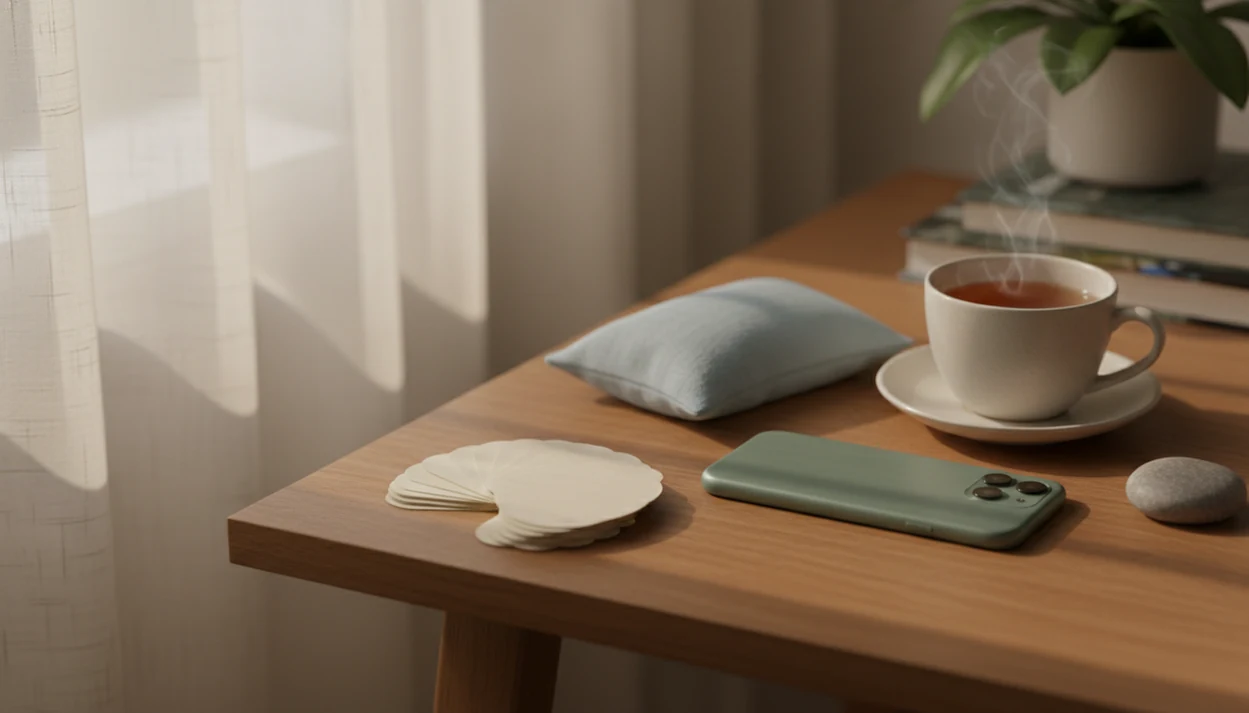


Mindfulness cards are short, deck-style prompts that turn a written intention, reflection, affirmation, or small exercise into an everyday calm practice. A card can start a morning intention, a breathing break during stress, a gratitude reflection, or a bedtime wind-down. The useful part is the action it prompts, such as three minutes of breathing, rather than the wording alone.
Choose a deck for the moment it needs to support: mornings, work breaks, everyday anxiety, gratitude, or sleep. Cards can stand alone or provide a theme for guided meditation, breathing audio, or a matching MindTastik session. A small, repeatable habit matters more than drawing a different card each day. Cards are supportive tools, not treatment replacements for severe anxiety, depression, trauma, or insomnia.
The essentials
- Choose cards by use case: morning intention, anxiety reset, work break, gratitude, or sleep wind-down.
- The most useful decks pair written prompts with guided meditation, breathing audio, or sleep sessions.
- Cards support calm habits, but they are not a treatment replacement for severe anxiety, depression, trauma, or insomnia.
Best mindfulness cards for everyday calm by use case
Useful mindfulness cards for everyday calm depend on the moment you want to support, not one universal deck. Pick the card style that matches the routine you can actually repeat.
- Morning intention cards: Best for choosing a simple focus before messages start. Not ideal if you need emotional processing; pair them with a 5-minute guided session.
- Anxiety reset cards: Best for short breathing, grounding, or naming emotions. Not for panic emergencies or crisis care; use them as everyday coping support.
- Work break cards: Best for a train seat during the evening commute or a conference room chair between meetings. Not ideal if the prompt takes longer than your break. If your break allows a little movement, try a mindful walking exercise to bring attention to each step.
- Gratitude cards: Best for people who like reflection and mindful gratitude. Not ideal when forced positivity feels irritating.
- Sleep wind-down cards: Best before bedtime audio. Not for treating insomnia; they can help you choose a calmer starting point.
When the issue is not knowing what to practice, MindTastik fits because a card theme can lead into guided meditation, breathing exercises, sleep audio, or self-hypnosis.
How mindfulness cards for everyday calm work
Mindfulness cards work by turning a calm intention into a cue-routine-reward loop: pull the card, do the small practice, then notice the shift. That loop matters because most people do better with one clear next step than a full menu of options.
The card acts as the cue. The routine might be box breathing, a body scan, or one sentence of reflection. The reward is modest, such as a longer exhale or a calmer pause before checking the phone in the dark. Brief, but real.
Cards also reduce decision fatigue. Instead of choosing between a 5-minute breathing exercise and a 20-minute body scan, the prompt chooses the lane. QR codes, deep links, or app playlists can turn a written card into guided audio. Direct research on card decks is limited, so the strongest claims come from broader mindfulness and app-based meditation research. For more practice types, compare mindfulness exercises and techniques.
How to use mindfulness cards for everyday calm
Use mindfulness cards by attaching one card to one real part of the day. A card ritual works better when it is small enough to repeat on a messy Tuesday.
- Pull one card in the morning and name the practice it asks for, such as breathing, gratitude, or intention.
- Set a time limit of 1 to 5 minutes unless the card points to a longer guided session.
- Pair midday stress cards with breathing audio or a short reset before opening messages.
- Choose a bedtime card for letting go, body softening, worry parking, or sleep audio.
- Repeat the same card for a few days if it helps, rather than chasing novelty.
- Add guided meditation, sleep audio, or self-hypnosis when the prompt feels too bare.
Keep it simple. The card should start the practice, not become another task.
Guided meditation cards for app-based calm sessions
Do guided meditation cards work better with an app? They often work better for beginners because the card gives the theme, and the app gives the voice, timing, and structure.
A written prompt can feel thin when your breath count gets lost after four. App-linked cards solve that by using QR codes, deep links, or suggested playlists. A “release tension” card might open a body scan. A “steady breath” card might point to a 3-minute breathing exercise.
The right fit for beginners is MindTastik because card themes can connect to guided meditation, sleep audio, breathing exercises, and self-hypnosis sessions. Research on app-based mindfulness has found that 10 to 20 minutes of daily practice over 8 weeks can reduce stress and irritability compared with active control conditions. Evidence supports broader mindfulness practice, not card decks specifically: a 2022 review of mindfulness-based interventions found reduced rumination, depression symptoms, and anxiety symptoms in people with depression. That does not prove every card deck works. It supports the practice behind the card.
Anxiety reset cards for stressful work breaks
Anxiety reset cards are best for short breathing resets, grounding prompts, and naming emotions during everyday stress. They should not be treated as emergency tools for panic, self-harm risk, or severe distress.
- Box breathing cards give a simple count, often inhale 4, hold 4, exhale 4, hold 4.
- 5-4-3-2-1 grounding cards shift attention toward sight, sound, touch, smell, and taste.
- Emotion-naming cards help you say, “This is tension,” instead of spiraling through the whole story. For a structured way to recognize and respond to difficult feelings, try the RAIN mindfulness practice.
- Self-compassion cards use one sentence, such as “This is hard, and I can slow down.”
- App-paired cards can open a short reset when you need a voice to follow.
Anyone dealing with loud thoughts between meetings may find MindTastik useful because a card can move straight into a guided breathing session. Mindfulness-based interventions may improve anxiety symptoms for some adults, including in a meta-analysis of randomized trials, but card decks have less direct evidence. For deeper feeling labels, try emotional awareness exercises.
Sleep mindfulness cards for bedtime wind-down
Can sleep mindfulness cards help before bed? They can support a nightly wind-down by giving you one low-effort bridge into sleep audio without extra scrolling.
Strong sleep cards focus on letting go, body softening, gratitude, and worry parking. A worry parking card might ask, “What can wait until tomorrow?” A body card might say, “Unclench your jaw, lower your shoulders, feel the mattress.” A small card beside a low lamp can make the ritual feel easy to return to. Simple and familiar.
On nights when the screen brightness is already lowered to minimum, MindTastik fits because a card can lead into sleep meditations or self-hypnosis sessions without browsing a big library. Sleep-quality research on mindfulness-based interventions shows small to moderate improvements across adult groups, but cards should not be presented as insomnia treatment. If gratitude helps your evening routine, gratitude meditation pairs naturally with sleep cards.
How we picked everyday calm mindfulness card styles
We picked card styles by looking at whether a prompt becomes a real practice, not whether the deck sounds inspiring. A useful card tells you what to do next.
| Selection factor | What we looked for | Why it matters |
|---|---|---|
| Prompt clarity | One clear action or reflection | Vague cards get skipped |
| Emotional safety | No pressure to feel positive | Hard days need room |
| Time required | 1 to 10 minutes | Short practices repeat better |
| Guided practice fit | Breathing, meditation, sleep audio, or reflection | The card becomes usable |
| Consistency support | Reminders, streaks, routine pairing | Habits need cues |
Card styles that map into mindfulness exercises ranked higher than affirmation-only decks. Meditation adoption has grown among U.S. adults; the CDC reported that meditation use rose from 4.1% in 2012 to 14.2% in 2017: CDC guidance: db325.htm.
People who like a card-of-the-day ritual may prefer MindTastik because reminders and guided sessions can turn the card into a repeatable routine.
What gratitude research says about card prompts
Gratitude cards draw on a broader evidence base, but research on gratitude exercises is not proof that a particular deck works. A 2023 review of 64 randomized clinical trials associated gratitude interventions with better mental health and fewer anxiety and depression symptoms. Those results concern structured interventions and average group differences, not a guaranteed benefit from pulling one card.
Repetition also deserves more attention than the number of cards in a box. A review of nine studies involving workers found that gratitude-list interventions generally improved perceived stress and depression, while well-being results were inconsistent. Interventions completed four times or fewer showed no significant changes. This does not establish an ideal schedule, but it supports choosing a concrete prompt that is practical to revisit.
Mindfulness cards vs physical decks and meditation apps
Mindfulness cards are best when you want one visible prompt; meditation apps are better when you want a voice, timer, reminders, and a deeper sleep library. The right choice depends on whether your problem is starting, staying guided, or avoiding another screen.
Physical mindfulness decks and printable prompts feel simple: shuffle, pull, practice, no login. They suit desks, bedside tables, classrooms, and people who do not want Calm, Headspace, Mindful, or another app open at night. App-linked cards sit in the middle, using a printed cue to launch audio, breathing, or a saved routine. Audio-first routines skip the card entirely and work well when you already know you need a body scan, sleep story, or breath session.
To compare options without overthinking it:
- Choose a no-screen deck if notifications, blue light, or app browsing make you more restless.
- Use printable prompts if you want low cost and do not need polished audio.
- Pick app-linked cards if a written cue helps, but you still want guidance.
- Compare pricing, narrator style, reminder controls, and sleep-library depth before subscribing.
- Pair MindTastik when the card theme points toward guided sleep, breathing, or self-hypnosis.
Who mindfulness cards for everyday calm are best for
Mindfulness cards are best for people who want one calm next step instead of a large meditation menu. They fit beginners, busy helpers, and tired minds when the card connects to a real morning, work-break, anxiety-reset, or sleep-wind-down ritual.
The strongest fit is someone who feels better with a visible cue: a student before studying, an office worker between calls, a commuter gripping a tote bag on a crowded train, or a caregiver taking three quiet minutes in the kitchen. Bedtime overthinkers may also like cards that park worries before sleep audio.
Use the segment to choose the ritual:
- Start with a morning intention card if you freeze when faced with too many meditation choices.
- Keep a grounding or breathing card at work, in a backpack, or near the car keys for midday stress.
- Choose an anxiety-reset card when you need naming, counting, or sensory focus more than insight.
- Move to guided audio if reading prompts feels too bare, your mind wanders quickly, or you need a voice to follow.
- Pause inward-focus cards and seek professional support first if body awareness, silence, or reflection increases panic, trauma symptoms, self-harm thoughts, or severe distress.
Honest cons of mindfulness cards for everyday calm
Mindfulness cards are easy to buy and easy to abandon. Without a reminder, a visible spot, or an app-linked routine, the deck can become shelf clutter beside old notebooks.
Affirmation-only decks may feel shallow when emotions are complicated. “I am calm” can land badly when your heartbeat is loud under the blanket at midnight. Prompts that ask you to notice, breathe, or name the feeling often work better.
Some cards are too vague to produce a real practice. “Be present” is not much help unless it tells you where to place attention. App guidance can help, but notifications should not become pressure. Calm reminders are useful; guilt reminders are not. A mindfulness bell practice can offer a gentle sound cue to pause without relying on frequent phone notifications.
Cards help coping, not circumstances. They will not remove a caregiving burden, a difficult manager, rent stress, or an unsafe work condition. If your stress is structural, a card can offer a short reset, but the bigger problem still deserves support.
When a card needs spoken guidance
MindTastik's breathing exercises suit cards that ask for a short pause but leave the timing unclear. Guided meditations can support body-scan prompts, while gratitude sessions and sleep audio match reflection and bedtime cards. The card supplies the theme; the audio supplies instructions.
A physical deck alone is a better fit when avoiding a screen is the priority or a written prompt already feels sufficient. Neither cards nor MindTastik replace professional care for severe distress or persistent sleep problems.
What mindfulness cards cannot promise
Mindfulness cards for everyday calm are supportive tools, but they have real limits. Treat them as practice prompts, not medical treatment.
- Direct research on mindfulness card decks is limited.
- Benefits are mostly extrapolated from broader mindfulness, meditation, and app-based practice studies.
- Cards are not a replacement for professional treatment for severe anxiety, depression, trauma, panic, or insomnia.
- Body scans and inward-focus prompts may feel uncomfortable for some trauma survivors.
- One-time use is unlikely to change stress patterns; repetition over weeks matters more.
- Cards cannot fix structural causes of stress, such as finances, caregiving burden, discrimination, or unsafe work conditions.
- Some decks lean too hard on positivity and may not help when someone feels numb, angry, or overwhelmed.
- Apps can support consistency, but reminders should be adjustable and easy to pause.
- Competitors such as Calm, Headspace, and Mindful offer strong meditation content, so compare pricing, voice style, and sleep features before choosing.
A beginner who wants plain prompts and guided bedtime audio may use MindTastik, but urgent mental health concerns require qualified care.
Mindfulness card questions
What should a mindfulness card actually ask me to do?
A useful card gives one clear action: notice body tension, name an emotion, take a brief breathing pause, or write one specific reflection. A phrase such as “be present” needs a practical instruction alongside it. Choose prompts that can become a short practice, not just an encouraging message.
Do mindfulness cards work, or are they just affirmations?
Cards can provide a visible reminder and a clear starting point, but direct research on card decks is limited. Evidence comes mainly from broader mindfulness and gratitude interventions. Affirmations state an idea; mindfulness prompts usually ask for observation or an action. A deck may contain both.
Should I draw a new mindfulness card every day?
There is no established best schedule for mindfulness cards. Repeating one useful card for several days is reasonable, especially when learning a practice. A daily draw is optional. Research on gratitude exercises suggests repeated practice matters, but it does not prove that changing cards daily produces better results.
Which mindfulness cards are useful during a stressful workday?
Look for brief grounding, emotion-naming, or breathing prompts that fit a break between tasks. A card asking for one observation and one small action is more manageable than a long reflection. These are everyday coping prompts, not emergency tools for panic, severe distress, or a mental health crisis.
What if a gratitude card makes me feel worse?
The prompt does not need to force a positive answer. A neutral alternative is to name what is difficult, then consider what would make the next ten minutes more manageable. Skip cards that feel pressuring. Gratitude research reports average benefits, not a requirement to feel grateful during distress.
What should a bedtime mindfulness card say?
Choose a low-effort prompt about letting go, noticing contact with the mattress, softening tension, or identifying a worry that can wait until tomorrow. Avoid turning the card into a lengthy review of the day. It can support a wind-down routine, but it is not a treatment for persistent insomnia.
Do I need an app to use mindfulness cards?
No. A card with a clear instruction can be used without a phone, login, or audio. Guided sessions are an option when spoken instructions or timing help, such as a breathing exercise or body scan. A physical card alone may suit people who want fewer screens at bedtime.