
Mindfulness Exercises You Can Try Today
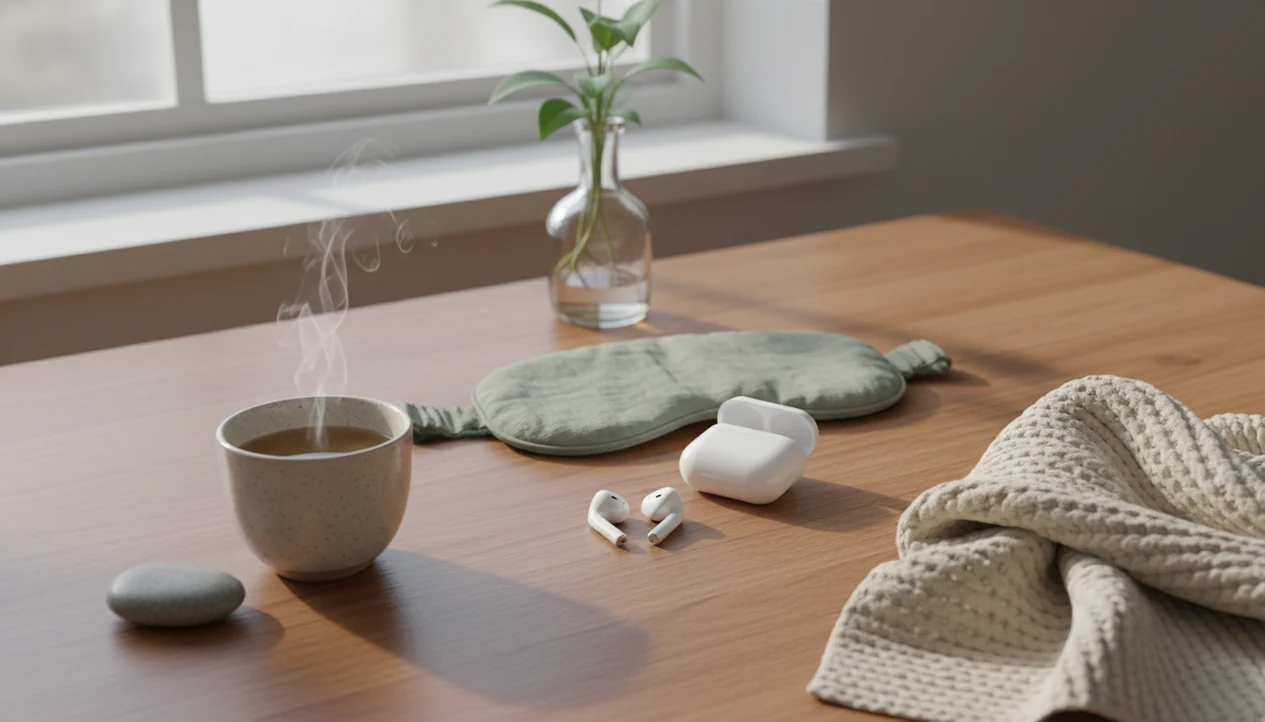


Mindfulness exercises are brief, structured practices that train attention to return to the present moment through breath, body sensations, sounds, touch, sight, or everyday activities. This mindfulness exercises list matches those anchors to common situations: a body scan for bedtime, box breathing before a meeting, or 5-4-3-2-1 grounding during anxious moments. A 1- to 5-minute practice is a manageable starting point.
Mindfulness does not mean emptying the mind. It means noticing thoughts, feelings, and sensations without judging them, then returning to a chosen anchor. Breath-based exercises offer a simple focus, body-based practices suit tension or bedtime, and sensory exercises provide an external focus when thoughts feel overwhelming. Short, consistent practice matters more than occasional long sessions when building an everyday calm or bedtime routine.
Choose an exercise
- Use breath-based exercises when you need quick calm, body-based exercises when you are tense or trying to sleep, and sensory exercises when thoughts feel overwhelming.
- Mindfulness is not emptying your mind; it is noticing thoughts, feelings, and sensations without judging them, then returning to a chosen anchor.
- Short, consistent practice matters more than long occasional sessions, especially for adults building a everyday calm or bedtime routine.
Best mindfulness exercises by situation

| Situation | Try this exercise | Duration | Why it works |
|---|---|---|---|
| Work stress | Feet-on-floor grounding | 1 minute | Gives attention a steady body cue |
| Pre-meeting nerves | Box breathing | 3 minutes | Adds rhythm before speaking |
| Bedtime restlessness | Body scan | 5 to 10 minutes | Shifts attention from planning to sensation |
| Waking at night | Breath counting | 3 to 10 minutes | Gives the mind a quiet task |
| Anxious spirals | 5-4-3-2-1 grounding | 1 to 3 minutes | Uses the senses when thoughts feel loud |
| Commuting | Mindful listening | 3 minutes | Works with eyes open |
| Everyday calm | One-minute breathing | 1 minute | Easy to repeat |
Body scan and breath counting are stronger choices for sleep anxiety because they are slow and low-effort. Sensory grounding is often better for daytime overwhelm because it uses the room around you. If you are too tired or stressed to self-direct, choose a guided version and keep the screen dim.
How mindfulness exercises work in the brain and body
Mindfulness is attention training: you notice distraction, label it gently, and return to an anchor. The anchor might be breath, body pressure, sound, touch, or one visible object.
That return is the practice.
Anchors reduce rumination by giving attention a stable target. In plain language, the mind has somewhere to land besides the same worry loop. Calm may happen, but it is not the required goal. The core skill is nonjudgmental awareness, especially when practice feels ordinary.
A 2014 JAMA Internal Medicine meta-analysis of 47 randomized trials found small to moderate improvements in anxiety, depression, and pain compared with usual care (JAMA Internal Medicine study: 1809754). An 8-week mindfulness-based stress reduction trial also reported reduced perceived stress and mood disturbance in adults with chronic stress. Clinicians typically frame mindfulness as a supportive skill, not a replacement for therapy, medication, or medical care.
What research on brief practice actually shows
Evidence for short practice is encouraging, but the average benefit is modest. A meta-analysis of 65 randomized trials involving 5,489 participants found a small reduction in negative affectivity, meaning unpleasant emotional states, compared with control programmes. The interventions lasted up to two weeks, and most participants had no previous meditation experience. This supports trying manageable beginner practices, not promising that a single minute will reliably stop anxiety.
Formal treatment programmes involve more than the exercises on this page. In a randomized trial of 276 adults with anxiety disorders, eight weeks of Mindfulness-Based Stress Reduction was noninferior to escitalopram on anxiety outcomes. That finding concerns a clinician-led programme, not informal breathing breaks or sensory grounding alone. It does not establish that a short self-directed routine can replace prescribed medication or professional care.
How to use simple mindfulness exercises today
Use simple mindfulness exercises by matching one practice to one situation, then repeating it long enough to learn its effect. For many adults, a 3-minute practice is easier than promising a 30-minute routine and skipping it by Wednesday.
- Choose the situation: Pick sleep, anxiety, work focus, or everyday calm.
- Set a realistic duration: Try 60 seconds, 3 minutes, 5 minutes, or 10 minutes.
- Pick one anchor: Use breath, body, sound, touch, or sight.
- Notice wandering: Name “thinking” or “planning,” without self-criticism, then return.
- Repeat for one week: Practice the same exercise daily before judging whether it helps.
For beginners, one anchor usually works better than switching techniques every day because the mind learns the route back. If you want a broader foundation, our guide to mindfulness exercises and techniques explains the main categories.
12 quick mindfulness exercises for adults
These quick mindfulness exercises for adults are designed for 1-minute, 3-minute, 5-minute, or 10-minute practice. Use one at a time. No special cushion required.
1. One-minute breathing
Best for: a fast reset. 1. Sit or stand still. 2. Notice one inhale and one exhale. 3. Return to the breath each time you drift. If time is tight, one-minute mindfulness exercises offer a simple way to practice without extending your schedule.
2. Box breathing
Best for: pre-meeting nerves. 1. Inhale for four. 2. Hold for four. 3. Exhale for four, then hold for four.
3. 5-4-3-2-1 grounding
Best for: anxious spirals. 1. Name five things you see. 2. Name four things you feel. 3. Continue with three sounds, two smells, one taste.
4. Bedtime body scan
Best for: sleep anxiety. 1. Start at the toes. 2. Notice each area. 3. Soften without forcing sleep.
5. Breath counting
Best for: waking at night. 1. Count each exhale. 2. Stop at ten. 3. Restart when you lose count.
6. Mindful listening
Best for: commuting. 1. Pick one sound. 2. Hear its texture. 3. Let other sounds come and go.
More mindfulness activities for adults
7. Mindful walking
Best for: restless energy. 1. Slow your pace. 2. Feel each foot land. 3. Notice the next step.
8. Hand-on-heart breathing
Best for: emotional stress. 1. Place a hand on your chest. 2. Breathe gently. 3. Notice warmth and pressure.
9. Progressive muscle release
Best for: tension. 1. Tighten one muscle group. 2. Release slowly. 3. Move through the body.
10. Mindful sipping
Best for: everyday calm. 1. Hold the cup. 2. Notice temperature. 3. Taste one slow sip.
11. Thought labeling
Best for: racing thoughts. 1. Notice a thought. 2. Label it “worry,” “planning,” or “memory.” 3. Return to your anchor.
12. Self-compassion pause
Best for: hard moments. 1. Say, “This is stressful.” 2. Notice your body. 3. Offer one kind sentence.
Mindfulness exercises for bedtime and sleep anxiety
Which mindfulness exercises are best for bedtime and sleep anxiety? Body scans, breath counting, progressive muscle release, and low-effort guided audio usually fit best because they ask less from a tired mind.
Bedtime practices work best when they are slow, quiet, and less goal-driven than daytime focus exercises. If you wake during the night, a soft breath cue or brief body scan can be easier than turning rest into another assignment. Keep the routine plain.
- Dim the room and lower the phone brightness.
- Play or practice a body scan.
- When thoughts appear, return to breath counting.
A 2015 JAMA Internal Medicine trial found that a 6-week mindfulness awareness program improved sleep quality and reduced insomnia symptoms in older adults with moderate sleep disturbance (JAMA Internal Medicine study: 2110998). A systematic review also reported sleep-quality improvements across mindfulness-based intervention studies, while noting variation in study quality and intervention design (PubMed research: 30529570). Mindfulness does not replace sleep hygiene, including regular bedtimes, screen limits, and caffeine reduction. For a fuller routine, try mindfulness exercises before bed.
Mindfulness activities for anxious moments at work
Mindfulness activities at work should be discreet, short, and repeatable. You do not need to close your eyes, sit cross-legged, or explain anything to the person in the next chair.
- Feet-on-floor grounding: Press both feet into the floor before a presentation and notice contact points.
- Box breathing: Use four-count breathing after a tense email, before replying.
- Mindful listening: During traffic, choose one sound and follow it for three breaths.
- Object focus: Between video calls, look at one pen, mug, or screen edge and describe it silently. For short pauses between tasks, try mindfulness exercises for transitions to reset your attention before starting again.
Eyes-open practices may feel more comfortable for people who dislike internal focus. The small reset counts.
If anxiety is severe, persistent, or impairing, professional support matters. For stress-specific options, compare these with mental health exercises.
Five facts about quick mindfulness exercises
- Mindfulness is a trainable skill, not a personality trait. Wandering attention is part of the training, not a sign you are bad at it.
- You do not need to empty your mind to practice. The useful move is noticing thought, then returning to the anchor.
- Different situations call for different anchors. Breath may help before a meeting, but sight and touch may work better during daytime overwhelm.
- Short daily sessions can be more useful than rare long sessions. For beginners, 3 minutes after lunch often beats 30 minutes once a month.
- Benefits are stronger when practice is consistent over time. Clinical and app-based mindfulness exercises can be secular, skills-based routines.
A JAMA meta-analysis found small to moderate improvements in anxiety, depression, and pain compared with usual care. For people learning to name feelings during practice, emotional awareness exercises can pair well with thought labeling.
Image guide for mindfulness activities
Use an image that shows an adult using a phone-guided breathing or body scan session in a calm bedroom or work break setting. The scene should feel ordinary: a dim lamp, earbuds on a nightstand, or a quiet desk corner after a call.
Avoid medicalized imagery, yoga-only clichés, and unrealistic retreat scenes. A mountain sunrise may look peaceful, but it does not help someone choose between a 5-minute breathing exercise and a 20-minute body scan in an app library.
Caption: “A 3-minute mindfulness exercise can use the breath, body, or senses as a present-moment anchor.”
Alt text: “Adult using simple mindfulness exercises for calm with a meditation app.”
Tools like MindTastik, Calm, and Headspace can make the image idea practical by showing guided audio as one option, not the only way to practice. MindTastik is another option for people who prefer bedtime audio.
Guided audio for breathing breaks and bedtime
MindTastik’s guided meditation library suits adults who prefer spoken instructions to remembering each step. Guided meditations and breathing exercises offer options for a work break or evening practice, while sleep stories and soundscapes are alternatives for bedtime listening.
Adults who find a voice distracting may prefer the silent exercises below. Those who find breath or body attention distressing can choose an eyes-open sensory practice instead. MindTastik is not a medical treatment, and persistent anxiety or insomnia calls for professional assessment.
What short mindfulness exercises cannot treat
Mindfulness exercises can support everyday calm, but they have real limits. They work better when expectations stay honest.
- Mindfulness exercises are not a quick cure for severe anxiety, depression, trauma symptoms, or chronic insomnia.
- Some people may find body scans or internal focus distressing, especially with trauma histories.
- Benefits depend on consistency and may be subtle at first.
- Mindfulness does not replace therapy, medication, medical care, crisis support, or sleep hygiene when those are needed.
- Trying to force calm can make practice frustrating; the goal is awareness and return.
- Guided audio can help when you are tired, but it can also become another form of phone use if the screen stays bright.
- An NIH-funded insomnia study found mindfulness-based therapy for insomnia may support insomnia severity and sleep efficiency, but that does not prove apps replace behavioral therapy for insomnia.
If practice brings up difficult emotions, pause and choose grounding through sight, sound, or touch instead.
When to seek professional support
Seek professional support when mindfulness is not enough to keep you safe, rested, or able to function. These exercises can be supportive skills, but they are not emergency mental health care or a substitute for a licensed clinician.
Use a practical threshold: if panic keeps returning, insomnia becomes severe, trauma memories feel overwhelming, or symptoms interfere with work, relationships, parenting, driving, or basic routines, bring in more help. A therapist, psychologist, psychiatrist, primary care clinician, or qualified sleep specialist can help sort out what is happening and what level of care fits.
- Pause the practice if it intensifies fear, flashbacks, dissociation, or body distress.
- Switch to external grounding, such as naming objects in the room or feeling your feet on the floor.
- Contact a licensed clinician if anxiety, sleep problems, or trauma distress persist or keep disrupting daily life.
- Use local crisis lines, emergency services, or the nearest emergency department right away if you might hurt yourself, hurt someone else, or cannot stay safe.
Getting support is not a failure of mindfulness. It is the right next step when the situation is bigger than a self-guided exercise.
Questions about everyday mindfulness exercises
Which mindfulness exercise is best for anxious thoughts?
Sensory grounding is a practical option when thoughts feel overwhelming. The 5-4-3-2-1 exercise names five things seen, four felt, three heard, two smelled, and one tasted. It gives attention an external task rather than requiring inward focus. It is a supportive skill, not a treatment for recurring panic or an anxiety disorder.
Which mindfulness exercises can I do in bed?
A gentle body scan or breath counting fits bedtime because neither requires much movement or decision-making. Notice body sensations in sequence, or quietly count breaths and restart after losing count. The aim is a quiet attention task, not forcing sleep. Persistent or severe insomnia needs assessment rather than increasingly long meditation sessions.
How long should a beginner practise mindfulness each day?
A manageable starting point is one to five minutes with one exercise. Repeating the same practice daily for a week makes it easier to notice how it fits a routine. Longer sessions are optional, not a requirement. Research on brief practice suggests modest average benefits, rather than a guaranteed result after a particular number of minutes.
Can I practise mindfulness while walking or eating?
Yes. Mindful walking focuses on foot contact and the sensations of each step; mindful eating notices taste, texture, and temperature. These are informal practices because attention training happens during an ordinary activity. They can build present-moment awareness, but should not be presented as established methods for weight loss or improving exercise adherence.
What if breathing exercises or body scans make me feel worse?
Stop rather than forcing the exercise. An eyes-open practice focused on visible objects, sounds, or contact with the floor may be more comfortable than internal attention. Gentle movement is another option. Marked distress, panic, dissociation, trauma-related reactions, or worsening symptoms are reasons to seek professional guidance before continuing.
Does mindfulness mean stopping all thoughts?
No. Thoughts can continue throughout a mindfulness exercise. The practice is noticing that attention has wandered and returning to a chosen anchor, such as a sound or body sensation, without self-criticism. Thought labeling can help: briefly name a thought as planning, worry, or memory, then return to the anchor.