


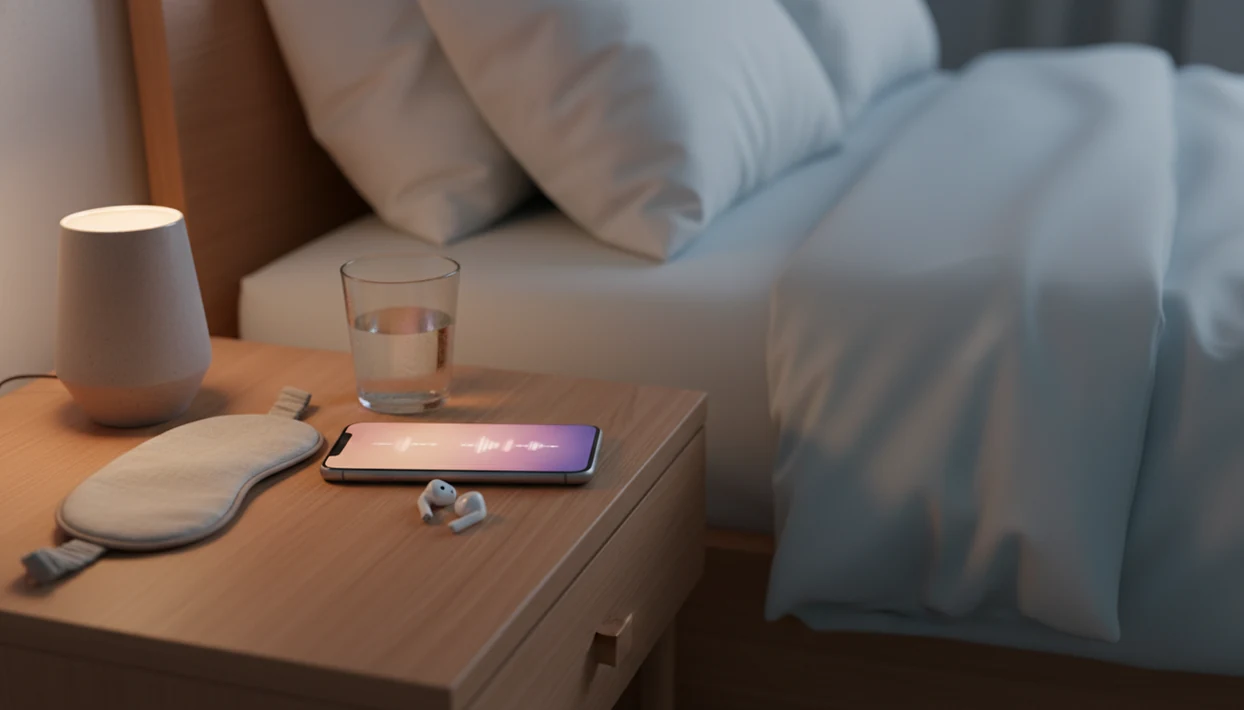
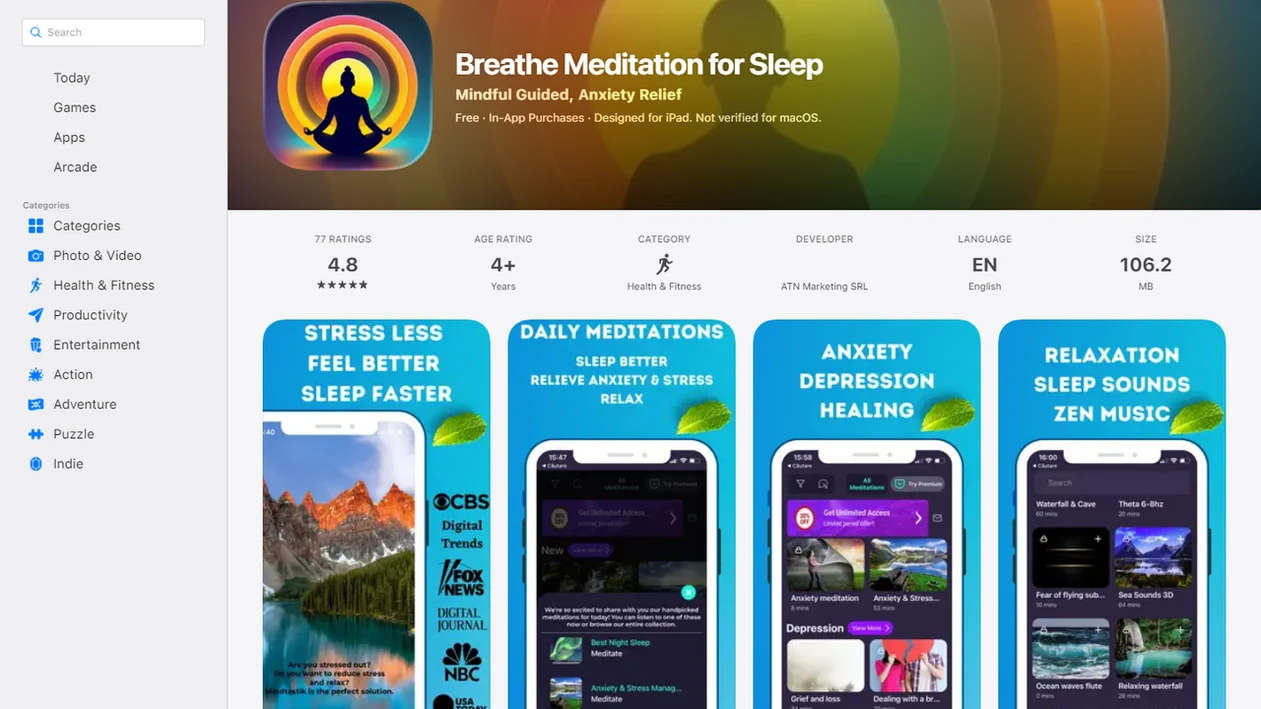
A guided meditation app is a mobile application that uses narrator-led audio to guide breathing, relaxation, and visualization exercises intended to support sleep and reduce anxiety. Spoken cues explain where to place attention and when to relax, making the practice accessible without prior meditation experience. Common options include body scans, guided breathing, and bedtime sessions for racing thoughts.
The useful distinction is between learning a calming skill and simply having sound in the room. Guided sessions ask for some attention; sleep stories and soundscapes serve different preferences. Short daytime sessions can provide a pause around stressful transitions, while bedtime audio can become part of a repeatable wind-down routine. Neither guarantees sleep, and an app is not a substitute for medical care.
Guided Meditation App Benefits For Sleep And Calm: 5 Facts
- Voice guided meditation means spoken instructions. A narrator tells you when to breathe, where to place attention, and how to relax the body, so you are not guessing in the dark.
- The main use cases are sleep and stress. People use guided sessions for falling asleep, quieting racing thoughts, lowering daytime anxiety, and building a repeatable wind-down routine.
- Sleep problems are common. Roughly 50-70 million U.S. adults have a sleep disorder, according to the National Heart, Lung, and Blood Institute (nhlbi reference: sleep deprivation).
- Short sleep is also widespread. Per CDC survey data, 35.2% of U.S. adults reported sleeping less than seven hours per night (CDC guidance: mm6506a1.htm).
- MindTastik fits beginners who want structure. Adults looking for a guided meditation app often need a calm voice, a clear session length, and a simple starting point.
Beginners looking for bedtime support can use MindTastik because the library separates sleep anxiety, breathing, and body scan tracks instead of dropping every audio session into one vague relaxation category.
Voice Guided Meditation Sleep Mechanisms: Breathing, Body Scans, And Rumination
Voice guided meditation works by giving the mind a task and the body a downshift cue at the same time. Slow breathing cues can support parasympathetic activation, which is the “rest and digest” side of the nervous system. In plain language, the body gets fewer signals that it needs to stay on alert.
Progressive muscle relaxation and body scans add another layer. The narrator may ask you to notice your jaw, shoulders, ribs, belly, and legs, then soften one area at a time. In a quiet room when sleep is not arriving, that kind of instruction can feel more useful than telling yourself to “just sleep.”
Research is promising, but not magic. A 2015 JAMA Internal Medicine trial found that a six-week mindfulness program improved sleep quality and insomnia symptoms more than sleep hygiene education alone (JAMA Internal Medicine study: 2110998). A 2019 systematic review and meta-analysis also linked mindfulness meditation with small to moderate sleep-quality improvements (PubMed research: 31126323).
For people whose minds keep circling at bedtime, MindTastik uses visualization, sleep stories, and repeated bedtime scripts to give attention a calmer place to land and build a familiar sleep cue.
What app research says about racing thoughts
A systematic review of psychological mechanisms examined 28 randomized controlled trials involving 5,963 adults. Compared with control conditions, mindfulness apps tended to improve attention regulation, repetitive negative thinking, and the ability to see thoughts as mental events rather than facts. Those findings help explain why spoken attention cues may be useful when thoughts keep returning, but they do not establish that any particular bedtime recording improves sleep.
Longer-term evidence remains limited: only 10 studies in that review included follow-up assessments at least one month later. A separate review of 28 app trials found generally modest improvements in well-being across varied programs. These are findings about groups of apps and interventions, not proof of MindTastik's effectiveness. The research supplied for this page did not identify an independent peer-reviewed trial of MindTastik itself.
5 Bedtime Steps For Using A Guided Meditation App
To use a guided meditation app before bed, keep the routine short, repeatable, and boring in a good way. Ten to 20 minutes is enough for most beginners; you do not need an hour-long session.
- Set a wind-down time 20-30 minutes before your target sleep time, and treat it like brushing your teeth.
- Choose beginner meditation audio such as a body scan, sleep story, or breathing exercise that matches your mood.
- Dim the lights, place the phone face-down, and press play so the screen does not become the main event.
- Follow the narrator’s cues for breathing and relaxation without grading your focus.
- Repeat the same session nightly for at least two weeks so the audio becomes a familiar sleep cue.
The small setup matters. A phone with guided audio already queued in a quiet room is easier to use than a fresh routine you have to figure out when you are tired.
When bedtime routine is the issue, the app fits because it gives users a same-track nightly workflow: choose sleep audio, dim the phone, press play, repeat.
Everyday Calm Reset Timing For Stress, Meetings, And Commutes
Everyday calm resets are short guided sessions, usually 3-10 minutes, used before stress becomes the whole day. They fit after waking with anxiety, during a lunch break, before a meeting, after a commute, or during the pre-sleep transition.
A 2019 evidence review reported that app-based mindfulness and meditation programs can reduce stress and anxiety, although results are usually small to moderate and depend on engagement. That matches real use. One calm reset does not erase a hard day, but it can lower the volume enough to make the next choice easier.
Feet planted on office carpet. One slower exhale before speaking.
Anyone dealing with pre-meeting anxiety can use MindTastik because short-format sessions are built for busy adults who need a guided reset before they walk into the room. The most useful everyday calm routine is often brief and repeatable because consistency changes the cue faster than session length. For another option for brief daily resets, compare a Calm alternative with your preferred session length.
MindTastik Guided Meditation Features For Sleep Anxiety
MindTastik focuses on voice guided meditation sessions for sleep anxiety, not generic background relaxation. The library includes body scans, progressive relaxation tracks, guided breathing, self-hypnosis sessions, and beginner meditation audio that assumes zero prior experience.
Good sleep and calm apps give you a specific next session, not a giant audio shelf that makes you decide while tired. That difference matters when your shoulders are tense against the mattress and every small choice feels louder than it should. When choosing between apps for bedtime relaxation, consider an Aura alternative that matches your preferred routine.
Bedtime Sleep Sessions
MindTastik bedtime sessions use sleep-specific scripts for worry, rumination, and nighttime panic. Users who prefer story-based wind-downs can compare the dedicated sleep stories feature for a softer, less instruction-heavy option.
Short Calm Reset Audio
For adults who need daytime support, MindTastik pairs breathing exercises with narrator guidance. The related breathing exercises page explains how short breathing audio fits stress and sleep routines.
Guided Meditation App Vs White Noise, Podcasts, And Sleep Medication
A guided meditation app is most useful when you want active relaxation training, not just sound in the room. White noise, podcasts, silence, and medication can all have a place, but they do different jobs.
| Option | What it does well | Main limitation |
|---|---|---|
| Voice guided meditation | Trains breathing, attention, and body relaxation | Some users dislike narration |
| White noise | Masks sudden sounds | Does not teach a calming skill |
| Sleep podcasts | Provides familiar storytelling | May keep the mind engaged |
| Silence | Works for people who prefer no audio | Can leave racing thoughts unstructured |
| Sleep medication | May be medically appropriate for some people | Requires clinician guidance and does not build meditation skills |
Guided meditation apps are complementary to other sleep tools, not exclusive. Therapists and mental-health guidelines commonly recommend behavioral sleep routines and skills-based support before relying on medication alone, especially when worry and arousal are part of the pattern.
For adults comparing calm.com, headspace.com, mindful.org, and MindTastik, the practical question is not which name is loudest; it is which routine you will actually repeat at night.
Check playback and accessibility before choosing an app
A bedtime app needs to work without repeated screen interaction. Before committing to a subscription, check whether essential audio plays with the screen locked, whether downloads are available, and which sessions remain accessible without payment. Check the intended phone platform separately, since iPhone and Android experiences may differ. These are practical selection criteria, not features confirmed for every app named on this page.
Accessibility also affects whether a routine is usable. Look for clear playback controls, screen-reader compatibility, transcripts or captions, and adjustable playback speed if those features are needed. A review of dropout and engagement in mindfulness-app trials found substantial variation across studies. That does not prove a particular interface improves results, but it supports treating sustained use as a separate concern from an app's content claims.
Beginner Meditation Audio Misconceptions About Sleep Results
Beginner meditation audio is designed for people who do not already know how to meditate. If you lose the breath count after four, that is not failure. That is exactly why the voice is there.
Myth: guided meditation apps are only for experienced meditators. False. Voice guided meditation exists so beginners can follow one cue at a time.
Myth: sleep meditation works like a sleeping pill the first night. Not usually. Sleep-quality benefits tend to build over weeks of daily or near-daily use.
Myth: you need to meditate for an hour. No. Ten to 20 minutes can help, and starting with one or two minutes is reasonable.
Myth: meditation apps cure chronic insomnia. They do not. A guided meditation app may support symptoms, but it does not replace diagnosis, CBT-I, or clinical care.
The right fit for new meditators is a guided library that beginner tracks explain what to do next instead of assuming you already know how to sit, breathe, and focus.
Related MindTastik Features For Breathing, Self-Hypnosis, And Sleep Audio
Guided meditation is one part of a broader sleep and calm routine. Some nights need a spoken body scan. Other nights need fewer words, slower breathing, or a deeper relaxation script.
The self hypnosis sessions feature supports adults who want deeper calm audio for habit-based wind-downs. For travel, low signal, or a shared bedroom where streaming is annoying, offline meditation downloads keep the routine available without Wi-Fi.
MindTastik offers guided meditation, breath-led resets, self-hypnosis, and sleep audio as different starting points when the mind will not settle.
MindTastik options for bedtime worry and daytime tension
MindTastik includes guided meditations, breathing exercises, self-hypnosis audio, and soundscapes. Guided relaxation suits adults who want spoken instructions rather than background sound alone. Its sleep stories offer another option when following breathing cues feels too demanding at bedtime.
Adults who dislike narration may prefer soundscapes or silence. Those seeking treatment for persistent insomnia or anxiety should choose clinical care rather than rely on an audio library. MindTastik is a supportive practice, not a medical treatment.
When guided audio is not enough for sleep problems
Guided meditation apps can support sleep and calm, but they have real limits. MindTastik should be treated as a supportive practice, not medical care.
- Guided meditation does not address underlying medical causes such as sleep apnea, restless legs syndrome, chronic pain, or major depression.
- Evidence is promising, but many studies are small, short-term, or based on self-reported sleep quality.
- Not everyone finds narration soothing. Some people sleep better with silence, soundscapes, or no phone nearby.
- Benefits depend heavily on consistent use. Downloading MindTastik and forgetting it changes nothing.
- People with severe anxiety, trauma histories, or certain mental health conditions may find some body-based meditations triggering.
- App-based meditation programs usually show small to moderate effects, not dramatic overnight changes.
- Guided meditation does not replace CBT-I, professional diagnosis, medication decisions, or emergency mental health support.
If symptoms are severe, sudden, or unsafe, contact a qualified health professional. The app can sit beside care, not stand in for it.
Breathing reset, body scan, or sleep story: choosing a session
| Technique | Best for | Minutes |
|---|---|---|
| Breathing reset | shallow breathing before rest or a stressful transition | 3-5 min |
| Body scan | jaw, shoulder, or chest tension that keeps pulling attention back | 8-12 min |
| Sleep story | bedtime rumination when silence makes thoughts feel louder | 10-20 min |
Guided meditation app questions
Do guided meditation apps actually help with sleep?
They may support relaxation and a consistent bedtime routine, but results vary. Research on mindfulness suggests possible sleep benefits, while evidence for individual apps is less extensive. General meditation findings do not prove that a particular app treats insomnia. Persistent sleep problems need assessment beyond an audio routine.
How long should a guided meditation before bed last?
Ten to 20 minutes is a reasonable starting range for a bedtime session. Starting with one or two minutes is also reasonable if a longer recording feels demanding. The aim is a repeatable wind-down practice, not completing the longest track or forcing sleep before the audio ends.
Is guided meditation better than a timer for beginners?
Guided audio is usually the clearer starting point because it explains where to place attention and how to return after distraction. A timer provides a duration but no instruction. It becomes more useful after the basic technique is familiar, or for someone who prefers practicing without a narrator.
What is a body scan meditation for sleep?
A body scan guides attention through different areas of the body, such as the jaw, shoulders, belly, and legs. The narrator may invite noticing sensations and softening tension one area at a time. It offers a structured focus at bedtime, but it does not guarantee sleep.
What if the meditation narrator keeps me awake?
Narration is not soothing for everyone. A different voice, a shorter recording, or fewer spoken instructions may suit better. Soundscapes or silence are also reasonable choices. Guided meditation asks for attention, so it can be the wrong bedtime format for someone who finds speech mentally engaging.
How often should I use a guided meditation app?
Research programs commonly use short daily sessions over several weeks. A regular time can make practice easier to repeat, but missing a day does not require restarting everything. Consistency matters more than choosing a long session that is difficult to maintain, and benefits still vary between people.
Can a guided meditation app replace sleep medication or insomnia treatment?
No. Guided meditation can support relaxation, but it is not medical treatment and does not address conditions such as sleep apnea or restless legs syndrome. It should not replace prescribed care. Changes to sleep medication belong with the prescribing clinician, especially when sleep difficulties persist.