
Do Meditation Apps Actually Help Sleep, Stress, And Calm?


Meditation apps can help many adults with stress, mild anxiety, pre-sleep worry, and everyday calm, but benefits are usually modest and depend on regular use. They are practice tools and additional support, not cures for insomnia, anxiety disorders, depression, PTSD, or other clinical conditions. The evidence supports improvements over several weeks, not instant or guaranteed relief from a single recording.
MindTastik offers guided sessions, sleep sounds, breathing practices, and self-hypnosis audio for everyday support with rest and stress. Choosing an app means separating useful guidance from treatment claims: a session can make practice easier to repeat, but it cannot provide clinical monitoring. Serious or persistent symptoms need appropriate care, which may include therapy, medication, or cognitive behavioral therapy for insomnia, known as CBT-I.
What the evidence says
- Meditation apps can support stress reduction, mood, sleep quality, and calm when used consistently for several weeks.
- The evidence is strongest for small-to-moderate improvements, not instant or guaranteed results.
- Apps should not replace therapy, medication, CBT-I, or urgent mental health care when symptoms are serious.
Meditation App Evidence At A Glance
Meditation apps can help, but the usual effect is small to moderate rather than dramatic. Most studies look at structured programs over 4 to 8 weeks, not one short sleep track started in the middle of a wakeful night.
The outcomes with the most relevant evidence are stress, mild anxiety, mood, sleep quality, and pre-sleep worry. That matters because many people open an app when their shoulders are tense against the mattress, then hope one session will quiet everything.
Not usually.
App evidence is also not the same as evidence for therapist-led mindfulness programs. A phone can guide breathing, body scanning, and attention practice. It cannot notice your distress in real time, adjust the session clinically, or replace a trained professional.
Do Meditation Apps Work For Stress, Anxiety, And Sleep?
Do meditation apps work? Yes, for many adults they can reduce stress, mild anxiety, depressive symptoms, and sleep-related worry, especially when used most days for several weeks.
A 2019 systematic review of 18 randomized controlled trials found small but significant reductions in depressive symptoms and anxiety from smartphone-based mindfulness interventions JAMA Internal Medicine study: 2734062. A 2022 meta-analysis of digital mindfulness programs found small-to-moderate improvements in psychological distress, with pooled effects around g = 0.32 to 0.40 across 29 trials NIH research: PMC9304513. A 2024 randomized trial of adults with poor sleep quality found about a 3-point improvement in Pittsburgh Sleep Quality Index scores versus control NIH research: PMC10850932.
In daily life, small-to-moderate means less spiraling, easier wind-down, or a calmer reset before a presentation. It does not mean symptoms disappear. For timing expectations, our meditation benefits timeline explains why several weeks is a more realistic window than one night.
Sleep results look promising, but certainty remains low
A 2025 review of 18 randomized trials of digital mindfulness reported improvements in sleep health, with 4,870 participants contributing to sleep outcomes. The pooled effect was g = 0.38, while the app-only subgroup had an effect of g = 0.32. However, the authors rated the evidence very low certainty because of methodological limitations. A positive average result is not the same as a dependable treatment effect for an individual.
The bedtime benefit may also involve reducing worry and activation rather than directly treating insomnia. A 2021 trial in adults with sleep disturbance found improvements in anxiety and depression that were statistically explained in part by reduced pre-sleep arousal. That finding supports attention to bedtime tension, but it does not establish that an app cures chronic insomnia or that every sleep recording has the same effect.
Five Facts About Meditation App Effectiveness
- App-based mindfulness can reduce stress, anxiety, and depressive symptoms compared with doing nothing, but the average improvements are usually modest.
- Benefits usually require regular use over weeks. Choosing between a 5-minute breathing exercise and a 20-minute body scan only helps if you repeat the choice.
- Not all apps have been independently tested. Studies usually evaluate specific programs, not every commercial app in the store.
- Apps may help mild sleep problems and pre-sleep worry, but they do not cure chronic insomnia. The full sleep question is covered in does sleep meditation work.
- Apps can be adjuncts for serious symptoms, not stand-alone treatment. Clinicians typically recommend professional care when anxiety, depression, trauma symptoms, or insomnia are severe or worsening.
For mild stress, a repeated short guided session is often easier than unguided meditation because the voice gives your attention somewhere specific to land.
Meditation App Brain Mechanisms And Habit Loops
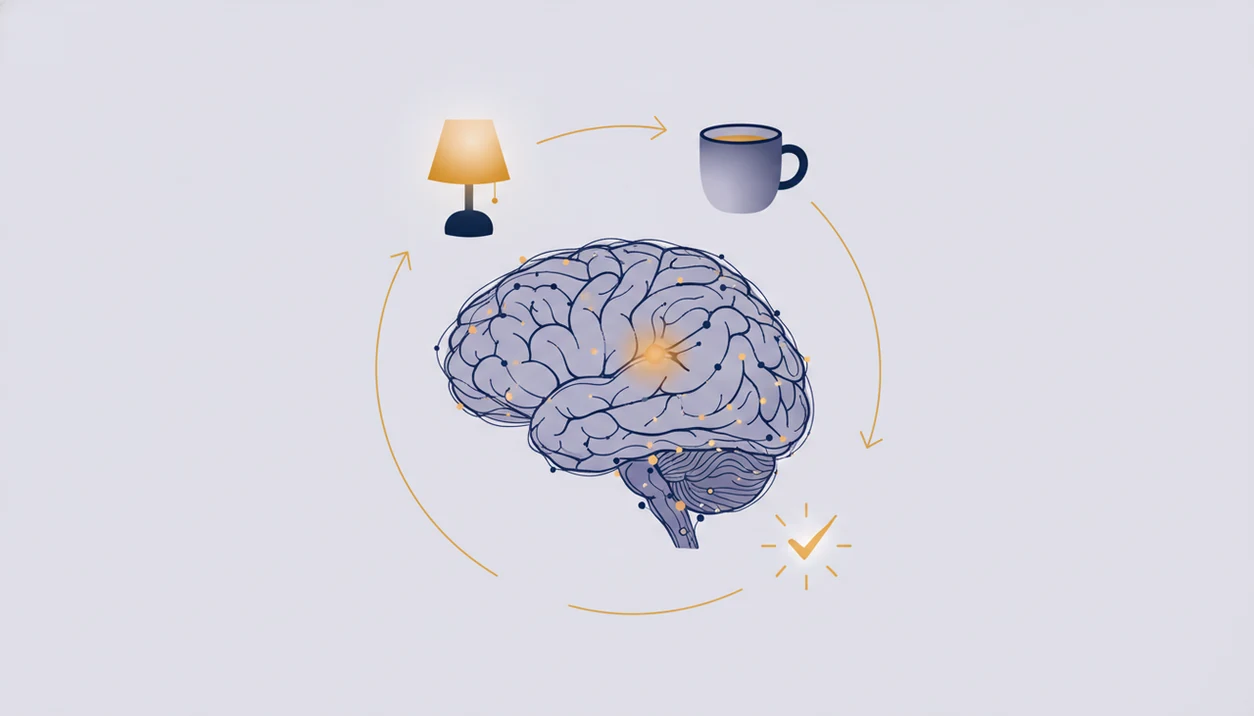
Meditation apps work by guiding attention, breath, body awareness, and thought observation through repeatable sessions that can become a habit loop. The relationship between neuroplasticity and consciousness offers another perspective on how repeated practice may shape attention and awareness.
Guided attention means the app gives your mind a simple target, such as the breath, a sound, or body sensations. Body scanning moves attention through the body slowly. Cognitive defusion means noticing thoughts as mental events, not commands. In plain terms, you practice seeing “I won’t sleep tonight” as a thought, not a fact. Understanding conscious and subconscious thoughts can help clarify which mental patterns you notice during meditation.
Repetition can train attention away from rumination and back toward present-moment cues. The app layer adds reminders, session libraries, streaks, sleep audio, and progress cues. Those features can help when a guided track is easy to reach during a quiet break, with a phone in your bag and a few minutes to breathe. For additional ways to practice attention and build learning habits, consider these neuroplasticity exercises alongside your meditation routine.
Before You Use A Meditation App
Before you use a meditation app, decide what kind of support you want and make the setup easy enough to repeat. A little preparation prevents the nightly scroll through options when you are already tired, tense, or worried.
- Choose one main goal first: sleep wind-down, stress relief, anxiety support, or everyday calm. The clearer the goal, the easier it is to pick the right session.
- Check for warning signs before relying on an app. If you have suicidal thoughts, panic that feels unmanageable, severe insomnia, trauma flashbacks, chest pain, or symptoms that feel urgent, seek professional or emergency support instead of trying to meditate through it.
- Pick a session length you can repeat without forcing it. Five calm minutes used often usually beats a 30-minute practice you avoid.
- Set the phone conditions before you press play. Dim the screen, silence nonessential notifications, and decide that the app is not a doorway into bedtime scrolling.
- Follow one program for the first week. Let the routine become familiar before comparing voices, categories, sleep stories, breathing tracks, and every new option in the library.
The first win is not perfect calm. It is making the next session easy to start.
Five Steps To Use A Meditation App For Sleep, Anxiety, And Calm
Use a meditation app like a short training plan, not a rescue button you only press when everything feels bad. The most common evidence-informed way to build benefit is regular practice combined with simple tracking.
- Set a realistic goal, such as sleep wind-down, stress reset, or everyday calm.
- Pick one short guided meditation or breathing practice and repeat it for the first week.
- Schedule use most days for 4 to 8 weeks, even if some sessions feel ordinary.
- Track sleep quality, stress level, and consistency without obsessing over every number.
- Reset the practice if it feels frustrating, emotionally intense, or too long.
Keep it simple.
If bedtime is the goal, dim the phone screen before starting audio and avoid scrolling through ten options. If daily practice is the goal, our guide to what happens when you meditate daily gives a plain-language view of what may change.
Keep the session from becoming more phone time
A meditation session can sit inside a less helpful evening phone routine. A 2025 clinical review of problematic smartphone use describes associations with stress, anxiety, depression, and sleep disruption. The concern is not simply frequent use: impaired control, continued use despite harm, and interference with sleep, work, or relationships matter more. Opening an app for calm need not mean keeping the phone available for repeated checking afterward.
A practical approach is to choose the recording before bedtime, disable nonessential notifications, set a fixed practice time, and stop browsing when the session ends. Keep the phone away from the bed when possible. These steps are consistent with recommendations to monitor screen time, reduce pre-sleep phone use, and create phone-free periods. This particular combination is practical guidance, not a standardized clinical protocol proven to improve meditation app outcomes.
Meditation App Expectations For Sleep, Stress, Anxiety, And Mood
Meditation apps are most useful when expectations match the evidence. They may support sleep, stress, mild anxiety, mood, and everyday calm, but they cannot promise clinical recovery. If cardiovascular health is your goal, review the evidence on whether meditation can lower blood pressure before setting expectations.
| Goal | What apps may support | What apps cannot promise |
|---|---|---|
| Sleep | Better wind-down, less pre-sleep worry, improved sleep quality | A cure for chronic insomnia |
| Stress | Lower perceived stress after regular use | Removal of work, caregiving, or financial stressors |
| Mild anxiety | Short resets, breathing practice, less rumination | Treatment for significant anxiety disorders |
| Mood | Modest improvement in depressive symptoms for some users | Replacement for therapy or medication |
| PTSD symptoms | Adjunct mindfulness support in some studied groups | Trauma treatment or crisis care |
| Everyday calm | A repeatable routine and attention practice | Constant calm or emotional control |
A Calm randomized trial found greater reductions in perceived stress and depressive symptoms after structured app use versus a control condition mhealth reference. A VA Mindfulness Coach trial found PTSD symptom reductions after app-based mindfulness practice, but that does not make an app a replacement for trauma care NIH research: PMC6294524. Chronic insomnia may need CBT-I, and severe symptoms need professional support.
These trials are useful but narrow: results depend on the study population, app version, comparison group, and how consistently participants used the program. Do not assume the same result applies to every meditation app or to people with severe symptoms. Learning about confirmation bias and belief can help you assess app claims without favoring only evidence that matches expectations.
Common Myths About Meditation App Evidence
Instant fix: Downloading an app does not instantly fix anxiety or insomnia. Wanting a steady voice available when the mind will not settle is completely understandable, but practice still matters.
Equal apps: All meditation apps are not equally effective. Structured programs, clear guidance, and goal-specific sessions are easier to evaluate than random audio libraries.
Therapy replacement: Meditation apps cannot replace therapy or medication for serious symptoms. They can support care, but they are not medical treatment.
Early boredom means failure: If the first few sessions feel boring, awkward, or hard, the app is not automatically useless. Wandering attention is normal. Fidgeting hands in a lap are normal too.
Slow progress counts.
If practice brings up distress, numbness, or panic, read about meditation side effects and consider professional guidance.
Meditation App Selection Criteria That Match The Evidence
Choose a meditation app with structured programs, not only a large pile of audio. A smaller library with clear paths for sleep, anxiety support, beginner practice, and everyday calm is often easier to use than endless categories.
Look for guided sessions, breathing exercises, sleep audio, reminders, gentle progression, and session lengths you will actually repeat. If you always skip 30-minute practices, pick five minutes. The pocket check is real.
Tools like MindTastik fit this evidence-aligned use case as a focused option for sleep audio, anxiety support routines, beginner meditation, breathing practice, and everyday calm. Apps such as Calm, Headspace, and Mindful.org may also fit, depending on your preferred voice, structure, price, and privacy expectations.
For beginners, a predictable program usually works better than browsing because it removes the nightly decision spiral.
MindTastik for repeatable stress and bedtime practice
MindTastik's guided meditation library suits adults who want spoken guidance for attention practice, everyday stress, or bedtime wind-down. Breathing exercises, sleep stories, soundscapes, and self-hypnosis audio offer other formats, but evidence for meditation apps does not establish that every format works equally well. Someone seeking treatment for chronic insomnia or a significant mental health condition should choose qualified care rather than rely on an audio library. MindTastik is not a medical treatment.
What meditation app studies cannot establish
Meditation app evidence is useful, but it has clear limits. Read these before expecting too much from any guided session.
- Most app studies are short term, often 4 to 8 weeks.
- Many studies rely on self-selected, relatively healthy participants.
- Not every feature inside a multi-purpose app has been tested.
- Engagement is a major barrier because many users stop using wellness apps.
- Apps provide no real-time clinical monitoring.
- Meditation can occasionally bring up difficult emotions, trauma memories, or distress.
- Worsening depression, suicidality, severe insomnia, or severe anxiety requires professional support.
- A sleep timer set for twenty minutes can help routine, but it cannot diagnose why sleep is failing.
- Some people dislike voice-guided meditation and do better with movement, therapy skills, or clinician-led care.
If safety is your main concern, our guide on are meditation apps safe separates common discomfort from warning signs.
Complete Evidence And Habit Science guide library
Browse 51 in-depth guides in this topic hub.
Anxiety & stress
Beginners & step-by-step
 Daily Mindfulness Steps
 How To Be Mindful Every Day
 How To Be Mindful Without Meditating
 How To Be More Optimistic
 How To Break A Bad Habit Mindfulness
 How To Break Bad Habits Mindfulness
 How To Break Phone Addiction
 How To Bring Mindfulness Into Daily Life
 How To Change A Habit For Good
 How To Create A Morning Ritual
 How To Cultivate Joy Daily
 How To Get Unstuck In Life
 How To Keep A Meditation Practice Going
 How To Let Go Of Regret
 How To Make Lasting Change
 How To Make Mindfulness A Habit
 How To Make New Habits Stick
 How To Start Mindful Journaling
 How To Stick With Meditation
 How To Stop Interrupting Mindfulness
 How To Take Care Of Your Brain
 Mindful Habits To Start
Science & evidence


Relationships & emotions
Daily habits & routines
Meditation techniques

Eating & nourishment


Gratitude & wellbeing
More guides in this topic

Questions about meditation app results
Is there scientific evidence that meditation apps help?
Yes. Randomized trials and reviews report improvements in stress, anxiety, depressive symptoms, and some measures of well-being. Average benefits are generally small to moderate. Results vary across programs and outcomes, and study limitations mean evidence for one app cannot establish that every commercial meditation app works.
How long does it take for a meditation app to work?
Many studies assess regular practice over several weeks, commonly 4 to 8 weeks. A single session may feel calming, but that is different from a sustained improvement in stress or sleep. The first week can help establish a manageable routine; it is too early to expect dependable clinical change.
Can meditation apps help with anxiety?
They can provide modest support for mild anxiety through guided attention, breathing, and repeated practice. They do not remove the causes of anxiety or replace treatment for an anxiety disorder. Severe anxiety, unmanageable panic, or symptoms that interfere substantially with daily life call for qualified professional support.
Do meditation apps help insomnia or just bedtime worry?
Apps may help with pre-sleep worry, wind-down, and sleep quality. Research on digital mindfulness reports positive sleep outcomes, but certainty remains low. Reducing bedtime tension is not the same as treating chronic insomnia. Persistent insomnia should not be managed with recordings alone; CBT-I or other appropriate care may be needed.
Does research on one meditation app apply to other apps?
Not automatically. Studies evaluate particular programs, practice schedules, and groups of participants. Another app may offer different guidance or an unstructured audio library. Even within a studied app, results for a mindfulness program do not establish the effectiveness of every sleep story, soundscape, or other feature.
Why might a meditation app not help?
Irregular use, frequent switching between sessions, and expecting immediate relief can make a routine less useful. The format may also be a poor fit, or symptoms may need treatment beyond self-guided practice. A lack of improvement is not a personal failure, and continuing an uncomfortable session is not required.
Can meditation apps replace therapy or medication?
No. Meditation apps can support everyday practice alongside care, but they provide neither individualized clinical treatment nor real-time monitoring. They should not replace therapy, prescribed medication, CBT-I, or urgent mental health care. Significant or worsening symptoms need assessment rather than a longer or more intensive recording.
Can meditation apps make anxiety or distress worse?
Meditation can occasionally bring up difficult emotions, trauma memories, or distress. If a session feels emotionally intense or symptoms worsen, stop or change the practice rather than push through it. Severe anxiety, worsening depression, trauma symptoms, or suicidal thoughts require professional or emergency support, not continued app use alone.