
Does Sleep Meditation Work for Bedtime Worry?
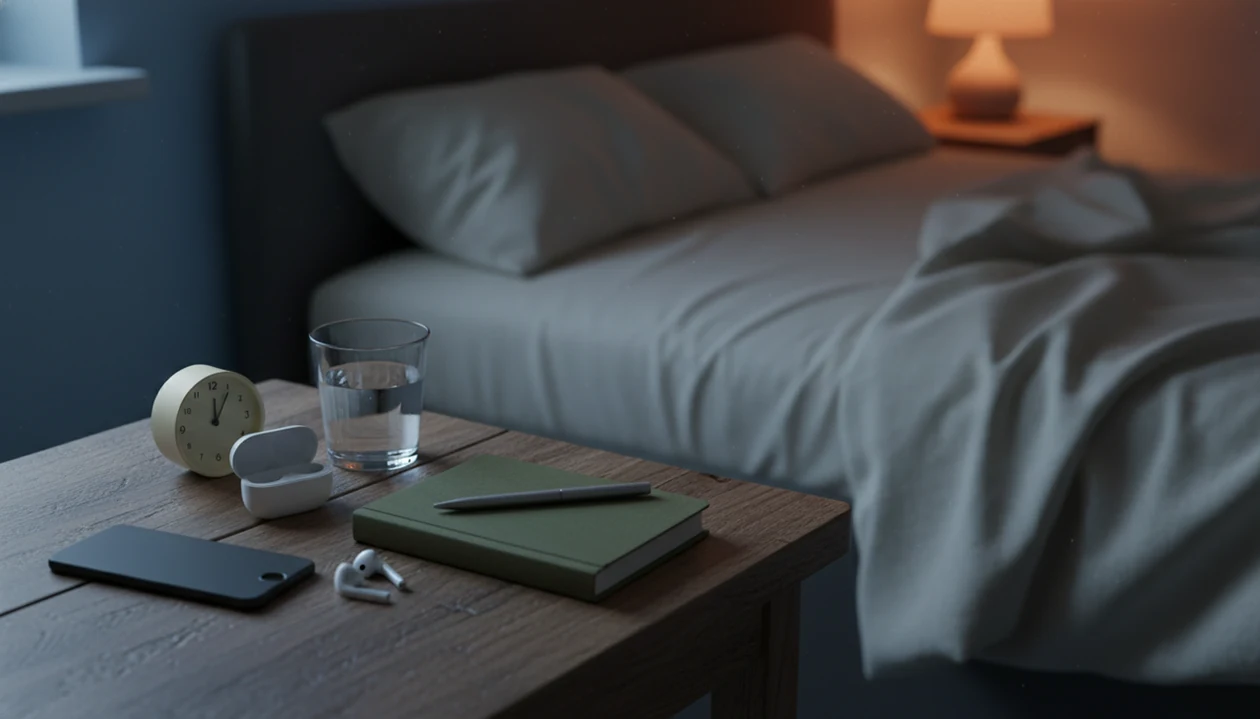


Sleep meditation can help some people sleep better, especially when stress, bedtime worry, or racing thoughts make it hard to settle. It is a bedtime mindfulness or relaxation practice, often guided by audio, that directs attention toward breathing, body sensations, imagery, or a calming voice. A review of randomized trials found moderate-strength evidence for improved sleep quality compared with nonspecific control activities.
The expected benefit is modest, not an instant cure for insomnia. Improvements usually build with repeated practice, and feeling calmer does not necessarily mean sleeping longer. Sleep meditation fits best within a consistent wind-down routine. It does not replace cognitive behavioral therapy for insomnia, known as CBT-I, medical assessment, or treatment for a sleep disorder.
What the evidence supports
- Sleep meditation has moderate evidence for improving sleep quality, but results are usually modest and build with repetition.
- Guided sleep meditation may be most useful for people whose sleep problems are driven by anxiety, rumination, or difficulty winding down.
- It works best as part of a consistent bedtime routine, not as a replacement for CBT-I, medical evaluation, or treatment for serious sleep disorders.
Sleep Meditation Evidence at a Glance
Sleep meditation can improve sleep quality for some people, but the effect is usually small to moderate rather than dramatic. It appears to fit people whose nights are disrupted by stress, bedtime worry, or the familiar loop of tomorrow’s meeting replaying at midnight.
A 2019 meta-analysis of randomized trials found mindfulness meditation improved sleep quality versus non-specific active controls, with effect sizes of 0.33 after treatment and 0.54 at follow-up PMC research article: PMC6557693. A 2015 randomized trial in older adults also found a 6-week mindfulness program improved sleep quality and daytime impairment more than sleep hygiene education. JAMA Internal Medicine study: 2110998 Sleep quality also depends on sleep architecture, including slow wave sleep and its role in brain health.
That does not make meditation the main treatment for chronic insomnia. CBT-I remains the better-established option for long-running insomnia symptoms. For stress-related sleep disturbance, guided meditation is often easier to start than silent meditation because the voice gives the mind a place to land.
What app studies can and cannot tell us
Evidence for mindfulness programs does not automatically establish that any bedtime recording will work. A 2025 review of digital mindfulness interventions combined 18 randomized trials involving 4,870 participants and found a small improvement in sleep. However, the authors rated the overall certainty of the evidence as very low because of differences between studies, reliance on self-report, variable adherence, and risk of bias.
A randomized trial of the Calm app found improvements in perceived sleep quality, fatigue, daytime sleepiness, and presleep arousal among adults with elevated insomnia symptoms. These were subjective outcomes, not proof of objectively longer sleep or equivalence to clinician-delivered CBT-I. Broader sleep-app findings also need care: a 2024 review of mobile sleep interventions mainly covered CBT-based or multicomponent programs, with relatively little evidence specific to mindfulness meditation.
Sleep Meditation Meaning for Bedtime Anxiety
Sleep meditation is a guided or self-led relaxation and mindfulness practice used before sleep to lower mental and physical arousal. It is not meant to force sleep; it gives your attention something steadier than worry to follow.
Common formats include breath focus, body scans, guided imagery, calming sleep stories, and self-hypnosis-style audio. A person may choose between a 5-minute breathing exercise and a 20-minute body scan in an app library, depending on how wired they feel.
MindTastik offers guided meditations, sleep tracks, breathing practices, and self-hypnosis sessions for adults seeking support with rest, anxiety, and daily calm. Sleep meditation is different from a daytime practice because it is not about staying alert or sharpening attention. It is meant to create a gentler wind-down routine so bedtime feels less like something you have to fix.
How Sleep Meditation Works
Sleep meditation works by lowering arousal and giving the mind a steady place to rest before sleep. It does not sedate the brain; it changes the conditions around sleep so the body has fewer reasons to stay on guard. For context on what happens after you fall asleep, explore sleep stages and brain waves.
The main mechanism is attention anchoring, which means returning to one simple focus such as a voice, breath, image, or body sensation. That anchor interrupts bedtime worry and rumination without asking you to argue with every thought. At the same time, slow breathing, relaxed muscles, and predictable audio can support parasympathetic activation, the “rest and digest” side of the nervous system. In plain language, the jaw softens, the shoulders drop, and the body gets more safety cues than threat cues.
Guided audio can be useful because it carries part of the effort for you. Instead of trying to make the mind blank, you follow the next gentle instruction. Benefits usually build through repetition over several weeks, as the same track or routine becomes a familiar signal that the day is ending.
5 Facts About Guided Meditation for Sleep
- Fact 1: Sleep meditation evidence supports small to moderate improvements in sleep quality when compared with weak or non-specific control activities.
- Fact 2: Guided meditation mainly works through the relaxation response and reduced pre-sleep worry, not through chemical sedation.
- Fact 3: Sleep meditation results usually require regular practice over weeks, not one impressive night.
- Fact 4: Meditation may reduce insomnia symptoms, but it does not outperform CBT-I for chronic insomnia.
- Fact 5: Better results usually come from combining audio, sleep hygiene, and a repeatable wind-down routine.
Cleveland Clinic notes that brief mindfulness meditation may improve sleep quality and reduce insomnia symptoms, especially with regular practice. The NHS also describes guided sleep meditation as more useful when paired with a consistent bedtime routine and good sleep habits NHS health guidance: how can meditation help with sleep.
For people comparing app-based support, our guide on whether do meditation apps actually help explains where guided audio is useful and where expectations should stay modest.
Sleep Meditation Effects in the Brain and Body
Sleep meditation works by helping the nervous system shift toward parasympathetic activation, often called the relaxation response. In plain terms, the body gets fewer “stay alert” signals and more cues that it is safe to settle.
Attention anchoring is part of the mechanism. When you follow a voice, count breaths, or scan the body, the mind has less room to feed rumination loops. Body scans may also reduce muscle tension and perceived alertness, especially around the jaw, shoulders, and legs. When attention difficulties and bedtime restlessness overlap, the ADHD iceberg and sleep can offer helpful context.
Still, sleep meditation does not sedate the brain like a sleeping pill. It changes the conditions around sleep, not the chemistry in the same direct way. Guided audio can help beginners because it removes some effort. Cheap earbuds, a quiet room, and one simple instruction are often enough.
The body gets the hint slowly.
For a broader day-by-day view, the meditation benefits timeline gives a realistic sense of what may change with repeated practice.
Before You Start Sleep Meditation
Before you start sleep meditation, set up the conditions so the practice feels quiet, simple, and repeatable. The goal is a calmer landing into bed, not a promise that sleep will arrive on command.
- Choose a low-stimulation window about 20 to 30 minutes before bed. Let this be the start of the wind-down, not something squeezed between work email and lights out.
- Use audio-only mode whenever possible. Dim the screen before the track begins, place the phone out of easy reach, and avoid browsing afterward.
- Pick one short track style before getting into bed, such as a body scan, breath practice, sleep story, or guided imagery. Deciding while tired often turns into scrolling.
- Treat the session as calm practice rather than a test of whether you can fall asleep fast. If sleep comes, fine. If not, you still trained the body to soften around bedtime.
- Seek care first if you have breathing pauses, loud snoring with gasping, severe daytime sleepiness, worsening mood, or symptoms that keep escalating. Meditation can support rest, but it should not delay medical evaluation when warning signs are present.
5-Step Sleep Meditation Routine for Better Results
Use sleep meditation as a repeatable routine, not a nightly test you have to pass. The most common medically supported way to address chronic insomnia is CBT-I, while sleep meditation fits better as a supportive wind-down habit.
- Set a consistent start time 20 to 30 minutes before bed, even if you do not feel sleepy yet.
- Turn off bright screens or switch to audio-only use. Dim the phone screen before starting bedtime audio.
- Choose one guided meditation style for at least one week, such as breath focus, body scan, or guided imagery.
- Practice for 10 to 20 minutes without checking whether sleep is “working” yet.
- Track sleep quality for two to four weeks instead of judging one restless night.
Structured apps such as MindTastik can make the routine easier by keeping sleep audio, breathing exercises, and calming sessions in one place. People comparing consumer options may also look at Calm, Headspace, or Insight Timer, but the same rule applies: judge the tool by repeatable wind-down support, not one-night knockout claims. A good meditation app for sleep anxiety and everyday calm should deliver repeatable support, not diagnosis, therapy, or guaranteed sleep.
Common Sleep Meditation Mistakes That Weaken Results
Several common mistakes make sleep meditation look less useful than it is. Most involve treating it like a switch instead of a wind-down practice.
- The knockout expectation: Waiting for meditation to “put you out” immediately can create more pressure.
- The nightly shuffle: Switching tracks every night prevents the brain from learning one familiar cue.
- The stimulation sandwich: Meditation works poorly when surrounded by scrolling, work email, or intense shows.
- The stopwatch test: Judging only time to fall asleep misses calmer wake-ups and fewer worry spirals.
- The silent struggle: Intense silent practice can be too demanding when a guided voice would be easier.
Fingers tracing a jacket zipper during a quick reset is different from lying in bed trying to perform calm. Notice what feels manageable. For many beginners, sleep meditation usually works best when the practice feels almost boring, while longer silent sits fit people with more experience.
Sleep Meditation Evidence Compared With Sleep Hygiene and CBT-I
Sleep meditation is supportive and low-risk for many adults, but it is not the gold standard for chronic insomnia. Sleep hygiene creates better conditions for sleep, while meditation helps reduce arousal once you are in those conditions. For adults with chronic insomnia, the American College of Physicians recommends CBT-I as the initial treatment in its clinical guideline on chronic insomnia.
| Approach | Best for | Evidence strength | Realistic expectation |
|---|---|---|---|
| Guided sleep meditation | Bedtime worry, stress, racing thoughts | Moderate for sleep quality | Modest improvements with repetition |
| Sleep hygiene | Irregular routines, light exposure, poor habits | Useful as a foundation | Better sleep conditions, not always enough alone |
| CBT-I | Chronic insomnia patterns | Strong | Structured treatment for thoughts and behaviors that maintain insomnia |
| Medical evaluation | Snoring, breathing pauses, severe sleepiness, complex symptoms | Essential when symptoms suggest a disorder | Diagnosis and condition-specific care |
Clinicians typically recommend escalating beyond app-based meditation when insomnia persists, daytime impairment is severe, or symptoms suggest sleep apnea, restless legs, or medication effects.
A conference room chair between meetings may be enough for a short reset. Nightly insomnia is different. If symptoms keep building, compare your options with a qualified professional rather than adding longer tracks.
MindTastik sessions for worry and bedtime tension
MindTastik’s guided meditation library offers a voice to follow when bedtime thoughts keep returning to unfinished tasks. Breathing exercises and body-focused sessions suit a short wind-down practice, while sleep stories offer a less inward-focused option. Choosing one familiar session can keep the routine simple.
The app is not a medical treatment. Persistent insomnia, daytime impairment, or a suspected sleep disorder calls for clinical assessment rather than more bedtime audio. People who find meditation distressing should stop or choose a different approach.
What sleep meditation cannot treat
Sleep meditation has real promise, but the limits matter. It can support a bedtime routine, yet it should not be treated as medical care.
- Research on sleep-specific guided meditations is still limited and varied.
- Effects are often modest and may not be enough for severe or long-standing insomnia.
- Meditation does not treat sleep apnea, restless legs syndrome, medication side effects, or circadian rhythm disorders.
- Some people with trauma, severe depression, panic, or certain psychiatric conditions may find inward-focused practice uncomfortable.
- Meditation cannot replace adequate sleep duration.
- People with persistent insomnia, loud snoring, breathing pauses, severe daytime sleepiness, or worsening mental health symptoms should seek professional help.
- MindTastik and similar tools should not be used as therapy, diagnosis, or medical treatment.
In a quiet room after midnight, noticing the same thoughts circling can feel discouraging. It may also be a sign that extra support would help. If meditation starts to bring discomfort, restlessness, or agitation, our page on meditation side effects explains when it may be wise to pause or adjust the practice.
Breathing, body scans, and sleep stories: choosing a starting practice
| Technique | Best for | Minutes |
|---|---|---|
| Slow exhale breathing | settling racing thoughts | 3-7 min |
| Guided body scan | releasing bedtime tension | 8-15 min |
| Sleep story | easing worry through gentle attention | 10-20 min |
Sleep meditation questions
Does sleep meditation actually work for racing thoughts?
It can help when worry and mental arousal are part of the sleep problem. Following a voice, breath, or body scan gives attention an alternative to rehearsing tomorrow’s problems. Research supports modest improvements in sleep quality, but not everyone benefits, and meditation does not address every cause of poor sleep.
How long does sleep meditation take to work?
A session may feel calming before sleep changes become noticeable. Research generally examines repeated practice over weeks, not a single recording on one night. A two- to four-week record of sleep quality and daytime functioning is more useful than judging the practice solely by how quickly sleep arrives each evening.
How many minutes should I meditate before bed?
Five to ten minutes is a manageable starting point, particularly when staying with instructions feels difficult. The routine described here uses ten to twenty minutes within a wind-down period before bed. Duration is not a guarantee of benefit. A short, repeatable practice is preferable to a longer session that feels demanding.
Which type of meditation is best for sleep?
There is no single best format established for everyone. Breath focus provides a simple attention cue, a body scan directs attention toward physical tension, and guided imagery or a sleep story provides something gentle to follow. The useful choice is a format that feels comfortable and does not add pressure to fall asleep.
Can sleep meditation cure chronic insomnia?
Sleep meditation is not an established cure for chronic insomnia. CBT-I is the guideline-supported initial treatment and addresses sleep-related thoughts and behaviors, not just relaxation. Meditation can support wind-down or reduce presleep arousal alongside treatment. Persistent symptoms or impaired daytime functioning warrant assessment rather than relying on audio alone.
Does feeling more relaxed mean I am sleeping better?
Not necessarily. Reduced bedtime worry is useful, but it does not prove that total sleep time has increased or nighttime waking has decreased. Many meditation studies rely on self-reported sleep quality. Consider daytime tiredness, awakenings, and overall sleep quality alongside relaxation rather than treating calmness as proof that insomnia has resolved.
When should I seek help instead of relying on sleep meditation?
Seek clinical assessment when sleep problems persist or interfere with daytime functioning. Sleep apnea, restless legs syndrome, circadian-rhythm problems, medication effects, pain, and mental health conditions can contribute to poor sleep. Meditation does not treat these causes. For chronic insomnia, CBT-I is generally preferred over meditation alone.