
Mindfulness Techniques for Therapy: Practical Exercises for Anxiety, Sleep, and Everyday Calm
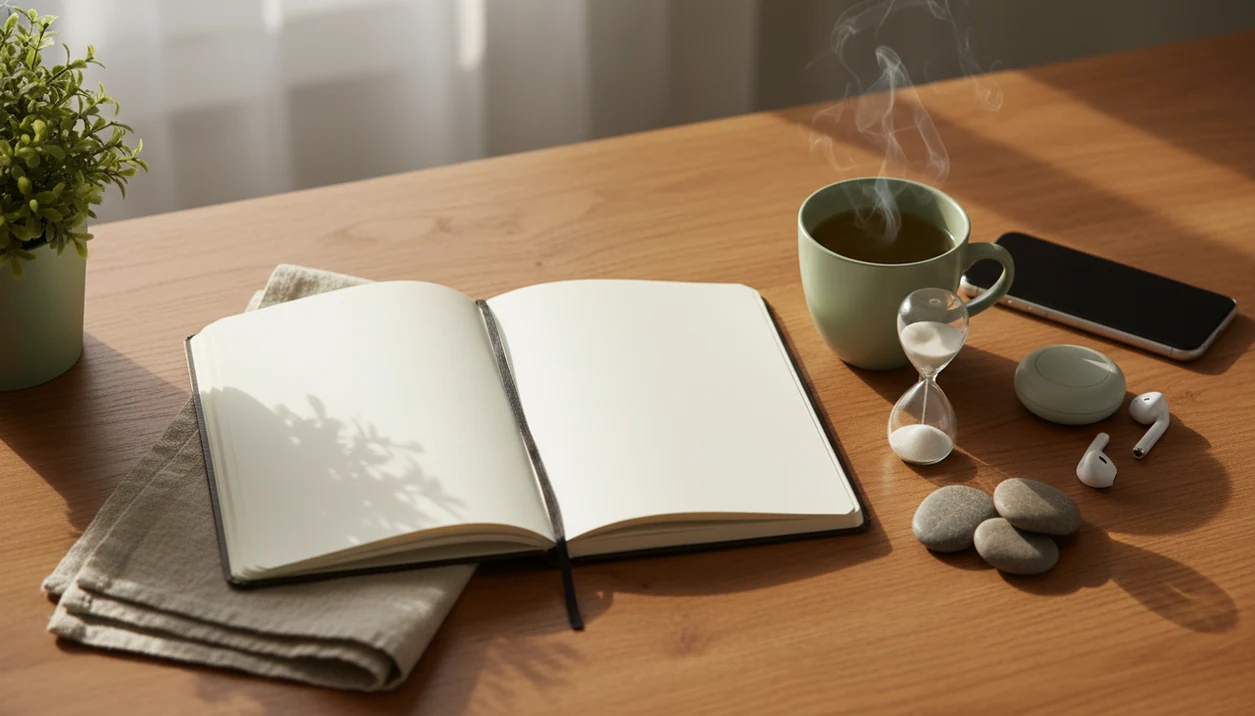


Mindfulness techniques for therapy are short, structured exercises that help people notice thoughts, emotions, and body sensations in the present moment without judgment. Common options include breathing exercises, body scans, grounding, mindful listening, and guided meditation. These practices can be used during counseling or coaching and between sessions at home to support emotional regulation, stress reduction, sleep routines, and daily coping.
The aim is not to empty the mind or force calm. It is to notice a thought or sensation before reacting automatically. A useful starting point is one brief exercise matched to a specific goal, such as grounding during anxiety or a body scan before bed. Mindfulness supports repeated skill practice alongside therapy or medical care, rather than replacing treatment.
The essentials
- Mindfulness in therapy is not about clearing the mind; it is about noticing thoughts and sensations without reacting automatically.
- Grounding, breathing, body scans, mindful listening, and guided imagery are the most useful starter techniques for adults.
- Mindfulness works best as a repeated skill alongside therapy or medical care, not as a replacement for treatment.
Five Facts About Mindfulness Techniques for Therapy
- Mindfulness means noticing present-moment experience without judgment. It is not the same as emptying the mind or forcing calm.
- Common therapy techniques include breathing, body scans, grounding, mindful listening, and guided imagery. These are practical exercises, not abstract ideas.
- Exercises can happen in session or between sessions at home. A therapist may guide the first try, then suggest a short practice before bed or after work. If movement feels more approachable, these ways to improve your home yoga practice can support a consistent routine.
- Mindfulness is often used for stress, anxiety symptoms, emotional regulation, sleep routines, and focus. Evidence supports symptom reduction, but results vary by person.
- Techniques should be adapted for the person. Trauma, panic, or dissociation can make inward attention uncomfortable, so grounding or eyes-open practice may be safer.
A useful starting point is simple: choose one skill, repeat it, and notice what changes.
Before You Try Mindfulness Techniques in Therapy
Before trying mindfulness techniques in therapy, check whether the practice feels steady enough for your nervous system today. Mindfulness should support safety and choice, not push you into panic, numbness, or overwhelm.
- Notice your response to inward focus before committing to breath work or body scans. If attention to the chest, belly, heartbeat, or muscle tension increases panic, dissociation, flashbacks, or trauma symptoms, that is useful information, not a failure.
- Start with eyes-open grounding if internal focus feels unsafe. You might name objects in the room, feel your feet on the floor, or orient to a doorway, window, lamp, or steady sound.
- Choose one small goal for the first week, such as winding down for sleep, coping with anxiety before a meeting, or creating a pause during stress.
- Discuss clinical concerns with a therapist, doctor, or qualified professional if symptoms are persistent, medication questions are involved, or trauma history may affect practice.
- Stop the exercise if you feel unsafe, detached, numb, trapped, or flooded. Return to the room, open your eyes, move gently, and seek support if needed.
Brain and Body Mechanisms Behind Mindfulness Techniques for Therapy
Mindfulness techniques for therapy work by training attention, increasing body awareness, and practicing nonjudgmental observation of thoughts and feelings. In plain language, the person learns to notice “I am having a worry” before reacting as if the worry is the whole situation. For stressful social interactions, learning how to take nothing personally may help you pause before reacting.
The mechanism is partly attentional control and partly interoception, which means sensing internal body signals. A person with racing thoughts may use the breath, feet, or sounds in the room as an anchor. That pause can interrupt rumination, stress reactivity, and automatic emotional responses. Clinicians typically recommend adapting mindfulness to the person’s symptoms, history, and tolerance for body-focused exercises. When mental effort leaves you tired, a nature walk for brain fatigue offers an outdoor break from demanding tasks.
The NIH/NCCIH notes that meditation may help with anxiety, stress, and sleep in some studies (NCCIH mindfulness overview: meditation and mindfulness effectiveness and safety), and Mayo Clinic summarizes mindfulness meditation as a stress-focused practice with possible anxiety and sleep benefits (Mayo Clinic health overview: art 20045858). A 2017 meta-analysis of mindfulness-based interventions reported small-to-moderate anxiety reductions, but effects varied across studies (doi reference: j.cpr.2017.01.008). Progress is usually gradual. In a quiet room under dim light, one body scan may not change the whole evening, but returning to the practice can build steadier support over time.
Five Mindfulness Techniques for Therapy by Goal
Different mindfulness techniques fit different therapy goals. For anxiety, a present-moment anchor often helps more than a long silent sit, while sleep routines may work better with lying-down audio or a slow body scan.
| Technique | Best for | How long it takes | When to avoid or adapt it |
|---|---|---|---|
| Breathing exercises | Daily stress, focus, settling before a hard conversation | 2 to 10 minutes | Adapt if breath focus increases panic or air-hunger sensations |
| 5-4-3-2-1 grounding | Panic, racing thoughts, emotional flooding | 1 to 5 minutes | Use gently if sensory scanning feels overwhelming |
| Body scan | Sleep support, tension awareness, reconnecting with the body | 5 to 20 minutes | Adapt for trauma, pain, or dissociation |
| Mindful listening | Therapy-session presence, relationships, conflict pauses | 2 to 10 minutes | Avoid using it to stay silent when a boundary is needed |
| Guided imagery or guided meditation | Beginners who need structure | 3 to 20 minutes | Choose neutral imagery if some scenes feel unsafe |
For beginners, guided meditation usually works best when the instructions are brief, specific, and easy to repeat.
Between-Session Mindfulness Techniques for Therapy: 5 Practice Steps
Between-session practice works best when it is small enough to repeat. The goal is not to become a different person by Friday; it is to make one supportive practice easier to reach.
- Choose one goal such as sleep, anxiety, focus, or emotional regulation.
- Pick one simple technique instead of trying breathing, grounding, and body scans all at once.
- Set a short practice time such as 2 to 10 minutes, then increase gradually if it feels manageable.
- Track what changes in mood, sleep, muscle tension, or focus after each practice. You can also explore research on nature walks and mental health when considering outdoor activities for your routine.
- Review the practice with a therapist, or adjust it if it feels uncomfortable, numbing, or too intense.
A guided audio app can help with between-session meditation, sleep audio, breathing exercises, and relaxation sessions. App-based practice can be easier to start when choosing between a 5-minute breathing exercise and a 20-minute body scan feels like too much. For step-by-step basics, this how to meditate guide can help you choose a starting point.
Breathing and 5-4-3-2-1 Grounding for Therapy Anxiety
Can breathing and 5-4-3-2-1 grounding help therapy anxiety? They can support anxiety coping by giving attention a stable anchor when worry rises. A 2017 evidence review found small to moderate anxiety reductions for mindfulness-based interventions, though individual responses vary.
Breathing practice might mean inhaling for four counts and exhaling for six. Grounding uses the five senses to reconnect with the room you are actually in. Try naming five things you see, four things you feel, three things you hear, two things you smell, and one thing you taste.
Feet on office carpet. Calendar alert buzzing.
Breath-focused work can feel uncomfortable for some people with panic. If that happens, use external grounding instead, such as naming colors in the room or pressing your shoes into the floor. For app-based options, a meditation app for anxiety support may be useful when short resets are easier than silent practice.
Body Scan Mindfulness Technique for Therapy Sleep Support
A body scan is a mindfulness technique that slowly moves attention through the body while noticing sensations without forcing relaxation. It may support bedtime routines by giving the mind something gentle to follow.
The practice often starts at the feet, then moves through the legs, belly, chest, shoulders, jaw, and face. You notice warmth, pressure, tingling, tightness, or nothing much at all. Nothing much counts. Lying-down guided audio can help people who struggle to practice silently, especially when a calm voice gives the mind a simple path to follow.
Mindfulness may support sleep routines, but it is not an instant fix for insomnia. If sleep trouble is persistent, medical or behavioral sleep support may be needed. Guided sleep audio can be one optional way to build a wind-down routine, alongside practical sleep hygiene habits.
Best-Fit and Not-Fit Use Cases for Mindfulness Techniques for Therapy
Mindfulness techniques fit best when the goal is skill-building, coping support, or a repeatable everyday calm routine. They are not a standalone cure for severe anxiety, depression, trauma symptoms, or insomnia.
Best-fit users
| Best for | Why it may fit |
|---|---|
| Adults wanting stress reduction | Short practices can create a pause before reacting |
| People building anxiety coping skills | Grounding and breathing offer concrete steps during stress |
| Sleep routine builders | Body scans and guided audio can support a nightly wind-down |
| Focus support | Attention anchors help bring the mind back to one task |
| Guided-audio learners | Structure reduces the “what do I do now?” problem |
Not-fit situations
| Not ideal for | Safer next step |
|---|---|
| People seeking a cure for severe symptoms | Use therapy, medical care, or psychiatric support |
| People who feel worse with inward focus | Adapt with a professional |
| Crisis or unsafe situations | Seek urgent help, not meditation |
Mindfulness in substance-use therapy: what the research covers
Substance-use treatment is one setting where researchers have studied mindfulness as a structured intervention, rather than simply a brief calming exercise. A 2017 meta-analysis of randomized trials found statistically significant effects, ranging from small to large, on substance misuse frequency and severity, craving intensity, and stress. Those findings concern the treatments studied, not proof that any individual breathing exercise or recording will produce the same results.
A 2024 Cochrane review of mindfulness-based interventions for substance use disorders assessed substance-use symptoms and related outcomes. Differences among interventions and comparison treatments call for cautious interpretation. For someone receiving substance-use care, the practical question is how a mindfulness practice fits the treatment plan. It should not be treated as a replacement for that care or assumed to suit every stage of recovery.
When to Seek Professional Help Instead of Mindfulness Practice
Seek professional help instead of relying on mindfulness when symptoms are unsafe, severe, worsening, or not improving. Mindfulness can support care, but it does not diagnose mental health conditions or treat them on its own.
- Get urgent help if you have thoughts of self-harm, feel at risk of harming someone else, are in an unsafe situation, or notice crisis symptoms that make it hard to stay safe. This is a time for emergency, crisis, or trusted-person support, not a breathing exercise.
- Contact licensed care when anxiety, depression, panic, or low mood is intense, getting worse, lasting for weeks, or interfering with work, sleep, relationships, or basic routines.
- Ask a therapist to adapt practice if trauma memories, panic sensations, dissociation, numbness, or feeling unreal show up during meditation, breath work, or body scans.
- Consider behavioral sleep care if insomnia continues after steady routine changes, wind-down habits, and gentle sleep practices.
- Use mindfulness as support alongside therapy, medical care, medication decisions, or sleep treatment when those are needed.
The safer frame is simple: practice can be helpful, but care comes first.
Seven Mistakes With Mindfulness Techniques for Therapy Practice
Common mistakes make mindfulness feel harder than it needs to be. The fix is usually smaller, clearer, and less perfectionistic.
- The Clear-Mind Mistake: Trying to erase thoughts turns practice into a fight. Noticing the thought is the practice.
- The Too-Long Start: Beginning with 30 minutes can backfire. Two minutes repeated is often more useful than one heroic session.
- The Emotion-Suppression Trap: Mindfulness is not a way to shove sadness, anger, or fear out of sight.
- The Random-Practice Problem: Inconsistency limits benefits because the skill never becomes familiar.
- The Wrong-Technique Match: Breath focus may not fit panic, while body scans may not fit some trauma histories.
- The No-Review Habit: If a technique feels bad for three days, discuss it or change it.
- The Instant-Calm Expectation: Formal programs can require real time. The APA describes one 8-week mindfulness program with about 45 minutes a day, 6 days a week of home practice, though beginners can start much shorter. For another example of structured practice, learn why the army trains in mindfulness and what its training involves.
For more options, compare different meditation techniques before settling on one.
App-Based Support for Mindfulness Techniques for Therapy Practice
App-based support can provide guided meditation, sleep audio, breathing exercises, and relaxation sessions for adults who want sleep, anxiety, and everyday calm support. Guidance can make between-session practice easier for beginners who do not want to sit in silence and guess what comes next.
A person might use guided meditation for everyday calm, breathing exercises for anxiety support, sleep audio for bedtime routines, or self-hypnosis sessions for relaxation. That can be useful for someone who wants a steady recording to lean on when the mind feels crowded and hard to settle.
No meditation app replaces therapy, diagnosis, medication, or crisis care. If you are comparing app options for sleep and anxiety routines, the best meditation app for sleep anxiety guide explains what to check before choosing. Some readers also compare it under the phrase Best Meditation App for Sleep.
Guided practice between therapy appointments
MindTastik’s guided meditation library can provide a spoken sequence for adults who find silent practice difficult. Breathing exercises may suit brief stress-management practice, while sleep audio can support a bedtime routine. The useful role is repetition between appointments, ideally with a technique already discussed in therapy. People whose symptoms worsen with inward attention should choose adapted, therapist-led practice instead. The app is not medical treatment or a substitute for clinical care.
What mindfulness exercises cannot treat on their own
Mindfulness techniques for therapy have real limits. They can support coping, but they should not be sold as instant calm or medical treatment.
- Mindfulness techniques for therapy do not work equally well for everyone.
- Evidence is stronger for symptom reduction and coping support than for curing anxiety, depression, or insomnia.
- People with trauma, panic, or dissociation may need adapted exercises and professional guidance.
- Some people prefer movement-based, cognitive, behavioral, or skills-based therapy approaches.
- Very brief or inconsistent practice may not create meaningful change.
- Overpromising immediate calm is misleading because mindfulness is usually a gradual skill.
- Mindfulness is not a substitute for medical, psychiatric, or crisis care.
- If an exercise makes symptoms feel unsafe, stop and discuss it with a qualified professional.
The most common medically supported way to use mindfulness for therapy goals is as a repeated coping skill combined with appropriate professional care.
Questions about mindfulness in therapy
What does a mindfulness exercise look like in a therapy session?
A therapist may guide attention to breathing, feet on the floor, sounds in the room, or sensations in the body. The task is to notice what happens without immediately judging or changing it. The exercise can also help identify which kind of attention feels manageable enough to practice between appointments.
Which mindfulness technique is best for anxiety?
There is no single best technique for everyone. Grounding or mindful listening may suit racing thoughts because they direct attention toward the surroundings. Breathing can provide a steady anchor, but it needs adaptation if it increases panic or air-hunger sensations. The best starting point is a brief exercise that does not intensify symptoms.
How do I do 5-4-3-2-1 grounding?
Name five things visible, four things felt through touch, three sounds, two smells, and one taste. The purpose is to reconnect attention with the current surroundings, not to complete the sequence perfectly. Keep it gentle and brief if scanning the senses feels overwhelming, and discuss that response with a therapist.
How long should mindfulness practice last between therapy sessions?
A practical starting range is two to ten minutes, using one technique for one goal. Longer sessions are not automatically more useful. Track changes in mood, tension, sleep, or focus, then review them with a therapist. Shorten or change the practice if it feels too intense, uncomfortable, or numbing.
Can a body scan help with sleep?
A body scan may support a bedtime routine by giving attention a gentle sequence to follow. It involves noticing sensations through different parts of the body without forcing relaxation. It is not an instant fix for insomnia, and inward attention may need adaptation if it brings up panic or trauma symptoms.
What if I cannot stop thinking during mindfulness?
Thoughts do not have to stop for mindfulness to count. The practice is noticing that attention has moved to a worry, memory, or plan, then returning to an anchor such as sound or the feet. Trying to erase thoughts can turn the exercise into a struggle rather than a noticing practice.
Can mindfulness replace therapy for anxiety or depression?
No. Mindfulness can support coping and emotional regulation, but it does not diagnose conditions or replace treatment. Symptoms that are severe, worsening, lasting for weeks, or disrupting daily life need professional assessment. Immediate safety concerns, including thoughts of self-harm, call for urgent support rather than relying on a mindfulness exercise.