
Mindfulness for Trauma: A Gentle, Trauma-Informed Guide
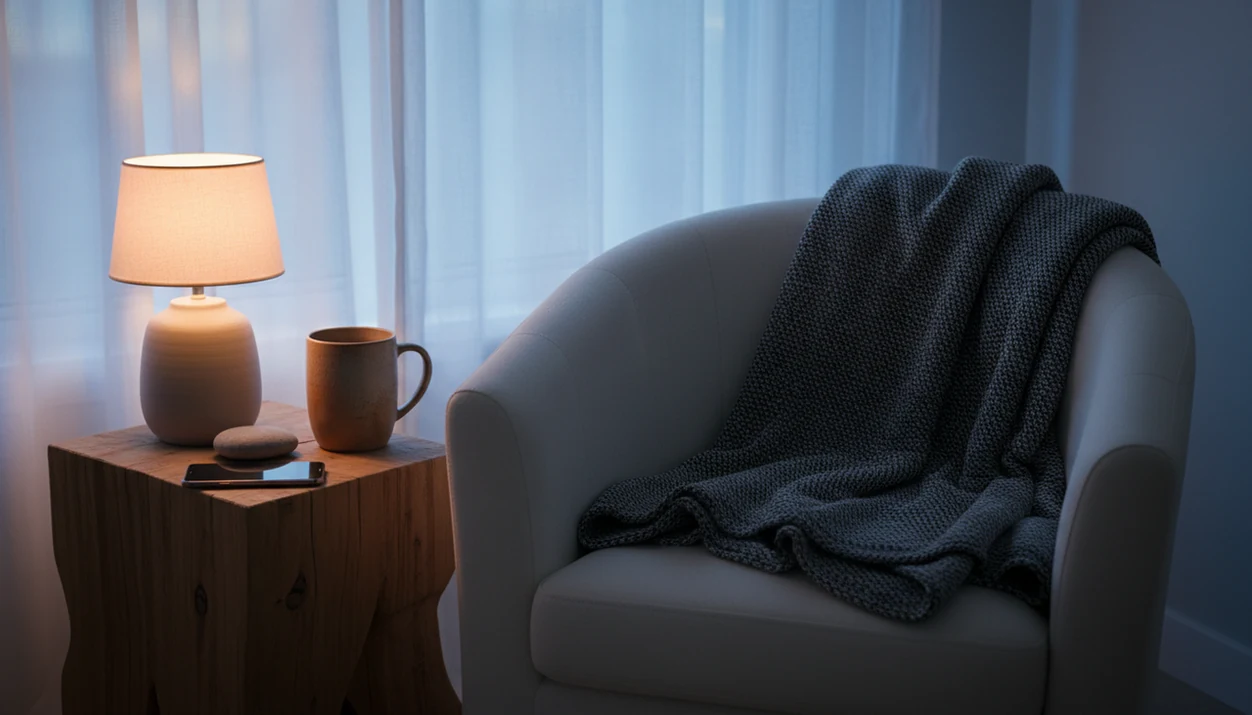


Mindfulness for trauma is present-moment awareness adapted to prioritize safety, choice, grounding, and nervous-system regulation rather than forced stillness or intense inward attention. It changes the pace, posture, and focus of meditation so that closing the eyes or following the breath is optional. Short practices, external anchors, and permission to stop are central, especially when internal sensations bring up distress.
The aim is a manageable connection with the present, not enduring discomfort to complete a session. Looking at an object, noticing nearby sounds, or feeling the floor underfoot can be starting points. Mindfulness may support trauma-related symptoms, but it belongs alongside professional trauma care, not in place of it. A practice that increases panic, flashbacks, or disconnection needs to change or stop.
The essentials
- Trauma-sensitive mindfulness is different from standard meditation because it adapts the pace, posture, anchor, and intensity of practice.
- Research suggests mindfulness-based interventions can reduce PTSD-related symptoms, but they are best used as a complement to therapy, not a standalone cure.
- Start with short, eyes-open grounding practices, external anchors, and guided audio that supports sleep, anxiety, and everyday calm without pushing you past your limits.
What Mindfulness for Trauma Means in Daily Life
Mindfulness for trauma means practicing present-moment awareness in a way that reduces overwhelm instead of increasing it. Standard meditation often asks people to sit still, close their eyes, and follow the breath. Trauma-informed practice changes that structure.
The core principles are choice, safety, grounding, and stopping. You might keep your eyes open, notice the floor under your feet, listen to nearby sounds, or end after one minute. That still counts.
For someone lying awake in a quiet room and noticing the night stretching on, the goal is not to “empty the mind.” It is to find one safe, manageable point of contact with the present.
Mindfulness can support sleep, anxiety, focus, and everyday calm, but it is not trauma treatment by itself. MindTastik offers guided practices, sleep audio, breathing exercises, and self-hypnosis sessions for adults seeking gentle support with rest, stress, and daily emotional balance.
Why Trauma-Sensitive Mindfulness Needs Safety Choices
Why can meditation feel unsafe after trauma? Eyes-closed breath focus, long silence, and forced stillness can make internal sensations feel louder. For some trauma survivors, that can increase distress rather than settle it.
Trauma can leave the body primed for threat. Hyperarousal may feel like racing thoughts, scanning the room, or a heart that will not slow down. Dissociation can feel foggy, far away, or unreal. Flashbacks may pull the past into the present with body sensations, images, or fear.
So the practice needs exits.
Opening the eyes, changing anchors, moving, or stopping is not failure. It is skillful practice. A trauma-sensitive approach lets you keep one foot in the room, especially when inner attention feels too intense. If you are new to the basics, a gentle how to meditate guide can help, but trauma adaptations matter from the start.
Five Mindfulness for Trauma Facts Worth Knowing
- Trauma-informed mindfulness is not standard mindfulness. It modifies pace, posture, anchors, and intensity so practice does not depend on stillness or closed eyes.
- Mindfulness may reduce trauma-related symptoms, but it should complement professional care. A 2021 meta-analysis of 19 randomized controlled trials found small to moderate reductions in PTSD symptoms with mindfulness-based interventions compared with controls NIH research: PMC8500672.
- Short practices and external anchors are often safer starting points. One to three minutes of sound, sight, or feet-on-floor awareness may feel steadier than a long body scan.
- Movement and contact points can rebuild a sense of control. Mindful walking, stretching, or noticing chair support gives the body choices. Gentle boundaries and self-respect can support a better relationship with yourself while you practice choice, safety, and stopping.
- PTSD is common enough that safety language should be direct. In the U.S., about 5% of adults experience PTSD in a given year, according to NIMH data nimh reference: post traumatic stress disorder ptsd.
A trauma-informed label is not proof of treatment benefit
Safety adaptations and treatment effectiveness are different questions. A 2021 systematic review of 33 articles on trauma-informed interventions found inconsistent evidence for improvements in PTSD, depression, or anxiety. The interventions were broadly defined and varied in study quality and outcome measurement. That review does not establish that every practice described as trauma-informed treats trauma symptoms.
Mindfulness research also needs to be read in context. A 2025 review of mindfulness, trauma, and substance use describes possible symptom benefits, while warning that mindfulness can intensify distress, dissociation, or trauma-related sensations in some patients. Findings from structured clinical programs should not be treated as proof that an individual audio track will help. For everyday practice, preserving orientation and choice matters more than completing a prescribed session.
How Mindfulness for Trauma Works in the Nervous System
Mindfulness for trauma works by helping attention shift between present cues and internal experience without forcing prolonged exposure to distress. The key skill is flexible attention, not intense focus.
Traumatic stress can narrow the nervous system into threat mode. Some people feel keyed up. Others go numb or disconnected. The National Center for PTSD describes PTSD symptoms as including intrusive memories, avoidance, negative mood changes, and hyperarousal, which is why grounding practices should be optional and adjustable ptsd reference: ptsd basics.asp. The “window of tolerance” describes the zone where emotions feel strong but still workable. In plain language, it is the range where you can notice what is happening without getting flooded or shutting down.
Grounding anchors help because they point attention toward current safety signals. Feet on the floor, chair contact, sounds in the room, and visible objects can feel less activating than breath focus. Breath can be useful for some people, but it is also internal and body-based.
For many trauma survivors, external anchors are often easier than breath focus because they keep attention connected to the present room.
How to Use Mindfulness for Trauma Safely
Use mindfulness for trauma by starting small, staying oriented to the room, and treating stopping as part of the practice. Long sessions are not required at the beginning.
- Choose a safe place where you can see the door, adjust lighting, and leave if needed.
- Set a short timer for 1 to 3 minutes instead of beginning with a long meditation.
- Select an external anchor such as feet on the floor, a steady sound, or one object in the room.
- Check intensity halfway through by asking, “Is this helping me feel more here, or less here?”
- Stop or switch if distress rises, your body feels unreal, or memories become too vivid.
- Use guided audio cautiously if a calm voice helps you stay oriented, and pause it if it feels activating.
A guided voice through cheap earbuds can be useful. It can also be too much. Keep the choice in your hands.
7 Mindfulness for Trauma Grounding Tips
These mindfulness for trauma tips are small on purpose. They are meant for stress spikes, anxiety, bedtime, or moments when sitting meditation feels too intense. For everyday stress around others, learning how to deal with difficult people mindfully can offer practical ways to respond.
Two-minute feet-on-floor practice
Place both feet on the floor. Press your toes down gently, then release. Notice the heel, arch, and ball of each foot. Look at one stable object while you do it.
Three-minute senses practice
Name five things you see, four sounds you hear, three textures you can feel, two colors nearby, and one thing that tells you today’s date.
Gentle bedtime grounding practice
Before bedtime audio, settle the room and let your eyes stay open if that feels safer. Notice the pillow, blanket, or mattress beneath you. If the mind starts crowding in, come back to one steady point of contact.
Other options include mindful walking, slow stretching, or standing near a wall. If grounding makes symptoms stronger, stop and choose something ordinary, like reading labels in the room. For more non-clinical practice ideas, compare mindfulness exercises and techniques that do not require deep inner focus.
Mindfulness for Trauma Guide: Best For and Not For
Mindfulness for trauma is best understood as a supportive self-regulation practice, not a replacement for trauma care. It may fit some moments well and be the wrong tool for others. When disagreements feel manageable and both people are safe, mindful conflict resolution can support calmer communication in relationships.
| Situation | Better fit | Not ideal for |
|---|---|---|
| Sleep disruption | Gentle grounding, bedtime audio, orienting to the room | Treating nightmares or trauma-related insomnia without clinical support |
| Anxiety support | Short resets, senses practice, feet-on-floor awareness | Managing panic that feels medically unsafe |
| Everyday calm | Brief routines after work, transitions, or before sleep | Forcing yourself to sit through distress |
| Focus problems | External anchors, sound awareness, mindful walking | Using meditation as punishment for distraction |
| Trauma symptoms | Support alongside therapy or clinician guidance | Replacing EMDR, cognitive processing therapy, medication, or emergency care |
Clinicians typically recommend evidence-based trauma therapy for PTSD, complex trauma, or recent trauma, with supportive practices added when appropriate. The U.S. Department of Veterans Affairs describes trauma-focused psychotherapies, including prolonged exposure, cognitive processing therapy, and EMDR, as strongly recommended PTSD treatments ptsd reference: tx basics.asp. The most common medically supported way to address PTSD is trauma-focused care with a qualified professional, while mindfulness may help some people practice regulation between sessions.
When to Seek Professional Help
Seek professional help before using mindfulness as your main support if trauma symptoms feel intense, unsafe, or hard to interrupt. Mindfulness can support regulation, but it cannot diagnose PTSD, treat PTSD, or replace trauma-focused care.
Some signs call for clinician-guided support first: frequent flashbacks, thoughts of self-harm, feeling unreal or detached from your body, losing time, panic that feels medically unsafe, or living in a situation where you are not physically or emotionally safe. If immediate safety is at risk, contact local emergency services, a crisis line, or a trusted person who can stay with you now. If relationship patterns undermine your safety, consider support and learn how to handle a toxic relationship without relying on mindfulness alone.
- Pause mindfulness practice if it makes memories, body sensations, or dissociation stronger.
- Contact a qualified mental health professional if symptoms interfere with sleep, work, relationships, or basic daily life.
- Tell the clinician what happens during meditation, including flashbacks, numbness, panic, or urges to harm yourself.
- Use grounding only as a short-term regulation tool while you arrange appropriate care.
- Seek emergency or crisis support right away if you might hurt yourself, someone else, or cannot get to a safe place.
Using Guided Audio for Trauma-Sensitive Mindfulness Support
Apps can support trauma-sensitive mindfulness when they offer short, flexible, grounding-focused options. They should deliver practical guidance for sleep anxiety and everyday calm, not promises to erase trauma.
Guided audio may be useful if you choose short sleep, anxiety, or grounding tracks first. Start with the lowest-intensity option. Keep your eyes open if needed. Sit near a lamp, not in total darkness, if that feels safer. Stop the audio if the voice, silence, music, or body cues feel activating.
Some people reach for guided support because silence feels too unstructured when they are overwhelmed. Wanting a calm voice or simple audio cue before bed, or during a brief reset, is a reasonable and gentle way to practice.
MindTastik should be used alongside therapy, medication, or clinician guidance when those are part of your care. If you are comparing app options for sleep and anxious thoughts, the best meditation app for sleep anxiety guide can help you choose with safety in mind.
Choosing guided audio without adding pressure
MindTastik’s guided meditation library offers an audio option for people who prefer spoken guidance to silence. Sleep stories and soundscapes are other options when meditation instructions feel too demanding. The choice should depend on the actual recording: voice, body cues, and breath instructions can feel calming or activating.
MindTastik is not a medical treatment, and a general meditation library is not the same as clinician-led trauma care. Frequent flashbacks, severe dissociation, or worsening distress call for professional support rather than another recording.
When mindfulness is not enough for trauma symptoms
Mindfulness for trauma has real limits. It can be supportive, but it is not always appropriate, and it should not be framed as a cure.
- Mindfulness is not a standalone treatment for PTSD, complex trauma, recent trauma, or severe trauma symptoms.
- Some practices can increase distress, flashbacks, panic, body memories, or dissociation.
- Recent trauma, severe dissociation, self-harm risk, or unsafe living conditions may require clinician-guided support first.
- Evidence for mindfulness-based approaches is promising, but long-term trauma-sensitive protocols are still less established than evidence-based trauma therapies.
- Meditation apps should not replace therapy, emergency care, crisis support, prescribed treatment, or medical advice.
- Breathwork can feel calming for some people, but it may feel activating for others.
- Stop if symptoms intensify, and contact a qualified mental health professional when needed.
Not every calm practice feels calming.
If bedtime is the hardest time, pair grounding with basic sleep hygiene rather than relying on meditation alone. A dim lamp beside wrinkled pillows may help more than another long session.
Breath focus and strong emotion are not requirements
Myth: Mindfulness for trauma has to start with breath awareness.
Reality: Breath focus can feel grounding for some people and activating for others. If the breath feels too intense, a guided voice, room sounds, or noticing the shape of an object may be a safer first anchor.
Myth: Feeling emotional means the practice is working.
Reality: Big emotion is not required for progress, and pushing into overwhelm can make a session harder to return to. A practice that ends while you still feel oriented often builds more trust than one that asks you to endure.
Myth: The best session is the deepest one.
Reality: For trauma-informed practice, the best session is often the one that preserves steadiness afterward. If a technique leaves you foggy, tense, or disconnected, it may need to be shortened, simplified, or replaced.
Mindfulness for trauma questions
How long should a trauma-sensitive mindfulness session last?
One to three minutes is a starting point, not a requirement to endure. A shorter pause may be more manageable than a full recording. Check whether attention feels connected to the room or increasingly distant. End early if distress rises; longer practice is not automatically better.
What grounding techniques can help during a flashback?
Keep the eyes open if that helps, look around the room, and name visible objects or nearby sounds. Notice contact with the floor and identify something that confirms the current date. These are grounding options, not guaranteed ways to stop a flashback. Frequent or hard-to-interrupt flashbacks need professional support.
Should I continue meditating if I feel numb or unreal?
Feeling unreal, distant, or disconnected is a reason to pause, not push deeper. Open the eyes, look around, change position, or stop the recording. Shift away from intense inward attention. If this happens repeatedly, or includes losing time, seek clinician-guided support before continuing meditation on your own.
Can mindfulness replace trauma therapy?
No. Mindfulness can be a supportive practice, but it is not a standalone treatment for PTSD or severe trauma symptoms. Research findings vary across interventions and populations. Trauma-focused professional care is the appropriate route when symptoms are persistent, disruptive, or unsafe; mindfulness may be used alongside that care.
Can mindfulness help with trauma-related sleep problems?
Gentle grounding or bedtime audio may support settling before sleep, provided the practice does not increase distress. Keeping a light on or the eyes open may feel more manageable than meditating in darkness. Persistent nightmares or trauma-related insomnia need clinical support rather than reliance on meditation alone.
How can I tell if past trauma is affecting my daily life?
Past trauma may show up as feeling constantly on alert, avoiding reminders, having intrusive memories, struggling to trust others, or reacting strongly to situations that seem safe. These experiences can have other causes too, so they do not confirm a diagnosis. A qualified mental health professional can help you understand persistent symptoms and explore support.
Is it okay to keep my eyes open during meditation after trauma?
Yes. Keeping your eyes open can help you stay connected to your surroundings and feel more in control. Try resting your gaze on a neutral object in a familiar space. You can also sit near an exit or adjust your position. Meditation does not require closed eyes, stillness, or pushing through discomfort.
How can I practice self-compassion while recovering from trauma?
Start by noticing self-critical thoughts without treating them as facts. Try a simple phrase such as, "I am having a hard moment, and I deserve support." If kind language feels uncomfortable, use neutral words instead: "This is difficult right now." Self-compassion can also mean respecting your limits, resting, and asking someone trustworthy for help.