
Obstacles to Meditation: A Practical Guide for Beginners
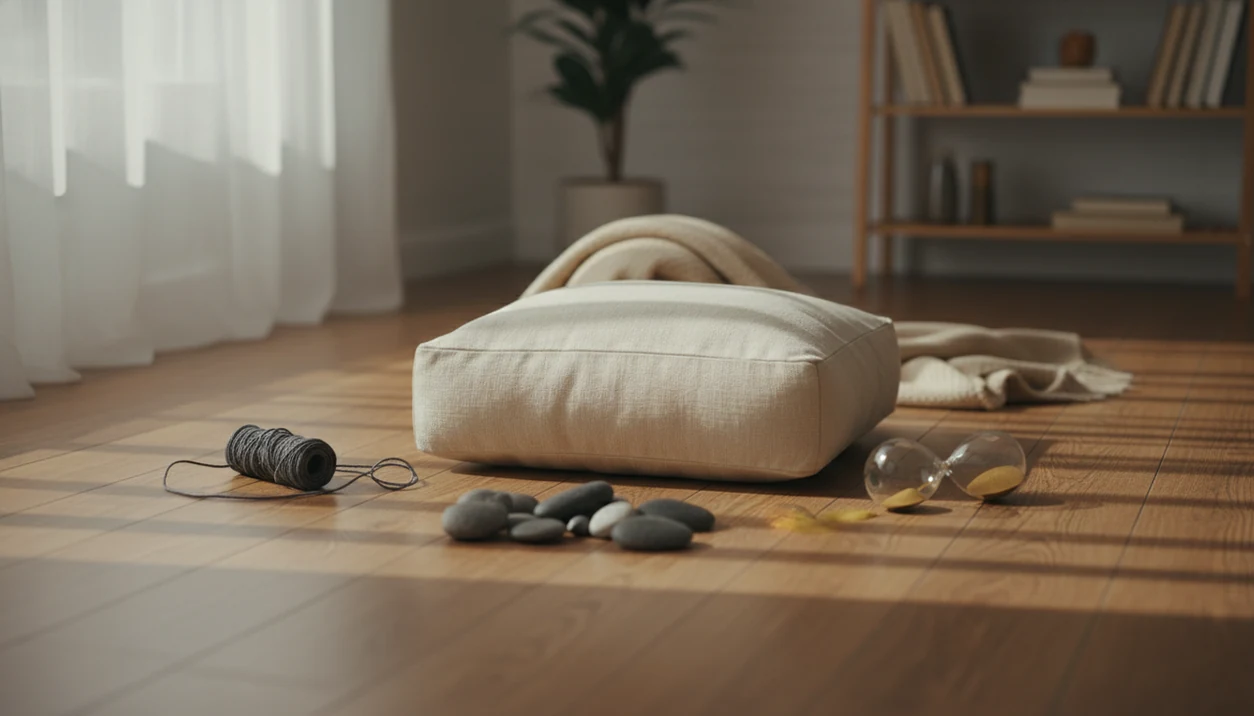
Quick answer: The most common obstacles to meditation are a wandering mind, sleepiness, restlessness, anxiety, physical discomfort, impatience, and doubt. The fix is not to force a perfectly calm mind, but to choose the right technique, shorten the session, adjust your posture, and return attention gently each time you notice distraction. Browse more meditation for anxiety relief.
> Definition: Obstacles to meditation are the mental, physical, and habit-related barriers that make it hard to stay present during meditation practice.
TL;DR
- A wandering mind is normal; noticing distraction and returning attention is the practice.
- Different obstacles need different fixes: sleepiness may need posture changes, while anxiety may need shorter sessions and grounding.
- Guided meditation, sleep audio, breathing exercises, and self-hypnosis sessions can support beginners who need structure for everyday calm.
Obstacles to Meditation: The Five Hindrances and Modern Beginner Problems
Obstacles to meditation are expected barriers, not proof that you are failing. Traditional meditation teaching often names five hindrances: desire, aversion, restlessness, sleepiness, and doubt.
In everyday language, those show up as racing thoughts, boredom, anxiety, fatigue, pain, impatience, or the sharp little thought, “I don’t know if I’m doing this right.” Desire might mean wanting the session to feel pleasant. Aversion might mean resisting discomfort or irritation. Doubt often sounds like quitting after three tries because nothing dramatic happened.
The first minute can feel crowded.
Meditation is widely used as a mind-body practice. The National Center for Complementary and Integrative Health describes meditation as one of the commonly used complementary health approaches among U.S. adults, alongside other mind-body practices NCCIH mindfulness overview: meditation in depth. That popularity does not make practice effortless. It only means many people meet the same obstacles and keep adjusting.
5 Obstacles to Meditation Tips for Wandering Thoughts, Sleepiness, and Doubt
These five facts are the simplest obstacles to meditation guide for beginners who want practical troubleshooting before they quit.
- Wandering thoughts are normal. The skill is noticing distraction and returning attention, not producing a blank mind.
- Sleepiness needs a physical adjustment. Sit upright, brighten the room, open your eyes slightly, or practice earlier in the day.
- Restlessness often needs less time. For anxious or keyed-up days, a three-minute grounding session may work better than a 20-minute sit.
- Doubt makes people stop too soon. Perfectionism turns normal distraction into a false failure signal.
- Routine design matters. Same cue, same time, and a realistic duration help practice become repeatable.
For beginners, short meditation usually works better than long meditation because it lowers the chance of frustration before the habit forms. If you need a starting menu, our meditation techniques for beginners guide keeps the first choices simple.
Mind and Body Mechanisms Behind Obstacles to Meditation
Meditation works more like attention training than thought elimination. Your brain keeps generating thoughts, sensations, emotions, memories, and predictions because that is what a living nervous system does.
During practice, those signals become easier to notice. Restlessness often reflects higher arousal, which means the body is ready to act. Sleepiness often reflects low alertness, especially if you meditate late, lie down, or close your eyes after a long day. Doubt adds another layer: the mind starts judging the session while the session is still happening.
That judgment is sticky.
Guided meditation can reduce cognitive load for beginners because someone else provides the structure. Instead of deciding what to do every few seconds, you follow a voice, a breath count, a body scan, or a sound cue. Good meditation apps for sleep anxiety and everyday calm deliver structured practice and repeatable cues, not a cure or a replacement for care.
What Research Says About Meditation Obstacles
Research suggests meditation may support general well-being for some people, but the evidence is not a blank check. The most honest reading is that benefits can be real, modest, and highly dependent on the person and practice.
NCCIH describes meditation as a mind-body practice with possible benefits for stress, blood pressure, and some symptoms, while also noting that research quality and conclusions vary. Sleep deserves its own lane: mindfulness studies have found improvements in sleep quality in some groups, but that is different from saying meditation treats insomnia. Anxiety and stress findings are also mixed, and they should be framed as support for everyday regulation, not treatment for clinical anxiety, chronic pain, or a diagnosed sleep disorder.
A useful way to read the evidence is:
- Check the method used, such as mindfulness, mantra, body scan, or guided audio.
- Notice the duration and whether people practiced for days, weeks, or months.
- Look at the population studied, because beginners, patients, and experienced meditators are not the same.
- Separate the outcome measured, such as sleep quality, stress ratings, attention, or pain-related distress.
- Leave room for reactions because some meditators report anxiety, sadness, memories, or discomfort during practice.
3-to-10-Minute Obstacles to Meditation Troubleshooting Routine
Use this routine when meditation feels messy in real time. A short session gives you enough practice to notice patterns without turning the practice into a test.
- Set a short timer for 3 to 10 minutes, especially if you are new or already restless.
- Name the obstacle in plain language: thinking, sleepy, anxious, bored, sore, impatient, or doubtful.
- Choose one response that fits the obstacle, instead of trying every fix at once.
- Return to one anchor such as breath, body contact, sound, or a guided voice.
- Review what helped after the session with one sentence, not a long self-critique.
A hallway bench, a parked car, the edge of the bed, all count. You do not need a special room. For rushed days, short meditation techniques can keep the practice small enough to repeat.
Busy Mind and Racing Thoughts as Obstacles to Meditation
What should you do when thoughts keep interrupting meditation? Treat thoughts as expected mental events, then label and return rather than fighting for silence.
Label the Thought
Use a quiet label like “thinking,” “planning,” “remembering,” or “worrying.” The label should be light, not annoyed. If you catch yourself building tomorrow’s schedule or replaying a text message, name it once and come back.
Do not measure success by blankness. A blank mind is not the main goal, and chasing one usually creates more tension. The practice is the return.
Return to One Anchor
Pick one anchor for the session: breath counting, background sound, body contact, or a guided meditation track. If unguided practice feels too open-ended, guided options such as Calm, Headspace, Mindful, or a clinician-recommended audio practice can provide a voice to follow.
For a busy mind, labeling thoughts is often easier than suppressing them because it gives the brain a simple task without treating thoughts like enemies. Many people are simply looking for a calm voice to follow when their inner chatter feels too crowded.
Sleepiness, Boredom, and Low Energy Obstacles to Meditation
Sleepiness changes the goal of practice. Meditation for alert attention needs different conditions than meditation used as a bedtime wind-down.
For Daytime Practice
Sit upright, lift your gaze, open your eyes slightly, or increase the light in the room. Meditating after lunch on a soft couch is almost an invitation to drift. If you keep nodding off, try morning practice or a standing meditation.
Boredom can also look like sleepiness. The mind says nothing is happening, then checks out. A slightly more active technique, such as breath counting or mantra meditation for beginners, can help.
For Bedtime Practice
Lying down makes sense when the goal is wind-down, but it is risky for daytime attention training. Sleep-related mindfulness research is promising but not a guarantee. A 2019 systematic review and meta-analysis found mindfulness meditation was associated with improved sleep quality, especially compared with nonspecific active controls PMC research article: PMC6557693.
At 2:13 a.m., checking the lock screen can feel discouraging. Sleep audio may support a calmer bedtime routine, but it should not be treated as insomnia treatment.
Anxiety, Restlessness, and Body Discomfort Obstacles to Meditation
Anxiety and body discomfort can become louder when outside stimulation drops. That does not mean meditation caused the whole problem; it may mean you are noticing what noise and motion were covering.
Shorten the Session
Try 3 minutes with eyes open. Use a chair, keep both feet on the floor, and let the room stay visible. If sitting still feels like pressure, gentle movement or walking meditation may be a better entry point.
No rigid lotus required.
Use the Body as Anchor
Ground through your feet, hands, or the points where your body meets the chair. A slow body scan can work, but skip areas that feel too charged. Grounding meditation techniques are useful when breath focus makes anxiety feel tighter.
MindTastik breathing exercises can support everyday calm during ordinary stress spikes. Persistent panic, severe anxiety, trauma symptoms, ongoing pain, or distress that feels unsafe needs support from a qualified professional.
Obstacle-to-Fix Table for Busy Mind, Sleepiness, Anxiety, Doubt, and Pain
Different meditation obstacles need different fixes. Use the table as a quick match, then test one change at a time.
| Obstacle | Best fix | Best for | Not for |
|---|---|---|---|
| Busy mind | Guided breath practice or breath counting | Planning, remembering, looping thoughts | Trying to force mental blankness |
| Sleepiness | Upright posture and brighter setting | Foggy daytime practice | Bedtime wind-down sessions |
| Anxiety | Short grounding meditation | Restlessness, racing body sensations | Severe panic without support |
| Doubt | Low-pressure daily practice and realistic expectations | Beginners who quit after “bad” sessions | Measuring progress after one sit |
| Pain | Posture support or movement-based mindfulness | Stiff backs, sore hips, fidgeting | Sharp, worsening, or unexplained pain |
Pain changes the rules. Use cushions, a chair, or movement before assuming stillness is required. If discomfort persists, get appropriate medical guidance rather than pushing through.
When to Seek Professional Help
Seek professional help when meditation brings up symptoms that feel severe, persistent, unsafe, or bigger than a beginner practice can hold. Meditation can support care, but it should not replace therapy, medication, medical evaluation, or urgent help when those are needed.
Use a calm escalation plan rather than pushing through.
- Pause the session if you notice severe panic, trauma memories or flashbacks, deep depression, or distress that keeps intensifying instead of settling.
- Seek urgent help right away if you have unsafe thoughts, feel at risk of harming yourself or someone else, feel disconnected from reality, or have crisis symptoms that cannot wait.
- Contact a qualified professional if anxiety, trauma symptoms, low mood, or persistent insomnia is interfering with work, relationships, sleep, or basic daily routines.
- Get medical evaluation for sharp, worsening, new, or unexplained physical pain instead of treating it as a posture problem.
- Use meditation as support once care is in place: shorter sessions, eyes-open grounding, guided audio, or breathing exercises can sit beside treatment without carrying the whole load.
The goal is not to be alarmed. It is to choose the right level of support.
App Support for Obstacles to Meditation, Sleep, Anxiety, and Focus
For readers considering MindTastik, the app offers guided meditation, sleep audio, breathing exercises, and self-hypnosis sessions. Use it as structure for practice, not as diagnosis, treatment, crisis support, or a replacement for professional care.
Good support gives you a starting point. It does not diagnose you, cure symptoms, or replace therapy, medication, emergency care, or medical advice.
- Guided meditation for beginners: Helps when silence feels too open or confusing.
- Sleep audio for wind-down: Offers a repeatable bedtime cue when the day feels unfinished.
- Breathing exercises: Supports short resets during tense moments, like breath counted in a bathroom stall.
- Self-hypnosis sessions: Can fit calm routines for people who like spoken suggestion and repetition.
Best For
✓ Beginners who want a voice-led practice ✓ People choosing between a 5-minute breathing exercise and a 20-minute body scan ✓ Adults building a sleep, focus, or everyday calm routine
Not For
✗ Crisis support or urgent mental health care ✗ Diagnosing sleep, anxiety, pain, or trauma symptoms ✗ Anyone who needs individualized clinical treatment
Limitations
Meditation advice has limits, especially when practice overlaps with sleep, anxiety, pain, or trauma. Keep the expectations honest.
- Meditation does not instantly remove thoughts, distractions, or emotional noise.
- Results vary by person, technique, frequency, timing, posture, and life context.
- Some people initially notice more anxiety, sadness, pain, memories, or discomfort.
- Meditation is not a substitute for medical care, therapy, medication, or crisis support.
- Sleep problems, panic, depression, trauma symptoms, or persistent pain may need professional help.
- Apps can support practice, but they cannot provide individualized diagnosis or treatment.
- Longer sessions are not automatically better; they can increase frustration for beginners.
- Breath focus is not ideal for everyone, especially if it intensifies anxious body sensations.
Clinicians typically recommend professional evaluation when anxiety, sleep disruption, depression, panic, trauma symptoms, or pain are severe, persistent, or interfering with daily life. Meditation can sit beside care. It should not quietly replace it.
A Practical Observation
While comparing meditation routines, we often see beginners do better when the first instruction is simple rather than ambitious. The opening minute may feel awkward because the mind is still switching from planning mode into practice mode. A short session, a steady breath, and one repeatable cue tend to make the obstacle easier to work with, even when the session does not feel especially calm.
When This Works Best
This approach works best when the obstacle is mild, familiar, and shows up as wandering attention, low patience, or a restless body rather than a crisis. Beginners often miss that a short session with one clear cue is not a compromise; it is the training ground. If you can notice one steady breath and return once, the session is already doing its job.
Choosing What Fits
The useful question is not “Which meditation is best?” but “Which obstacle is loudest today?” If your mind is scattered, a guided voice may reduce decision fatigue; if your body feels tense, a breathing exercise or body scan may fit better than silent sitting. A practice that matches today’s obstacle is easier to repeat than one chosen for an ideal version of yourself.
At-a-Glance Options
| Technique | Best for | Minutes |
|---|---|---|
| Guided breath reset | busy mind or doubt | 3-5 min |
| Body scan | physical discomfort or restlessness | 7-12 min |
| Counting breaths | impatience or drifting attention | 5-10 min |
Why MindTastik fits this specific need
MindTastik can support this kind of obstacle-based practice with guided meditation, breathing exercises, reminders, and offline audio for short sessions. A personalized plan may help beginners choose a calmer starting point instead of guessing between too many techniques.
MindTastik for Building Your Meditation Practice
MindTastik is a useful choice for turning common meditation obstacles into simple follow-along practice, especially when wandering thoughts, restlessness, or doubt make it hard to stay consistent after reading a technique.
Best for:
- wandering thoughts
- restless beginners
- meditation doubt
- follow-along practice
- building consistency
For structured sessions beyond this page, MindTastik guided meditation app is the main MindTastik hub for guided meditation.
FAQ
Why is meditation so hard?
Meditation is hard because it asks you to notice attention, thoughts, body sensations, and emotions without immediately reacting. That skill is unfamiliar for many beginners, so difficulty at the start is normal.
What are the five hindrances?
The five hindrances are desire, aversion, sleepiness, restlessness, and doubt. In plain language, they show up as wanting a different experience, resisting discomfort, feeling foggy, feeling agitated, or questioning whether practice is working.
Is a wandering mind normal during meditation?
Yes, a wandering mind is normal during meditation. Noticing distraction and returning attention is the practice.
How do I stop racing thoughts during meditation?
Use a simple label such as “thinking,” “planning,” or “worrying,” then return to one anchor like breath, sound, or body contact. Shorter sessions can make racing thoughts easier to work with.
Why do I fall asleep while meditating?
You may fall asleep because your alertness is low, your posture is too relaxed, or you are practicing late in the day. Lying down can help bedtime wind-down, but it often makes daytime meditation sleepy.
Can meditation increase anxiety?
Some people notice more anxiety at first because stillness makes body sensations and thoughts more obvious. Try eyes-open grounding, shorter sessions, or professional support if anxiety feels intense or unsafe.
How long should beginners meditate?
Beginners often do well with 3 to 10 minutes of meditation. Increase the duration only when the shorter session feels repeatable.
What posture is best for meditation?
The best posture is comfortable and alert, such as sitting in a chair with both feet supported. A perfect lotus position is not required.
Am I bad at meditation if I keep getting distracted?
No, distraction does not mean you are bad at meditation. Each return to the breath, body, sound, or guidance is part of the training.