
Meditation for Happiness: A Practical Guide to Feeling Calmer and More Positive
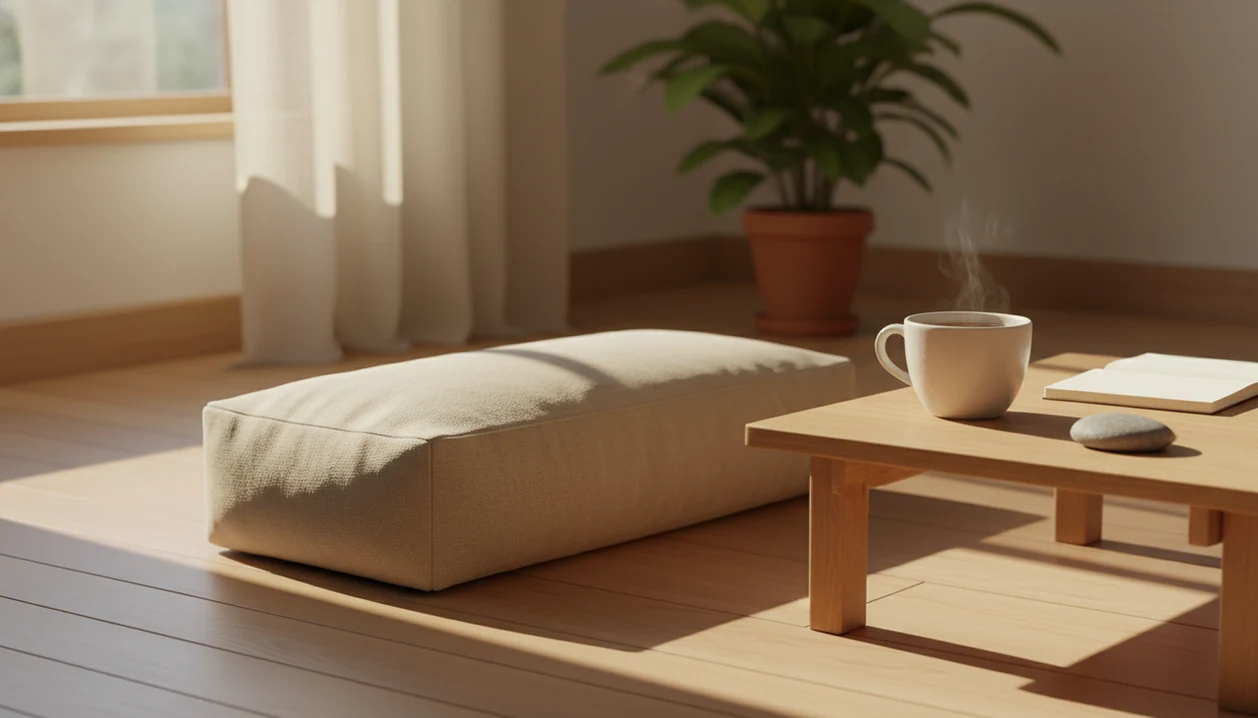


Meditation for happiness is a set of attention, breathing, gratitude, mindfulness, and loving-kindness practices that support calmer mood, emotional balance, and daily well-being. The aim is to make room for positive emotions, not to feel happy on command. A consistent 10-15 minute routine gives the practice a manageable place in daily life. Sessions can focus on the present moment, a specific source of gratitude, or kind wishes for yourself and others.
Happiness is not the only useful outcome. Noticing worry without following every thought, responding with less self-criticism, or appreciating one ordinary comfort can also matter. Some sessions will feel calm; others may feel distracted or sad. Meditation is self-care support, not a replacement for therapy, medication, or medical advice when symptoms are serious.
The essentials
- Start with 10 minutes of guided mindfulness, gratitude, or loving-kindness meditation each day.
- Evidence suggests meditation can modestly improve stress, anxiety, positive affect, well-being, and life satisfaction over several weeks.
- Use meditation as self-care support, not as a replacement for therapy, medication, or medical advice when symptoms are serious.
Meditation for Happiness Meaning in Daily Life
Meditation for happiness means practicing attention in ways that make calm, gratitude, compassion, and emotional steadiness easier to access. It does not mean pretending everything is fine or pushing sadness out of the room.
Mindfulness helps you notice thoughts without chasing every one. Breath awareness gives the body a simple anchor. Gratitude meditation trains attention toward what is still supportive or meaningful. Loving-kindness meditation uses repeated phrases to build warmth toward yourself and others.
Some days, the practice feels plain. Breath count lost after four. Start again.
Guided audio can help beginners because it removes the question, ‘What do I do next?’ If you want a broader starting point, our meditation techniques library explains several styles in simple terms.
Research-Backed Meditation for Happiness Benefits from 47 Trials
A 2014 JAMA Internal Medicine meta-analysis reviewed 47 randomized trials with 3,515 participants and found moderate evidence that mindfulness meditation programs improved anxiety, depression, and pain, with smaller or less consistent effects for well-being outcomes JAMA Internal Medicine study: 1809754. That is useful evidence, but it is not a miracle claim.
Five research-grounded facts matter most:
- Mindfulness programs tend to show small to moderate benefits, especially for stress, anxiety, mood, and quality of life.
- The U.S. National Center for Complementary and Integrative Health notes that meditation may help stress, anxiety, depression, and overall mental health, while not replacing care for serious symptoms. NCCIH mindfulness overview: meditation and mindfulness effectiveness and safety
- A 2013 review of loving-kindness and compassion meditation found links with higher positive emotions and life satisfaction across 22 studies. PubMed research: 23842206
- A 4-week college student trial reported increased positive affect and decreased negative affect compared with a wait-list control. PubMed research: 24395196
- For most adults, meditation for happiness is better understood as supportive practice than as treatment.
The copy-paste takeaway: Meditation may support happiness by improving emotional regulation and positive affect, but benefits are usually modest and depend on consistent practice.
How Meditation for Happiness Works
Meditation for happiness works by training attention to notice what is happening, redirect gently, and repeat without self-criticism. The change comes from practice over time, not from forcing yourself to think positive thoughts.
A simple session may use the breath, a gratitude cue, or loving-kindness phrases as an emotional regulation anchor. Emotional regulation just means the nervous system has a steadier way to respond when thoughts, sensations, or worries show up. Instead of wrestling with rumination, you notice the loop, return to the cue, and give the body a chance to settle.
A practical sequence looks like this:
- Notice where attention has gone, such as planning, replaying, judging, or worrying.
- Redirect toward one chosen cue, like breathing, a kind phrase, or one specific gratitude.
- Repeat the return each time the mind wanders, without turning it into a failure.
- Support the routine with bedtime breathing, body scans, or calming audio when sleep is the goal.
This can support mood, stress recovery, and sleep routines, but it does not replace therapy, medication, emergency care, or clinical treatment when those are needed.
Brain Habit Loop for Meditation for Happiness
Meditation for happiness works by training attention away from automatic rumination and toward present-moment signals. In plain language, you practice noticing where the mind went, then gently choosing where it goes next.
The mechanism is practical, not mystical. A breath, body scan, kind phrase, or gratitude cue becomes the routine. The small reward is a little more space before reacting. Over time, that cue-routine-reward loop can make calmer responses easier to repeat.
Unread emails can replay behind closed eyes. The practice is not to win an argument with those thoughts. It is to notice the replay, feel the mattress, soften the jaw, and return.
Anxiety reduction, better sleep habits, and improved focus can all support mood stability. Still, meditation does not “rewire” happiness overnight. For adults with serious symptoms, clinicians typically recommend meditation only as a complement to evidence-based mental health care, not a substitute.
10-Minute Meditation for Happiness Routine
Use this 10-minute meditation for happiness with a timer, a quiet room, or guided audio. The goal is not to manufacture joy; it is to make room for steadier attention and kind emotion. For step-by-step wording, try a simple meditation script for beginners that keeps the practice clear and manageable.
- Sit in a chair or on the floor with your back supported and your shoulders relaxed.
- Breathe slowly for two minutes, noticing the inhale, the exhale, and the pause after breathing out.
- Name one emotion that is present, such as worry, sadness, calm, irritation, or hope.
- Choose one small gratitude, like a warm room, a helpful message, or five minutes without rushing.
- Close with one intention, such as “May I meet this day with patience” or “May I notice one good thing.”
If sitting still feels awkward, use guided prompts that handle the timing, phrases, and transitions, especially when choosing between a 5-minute breathing exercise and a 20-minute body scan feels like too much.
Turn a closing intention into one small action
A closing intention becomes more concrete when it names a behavior rather than a desired mood. Acceptance and commitment therapy, or ACT, combines awareness and acceptance with values-guided action. A 2025 review of 11 studies involving 1,226 participants found a moderate improvement in psychological flexibility after treatment. That means greater ability to notice thoughts and feelings without letting them control behavior. This is evidence about ACT, not proof that a brief happiness meditation produces the same result.
After the final breath, name one value that matters today, such as care, patience, or connection. Then choose one observable action: send a thoughtful message, pause before replying, or finish a small commitment. Add a plan for an obstacle: “If worry interrupts, I will notice it and return to the next step.” This suggested ending reflects ACT’s emphasis on acceptance and committed action. It does not require feeling positive first, and acceptance does not mean approving harmful circumstances. You can use mindfulness questions for self-discovery to clarify which values you want your daily actions to reflect.
4 Meditation for Happiness Techniques to Try
Different happiness meditation styles work through different doors. Choose the one that feels easiest to repeat, not the one that sounds most impressive.
| Technique | What you do | Best for |
|---|---|---|
| Mindfulness meditation | Notice thoughts, sounds, and body sensations without chasing them | Racing thoughts, reactivity, everyday calm |
| Loving-kindness meditation | Repeat kind phrases for yourself and others | Warmth, compassion, connection |
| Gratitude meditation | Reflect on specific people, moments, or supports | Positive attention and appreciation |
| Body scan or guided imagery | Move attention through the body or imagine a calming scene | People who dislike breath-focused practice |
Loving-kindness can feel strange at first. Many people start with neutral phrases before directing kindness toward themselves. Our loving-kindness meditation for beginners guide gives a simple phrase structure.
For people who tense up during breath focus, body-based practices may feel safer. Cool sheets against restless legs can be enough of an anchor. For visual practice, visualization meditation for sleep may fit better.
Meditation for Happiness Fit: Beginners, Sleep, and Professional Care
Meditation for happiness fits adults who want everyday calm, stress support, emotional balance, gratitude, and sleep-friendly wind-downs. It is especially useful when the practice is short enough to repeat.
- Beginners: Guided prompts, reminders, and short sessions reduce guessing. If you need basics first, start with meditation techniques for beginners.
- Sleep-focused adults: Evening body scans, gentle breathing, and calming audio can help create a wind-down routine.
- Busy people: A short reset between tasks may be more realistic than one long session.
- People with breath discomfort: Grounding, sound, body scan, or mantra options may feel easier than following the breath.
- People in serious distress: Meditation is not a replacement for emergency care, therapy, medication, or treatment for severe depression or anxiety.
Good meditation app for sleep anxiety and everyday calm routines deliver guided structure, repeatable cues, and easier practice access, not instant happiness or medical treatment.
MindTastik Meditation for Happiness Daily Plan
An app can reduce friction by putting guided sessions, reminders, streaks, and themed packs in one place. That matters on low-motivation days, when the hardest part is choosing a starting point.
A simple 24-hour flow might look like this: morning gratitude before checking messages, midday breathing after lunch, and evening sleep meditation with the phone face-down on the nightstand. The point is repetition, not intensity.
Meditation apps can pair happiness practices with sleep audio, anxiety support routines, breathing exercises, focus sessions, and everyday calm guidance. Options such as MindTastik, Calm, Headspace, and mindful.org resources can help people compare guided formats, but happiness practice still depends on routine, timing, and realistic expectations.
In a quiet room after a long day, a simple guided track can feel easier than searching through options. Set the phone nearby, let the light stay low, and choose audio gentle enough to begin with one breath.
10-15 Minute Meditation for Happiness Routine Tips
“How long should I meditate for happiness?” Start with 10-15 minutes daily, or set a 3-minute minimum on difficult days. Consistency usually matters more than a long session you avoid.
Pair the practice with something already stable: waking up, lunch, changing into sleep clothes, or closing a work laptop. A conference room chair between meetings can be enough for one short reset.
Benefits often build over several weeks, not after one dramatic session. If your thoughts wander, that is not failure; returning is the practice. If you miss a day, restart without making it a personal story. If boredom shows up, try a different style. When past experiences keep pulling your attention back, try a meditation for moving on as a gentle practice.
For people with packed schedules, short meditation techniques can keep the habit alive. Meditation usually works best when it is easy to repeat, while longer practices fit people who already have a steady routine.
Guided gratitude sessions for a repeatable routine
MindTastik’s gratitude sessions and guided meditation library suit adults who prefer spoken prompts to deciding what to do in silence. Gratitude offers a concrete focus, while guided meditation can provide structure for present-moment practice. People who find narration distracting may prefer a quiet practice with a timer. Those whose distress becomes stronger during meditation should choose grounding or professional support rather than push through another session. MindTastik is not a medical treatment.
What happiness meditation cannot promise
Meditation for happiness has real limits, and naming them makes the practice safer. It can support emotional balance, but it cannot promise constant positivity or clinical recovery.
- Meditation is not a magic cure for depression, anxiety disorders, trauma, panic, grief, or serious distress.
- Some beginners initially notice more uncomfortable thoughts because slowing down makes inner noise easier to hear.
- Research effects are generally modest to moderate, not guaranteed, permanent, or equal for every person.
- Not every technique fits every nervous system; breath focus, silence, or closed eyes may feel wrong for some people.
- Apps increase access, but they still require motivation, repetition, and a realistic routine.
- Meditation can become avoidance if someone uses it to bypass hard conversations, medical care, or needed support.
- Severe, persistent, or unsafe symptoms deserve professional help from a qualified clinician or emergency service.
If breath practice feels uncomfortable, try grounding meditation techniques or eyes-open practice instead. Gentle counts. Forced calm does not.
When gratitude feels forced or happiness becomes a mood test
| If you... | Try | Why | Note |
|---|---|---|---|
| You keep checking whether you feel happier yet | Return to a steady breath and label the checking as “thinking” | Happiness practice tends to work better when it is treated as attention training, not a mood test. | Forcing a positive feeling can make the session feel more frustrating. |
| You abandon the practice because ten minutes feels too long | Start with a short session of three to five minutes | A repeatable session is usually more useful than an ambitious one that disappears after two days. | Increase time only after the routine feels easy to begin. |
| You feel unsure what to do after the first few breaths | Choose a guided voice that gives one instruction at a time | Simple guidance can reduce decision fatigue and help the mind settle without overplanning. | If the voice feels distracting, switch to a quieter breath-based practice. |
| Gratitude practice feels fake or forced | Name one neutral comfort, such as warm light, a relaxed shoulder, or a quiet room | Starting with neutral noticing can feel more honest than trying to manufacture joy. | Skip any prompt that feels emotionally pressured. |
When quiet meditation makes distress harder to manage
Meditation for happiness may not be the best first step when sitting quietly makes distress feel sharper, overwhelming, or hard to manage. In that case, a grounding activity, supportive conversation, or professional care may be a better starting point than pushing through a silent session. A good practice should feel workable, not like an emotional endurance test.
When you want app-based guidance rather than reading steps alone, MindTastik guided meditation app collects the core guided library in one place.
Happiness meditation questions
Can meditation make me happier if I am not happy now?
Meditation can support calmer attention and make gratitude or kindness easier to notice, but it cannot guarantee happiness. A useful aim is to relate differently to difficult thoughts rather than erase them. Persistent low mood, loss of interest, or serious distress calls for professional support, not simply longer meditation sessions.
Which type of meditation is best for happiness?
There is no single best practice for everyone. Gratitude meditation focuses on specific supports or meaningful moments. Loving-kindness uses kind phrases for yourself and others. Mindfulness trains noticing without chasing every thought. Start with the approach that feels honest and repeatable, rather than one that promises the strongest positive feeling.
How long should a happiness meditation last?
A practical starting point is 10-15 minutes a day, with a three-minute minimum on difficult days. This is a manageable routine, not a proven threshold for happiness. Use the same daily cue and keep the session short enough to repeat. Extend it only if the shorter practice feels workable.
What if gratitude meditation feels fake?
Choose something specific and modest, such as a warm room, a helpful message, or a quiet moment. There is no need to claim that life is wonderful. If even gratitude feels forced, switch to neutral noticing: feel the chair, hear a sound, or observe a breath without trying to change your mood.
Why do I feel sad during happiness meditation?
Slowing down can make uncomfortable thoughts and feelings more noticeable. Sadness during a session does not automatically mean the practice has failed, but it is not something to push through at any cost. Shorten or stop the session, try grounding, and seek professional guidance if distress repeatedly grows or feels overwhelming.
How can I tell if happiness meditation is helping?
Look beyond how happy a session feels. Notice whether returning attention becomes easier, self-criticism softens, or a kind intention leads to a concrete action. Avoid checking your mood after every breath. Changes may be uneven, and a calm session does not prove lasting improvement any more than a distracted session proves failure.
Is happiness meditation the same as positive thinking?
No. Happiness meditation can include gratitude and kind wishes, but it also leaves room for sadness, worry, and irritation. The practice is to notice what is present and return attention gently. Positive phrases are optional cues, not predictions, and they do not require denying problems or accepting harmful conditions.