
How To Get Back Into Meditation After a Break
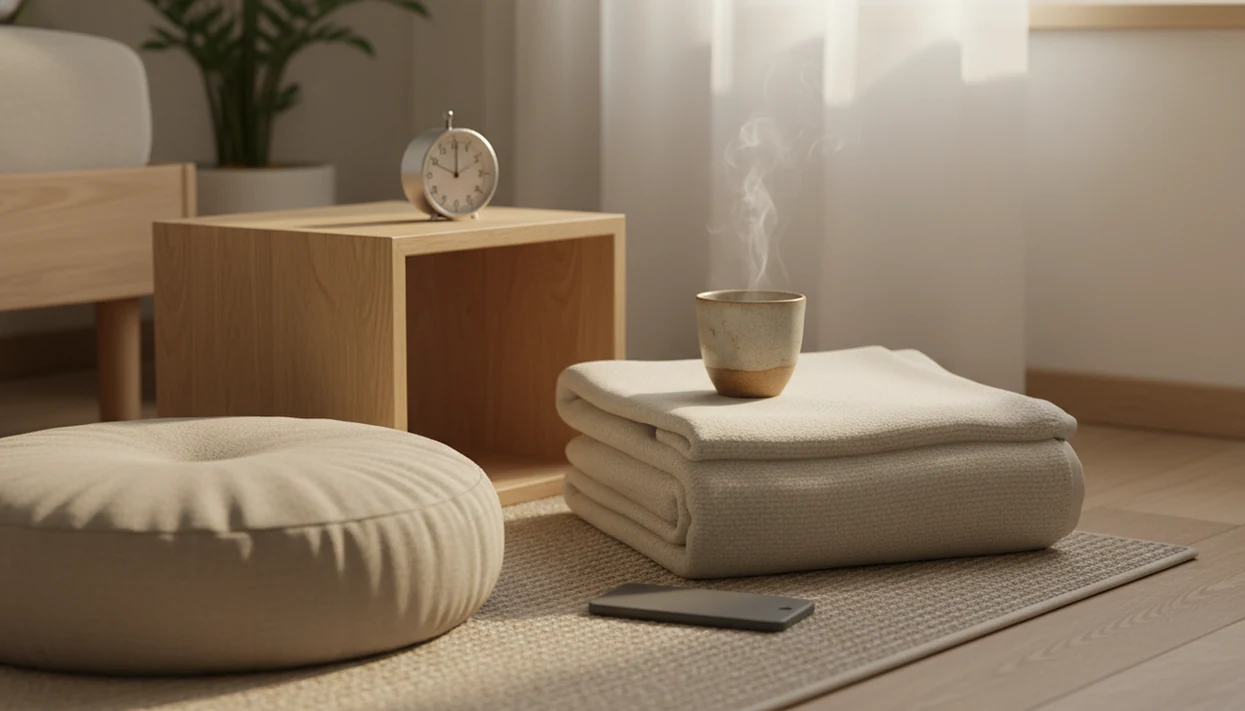


Getting back into meditation means restarting a realistic practice after a break: begin with 1 to 5 minutes, one simple attention anchor, and a reliable daily cue. The aim is to rebuild consistency before returning to longer sessions. Breath, sound, body sensation, or a guided voice can serve as the anchor, while waking up, bedtime, or a lunch break can provide the cue.
A previous routine is a reference point, not a requirement. A short session that fits the current schedule is a more practical starting point than trying to recover an old habit overnight. Keep the first few sessions simple, allow for distraction, and increase the length only when the shorter practice feels easy to repeat.
The restart essentials
- Start with 1 to 5 minutes, not the longest session you used to do.
- Use one anchor, such as breath, sound, body sensation, or a guided meditation.
- Pair meditation with a daily cue like waking up, bedtime, or a lunch break.
How to Get Back Into Meditation in 5 Small Steps
To restart meditation, make the practice so small that it feels almost too easy to skip. Consistency matters more than session length during the first week back.
- Set a tiny goal. Choose 1 to 5 minutes, even if you used to sit for 20.
- Choose one anchor. Use breath, sound, body sensation, a mantra, or a guided voice.
- Attach it to a cue. Try after waking, before bed, or right after lunch.
- Use guided support. Short guided meditation, breathing exercises, sleep audio, or self-hypnosis can reduce the “what do I do now?” feeling. A timer, a saved audio track, or a short guided session can help when structure makes restarting easier.
- Review after one week. Keep the same plan if it worked. Add time only if it felt manageable.
No drama needed.
If you feel rusty, treat that as information, not failure. For a lighter re-entry, short meditation techniques can help you avoid overbuilding the first session back.
Meditation Restart Habit Loop and Attention Training
Getting back into meditation works by rebuilding a habit loop and retraining attention through repeated returns to one anchor. In plain terms, the cue tells you when to start, the anchor tells you what to do, and the short session makes the habit small enough to repeat. The loop is cue, routine, reward: a stable cue lowers decision friction, the session becomes the routine, and the reward is a small felt shift.
That shift may be subtle. Maybe your shoulders drop. Maybe you stop reaching for the phone for three minutes. Repetition helps the brain associate the cue with the routine, so you don’t need a fresh motivational speech every day.
Meditation is not about emptying the mind. It trains the skill of noticing distraction and coming back. That return is the rep. Understanding whether you can control your mind can help you set realistic expectations about attention and distraction.
Short sessions work because they lower resistance and protect consistency. A 3-minute breath practice is often easier to fit into a returning meditator’s day than a 30-minute session, especially when meetings run late, energy is low in the evening, or sleep is elusive.
When the daily cue stops working
Linking meditation to an existing activity can help, but a cue does not guarantee lasting consistency. In a 2021 randomized trial of personalized routine anchors, the intervention group had higher odds of daily meditation during the intervention. Yet daily practice became less likely across all participants over eight weeks. The finding supports using a cue without treating missed days as proof that the whole plan has failed.
After repeated missed sessions, check the cue itself: does the activity still happen reliably, and is there actually time to pause afterward? Moving the session to a quieter part of the day is a practical adjustment, not a proven solution for everyone. If the barrier is uncertainty about the practice, teacher contact or a group may help. A 2021 systematic review and meta-analysis identified instructor and group-related social factors as important to carrying out home practice.
5 Facts About Restarting Meditation After Stopping
These five facts are the most useful things to remember when restarting meditation after a break. They keep the plan practical instead of turning it into another pressure project.
- Shrinking the session to 1 to 5 minutes is usually better than forcing 20 to 30 minutes. The smaller goal gets you back in motion.
- One anchor is easier than switching techniques every day. Breath, sound, mantra, or body sensation can all work.
- Mind wandering is normal. Returning attention is the practice, not proof that you failed. When thoughts keep pulling you away, meditation for a restless mind can help you practice returning without self-criticism.
- A fixed cue works better than waiting to feel motivated. Try the same time or situation for one week.
- Guided audio, reminders, and timers reduce friction. They help most when sleep, stress, or anxiety make self-starting harder.
For returning meditators, one repeated anchor usually works better than technique-hopping because it removes a daily choice. If breath focus feels uncomfortable, mantra meditation for beginners offers a simple sound-based alternative.
Meditation Restart Formats for Sleep, Anxiety, and Focus
The right restart format depends on what you need meditation to do right now. Sleep, anxiety support, focus, and everyday calm often call for different starting points.
| Goal | Best restart format | Session length | Best time | Avoid |
|---|---|---|---|---|
| Sleep | Body scan, sleep audio, or self-hypnosis | 5 to 15 minutes | Bedtime | Bright screens and “performance” tracking |
| Anxiety support | Breathing exercise, grounding meditation, or short guided session | 2 to 10 minutes | Before a known stress point or after a spike | Forcing long silence when activated |
| Focus | Breath timer or sound anchor | 2 to 5 minutes | Before work or study | Changing methods every session |
| Everyday calm | Simple guided meditation | 3 to 10 minutes | After waking or during a break | Waiting until the day is already overloaded |
If anxiety is the main reason you stopped, grounding meditation techniques may feel more practical than closing your eyes and hoping your thoughts quiet down.
Best-Fit Meditation Restart Plan for Beginners and Returning Adults
A meditation restart plan fits best when it lowers pressure and gives you one clear next action. It is especially useful for people who want a supportive practice, not a strict self-improvement project.
Best for
- Beginners returning after a break: Start like a beginner again, without treating that as a setback.
- Adults wanting everyday calm: A short reset after waking or during a break is often enough to rebuild rhythm.
- People needing sleep or anxiety support: Guided audio can give the mind something steady to follow.
- Users who prefer structure: Apps such as MindTastik, Calm, and Headspace can make the first week less vague.
Not ideal for
- People seeking instant results: One session may feel useful, but the benefits usually build slowly.
- Anyone replacing professional care: MindTastik supports meditation practice but is not a therapy replacement.
- People forcing uncomfortable methods: If breath focus feels bad, choose sound, movement, or a guided session instead.
The better plan is the one you can repeat on a dull Tuesday.
Meditation Evidence for Sleep, Anxiety, and Everyday Calm
Meditation has evidence for modest support in stress-related outcomes, but it should not be framed as a cure. Effects vary by person, method, and repetition.
The CDC has reported that meditation use among U.S. adults became more common over time, including an increase from 4.1% in 2012 to 14.2% in 2017 in National Health Interview Survey trend data CDC guidance: db379 h.pdf. That does not prove meditation works for everyone. It does show that many adults now use it as a mainstream self-care practice.
Research is cautious but useful. A 2015 randomized clinical trial in older adults found mindfulness meditation improved sleep quality more than sleep hygiene education at 6 weeks PubMed research: 25686304. A randomized trial in adults with generalized anxiety disorder found mindfulness-based stress reduction produced greater anxiety reductions than an active stress-management education control PubMed research: 23541163. A JAMA Internal Medicine systematic review found meditation programs produced small to moderate improvements in anxiety, depression, and pain outcomes JAMA Internal Medicine study: 1809754.
Clinicians typically recommend professional support for severe or persistent sleep and mental health symptoms. Meditation can sit beside care, but it should not replace it.
Common Meditation Restart Mistakes That Make People Quit Again
Why do people quit again after restarting meditation? The usual reason is that the restart plan is too demanding, too vague, or tied to unrealistic expectations.
The first mistake is trying to resume the exact old routine immediately. If you once meditated for 25 minutes, that does not mean your first session back has to match it. Start with the version your current life can hold.
Another mistake is judging distraction as failure. Thoughts will move. Calendar worries show up in the dark. The practice is noticing and returning, not winning silence. If calendar worries keep crowding your attention, learning to declutter your mind can offer a gentler starting point.
People also quit when they change techniques every session. Breath on Monday, visualization on Tuesday, body scan on Wednesday, then nothing by Friday. Pick one for a week. If sleep is your restart point, progressive muscle relaxation for sleep gives the body a clear sequence to follow.
Reset line: make it shorter, easier, and more repeatable.
Before You Restart Meditation
Before you restart meditation, set up the first session so it feels safe, ordinary, and easy to repeat. The goal is not to prove you can relax on command; it is to create a low-pressure return.
- Choose a quiet opening. Pick a time when you are less likely to be interrupted, such as before the household gets busy, during a lunch pause, or near bedtime if that does not add pressure.
- Decide what feels safest. You can sit or lie down. You can keep your eyes closed, softly open, or focused on one spot. There is no prize for using the most “traditional” version.
- Pick one anchor. Choose breath, sound, body sensation, or guided audio before you begin, then stay with that choice for the session.
- Let the first session be neutral. Do not grade it by calmness, sleep, or how quiet your thoughts were. Finishing the small session counts.
- Get extra support when needed. If severe anxiety, insomnia, trauma symptoms, panic, depression, or safety concerns are present, use professional care instead of trying to meditate through it alone.
A comfortable chair is a valid starting position
Restarting does not require sitting cross-legged on the floor. Harvard Health’s meditation guidance recommends a chair with the back supported and feet flat on the floor. This gives a concrete starting position when floor sitting adds hip, knee, or back discomfort. The posture should make a short session manageable, rather than become another task to endure.
The end of the session can be gradual, too. The NHS beginner meditation guidance recommends gently opening the eyes and remaining seated briefly before standing. Significant pain or worsening symptoms should not be treated as an attention-training challenge. NCCIH advises that meditation must not replace medical care or delay evaluation of a medical problem.
Guided sessions for the first week back
MindTastik’s guided meditation library suits returning meditators who prefer spoken instructions to deciding what to do in silence. Breathing exercises offer another simple starting format, while sleep stories or self-hypnosis audio may suit a bedtime routine. A timer is enough for someone who already has a comfortable technique and wants quiet practice. Persistent panic, severe insomnia, or worsening symptoms call for professional care rather than an app-led restart.
When a meditation restart needs more than short sessions
Meditation can support everyday calm, but it has real limits. A restart plan should be gentle, honest, and flexible.
- Meditation is not a fast fix for sleep, anxiety, focus, stress, or emotional overload.
- Apps can reduce friction, but they do not replace consistency, repetition, and personal fit.
- Some people find silence, body scans, or breath focus uncomfortable, especially during stress.
- One meditation style is not universally better than another; adherence often matters more than format.
- Severe insomnia, panic, depression, trauma symptoms, or safety concerns may need professional support.
- MindTastik is for guided meditation, sleep audio, breathing exercises, and self-hypnosis support, not diagnosis or medical treatment.
- If a practice makes you feel worse, stop and choose another anchor or ask a qualified professional for guidance.
Sometimes the kindest restart is not longer meditation. It is a smaller one.
Choose breath counting, guided audio, or a body scan
- Start with the session you would still do on a low-energy day; that is usually the honest baseline.
- Use breath counting when your main issue is drifting attention, because the count gives the mind a simple job.
- Choose a guided meditation when silence makes you overthink the process rather than settle into it. If you need a calmer starting point, learn how to settle the mind without demanding complete silence.
- Use a body scan when physical tension is more noticeable than mental distraction. For a tension-focused restart, try mindfulness practices for mind-body connection that bring attention to physical sensations.
- Avoid ambitious streak goals at first; a restart should prove repeatability before it tests discipline.
For structured sessions beyond this page, MindTastik guided meditation app is the main MindTastik hub for guided meditation.
Questions about restarting meditation
How do I start meditating again after a long break?
Begin with 1 to 5 minutes and one familiar anchor, such as breath, sound, or a guided voice. Attach the session to an activity that already happens most days. Treat the old routine as optional, and increase the length only when the shorter session is manageable.
Is one minute of meditation enough to restart?
One minute can be enough to begin rebuilding the habit, especially when a longer session keeps getting postponed. It is a starting point, not a proven minimum dose for improving sleep or anxiety. The immediate goal is a repeatable pause with a clear attention anchor.
Should I return to my old meditation technique?
A familiar technique is a reasonable first choice if it still feels comfortable. There is no requirement to keep using it if circumstances have changed. A guided voice, sound anchor, or body scan may fit better now. Pick one manageable format rather than changing methods every session.
Why does meditation feel harder after a break?
The routine may no longer fit the current schedule, or expectations may still reflect a longer practice from the past. Distraction does not mean the session has failed. Returning attention to the chosen anchor is the practice. Shorter sessions can reduce the pressure of restarting.
Should I use guided meditation when restarting?
Guided meditation can help when silence leaves too many decisions about what to do next. Choose instructions that are clear and a session length that feels manageable. A timer is enough for someone who prefers an independent practice. Neither format is universally better for returning meditators.
How can I make meditation a regular habit?
Link meditation to something you already do each day, such as brushing your teeth or making coffee. Choose a session length that feels manageable, and keep your meditation spot easy to access. A simple reminder can help, but aim for a routine that fits your life rather than a perfect streak.
Is bedtime a good time to rebuild a meditation routine?
Bedtime can work well if it is a reliable, quiet part of your day. Try a short body scan or listen to surrounding sounds while sitting comfortably. If you regularly fall asleep but want to practice staying aware, move your session earlier in the evening or meditate before getting into bed.