
Short Meditation Techniques for Busy People
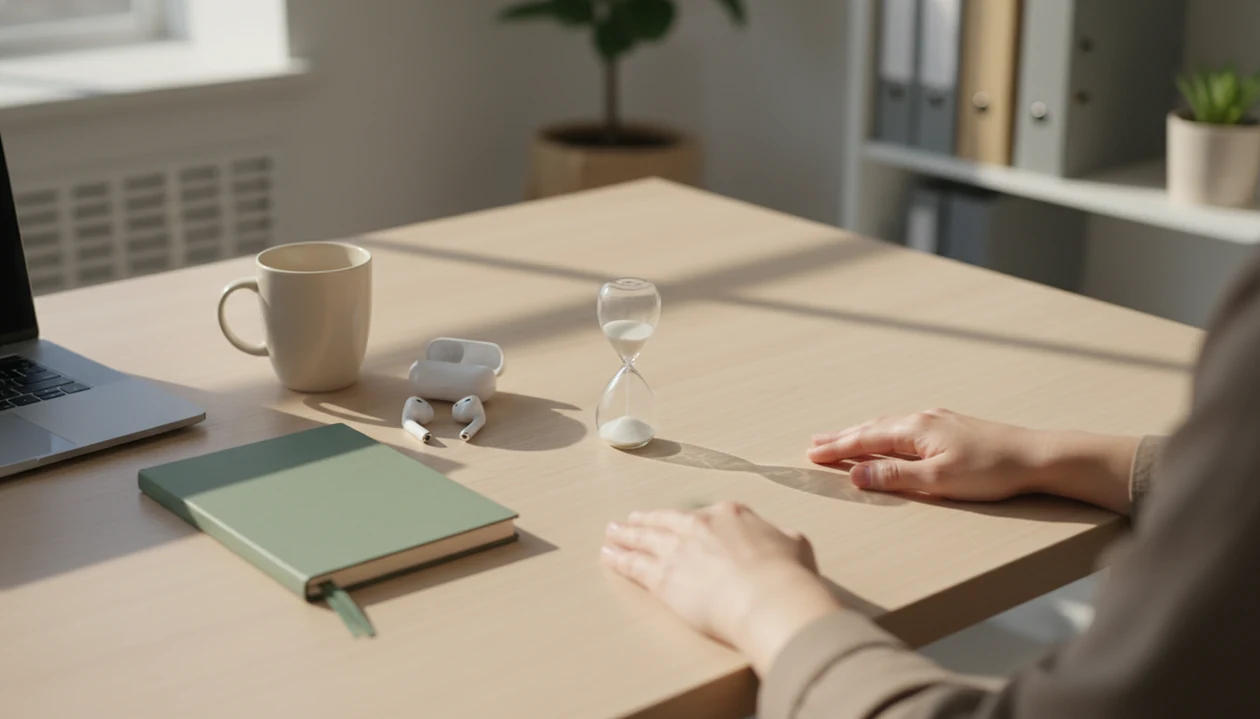


Short meditation techniques are 1- to 5-minute practices that help reset attention, relax the body, and create a pause before the next task. Simple options include slow breathing, breath counting, a 60-second body scan, muscle release, and brief guided audio. A micro meditation uses breath, body sensation, sound, or guided prompts within that small time window. The aim is a repeatable pause, not a blank mind.
The setting helps determine the practice: breath counting at work, a body scan in a waiting room, open-eye grounding on public transit, or guided audio before bed. Short sessions may support stress and sleep routines, but they do not replace care for severe anxiety, chronic insomnia, or medical concerns.
Short practice essentials
- Use 1 to 5 minutes for a repeatable reset, not a perfect blank mind.
- Choose the technique by setting: breath counting for work, body scan for waiting rooms, grounding for commutes, and guided audio for bedtime.
- Short practices may support stress and sleep routines, but they do not replace care for severe anxiety, chronic insomnia, or medical concerns.
Best short meditation techniques for 1 to 5 minutes
The most useful short meditation techniques are simple enough to repeat when your day is already crowded. Consistency matters more than duration, especially when you only have the space between two calendar alerts.
| Technique | Time needed | Best setting | Why it helps |
|---|---|---|---|
| 60-second breath count | 1 minute | Desk, hallway, parked car | Gives attention one clear job |
| 2-minute exhale breathing | 2 minutes | Work break, tense pause | Slower exhales can support a calmer body state |
| 3-minute body scan | 3 minutes | Waiting room, couch, train seat | Shifts focus from thoughts to physical sensation |
| 5-minute guided audio | 5 minutes | Bedtime, lunch break | Removes the pressure to “know what to do” |
| Progressive muscle release | 3 to 5 minutes | After work, before sleep | Uses tension and release to notice the body |
For beginners, breath counting and a short body scan are usually easiest. A longer method can wait. If you want a wider menu, our meditation techniques library compares slower practices too.
How short meditation techniques work in the nervous system
Short meditation techniques work by moving attention away from stress loops and toward a simple anchor, such as breath, sound, or body sensation. The practice is not about deleting thoughts; it is about noticing the mind has wandered and returning without making it a failure.
Longer exhalations and muscle release may help the body shift toward a calmer state. In plain language, you give the nervous system fewer signals to chase. Palms pressed against a desk edge can become the anchor for one minute. That is enough to interrupt the spiral, even if it does not solve the whole day.
Mindfulness programs have shown moderate improvements in anxiety, depression, and pain outcomes compared with controls in a 2014 JAMA Internal Medicine systematic review and meta-analysis JAMA Internal Medicine study: 1809754. Short practices are smaller than full programs, but they use the same basic skill: return attention, again and again.
Does a longer meditation always work better?
A 2026 randomized experiment involving 636 adults compared a single 5-minute mindfulness practice, a 20-minute practice, and an active control. Immediate effects varied with participants’ traits. Among people lower in agreeableness, five minutes reduced negative affect more than 20 minutes. That finding challenges the idea that longer is always better for immediate mood, but it does not establish five minutes as the best duration for everyone.
Regularity is a separate question from session length. A 2025 dose-response study found that practice frequency was a stronger predictor of well-being, affect, and distress outcomes than duration, particularly early in practice. Because the analysis relied on reported practice, it cannot prove that frequent short sessions caused those outcomes. It supports choosing a manageable routine, without prescribing an exact number of minutes or promising that several brief pauses equal a longer course of treatment.
How to use quick meditation techniques during a busy day
Use quick meditation techniques by matching one small practice to one repeatable moment. Work breaks, waiting rooms, commutes, and bedtime each need a slightly different setup.
- Choose one setting first: after a video call, before an appointment, during a train ride, or while settling into bed.
- Set a timer for 1 to 5 minutes so you are not checking the clock.
- Sit in a safe position, and keep your eyes open if you are in public, traveling, or need situational awareness.
- Follow one anchor, such as ten breaths, foot pressure, background sound, or a short guided session.
- Return to the same practice daily instead of switching every time it feels imperfect.
The laptop fan during a five-minute pause is enough of a cue. Same chair, same breath count. The repetition does more than novelty.
Five facts about micro meditation for beginners
Micro meditation is beginner-friendly because it asks for a small return of attention, not a dramatic lifestyle change. The first win is noticing you can pause.
- Short practices can be useful even when they last only a few minutes.
- Wandering attention is normal; returning is the practice.
- A short practice supports temporary calm, but it is not a cure-all.
- Breath focus is optional; sound, touch, posture, or body sensation may work better for some people.
- Repetition matters more than a single ideal session.
The U.S. National Center for Complementary and Integrative Health says meditation and mindfulness practices may help with stress and well-being, while also noting they are not cure-alls NCCIH mindfulness overview: meditation and mindfulness effectiveness and safety. If breath focus feels awkward, try grounding meditation techniques that use touch, sight, or sound.
Two minute meditation techniques for work breaks
What is a good 2 minute meditation technique? A practical option is a ten-breath reset: sit, inhale naturally, exhale slowly, and count ten full breaths without trying to force calm. For a comfortable breath-based reset, try belly breathing and let your abdomen move naturally with each inhale.
Use this four-part script:
- Sit with both feet supported.
- Inhale through the nose or mouth in a natural way.
- Exhale a little slower than you inhale.
- Count from one to ten, one number per full breath.
If a message pops up, notice it and come back on the next exhale. If you lose count, restart at one. No drama.
This fits transitions between meetings, the pause before sending a tense message, or the end of a task sprint. For busy people, a 2-minute breath count is often easier than a longer silent sit because the structure is obvious and the endpoint is close.
Short meditation practice choices by situation
The right short meditation practice depends on where you are, how safe it is to close your eyes, and whether breath focus feels helpful. When in doubt, choose the least fussy anchor. If you prefer a more structured breathing practice, alternate nostril breathing offers a different rhythm for a short pause.
| Situation | Best choice | Best for | Not ideal for |
|---|---|---|---|
| Work break | Breath counting | Resetting after calls | Loud open offices without privacy |
| Waiting room | Body scan | Restless waiting | People who feel trapped by stillness |
| Commute | Open-eye sound focus | Public transit | Driving or cycling with inward focus |
| Nighttime waking | Cool-sheet body awareness | Racing thoughts at 2:13 a.m. | Checking the phone repeatedly |
| Bedtime wind-down | Guided audio | Following a voice when tired | Anyone who dislikes headphones |
Do not close your eyes or use deep inward focus while operating a vehicle. Choose open-eye awareness instead.
Best for work breaks
For work breaks, breath counting or sound focus usually works best because you can start and stop quickly. Hands unclenched after a video call may be the first sign it helped.
Best for bedtime
For bedtime, guided audio, body scans, and progressive muscle relaxation for sleep are often easier than sitting in total silence. A phone with a short session cued up, volume low in a quiet room, can be enough to make the routine feel doable.
Guided micro meditation for sleep and anxiety support
Guided micro meditation is often easier than silent practice when your thoughts feel too loud to organize. A voice gives you the next instruction, so you do not have to choose between a 5-minute breathing exercise and a 20-minute body scan at midnight.
MindTastik offers wellness-focused guided meditation, sleep audio, breathing exercises, and self-hypnosis sessions for adults looking for support with rest, anxiety, and everyday calm. Apps such as MindTastik, Calm, and Headspace can give people a practical place to begin when an open-ended timer feels too vague.
Calming now is different from changing a sleep routine over time. The NHS says evidence suggests regular guided sleep meditation may improve sleep quality NHS health guidance: how can meditation help with sleep. Regular is the key word. One night of audio may help you settle; a wind-down routine builds through repetition.
Guided sessions for a short work or bedtime pause
MindTastik’s guided meditation library suits adults who prefer spoken instructions to counting breaths or sitting with a timer. Breathing exercises offer another option for a work-break pause, while sleep audio may fit a bedtime routine. Choose a session that fits the available time rather than treating every pause as a full meditation.
An unguided breath count or open-eye sound practice is a better fit when using a phone would interrupt the break. MindTastik is not a medical treatment.
What a 1- to 5-minute meditation cannot resolve
Short meditation can be useful, but it has real limits. Clinicians typically recommend professional support when symptoms are severe, persistent, unsafe, or interfering with daily life.
- Short meditation can support temporary calm, but it may not resolve chronic insomnia on its own.
- Severe or persistent anxiety, panic, depression, trauma symptoms, or sleep problems may need professional support.
- Some people feel more aware of anxious thoughts at first, especially in silence.
- Breath-focused methods may be uncomfortable for people who dislike monitoring breathing.
- A single session is unlikely to create lasting change without repetition.
- A 2021 Cochrane review found mindfulness-based programs may reduce stress and improve some mental health outcomes, but the certainty of evidence varied Cochrane review.
- Audio may be hard to use in noisy rooms, shared bedrooms, or places where headphones are unsafe.
If a practice makes you feel worse, stop and choose a steadier anchor, such as sound or touch.
When a work break needs action, not meditation
Short meditation is not always the best first move, especially when the real problem is logistics, hunger, conflict, or an overloaded schedule. A one-minute pause may support composure, but it cannot replace a needed conversation, a realistic break, or professional support when distress feels unmanageable. Meditation works best when it is used as a small reset, not as a way to ignore a problem that needs action.
When you want app-based guidance rather than reading steps alone, MindTastik guided meditation app collects the core guided library in one place.
Short meditation questions
How do I meditate when I only have one minute?
Sit or stand safely and choose one anchor, such as foot pressure, surrounding sounds, or natural breathing. Keep attention there until the minute ends. When thoughts interrupt, notice them and return to the anchor. There is no need to finish a set number of breaths or make the mind quiet.
What is a good two-minute meditation for a work break?
Try a breath count with both feet supported. Breathe naturally, let the exhale be a little slower if comfortable, and count one number per full breath. Return to one after ten or after losing count. The purpose is a brief transition between tasks, not forcing calm before the timer ends.
Is five minutes of meditation enough to help?
Five minutes can be useful for a short pause and may help with immediate mood or stress. Research does not show that longer sessions always produce better short-term results. It also does not establish five minutes as sufficient treatment for persistent anxiety, depression, or sleep problems.
Is it better to meditate briefly every day or longer once a week?
A brief daily practice is a reasonable starting point when it is easier to repeat. Research on reported practice suggests frequency may matter more than session length, especially early on, but that does not prove one schedule is best. Choose a routine that fits a reliable daily cue.
Can I do a short meditation during my commute?
On public transit, try an open-eye practice using surrounding sounds or the sensation of feet against the floor. Keep enough attention available for stops and surroundings. Driving or cycling is not an appropriate setting for inward-focused meditation. Wait until safely parked or until the commute is over.
What can I focus on if breathing makes me anxious?
Breath focus is optional. Try the pressure of feet on the floor, contact with a chair, or sounds in the room. Keep the eyes open if that feels more comfortable. Stop a practice that increases distress rather than pushing through it, and seek professional support for persistent or severe symptoms.
Can a short meditation help me fall asleep?
A brief body-awareness practice or guided audio can be part of a bedtime wind-down. It gives attention a simple task without requiring a long session. Temporary calm is different from resolving chronic insomnia, though. Persistent sleep problems may need professional support rather than repeated attempts to meditate them away.