
Reasons To Meditate: A Practical Guide for Sleep, Anxiety, and Everyday Calm
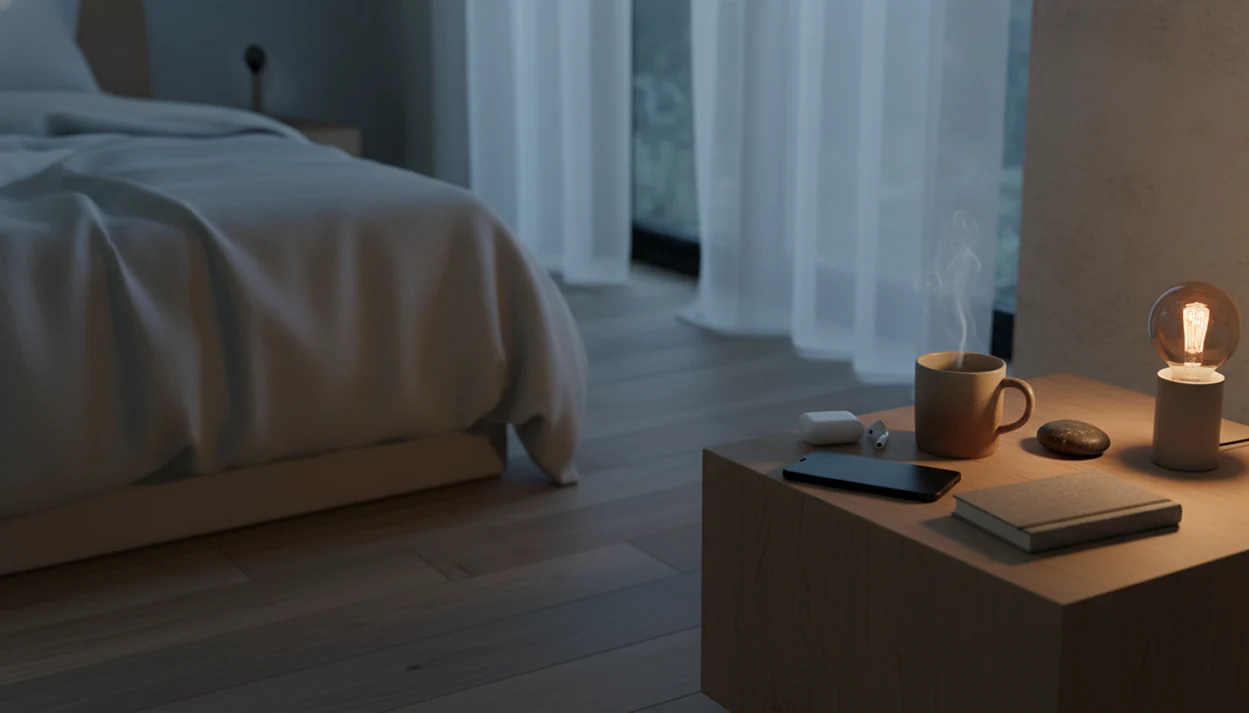


The main reasons to meditate are to reduce stress, ease anxious thoughts, support sleep, practice focus, and build a steadier daily mood. A guided session of 5 to 20 minutes offers a manageable starting point for beginners. Meditation does not require an empty mind: the practice is noticing distraction and returning attention to a breath, a body sensation, a sound, or a guided voice.
The benefits are not equally well established. A review of 47 randomized trials found small to moderate improvements in anxiety, depression, and pain, but weaker evidence for attention and sleep. Choosing one goal makes practice easier to assess. Short sessions repeated regularly are a practical starting point, not a guarantee of better sleep or lasting calm.
Reasons at a glance
- Meditation is most useful when matched to a clear goal: sleep, anxiety support, focus, emotional balance, or habit-building.
- Research links regular mindfulness meditation with improved sleep quality and small to moderate improvements in anxiety and stress-related symptoms.
- Beginners do not need long sessions; short guided sessions practiced consistently are more important than perfect technique.
Top reasons to meditate for sleep, anxiety, focus, and calm
- Meditation can lower stress by giving the nervous system a repeatable calming cue.
- Meditation can reduce racing thoughts by training attention to return gently.
- Meditation may improve sleep quality when used as part of a steady wind-down routine.
- Meditation can support focus, mood, self-awareness, and emotional regulation.
- Meditation works best as a habit, not as a one-time fix.
Meditation is not about forcing the mind blank. The real practice is noticing that attention has wandered, then returning to breath, body sensations, sound, or a guided voice.
That return is the rep.
Meditation is also mainstream now. Per the CDC, U.S. adult meditation use rose from 4.1% in 2012 to 14.2% in 2017, reflecting broader use for stress, sleep, and everyday calm CDC guidance: db325.htm.
Meditation mechanics for stress and racing thoughts
Meditation works by training attention to rest on a chosen anchor, then return when the mind drifts. That anchor might be breath, body sensations, ambient sound, a mantra, or a guided voice. Following practical steps to mindfulness can help you practice noticing distractions and returning attention gently.
The mechanism is simple but not always easy. Attention training gives the brain a task that is quieter than worry. Over time, repeated practice can support the relaxation response, which is the body’s shift away from fight-or-flight arousal toward slower breathing and less tension.
A drifting mind does not mean you are doing it wrong. It gives the practice somewhere to begin. In a dark, quiet room, when rest still feels out of reach, the aim is not to force every thought away. It is to notice, come back to the breath, and loosen your grip. For difficult moments, overcoming obstacles with mindfulness begins with noticing your response rather than forcing calm.
For beginners, meditation techniques for beginners can make that process less vague.
Evidence-based reasons to meditate for better sleep
Does meditation improve sleep? Meditation may improve sleep quality by helping people disengage from worry, body tension, and bedtime problem-solving before sleep.
Nighttime body scans, breath practices, and sleep audio give attention somewhere steady to land. That matters when feet are searching for a cool sheet and the mind keeps replaying tomorrow’s list. A 2015 randomized clinical trial found that a 6-week mindfulness meditation program significantly improved sleep quality in older adults with moderate sleep disturbance compared with sleep education PubMed research: 25686304.
A 2019 systematic review and meta-analysis also found mindfulness meditation significantly improved sleep quality at post-intervention and follow-up PubMed research: 31424190. Still, meditation should not be described as a cure for insomnia.
For sleep, a body scan or breath-led wind-down is often easier than silent meditation because it gives a tired mind clear instructions.
Anxiety and emotional balance reasons to meditate
Can meditation reduce anxiety? Meditation may support anxiety management by creating a pause between anxious thoughts and automatic reactions.
That pause can be small. A brief pause may help release tension in the shoulders. Feet press into office carpet. One breath becomes enough space to avoid sending the sharp reply or spiraling into the next “what if.” A 2014 meta-analysis of 47 trials with 3,515 participants found mindfulness meditation programs showed small to moderate improvements in anxiety, depression, and pain compared with control conditions JAMA Internal Medicine study: 1809754.
Clinicians typically recommend professional care for severe anxiety, depression, trauma symptoms, or crisis risk; meditation can support care, but it does not replace diagnosis, therapy, medication, or emergency support.
Some people need gentler practices, shorter sessions, or a professionally guided approach. Start softer if stillness feels too intense.
Best reasons to meditate by practice type
The most useful meditation style depends on the reason you are practicing. Matching the practice to the goal makes consistency easier because the session feels relevant right away.
| Reason to meditate | Practice type to try | Why it fits |
|---|---|---|
| Sleep | Body scan or sleep audio | Gives the mind a calm bedtime track to follow |
| Anxiety support | Breathing or grounding | Helps attention return to the body during stress |
| Focus | Short attention practice | Trains returning to one chosen anchor |
| Mood | Loving-kindness or self-compassion | Builds a kinder inner tone over time |
| Everyday calm | Simple guided mindfulness | Creates a repeatable reset without much setup |
A person choosing between a 5-minute breathing exercise and a 20-minute body scan is already doing something useful: matching effort to the moment. Tools like MindTastik can help organize guided sessions for sleep, anxiety support, beginner meditation, and everyday calm.
For mood-focused practice, loving-kindness meditation for beginners is a practical next step.
When sitting still makes meditation harder
Stillness is not a requirement for attention practice. A 2025 comparison of novice meditators found greater focused attention during movement-based meditation than during static practice, with less drowsiness associated with sitting still. Walking or gentle movement may therefore be a reasonable alternative when seated meditation repeatedly leads to sleepiness or restlessness. This finding does not establish movement as the best choice for everyone.
The same study found that audio guidance supported focused attention in beginners, but verbal instructions could also increase mental effort or bodily arousal. A guided voice can help with concentration without necessarily producing deeper relaxation. An evidence map of meditation reviews also found substantial differences among programs. Comfort, consistency, and the intended outcome are more useful selection criteria than assuming one style is universally best.
Daily meditation routine for sleep, anxiety, focus, and calm
A daily meditation routine works best when it is tied to one clear reason and one repeatable cue. Keep the plan small enough that you can do it on a normal Tuesday.
- Choose one reason for the next two weeks, such as sleep, anxiety support, focus, or calm.
- Pick one guided session between 5 and 20 minutes.
- Practice at the same cue time, such as after brushing teeth, before work, or at bedtime.
- Track one simple outcome, like sleep latency, stress level, irritability, or focus.
- Adjust the style if the first practice feels frustrating, dull, or too intense. Recognizing common obstacles to meditation can help you choose adjustments instead of abandoning the practice.
Short counts.
If you only have a laptop fan humming during a five-minute pause, use that pause. Short meditation techniques often work better than ambitious plans because they survive busy days.
MindTastik support for meditation beginners
Beginners often benefit from structure, a voice guide, and a clear session length. It is easier to begin when someone simply tells you where to place attention and when the session will end. If shared practice appeals to you, learn how to start a meditation group for regular sessions with others.
- Guided meditation: Useful when silent practice feels too open-ended.
- Sleep audio: Helpful for a bedtime wind-down routine when thoughts get loud.
- Breathing exercises: Practical for short resets during stress.
- Self-hypnosis sessions: A structured option for habit and relaxation support.
MindTastik includes guided meditation, sleep audio, breathing exercises, and self-hypnosis sessions for adults seeking sleep, anxiety, and everyday calm support. A 2018 mobile-app meditation trial reported that 10 to 20 minutes daily for 10 days reduced stress and irritability compared with a wait-list control PubMed research: 30274963.
Someone sitting under a dim light with guided audio ready on the phone does not need an ambitious routine. They need a simple first step that feels easy enough to come back to tomorrow.
Guided sessions for a clear meditation goal
MindTastik’s guided meditation library suits adults who prefer spoken instructions to silent practice. Focus sessions offer a clear attention exercise, while breathing practices and sleep audio provide options for a stress break or bedtime wind-down. Choosing a session with one purpose can reduce the decision-making involved in starting.
People who find spoken guidance distracting may prefer unguided practice or movement-based meditation. Those seeking treatment for persistent insomnia or severe anxiety should choose professional care rather than rely on an app. MindTastik is not a medical treatment.
What meditation cannot promise for sleep and anxiety
Meditation has real limits, and honest expectations make the habit safer and more useful.
- Meditation is not a substitute for medical care, therapy, diagnosis, medication, or emergency mental health support.
- Not everyone experiences large improvements; some benefits are subtle.
- Benefits usually require regular practice over days or weeks, not one unusually calm session.
- Some people feel more distress, body discomfort, or emotional intensity at first.
- Claims that meditation cures insomnia, eliminates anxiety, or guarantees happiness are overhyped.
- App-based meditation depends on user consistency and may not help if used only occasionally.
- Trauma history, panic symptoms, or severe depression may call for professionally guided support.
- Silent practice is not always the right first step; grounding, movement, or grounding meditation techniques may feel safer.
If a practice leaves you more unsettled each time, change the method or ask a qualified professional for guidance.
If you are ready to move from tips to practice, MindTastik guided meditation app is where MindTastik keeps its guided meditation experience.
Questions about reasons to meditate
What are the main benefits of meditation?
Common goals include less stress, support with anxious thoughts, better sleep, and more consistent attention. The strongest evidence here concerns modest improvements in anxiety, depression, and pain. Evidence for other benefits varies, so meditation is better viewed as a repeatable practice than a way to guarantee calm, concentration, or happiness.
Is five minutes of meditation enough for beginners?
Five minutes is a manageable starting session, especially when longer practice makes it harder to begin. It is not an established minimum dose for health benefits. Choose one goal, repeat the session at a regular cue, and track a relevant outcome, such as stress or bedtime settling, before deciding to extend it.
Can I meditate while walking instead of sitting?
Yes. Movement-based meditation is an option when stillness causes restlessness or drowsiness. A study of beginners found better focused attention with movement-based practice than static practice. This is a reason to consider walking or gentle movement, not proof that it will provide greater anxiety relief or sleep benefits.
Can meditation make anxiety feel worse?
Some people experience more distress, discomfort, or emotional intensity during meditation. Continuing through increasing distress is not the goal. A shorter or different practice may be more suitable, and stopping is reasonable if symptoms worsen. Persistent or severe anxiety should be discussed with a qualified clinician; meditation is not a substitute for care.
Can meditation help lower blood pressure?
Regular meditation may help lower blood pressure by reducing stress and encouraging relaxation. Results vary, and meditation is best used alongside habits such as physical activity, balanced eating, and adequate sleep. If you have high blood pressure, keep following your prescribed treatment and ask your healthcare professional how meditation might fit into your care.
Can meditation help with chronic pain?
Meditation may help some people manage chronic pain by changing how they respond to discomfort and reducing related stress. It does not necessarily remove the pain or treat its underlying cause. Gentle mindfulness practices can complement medical care, but avoid forcing yourself to focus on painful sensations if that feels overwhelming.
Do you have to stop thinking to meditate?
No, meditation does not require an empty mind. Thoughts naturally arise during practice, even for experienced meditators. The aim is often to notice when your attention wanders and gently return to a chosen focus, such as your breath or surrounding sounds. Each return is part of the practice, not evidence that you are doing it wrong.