
Desk Meditation At Work: A Practical Guide for Calm, Focus, and Reset Breaks
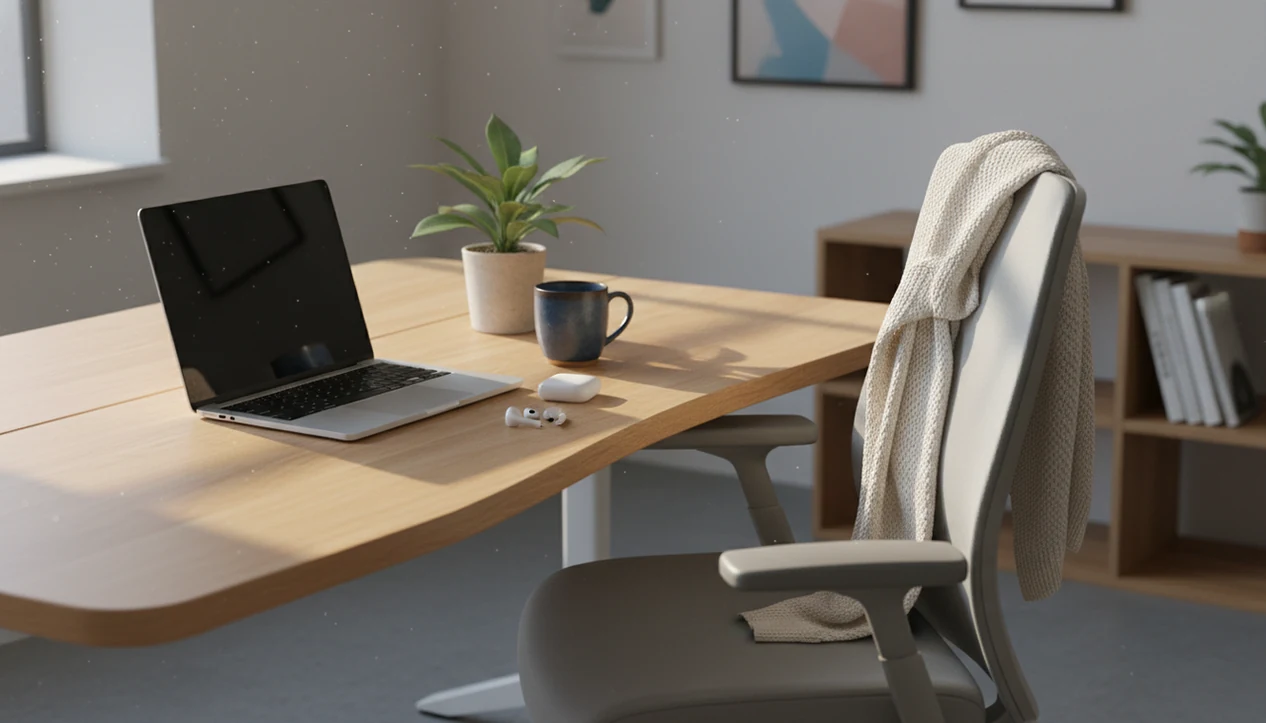


Desk meditation at work is a short, discreet practice done in a chair to settle the body, steady attention, and pause before returning to a task. A typical reset takes 1 to 5 minutes and uses breath awareness, a body scan, sensory grounding, visualization, or guided audio. Useful moments include the gap before a meeting, the minutes after a stressful email, and the afternoon slump.
The aim is not a blank mind. It is to notice distraction and return to one simple anchor, such as feet touching the floor. Research supports workplace mindfulness for stress and well-being, though longer programs provide stronger evidence than one-minute pauses. A repeatable workday cue makes these brief practices easier to fit into a schedule.
Desk reset essentials
- Effective desk meditation at work is short, repeatable, and tied to real work moments like logging in, meeting transitions, or post-call resets.
- Research supports workplace mindfulness and app-based meditation as promising tools for reducing stress, anxiety, distress, and job strain.
- MindTastik can support the habit with guided meditation, sleep audio, breathing exercises, and self-hypnosis sessions for adults who want sleep, anxiety, and everyday calm support.
Desk Meditation At Work Guide: The 60-Second Chair Reset
Desk meditation at work is a 1-10 minute chair-based reset that uses breath, body awareness, sound, or guided audio to help you pause before reacting. The goal is not to empty your mind. It is to notice distraction, come back to one anchor, and return to work with a little more steadiness.
Try it before a meeting, after a sharp message, or between tasks that use different kinds of attention. One minute can be enough: feet on the floor, shoulders soft, one slow inhale, one longer exhale.
The calendar alert is still blinking.
For people who need structure, a short guided session can make the practice easier to repeat. Tools like MindTastik, Calm, and Headspace can support focus resets, anxiety-friendly grounding, and bedtime wind-down routines when the workday follows you home.
Desk Meditation At Work Mechanisms in the Nervous System
Desk meditation works by training attention and giving the nervous system a simple downshift cue during the workday. In plain terms, you notice where your mind went, then return to an anchor such as breath, body pressure, or sound.
That loop is attention training. Each return is the practice, even if your inbox keeps pulling at you. Breath awareness and body scanning can also send “not in immediate danger” signals through interoception, the brain’s reading of internal body sensations. A longer exhale, relaxed jaw, or grounded feet may help reduce the feeling of urgency before the next email or call.
It’s not magic.
Micro-practices are useful because work stress often arrives in small spikes. A tense chat thread, a video call that runs long, or a last-minute slide change can push you into reactivity. Desk meditation supports stress regulation; it does not cure anxiety or remove the cause of pressure.
Five Desk Meditation At Work Facts Employees Should Know
- Short, consistent micro-sessions are usually more useful than rare long sessions because they fit real work triggers like logging in, task switching, and shutdown.
- In a randomized controlled trial of 238 employees, app-based mindfulness for 10-20 minutes daily over 8 weeks improved well-being and reduced distress, job strain, and workplace social support problems compared with controls PMC research article: PMC6215525.
- A workplace mindfulness meta-analysis found significant reductions in perceived stress and anxiety among employees compared with control groups PubMed research: 29244742.
- Gallup reported that 44% of employees globally experienced “a lot of stress” during the previous workday in 2023, which is why workday regulation matters gallup reference: state of the global workplace.aspx.
- Desk meditation is support, not a substitute for fair workloads, safe management, professional care, or needed workplace accommodations.
For busy leaders, the same principle applies in shorter windows. Our guide to a meditation for CEOs app covers that higher-pressure version of the workday reset.
A one-minute pause is not the same as a studied program
The evidence for employee stress reduction usually involves repeated practice over weeks, not a single pause between calls. In a 2025 randomized trial of 1,458 employees, participants assigned to 10 minutes of daily digital meditation for eight weeks had a large reduction in perceived stress compared with a wait-list group. Benefits remained at four months.
Participants practicing 5 to 9.9 minutes daily improved more than those practicing under five minutes. That finding does not establish a minimum effective length for every employee, or prove that a one-minute desk reset produces the same results. A short pause can be a manageable starting routine; the stronger research claim concerns regular practice sustained over several weeks.
Before You Start Desk Meditation At Work
Before you start desk meditation at work, make sure the moment is safe, discreet enough, and actually supportive. A reset should help you return with steadier attention, not pressure you to endure a situation that needs a boundary, manager conversation, or formal support. These practical guides to mindfulness at work offer additional ways to build supportive habits around everyday demands.
- Choose a safe pause: Meditate only when you are seated or otherwise clear of active tasks. Do not practice while driving, operating equipment, monitoring hazards, or doing work that requires immediate response.
- Decide what looks natural: Keep your eyes open, lower your gaze, or use one earbud if that fits your workplace norms. The best setup is the one you can repeat without feeling exposed.
- Set a realistic timer: Start with one to five minutes. Short enough to feel possible. Long enough to notice one breath, one sound, or one point of contact.
- Pick a neutral anchor: If focusing on the body increases anxiety, use a visual object, room sounds, or a guided voice instead.
- Protect the bigger signal: Do not use meditation to normalize unsafe conditions, chronic overload, harassment, or unreasonable demands. Understanding empathy versus compassion at work can help leaders move beyond recognizing distress to addressing what employees need.
Best Desk Meditation At Work Techniques for 5 Common Work Moments
The best technique depends on the work moment. Pick the smallest practice that matches what your body and attention need right now.
| Work moment | Technique | How to do it |
|---|---|---|
| Before meetings | Breath counting | Inhale, exhale, count “one.” Repeat to five, then restart. |
| After long sitting | Body scan | Notice feet, legs, back, shoulders, jaw, and eyes. Soften one area. |
| Anxiety spike | Sensory grounding | Name 3 things you see, 2 sounds you hear, and 1 point of contact. |
| Before presentations | One-minute visualization | Picture opening the first slide, speaking slowly, and pausing once. |
| Need structure | Guided audio | Use a short track with earbuds, eyes open or lowered. |
For anxious workdays, grounding or breath counting is often easier than silent open awareness because it gives the mind a specific task. People in founder or startup roles may also need pressure-specific routines, which we cover in meditation for founders.
When the better break includes leaving the chair
Desk meditation offers a pause without leaving the workstation, but it does not interrupt sitting. A 2022 review of office-based sitting interventions reported improvements in working memory, attention, and psychomotor function lasting up to approximately 30 minutes after the intervention. Those findings concern breaking up sitting, not seated meditation, so the two should not be treated as interchangeable.
For a gap after prolonged sitting, consider standing or moving before returning to a brief attention practice, when the task and workplace permit it. The choice depends on what the break needs to address: a seated anchor can support a quiet pause, while leaving the chair changes the physical pattern of the workday. There is no need to make every break a meditation session. Beyond choosing better breaks, finding purpose at work involves reflecting on what makes your daily effort feel meaningful.
How to Use Desk Meditation At Work in 5 Steps
Use desk meditation like a repeatable work habit, not a dramatic break. The smaller the routine, the more likely you are to keep it.
- Set a tiny target: Choose 1-5 minutes, especially if you are new or skeptical.
- Choose a trigger: Pair it with calendar start, lunch return, post-call reset, or end-of-day shutdown.
- Pick one anchor: Use breath, body pressure, sound, or a guided track.
- Rate before and after: Give stress and focus a quick 1-10 score so you can notice patterns.
- Repeat for one workweek: Keep the same practice for five workdays before changing it.
A sticky note works.
For people managing teams, the trigger often comes after absorbing other people’s stress. The same skill shows up in meditation for managers, where reset breaks protect tone before the next conversation. Practicing compassion at work can help you turn a calmer response into practical support for colleagues.
Common Desk Meditation Mistakes and Fixes
The most common desk meditation mistakes come from making the practice too big, too private, or too perfect. Fix them by choosing one simple anchor, keeping the session short, and using meditation as a reset rather than an escape hatch.
- Return to one anchor: Do not wait for a blank mind. Notice the thought, label it lightly, and come back to breath, sound, feet, or the guided voice.
- Shorten the session: Choose a length that fits the actual gap in your day. Two minutes before the next meeting is better than a 20-minute plan you abandon.
- Keep your eyes open: Use a lowered gaze or one neutral object if closed eyes feel unsafe, too visible, or more distracting than helpful.
- Name the real issue: If the stress is a needed conversation, unclear priority, or impossible workload, meditate first if it steadies you, then take the next practical step. If dissatisfaction persists beyond stressful moments, consider how to find fulfilling work that better matches your values and needs.
- Stay with one routine: Give the same technique a full workweek before switching. Constantly changing methods can hide whether the habit is helping.
Awkward is allowed. The return is the rep.
Desk Meditation At Work Tips for Anxiety, Focus, and Sleep
Anxiety-friendly desk meditation
For anxiety, use grounding or breath counting instead of silent open awareness. Keep your eyes open if closing them makes you feel exposed. Try naming objects on your desk, then lengthen one exhale. Clinicians typically recommend professional care for severe or persistent anxiety; meditation can be a supportive practice alongside that care, not a replacement nimh reference: anxiety disorders.
Focus resets between tasks
For focus, meditate during transitions between cognitively demanding tasks. Close the document, feel both feet, and take five slow breaths before opening the next tab. Apps for sleep anxiety and everyday calm should deliver guided structure and repeatable routines, not promises to erase stress.
Sleep support after work
For sleep, connect daytime decompression with an evening wind-down routine. MindTastik offers guided practices, sleep audio, breathing exercises, and self-hypnosis sessions for adults seeking support with rest, stress, and everyday calm. After a final calendar check, setting the phone aside before bedtime audio can help the transition feel clearer.
Desk Meditation At Work Fit for Busy Employees and Beginners
Desk meditation fits people who need discreet, low-effort resets during real workdays. It is especially useful when a full break is not possible, but one quiet minute is.
| Best for | Not ideal for |
|---|---|
| Busy employees who need a reset without leaving their chair | Replacing therapy, medication, HR action, or workload changes |
| Beginners who struggle with 20-minute meditation sessions | Crisis support or severe distress that needs immediate help |
| Meeting transitions, post-call tension, and focus recovery | People who feel worse sitting still without guidance |
| Remote workers who need boundaries between tasks | Workplaces where privacy or safety is limited |
For remote roles, the desk can blur into the whole day. We cover home-based triggers in meditation for remote workers, including shutdown routines that mark the end of work.
Desk Meditation At Work Script and Office Image Caption
Can I use a desk meditation script without looking unprofessional? Yes. Keep your eyes open, lower your gaze, or use one earbud if your workplace allows it.
Three-minute desk meditation script
Sit with both feet on the floor. Let your hands rest where they already are. Notice the chair holding you.
Take one slow breath in. Let the exhale be a little longer.
Now notice three points of contact: feet, seat, and hands. If thoughts show up, label them “thinking” and return to contact.
For the final minute, breathe naturally. Before you move, choose the next one thing you will do.
Headphones adjusted for the third time. Still counts.
Suggested image caption
Image caption: An office worker practicing desk meditation at work with eyes softly lowered, one earbud in, and both feet grounded under the desk.
Making Quiet Attention Possible in a Shared Office
In an open office, closing your eyes at a monitor can make a quiet pause feel conspicuous. Keep your eyes open if that feels more comfortable, and choose a moment when you are not responsible for a live customer chat, reception queue, or urgent team response. If colleagues routinely interrupt at your workstation, agree on a simple availability cue, such as a calendar block or chat status, rather than expecting them to recognize meditation. Follow your team's response expectations, especially when a status indicator is used to coordinate coverage.
A 2019 review of workplace mindfulness programs found benefits for stress and anxiety, although participants were not exclusively desk workers. For employees surrounded by message alerts, shared screens, and nearby conversations, the practical issue is whether quiet attention is permitted within the workflow. Ask whether an existing break can include a few uninterrupted minutes with notifications muted and coverage arranged. You do not need to disclose personal anxiety or sleep difficulties to request a predictable break or clarify when immediate replies are required.
Guided audio for the gap between meetings
MindTastik’s guided meditation library, breathing exercises, and focus sessions suit employees who prefer a spoken prompt to silent practice. Choose a session that fits the available break rather than trying to squeeze longer audio into a short calendar gap. An eyes-open grounding exercise may be a better choice where headphones are unsuitable or spoken guidance feels distracting. MindTastik is not a medical treatment, and an audio session cannot resolve excessive workloads or replace care for persistent anxiety.
What a desk reset cannot solve
Desk meditation is useful, but it has real limits. Treat it as a support tool, not a fix for every work problem.
If workplace stress includes panic, severe depression, trauma symptoms, or thoughts of self-harm, pause the meditation advice and contact a licensed clinician, local emergency service, or a crisis line such as 988 in the U.S.
- It cannot repair toxic culture, poor management, chronic understaffing, or unrealistic workload.
- It should not replace professional treatment for severe anxiety, depression, trauma, panic, or crisis needs.
- Some people feel more distressed when sitting still, closing their eyes, or focusing on the body.
- Benefits depend on consistency and may not appear after one rushed session.
- Evidence is promising, but not every study shows large or durable effects for every outcome.
- Some workers do better with walking breaks, stretching, therapy, medication, coaching, or formal workplace accommodations.
- If meditation makes symptoms feel sharper, stop and choose a more grounded option, such as looking around the room or stepping outside.
Reset the plan.
If your stress is tied to high output expectations, meditation for high performers may help you separate useful focus from constant overdrive.
Desk meditation questions
How can I meditate at my desk without anyone noticing?
Keep both feet on the floor, rest the hands naturally, and look at a neutral spot on the desk. Notice the pressure of the chair and a few natural breaths. No special posture or closed eyes are required. Headphones are optional and should fit workplace rules and attention requirements.
Is one minute of desk meditation enough?
One minute is a practical length for a pause between tasks, but it is not equivalent to the programs studied for employee stress reduction. Trials commonly involved daily practice over several weeks. Start with a length that fits the break, without expecting a brief session to resolve ongoing stress.
What is a quick meditation to do between meetings?
Sit with feet on the floor and notice three points of contact: feet, seat, and hands. Follow a few natural breaths. When thoughts about the last meeting appear, return attention to contact with the chair. Finish by naming the next task, rather than immediately reopening every message.
Should I keep my eyes open during desk meditation?
Eyes-open practice is a suitable option at a desk, especially where closing the eyes feels uncomfortable or too conspicuous. Rest the gaze on one neutral object rather than reading the screen. Meditation should wait until there is a safe pause, not happen while monitoring hazards or handling tasks requiring immediate response.
What if focusing on my breathing makes work anxiety worse?
Stop the breath-focused exercise and try an external anchor instead: name three visible objects, notice two sounds, or feel the feet touching the floor. Do not force deep breathing or continue a practice that increases distress. Severe or persistent anxiety needs professional care; meditation is only a possible support.
Does desk meditation improve productivity?
The strongest workplace evidence concerns stress, anxiety, and well-being rather than a reliable increase in output. A pause may help someone return to a task with steadier attention, but it cannot guarantee faster work or fewer errors. Workload, interruptions, and the task itself still matter.
When is the best time to meditate during the workday?
Choose a predictable, safe gap: before a meeting, after a difficult call, on returning from lunch, or before switching tasks. A regular cue is more useful than waiting for the perfect mood. If the gap is too short or the work requires constant monitoring, postpone the practice.