
How to Meditate with Crystals: 10 Best Meditation Crystals for Beginners
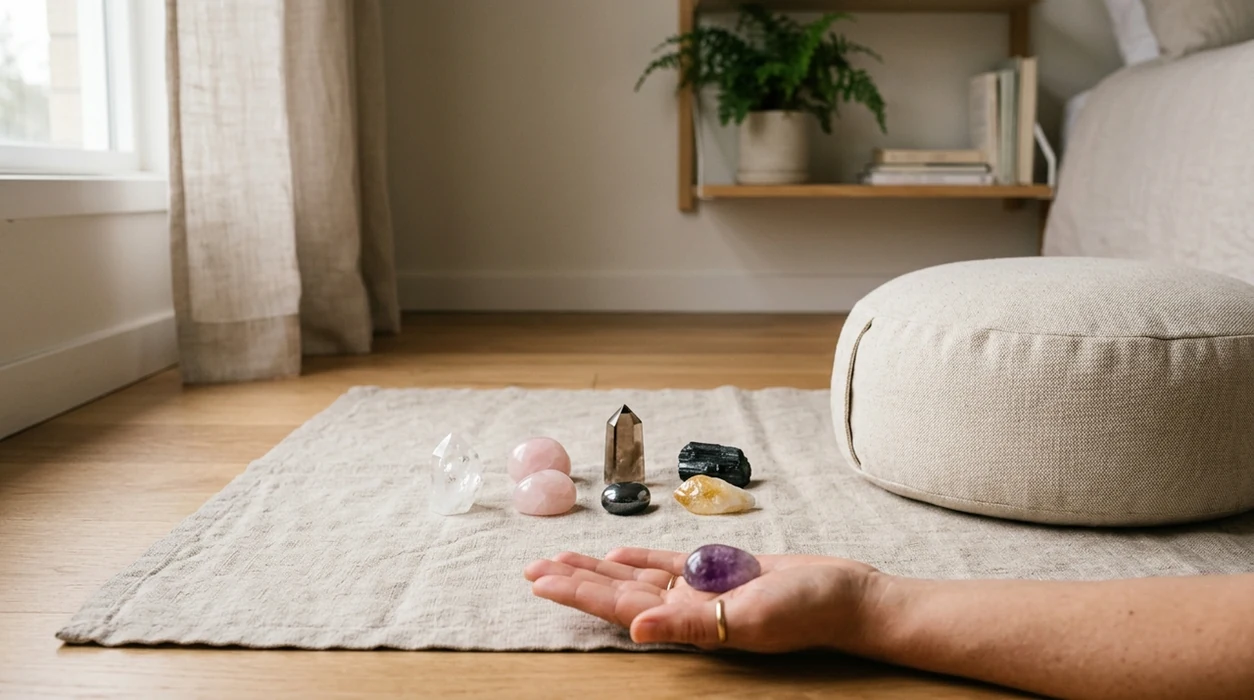


To meditate with crystals, choose one comfortable stone, sit quietly, breathe slowly, and use its weight, texture, or shape as a focus point when attention wanders. Crystal meditation is a mindfulness practice that uses a stone as a tactile or visual anchor for breathing, attention, and intention-setting. Start with a 5 to 10 minute guided or silent session.
The stone can support a calming ritual, but it is not a proven treatment for anxiety, insomnia, or stress. Evidence is stronger for mindfulness practices than for medical claims about crystals. Beginner options include clear quartz, amethyst, rose quartz, smoky quartz, black tourmaline, selenite, lepidolite, labradorite, citrine, and hematite. Comfort matters more than rarity or price.
The essentials
- Start with one easy-to-hold crystal and a 5-10 minute guided or silent meditation session.
- The strongest evidence is for mindfulness practices, not for crystals having a proven medical effect.
- Beginner-friendly meditation crystals include clear quartz, amethyst, rose quartz, smoky quartz, black tourmaline, selenite, lepidolite, labradorite, citrine, and hematite.
How how to meditates look
Side-by-side captures of the compared products. Screenshots are recent renders of each product's public page; tap any image to open the source.
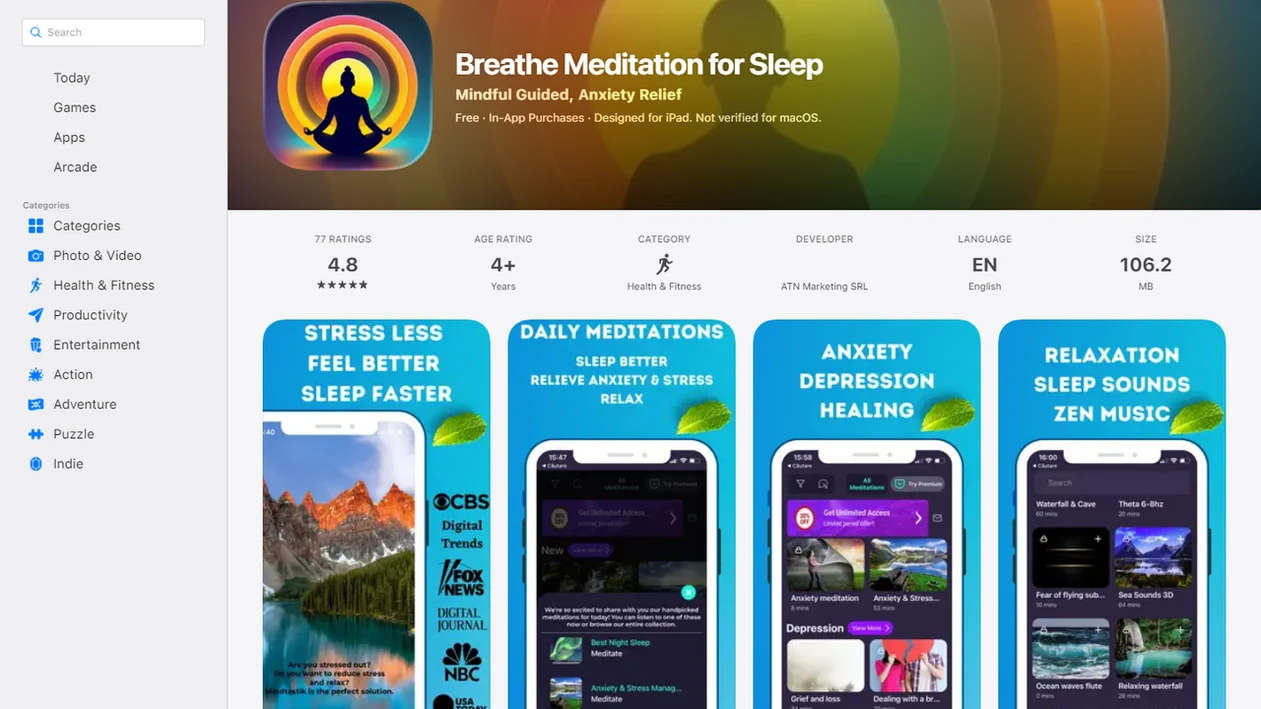
How to meditate with crystals 10 best meditation crystals: quick beginner answer
Quick answer: Meditate with crystals by using one stone as an attention anchor while you breathe slowly for 5-10 minutes. Hold it, place it nearby, or rest it safely on the body, then return your attention to its weight, texture, or shape when your mind drifts.
Keep the first session plain. One crystal, one seat, one short guided session. That is enough. If you start by comparing every stone in a shop tray, the practice can become another decision instead of a pause.
Crystals are not proven medical treatments for anxiety, insomnia, depression, pain, or stress. Tools like MindTastik can support the guided meditation part of the routine, especially if you want a voice to follow while the crystal gives your hands something steady to notice. For a symbolic calming routine, crystals for anxiety and stress can serve as attention cues alongside appropriate professional care.
Five facts about meditation with crystals for beginners
- Crystal meditation is mainly an attention practice. The stone gives your mind a place to return when thoughts pull you away.
- Comfort matters more than rarity. A smooth, easy-to-hold crystal usually works better than an expensive piece that feels awkward.
- Warmth or tingling is optional. Some people notice temperature, texture, or pressure; others notice almost nothing. The practice still counts.
- Mindfulness research supports meditation more strongly than crystal claims. Evidence is stronger for structured mindfulness programs than for claims about crystal energy. The National Center for Complementary and Integrative Health also summarizes meditation and mindfulness as practices with some evidence for stress-related symptoms, while noting that benefits vary by condition and study quality NCCIH mindfulness overview: meditation and mindfulness what you need to know.
- Crystal meditation should complement care, not replace it. If symptoms are persistent or severe, professional support matters.
One beginner explained the need this way: when the mind feels crowded, it helps to have a simple point of return. That is a useful frame. The crystal is the cue; the practice is coming back.
Crystal meditation mechanism as a mindfulness cue
Crystal meditation works by turning a crystal into a tactile, visual, and ritual anchor for attention. In plain language, the stone gives your mind something simple to come back to while your breathing slows and your body gets still.
The mechanism is not magic in the medical sense. It is closer to attentional training and habit loops. You choose an object, notice breath and body, drift into thought, then return to the object again. That repetition can make the practice feel steadier over time.
The calm may come from stillness, slow breathing, repeated focus, and the intention you bring to the session. A 2014 JAMA Internal Medicine meta-analysis found mindfulness-based programs had modest effects for anxiety symptoms, pain, and depressive symptoms, but that evidence applies to mindfulness programs, not to crystals themselves JAMA Internal Medicine study: 1809754.
In the middle of the night, a glowing phone can pull attention in the wrong direction. A crystal resting nearby may serve as a quiet reminder to pause, breathe, and leave the checking for later.
How to use crystals for meditation in a 10-minute MindTastik routine
Use this 10-minute crystal meditation routine when you want a clear starting point without building a large ritual around it.
- Set your space. Sit or lie down somewhere quiet, dim the screen if you’re using audio, and choose one smooth crystal.
- Hold the crystal. Keep it in one hand, both hands, or nearby where you can see it without straining.
- Start a short session. Choose a MindTastik meditation, breathing exercise, sleep audio, or everyday calm session that lasts about 5-10 minutes.
- Return to the stone. When thoughts wander, notice the crystal’s weight, edge, temperature, or color, then come back to the breath.
- Close gently. Notice mood, body sensations, and breathing without grading the session as good or bad.
For beginners, a 5-minute breathing exercise is often easier than a 20-minute body scan because the shorter time frame reduces pressure and restlessness.
Best meditation crystals for beginners: 10 comfortable stones
The best meditation crystals for beginners are comfortable, safe to handle, and easy to connect with as a focus object. Choose by feel first, then by meaning if that matters to you. For an astrology-themed focus object, consider Aries crystals for focus and grounding while choosing a stone that feels comfortable.
Top five starter crystals
Clear quartz is often used for simple focus because it feels neutral and easy to pair with any intention. Amethyst fits a calming bedtime ritual, especially when pajamas are warm from the dryer and the phone is face-down on the nightstand. Rose quartz suits compassion-focused meditation or gentle self-talk. Readers interested in that theme may also like the heart chakra everything you need to know. Smoky quartz works well for grounding practice. Black tourmaline can support a protective-feeling ritual, as long as you treat that meaning as personal symbolism.
Five more beginner options
Selenite, lepidolite, labradorite, citrine, and hematite are also common beginner choices. Pick pieces that are smooth, stable, and not flaky or sharp. Zodiac-based lists, such as crystals for taurus best 10 healing gemstones guide, can be fun, but comfort should still decide what you actually use.
Crystal meditation benefits versus evidence for mindfulness practice
People may experience calm, better focus, ritual consistency, or an easier bedtime wind-down from crystal meditation. The evidence boundary is important: research supports some mindfulness-based programs, not claims that crystals treat health conditions. You can also explore crystals for stress relief rituals as symbolic focus objects, not treatments for stress.
| Claim or experience | Better evidence-based framing |
|---|---|
| “This crystal reduces anxiety.” | Meditation may support calm, but crystals are not proven anxiety treatments. |
| “Amethyst fixes sleep.” | A bedtime ritual may help you wind down, but it does not treat insomnia. |
| “The stone clears pain.” | The 2014 JAMA review found a pooled effect size of 0.33 for pain outcomes in mindfulness programs, not crystal use. |
| “Crystals improve mood.” | The same review found effect sizes of 0.30 for anxiety symptoms and 0.14 for depressive symptoms in mindfulness-based programs. |
| “I feel calmer with it.” | That subjective benefit is valid as a personal experience, not a medical claim. |
Meditation usually works best when the routine is repeatable, while crystal choice fits people who benefit from a physical focus object.
Meditating with crystals in hands, on the body, or nearby
The safest crystal placement is the one that lets you relax without pressure, scratching, or distraction. Most beginners should start by holding a smooth crystal or placing it nearby.
| Placement method | How it works | Safety note |
|---|---|---|
| One hand | Hold the crystal lightly and notice weight or temperature. | Avoid gripping so hard your hand tenses. |
| Both hands | Rest the stone between palms during breathing. | Choose a size that does not strain wrists or fingers. |
| Nearby | Place it on a table, mat, or nightstand as a visual anchor. | This is often easiest for sleep routines. |
| On the body | Rest it on the chest, belly, or palm only if stable. | Avoid heavy, sharp, fragile, or irritating stones. |
Feet planted on office carpet, a small stone beside the keyboard, three slow breaths. That can be enough for a daytime reset. Good meditation app for sleep anxiety and everyday calm support routines deliver guided structure and repeatable cues, not cures or medical promises.
Crystal meditation script for sleep, anxiety support, and everyday calm
“Can I use a short crystal meditation script for sleep, anxiety support, or everyday calm?” Yes. Use neutral words like attention, intention, breath, and noticing, and avoid promising that the crystal will heal a condition.
One-minute crystal breathing cue
Hold the crystal gently. Breathe in and notice its texture. Breathe out and soften your shoulders. Say silently, “I can return to this moment.” If thoughts race, name them as thoughts and feel the stone again.
Bedtime crystal meditation cue
Place the crystal safely on a soft cloth or hold it gently in your palm before sleep audio begins. Notice the room, the weight of the bedding, and the next slow breath. Let the stone mark the shift from doing to resting.
MindTastik offers guided mindfulness sessions, sleep audio, breathing practices, and self-hypnosis support for adults seeking everyday calm, rest, and stress relief. If you are comparing guided-audio options, Calm and Headspace also offer meditation libraries; choose the tool whose session length, voice style, and sleep content you will actually use. If you also use affirmations, keep them grounded; positive affirmations the importance of balance in the chakras can offer a related ritual lens.
When a crystal meditation increases distress
A meditation session does not have to feel calming to count as practice, but worsening distress is a reason to stop rather than push through. The National Center for Complementary and Integrative Health’s safety summary says meditation is usually considered safe, while research on harms remains incomplete. Some people report increased anxiety, intrusive thoughts, or emotional distress. A crystal does not remove those risks.
If focusing inward becomes uncomfortable, end the session and set the stone aside. There is no need to finish a timer or interpret the discomfort as a message from the crystal. A shorter practice or a different activity may be preferable. Significant or persistent symptoms deserve qualified medical or mental-health support; neither a crystal ritual nor guided audio should replace that care.
Guided audio can give a crystal ritual structure
MindTastik’s guided meditation library suits beginners who want spoken cues while holding a stone or keeping it nearby. Breathing exercises can keep attention on the practice rather than on choosing the right crystal. Sleep stories offer another option for an evening wind-down.
A silent session may suit people who find narration distracting. Persistent anxiety, insomnia, or distress calls for qualified care, not a different crystal or an app subscription. MindTastik is not a medical treatment.
What crystals cannot treat, and where placement becomes unsafe
Crystal meditation has real boundaries, and naming them makes the practice safer.
- No strong clinical evidence shows crystals themselves treat anxiety, insomnia, depression, pain, trauma symptoms, or stress.
- Spiritual claims about crystal energy are beliefs or traditions, not established medical facts.
- The calming effect may come from slow breathing, stillness, repeated attention, and a familiar routine.
- Expensive stones, rare minerals, and complex chakra rituals are not required for a useful beginner session.
- Do not place crystals where they cause pain, pressure, choking risk, skin irritation, or sleep disruption.
- Avoid fragile, flaky, sharp, or toxic mineral specimens, especially near children, pets, or bedding.
- Seek professional support for persistent insomnia, panic, depression, trauma symptoms, or thoughts of self-harm. If thoughts of self-harm feel immediate or unsafe, contact local emergency services or the 988 Suicide & Crisis Lifeline in the U.S. 988lifeline reference.
A simple stone can support a supportive practice, but it should not carry a job meant for clinicians, therapists, or emergency care. If you enjoy astrology-based crystal selection, a guide like crystals for gemini top 10 you should use can be a personal-interest layer, not a health plan.
Crystal meditation questions
How do beginners meditate with crystals?
Choose one smooth, comfortable stone and sit somewhere quiet for 5 to 10 minutes. Hold it lightly or place it nearby. Notice the breath, then the stone’s weight, texture, or shape. When thoughts pull attention away, return gently to one of those sensations. No elaborate layout is required.
Which crystal is best for meditation?
There is no established best crystal for meditation. Clear quartz, amethyst, and rose quartz are common beginner choices, but comfort and ease of handling matter more than symbolic meaning. A smooth stone that does not strain the hand is a practical starting point. Rarity and price do not establish a medical benefit.
Where should I put crystals while meditating?
Holding a smooth crystal lightly or placing it on a nearby table is a simple starting point. Avoid squeezing it or choosing a size that strains the fingers or wrists. Body placement is optional, not necessary. Any stone resting on the body should be stable and should not cause pressure, scratching, or pain.
How long should a crystal meditation last?
Start with 5 to 10 minutes rather than aiming for a long session. The useful task is repeatedly noticing when attention wanders and returning to the breath or stone. A shorter session is reasonable if the practice feels uncomfortable. There is no established crystal-specific duration needed to produce a benefit.
Do crystals help with anxiety?
Crystals are not proven anxiety treatments. A crystal meditation may feel calming because it includes breathing, stillness, and repeated attention. Research supports modest anxiety benefits from some mindfulness programs, not a specific effect from stones. Persistent anxiety or symptoms that interfere with daily life call for qualified mental-health care.
Can I use crystals for sleep meditation?
A crystal can serve as a focus cue during a bedtime wind-down, but it does not treat insomnia. Place it on a nightstand or another stable surface rather than where it could cause pressure or a choking risk. Evidence for mindfulness and sleep is promising but limited, and it does not establish a crystal-specific benefit.
What should I feel when meditating with a crystal?
There is no required sensation. Some people notice weight, texture, temperature, or pressure; others notice very little. Neither response proves that a crystal has healing energy. The practice is returning attention, not producing tingling or warmth. If meditation increases anxiety or emotional distress, stop rather than treating discomfort as a necessary step.