
11 Best Crystals for Anxiety and Stress to Try
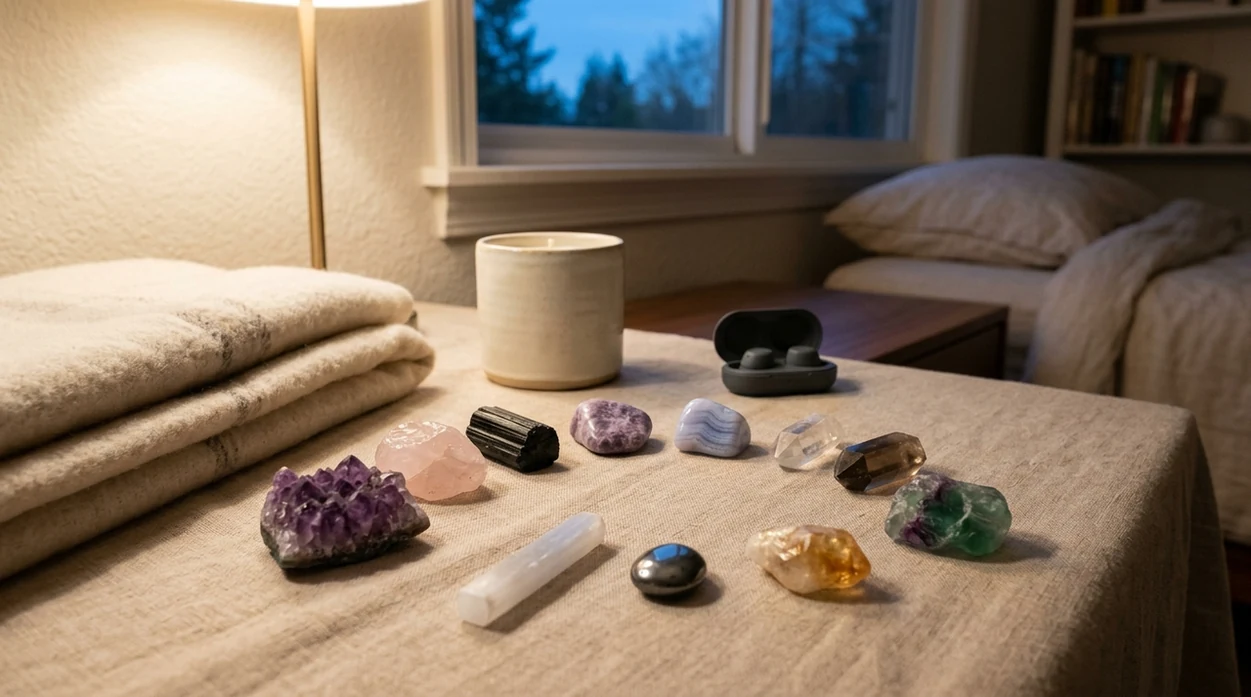


Crystals for anxiety and stress are stones used as tactile reminders to pause, breathe, meditate, or begin a calming routine, not evidence-based treatments for anxiety disorders. The 11 options covered here are amethyst, rose quartz, black tourmaline, lepidolite, blue lace agate, clear quartz, smoky quartz, selenite, hematite, citrine, and fluorite.
Their practical role is to mark the start of a habit: holding a stone before slow breathing, placing one beside a journal, or keeping one near bedtime audio. Any comfort may come from touch, attention, expectation, and the ritual itself rather than a property of the crystal. Choose by the routine the stone will support, not by promises of healing or a higher price.
The essentials
- Crystals may feel calming because they create ritual, focus, touch, and a pause point, not because they are proven to medically treat anxiety.
- Pair any crystal with an evidence-informed habit such as slow breathing, guided meditation, sleep audio, journaling, or screen-free wind-down time.
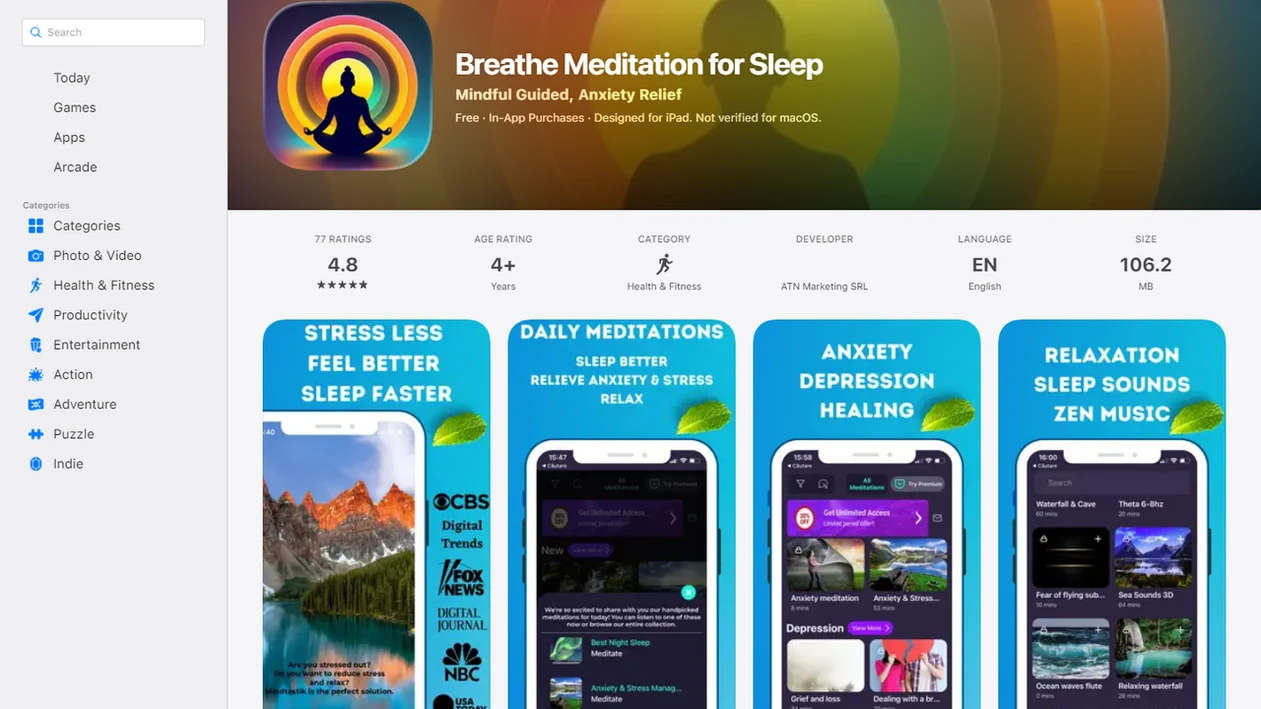
- A guided meditation app can pair the crystal cue with breathing exercises, sleep audio, journaling prompts, or a short wind-down session. For structured journaling alongside your crystal cue, an AI self reflection tool can offer prompts for noticing feelings and habits.
How 11 best crystals look
Side-by-side captures of the compared products. Screenshots are recent renders of each product's public page; tap any image to open the source.
At a Glance: 11 Best Crystals for Anxiety Stress to Try
The 11 crystals below are best understood as comfort objects, grounding cues, or meditation anchors. Expensive or rare crystals are not automatically better for anxiety or stress.
| Crystal | Common calming association | Practical use |
|---|---|---|
| Amethyst | Rest, quiet, meditation | Hold before bedtime audio |
| Rose quartz | Self-kindness, emotional softness | Keep near a journal |
| Black tourmaline | Grounding, symbolic protection | Carry during stressful errands |
| Lepidolite | Calm, transition | Use during a short reset |
| Blue lace agate | Calm communication | Keep on a desk |
| Clear quartz | Clarity, intention | Hold while setting a daily intention |
| Smoky quartz | Letting go, steadiness | Use with slow breathing |
| Selenite | Cleansing ritual | Place near a wind-down space |
| Hematite | Weight, sensory grounding | Hold during 5-4-3-2-1 grounding |
| Citrine | Warmth, optimism | Use before a meeting reset |
| Fluorite | Focus, organization | Place beside a planner |
A smooth stone in your pocket can be enough. The point is the pause it creates.
5 Facts About Crystals for Anxiety and Stress Relief
Before choosing a stone, set the evidence boundary clearly. Crystals are widely used as comfort objects, but they do not have established medical evidence as anxiety treatments.
- Fact 1: Crystals may feel calming because they add ritual, touch, expectation, attention, and self-soothing to a stressful moment.
- Fact 2: In the U.S., 19.1% of adults experienced an anxiety disorder in the past year in the 2022 National Survey on Drug Use and Health samhsa reference: 2022 nsduh annual national report.
- Fact 3: NIMH reports that 31.9% of U.S. adolescents ages 13-18 have had any anxiety disorder nimh reference: any anxiety disorder.
- Fact 4: A 2022 Cochrane review found that mindfulness-based interventions may reduce anxiety symptoms compared with no treatment or usual care Cochrane review.
- Fact 5: A crystal ritual is not the same as care from a clinician, therapist, or prescribing professional.
That distinction matters in a quiet corner before dawn, when a stone on the mat feels more like a reminder than a remedy.
Best Crystals for Anxiety Stress to Try by Calming Need
Choose a crystal by the behavior you want to repeat, not by a promise that it will remove anxiety. The most useful stone is often the one you will actually pick up before breathing, journaling, or stepping away from your screen.
For bedtime calm
Amethyst, lepidolite, selenite, and rose quartz are common bedtime choices. Place one beside a half-empty water glass by the bed, then use it as the cue to dim your phone and start a wind-down routine.
For grounding during stress
Black tourmaline, smoky quartz, and hematite fit grounding rituals. Hold one in your palm during slow breathing or keep it in a coat pocket for a short reset outside.
For focus and emotional reset
Fluorite, clear quartz, blue lace agate, and citrine work well as desk or journal cues. If you want a fuller practice, our how to meditate with crystals 10 best meditation crystals guide explains a simple setup.
How Crystals for Anxiety and Stress Work as Mindfulness Cues
Crystals for anxiety and stress work best as tactile cues that interrupt autopilot and trigger a deliberate calming behavior. In habit-loop terms, the stone is the cue, the breathing or meditation is the routine, and the reward is a small sense of steadiness.
The mechanism is practical, not mysterious. Touch gives your attention somewhere to land. Ritual tells the brain, “we do this now.” Expectation can shape how calming the moment feels, but that is different from scientific proof that a stone treats anxiety. Spiritual meanings can be personally important, as long as they are not presented as medical facts. If you explore other spiritual stones, approach moldavite for enlightenment as a symbolic practice while staying grounded.
A guided meditation app can provide the routine paired with the cue. Good apps for sleep, anxiety, and everyday calm deliver repeatable practices, not guaranteed cures. A simple, repeatable practice can provide a pause when worry builds.
The evidence supports meditation, not the stone
A 2014 systematic review of 47 randomized clinical trials, involving 3,515 participants, found moderate evidence that mindfulness meditation programs improved anxiety and depression. The programs were not clearly superior to established treatments such as exercise, medication, or cognitive behavioral therapy. These findings concern meditation programs, not crystals, and do not establish that adding a stone makes a practice more effective.
That distinction also matters at bedtime. NCCIH’s summary of a 2019 sleep analysis reports that mindfulness meditation improved sleep quality more than education-based controls, but did not outperform evidence-based treatments such as cognitive behavioral therapy for insomnia or exercise. A crystal can mark the start of a wind-down routine, but evidence for meditation should not be presented as evidence for amethyst, selenite, or any other mineral.
How to Use Crystals for Anxiety Stress to Try Safely
Use crystals as part of a short routine that includes breathing, attention, and a realistic endpoint. For beginners, 2 to 10 minutes is usually easier to repeat than a long session because the barrier is low.
- Choose one stone that feels comfortable in your hand, such as amethyst, hematite, or rose quartz.
- Set one intention such as “pause before reacting” or “breathe for three minutes.”
- Pair it with breathing by inhaling for four counts and exhaling for six.
- Use guided support through a meditation app, breathing exercise, sleep audio, or self-hypnosis session if silence feels too open.
- Place it visibly on a desk, nightstand, or journal so it becomes a cue.
- Review whether it helps after a week, and stop if the ritual increases checking, fear, or dependency.
Small is fine. Repeatable is better.
If the ritual makes anxiety worse
A calming ritual does not always feel calming. NCCIH’s guidance on meditation safety says meditation and mindfulness are usually considered safe, but research on harms remains incomplete. Some people report increased anxiety, intrusive thoughts, or emotional distress. Holding a crystal does not remove those risks, and discomfort is not evidence that the stone is releasing stored emotions.
If sitting quietly or following the breath increases distress, stop rather than extending the session to make it work. A brief, eyes-open grounding exercise may be a more manageable format than a long inward-focused practice. Repeated or significant worsening deserves discussion with a qualified clinician. Neither the ritual nor the meditation needs to be continued simply because it was intended to help.
Amethyst, Rose Quartz, and Lepidolite for Gentle Anxiety Rituals
Amethyst, rose quartz, and lepidolite are commonly used in softer anxiety rituals because they fit quiet, low-pressure practices. None should be treated as medicine.
Amethyst: Amethyst is often associated with calm, rest, and meditation spaces. Try holding it for two minutes before a guided session, especially if you’re choosing between a 5-minute breathing exercise and a 20-minute body scan.
Rose quartz: Rose quartz is commonly linked with compassion, self-kindness, and emotional softness. Keep it near a journal and write one sentence you would say to a friend. For a reflective writing prompt, talk with your younger self using the same gentle tone you would offer a friend.
Lepidolite: Lepidolite is often marketed for calm because it contains lithium minerals, but the stone does not deliver a medical lithium effect. Use it as a transition object after work, not as treatment.
For spiritual context around compassion practices, the the heart chakra everything you need to know guide may help.
Image caption suggestion
A hand holding amethyst beside a phone playing a guided breathing session.
Black Tourmaline, Smoky Quartz, and Hematite for Grounding Stress
Can black tourmaline, smoky quartz, or hematite help with stress? They may help as physical anchors during grounding, but they should not be relied on to cure panic attacks or severe anxiety.
Black tourmaline is commonly associated with protection and grounding. Treat that as symbolic meaning, not proven energy shielding. Smoky quartz is often linked with letting go and steadying attention. Hematite has a dense weight that makes it useful for sensory focus.
Try this 5-4-3-2-1 practice: hold the stone, name five things you see, four things you feel, three things you hear, two things you smell, and one thing you taste. During a brief elevator ride, shoulder tension may ease even if worried thoughts remain. That still counts as a coping skill, not a cure. For severe or recurring panic symptoms, professional support matters.
Blue Lace Agate, Clear Quartz, Citrine, Selenite, and Fluorite for Everyday Calm
These five crystals fit everyday routines because they can sit where stress usually starts: a desk, notebook, meeting space, or bedside table. Use the stone to start the habit, not to promise a result.
Blue lace agate: Commonly associated with calm communication. Keep it beside your laptop before a difficult message.
Clear quartz: Commonly linked with clarity and intention setting. Hold it before writing one priority for the day.
Citrine: Often associated with optimism and energy. Use it before a meeting reset, without expecting it to change your mood by itself.
Selenite: Commonly tied to cleansing rituals. If that meaning fits your beliefs, place it near an evening wind-down space.
Fluorite: Often connected with focus and mental organization. Put it beside a planner before a 10-minute focus block.
If you like zodiac-based crystal lists, the crystals for gemini top 10 you should use article takes a different angle.
MindTastik Meditation Habits to Pair With Crystals for Anxiety Stress
A crystal can be the cue, and MindTastik can provide the guided routine. That pairing is more useful than simply buying another stone and hoping it changes the evening.
Try amethyst with sleep audio, hematite with breathing, rose quartz with a self-compassion meditation, and fluorite with a focus reset. Per the CDC, more than 1 in 3 U.S. adults do not get enough sleep on a regular basis CDC guidance: data statistics.html. Poor sleep can worsen stress and anxiety, so bedtime routines matter.
The practical stack can stay simple: set a journal beside a soft cloth, choose one short practice, and let the stone serve as a gentle cue before the next scroll begins. MindTastik can also support sleep through guided meditation, breathing exercises, sleep audio, and self-hypnosis. If affirmations are part of your routine, positive affirmations the importance of balance in the chakras may pair naturally with journaling.
Guided breathing to pair with a crystal cue
MindTastik’s breathing exercises can provide the routine that follows picking up a stone. Guided meditations offer another option when a spoken prompt is more useful than silence, while sleep stories or soundscapes can accompany an evening wind-down. The crystal remains an optional reminder, not the active treatment. People seeking treatment for persistent anxiety or panic should choose qualified clinical support rather than an app-and-crystal ritual.
What crystals cannot treat or guarantee
Crystals can be meaningful, but they have clear limits. Keep these boundaries in view, especially if anxiety is severe, persistent, or interfering with daily life.
- Crystals are not evidence-based treatments for anxiety disorders, panic disorder, depression, trauma, or chronic stress.
- Any calming effect may come from ritual, placebo, attention, touch, or mindfulness rather than the stone itself.
- Crystals should not replace therapy, medication, medical care, or urgent mental-health support.
- A crystal under a pillow or worn as jewelry is not a guaranteed sleep or anxiety cure.
- More expensive, rare, or visually striking stones are not automatically more effective.
- Cleansing, charging, and energy claims are spiritual traditions, not scientific facts.
- If a crystal ritual increases checking, fear, avoidance, or dependency, stop and seek appropriate support.
Clinicians typically recommend evidence-informed care for anxiety that is severe, persistent, or disabling, which may include therapy, medication, sleep support, or medical evaluation.
When a short guided crystal ritual beats silent practice
- Skip a complex crystal layout when anxiety already feels intense; a single stone plus five counted exhales is easier to complete.
- Avoid silent practice if racing thoughts become louder in silence; a short guided voice may give the mind a steadier track.
- Do not use a crystal ritual as a test of whether you are “calm enough”; the practice can still count when the body stays tense.
- Choose a grounding format when stress shows up as clenched hands, raised shoulders, or restless pacing.
- Use a brief reset rather than a long routine when the goal is to interrupt spiraling, not solve every concern at once.
When to Seek Professional Help for Anxiety or Panic
Seek professional help when anxiety or panic is intense, recurring, unsafe, or starting to shrink your life. Crystals and guided meditation can support a calming routine, but they should never delay therapy, medication, medical evaluation, or urgent care.
Use a stone as a cue to pause, then let the next step be practical:
- Notice red flags such as panic attacks, avoiding work or school, insomnia, relationship strain, trouble functioning, or thoughts of self-harm.
- Contact a primary-care clinician if symptoms are new, worsening, or paired with physical symptoms like chest tightness, dizziness, or rapid heartbeat.
- Book support with a therapist, psychiatrist, or licensed mental-health professional for assessment, coping tools, and medication discussion when appropriate.
- Use crisis or emergency support immediately if you might hurt yourself, feel unable to stay safe, or are in immediate danger.
- Keep guided meditation supportive by using it alongside care, not instead of care, especially when panic or sleep loss keeps returning.
A crystal can sit in your palm while you make the call. It does not have to carry the whole night.
Questions about crystals and anxiety
Which crystal is best for anxiety and stress?
No crystal has been established as the best anxiety treatment. Amethyst is commonly associated with rest, rose quartz with self-kindness, and hematite with grounding. Those associations can guide a personal ritual, but the practical choice is a stone that feels comfortable and cues a useful habit.
Can crystals stop a panic attack?
Crystals should not be relied on to stop panic attacks. A familiar stone may serve as a physical anchor during grounding, but that is different from treating panic disorder. Recurring attacks, avoidance, or difficulty functioning call for professional assessment rather than a stronger stone or a more elaborate ritual.
How do I use a crystal during a breathing exercise?
Hold one comfortable stone in a relaxed hand and use it as the reminder to begin. A short routine can involve inhaling for four counts and exhaling for six, without forcing the breath. If focusing on breathing increases distress, stop and choose a different grounding format.
Can sleeping with amethyst help anxiety at night?
Amethyst can mark the start of a bedtime routine, but it is not a proven sleep or anxiety treatment. Keeping it beside the bed may be enough to cue dimmer screens, journaling, or sleep audio. Persistent insomnia or nighttime anxiety deserves attention beyond changing the bedside stone.
Are expensive crystals more effective for stress?
A higher price or rarer specimen does not establish a greater benefit for anxiety. For a mindfulness cue, comfort and usefulness matter more than cost. A stone already owned can serve the same practical role: reminding someone to pause and begin a breathing, journaling, or meditation routine.
Does the lithium in lepidolite treat anxiety?
Lepidolite is sometimes marketed for calm because it contains lithium, but holding the mineral is not equivalent to taking a prescribed medicine. Its composition does not establish an anxiety treatment. Treat it as a ritual object, not a way to obtain medication or replace clinical care.
What has better evidence for anxiety than crystals?
Mindfulness meditation has research support for modest anxiety improvement, though it is not clearly superior to established treatments. Exercise, medication, and cognitive behavioral therapy are among the approaches studied in comparisons. The appropriate choice depends on symptoms and clinical advice, especially when anxiety is persistent or interferes with daily life.