
5 Best Anxiety Remedies to Try Out for Everyday Calm


Five anxiety relief remedies for everyday stress are regular movement, calming breathwork, guided mindfulness or meditation, sleep-supportive routines, and cautious use of herbs or supplements with medical guidance. These approaches can support mild anxiety, but they do not replace therapy, medication, or urgent care when symptoms are severe or unsafe. Movement, breathing, mindfulness, and sleep routines are the lowest-risk starting points.
A meditation app provides guided meditation, sleep audio, breathing exercises, and relaxation sessions for adults seeking anxiety and sleep support. It can give a routine some structure, not diagnose or treat an anxiety disorder. Herbal products also need care: natural ingredients can cause side effects or interact with medicines. Escalating anxiety, disrupted daily life, panic, depression, or self-harm thoughts call for professional support.
The essentials
- Start with the lowest-risk anxiety remedies: movement, breathing, mindfulness, and better sleep routines.
- Use herbal teas or supplements carefully because natural products can still cause side effects or drug interactions.
- Seek professional support if anxiety is escalating, disrupting daily life, or causing panic, depression, or self-harm thoughts.
How 5 best anxiety remedies to try outs look
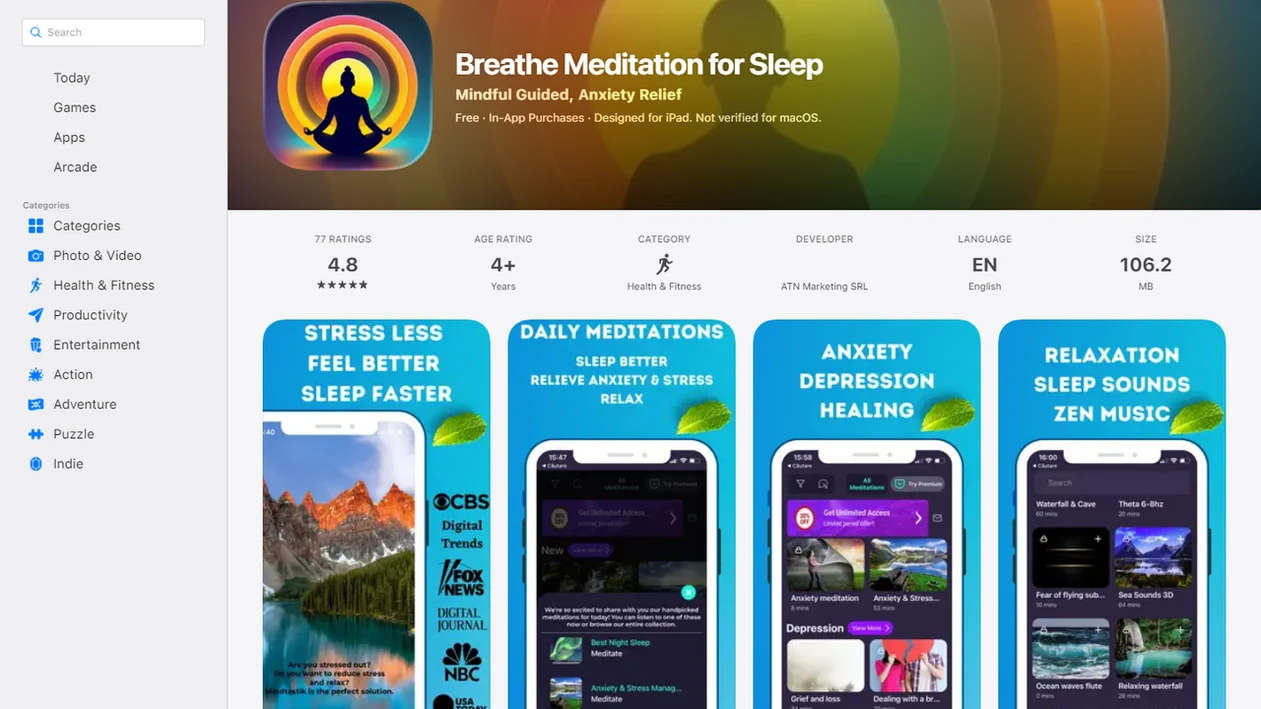
Side-by-side captures of the compared products. Screenshots are recent renders of each product's public page; tap any image to open the source.
5 Best Anxiety Remedies to Try Out at a Glance
The safest starting point is usually a low-risk routine, not a dramatic overhaul. Anxiety is common: NIMH reports that 19.1% of U.S. adults had an anxiety disorder in the past year, and 31.1% experience one at some point in life.
| Remedy | Best use case | Time needed | Evidence level | Safety note |
|---|---|---|---|---|
| Movement | Restless tension, stress buildup | 10 to 30 minutes | Stronger | Start gently if injured or deconditioned |
| Breathwork | Sudden anxiety sensations | 1 to 5 minutes | Moderate | Stop if breath focus worsens panic |
| Mindfulness meditation | Worry loops and reactivity | 5 to 20 minutes | Moderate to strong | Use trauma-sensitive guidance if needed |
| Sleep and lifestyle routines | Night anxiety, daily stability | Daily | Foundational | Changes work gradually |
| Herbs or supplements | Mild support, with guidance | Varies | Mixed | Check interactions first |
Digital meditation tools can support breathing, mindfulness, sleep audio, and everyday calm, but the remedy is the repeatable habit.
Five Evidence Facts Behind Anxiety Remedies
Anxiety remedies are better understood as support tools, not cure claims. The evidence is strongest for regular movement, structured mindfulness, relaxation skills, and steady lifestyle habits.
- Exercise has randomized-trial evidence for moderate anxiety symptom reduction in adults with anxiety and stress-related disorders, according to a 2018 meta-analysis (PubMed research: 29677332).
- Breathing and relaxation techniques can activate the parasympathetic nervous system, which helps shift the body away from high-alert arousal.
- Mindfulness programs have clinical evidence, including MBSR data from a 2022 trial comparing mindfulness-based stress reduction with escitalopram (JAMA Internal Medicine study: 2798510).
- Sleep, caffeine, nutrition, and routine can influence anxiety severity because they affect arousal, blood sugar swings, and stress tolerance.
- Herbal remedies such as chamomile may help some people, but benefits vary and safety checks matter.
The most common medically supported way to manage persistent anxiety is self-care combined with therapy, medication, or both when symptoms warrant it.
Body and Brain Mechanisms Behind Anxiety Remedies
Anxiety remedies work by lowering arousal, interrupting worry loops, and improving coping capacity; they usually do not permanently remove anxiety. The stress response starts with threat detection, then sympathetic activation, muscle tension, faster breathing, and more scanning for danger. For specific fears, phobia and fear meditation can offer a structured way to practice steadier coping.
Movement gives the body a way to discharge stress energy. Slow breathing changes carbon dioxide balance and vagal tone, which is a plain way of saying the body gets a stronger “settle down” signal. Relaxation practice releases held muscle tension. Meditation helps you notice thoughts without obeying every alarm.
Waking before dawn can feel unsettling. You’re alert in the quiet, your feet find the floor, and tomorrow’s plans start crowding in.
Structured mindfulness and relaxation practices can complement CBT or medical care. Good meditation app for sleep anxiety and everyday calm tools deliver guided practice and repeatable routines, not diagnosis, crisis treatment, or guaranteed symptom removal.
How to Use Anxiety Remedies Safely
Use anxiety remedies safely by testing one simple change at a time and watching how your body responds. The goal is steadier support, not stacking every calming idea into a stressful new rulebook.
- Choose one low-risk remedy first, such as a short walk, a breathing practice, a bedtime wind-down, or a brief guided meditation, before adding supplements or multiple routine changes.
- Track your pattern for seven days with quick notes on anxiety level, sleep quality, caffeine timing, and obvious triggers, so you are not guessing from memory.
- Use breathing or grounding when symptoms spike suddenly; name what you see, feel your feet, or lengthen the exhale without forcing the breath.
- Attach meditation or movement to the same daily cue, such as after brushing your teeth, closing your laptop, or getting into bed.
- Stop any remedy that worsens panic, trauma symptoms, dizziness, compulsive checking, or safety concerns.
- Contact a clinician if anxiety disrupts work, school, eating, sleep, relationships, or feels unsafe.
7-Day Plan for the 5 Best Anxiety Remedies to Try Out
Use this 7-day plan to test the five remedies without turning self-care into another assignment. Keep notes simple; a few words per day is enough.
- Set a baseline by rating anxiety, sleep, caffeine, and stress triggers from 1 to 10.
- Walk or move gently for 10 to 20 minutes most days, even if it is just around the block.
- Practice one breathing exercise such as box breathing or extended-exhale breathing once daily.
- Play a short guided meditation, breathing session, or sleep audio at the same time daily, such as before bed or after work.
- Review what helped after 7 days and contact a professional if symptoms are worsening, unsafe, or interfering with basic function.
Some people want a calm voice to follow when worry starts taking up too much space. That is a reasonable starting point.
Best Anxiety Remedy 1: Exercise and Gentle Movement
Does exercise help anxiety naturally? Yes, regular movement is one of the better-supported self-help options for reducing anxiety symptoms, especially when it is realistic enough to repeat.
Brisk walking, cycling, yoga, stretching, dancing, and light strength work can all count. A 2018 meta-analysis in JAMA Psychiatry found that exercise produced a moderate reduction in anxiety symptoms in adults with anxiety and stress-related disorders. The likely reasons include endorphins, stress hormone regulation, better sleep, improved confidence, and nervous system discharge.
For anxious restlessness, movement is often easier than sitting still because the body already wants an outlet. Start gradually, adapt for injury or medical conditions, and avoid turning exercise into a compulsive rule. Ten steady minutes still counts.
If stress spikes during the workday, a short walk can pair well with a meditation for work stress reset afterward.
Best Anxiety Remedy 2: Breathwork and Relaxation Techniques
How do you reduce anxiety immediately at home? Slow breathing, grounding, and progressive muscle relaxation are common first steps because they are low-cost, portable, and quick to start.
Box breathing uses equal counts for inhale, hold, exhale, and hold. Extended-exhale breathing makes the out-breath longer than the in-breath. Diaphragmatic breathing shifts attention toward the belly and lower ribs. Progressive muscle relaxation works by tensing and releasing muscle groups.
Counting can fall apart fast. Breath count lost after four is normal, not failure.
MindTastik breathing sessions can guide pacing when your mind will not keep time. These tools can ease acute anxiety sensations, but they are not magic cures for panic disorder, trauma responses, or medical symptoms. For nighttime practice, our guide to breathing exercises for anxiety at night gives more specific patterns.
A 60-second calming breath pattern
Inhale for 4 seconds, exhale for 6 seconds, and repeat for 6 rounds. Keep the breath soft, not forced.
Best Anxiety Remedy 3: Mindfulness and MindTastik Meditation
Mindfulness means noticing thoughts, sensations, and emotions without immediately reacting to them. It does not mean emptying the mind or pretending anxiety feels pleasant.
- Short guided meditations: Helpful when you need a clear starting point and a voice to follow.
- Body scans: Useful for noticing jaw, shoulder, chest, and stomach tension.
- Sleep audio: Supports a wind-down routine when worry gets louder in bed.
- Breathing exercises: Good for a short reset before a meeting, exam, or travel. If travel anxiety centers on air travel, try these fear of flying tips before your next flight.
- Self-hypnosis sessions: May support habit cues and relaxation for some adults.
A 2022 randomized clinical trial found mindfulness-based stress reduction was noninferior to escitalopram for anxiety disorders at 8 weeks. That supports structured mindfulness, not the claim that any app cures anxiety.
MindTastik can be used as a meditation app for anxiety support, especially when choosing between a 5-minute breathing exercise and a 20-minute body scan feels like too much. However, meditation can increase awareness of distress for some people, especially with trauma histories.
What meditation research does and does not say about apps
Evidence for mindfulness apps is encouraging, but the average benefit is small. A 2023 meta-analysis of 45 randomized trials, involving 6,082 participants, found a small reduction in anxiety compared with control conditions. The authors called for higher-quality trials and longer follow-up. These results concern mindfulness apps as a group, not proof that any particular app will relieve anxiety for an individual.
Structured mindfulness programs have a separate evidence base. A 2014 review of 47 randomized trials found moderate evidence of anxiety improvement at eight weeks, with smaller improvement at three to six months. That review assessed standardized programs, not individual recordings or apps. A brief guided session can be a practical support, but it should not be presented as equivalent to a full clinical program or established anxiety treatment.
Best Anxiety Remedy 4: Sleep, Caffeine, Food, and Daily Routine
Sleep and daily routine make anxiety remedies easier to sustain because they lower background strain. A consistent bedtime, steady wake time, morning light, regular meals, hydration, and less late caffeine can all reduce avoidable stress on the body.
Food is not a fast anxiety cure. Still, nutrient-rich eating patterns can support steadier energy. Magnesium-rich foods, such as leafy greens, beans, nuts, and seeds, are reasonable examples. Omega-3-rich foods, such as salmon, sardines, chia, and walnuts, may also fit a supportive routine.
The small bedtime choices matter. Dimming the phone screen before starting audio can be the difference between winding down and scrolling.
MindTastik sleep audio and bedtime meditations can help build a repeatable wind-down routine. Some readers compare meditation apps for sleep, but the real test is whether you use one when the room is quiet.
Best Anxiety Remedy 5: Herbal Teas and Supplements With Safety Checks
Are herbal remedies safe for anxiety? Sometimes, but “natural” does not automatically mean safe, especially with medications, pregnancy, liver disease, or mental health treatment.
Chamomile and lavender are commonly used for calm, with mixed-to-moderate evidence depending on the form, dose, and study. A 2009 randomized placebo-controlled trial found chamomile extract reduced generalized anxiety disorder symptoms compared with placebo over 8 weeks. Per the CDC, nearly 15% of U.S. adults reported using some type of herbal supplement in the past 12 months.
Teas are not the same as concentrated extracts. Dose matters.
Kava deserves special caution because of liver safety concerns. Check with a healthcare professional before adding supplements, especially if you take antidepressants, sedatives, blood thinners, seizure medicines, or multiple prescriptions. If panic symptoms are intense, panic attack meditation support may help as a coping tool, but urgent symptoms need medical care.
Guided sessions for worry loops and bedtime tension
MindTastik's guided meditations can provide a voice to follow when worry makes a self-directed practice difficult. Its guided breathing exercises suit brief calming routines, while sleep stories and soundscapes can support a bedtime wind-down. These are support tools, not medical treatment.
People who find breath focus unsettling may prefer gentle movement or sensory grounding. Persistent anxiety, repeated panic, or symptoms that interfere with daily life need professional assessment rather than an app-only approach.
When everyday anxiety remedies are not enough
Self-help anxiety remedies can be useful, but they have limits. Clinicians typically recommend professional assessment when anxiety is persistent, worsening, disabling, or linked with safety concerns.
- Remedies may provide partial relief, but they are not stand-alone treatment for moderate to severe anxiety disorders.
- Supplements have mixed evidence, side effects, quality-control issues, and possible interactions.
- Meditation or breathwork can feel uncomfortable for some people, especially with trauma histories or panic sensations.
- Anxiety with self-harm thoughts, chest pain, fainting, psychosis, substance withdrawal, or inability to function needs urgent professional support.
- Herbal products can affect pregnancy, liver disease, surgery risk, and prescription medication safety.
- Exercise should be adapted for pain, injury, disability, heart symptoms, and medical conditions.
- MindTastik is a wellness and meditation app, not a replacement for diagnosis, therapy, medication, or emergency care.
If a remedy makes symptoms worse, stop and reassess. Reset the plan.
Match the remedy to restlessness, worry, or bedtime anxiety
- Choose breathwork when the anxiety feels physical, such as chest tightness, fast breathing, or jaw tension; a longer exhale can give the body a clear next step.
- Choose grounding when thoughts are looping and abstract; naming what you can see, hear, or touch may help attention return to the present task. When worries keep returning, considering fear as an unmet need may help you identify what support is missing.
- Choose a short guided voice when you feel too scattered to self-direct; fewer decisions can make a reset easier to begin.
- Choose movement when the body feels charged or restless; a brief walk, stretch, or shoulder drop sequence may fit better than sitting still.
- Choose sleep-supportive routines when anxiety peaks late in the day; the goal is not to force sleep, but to reduce decisions and stimulation.
When you need a body-first reset before meditation, MindTastik breathing exercises offers simple breathing patterns you can follow along.
Questions about everyday anxiety relief
What can calm anxiety quickly at home?
Slow breathing, sensory grounding, or progressive muscle relaxation are practical first steps for a sudden anxious moment. A gentle walk may suit restless tension better than sitting still. No technique guarantees immediate relief. If focusing on breathing increases panic sensations, stop and switch to noticing nearby sights, sounds, or the feeling of feet on the floor.
Which anxiety remedy should I try first?
Start with one low-risk change that matches the main difficulty: movement for restlessness, grounding for racing thoughts, or a wind-down routine for bedtime worry. Keep brief notes on anxiety, sleep, caffeine, and triggers for seven days. Adding several remedies at once makes it harder to tell what helps or causes discomfort.
Can meditation make anxiety worse?
Yes. Meditation can worsen anxiety or bring up uncomfortable sensations and memories for some people. Breath focus may also intensify panic sensations. Stop or modify a practice that increases distress, and consider an externally focused option such as sensory grounding or walking. Persistent panic, intrusive memories, insomnia, or worsening mood warrant professional advice.
Does exercise help anxiety even if it is just walking?
Regular movement is one of the better-supported self-help options for anxiety, and walking can be part of it. A short, repeatable walk is a reasonable starting point when a demanding workout feels unrealistic. Stretching, dancing, cycling, and gentle strength work are other options. Start gently when injured or deconditioned, and do not treat exercise as a replacement for needed care.
Does caffeine make anxiety worse?
Caffeine timing is a useful part of an anxiety and sleep review. The article's sleep-supportive approach includes reducing late caffeine and keeping a steady sleep routine. Brief notes on caffeine, anxiety, and sleep can help identify a pattern rather than relying on memory. Changing caffeine habits alone may not resolve persistent anxiety.
Are chamomile tea and anxiety supplements the same thing?
No. Herbal tea is not equivalent to a concentrated extract, and evidence for one form does not automatically apply to another. Dose, product quality, side effects, and medicine interactions matter. Medical guidance is especially important during pregnancy, with liver disease, or alongside medication. Natural products should not replace treatment for an anxiety disorder.
How long does meditation take to help anxiety?
There is no reliable timetable for an individual. Research on structured mindfulness programs has found improvement at eight weeks and smaller benefits at three to six months. That does not mean every session or app produces the same result. A brief practice may help with a particular moment, while persistent symptoms still need assessment.
When should anxiety be treated by a professional?
Seek professional assessment when anxiety persists, worsens, disrupts sleep or daily activities, or leads to repeated panic or depression. Self-help remedies may provide partial relief but are not stand-alone treatment for moderate to severe anxiety disorders. Self-harm thoughts or symptoms such as chest pain or fainting require urgent help rather than another calming exercise.