
Flight Anxiety Can Be Overcome by Using These Tips
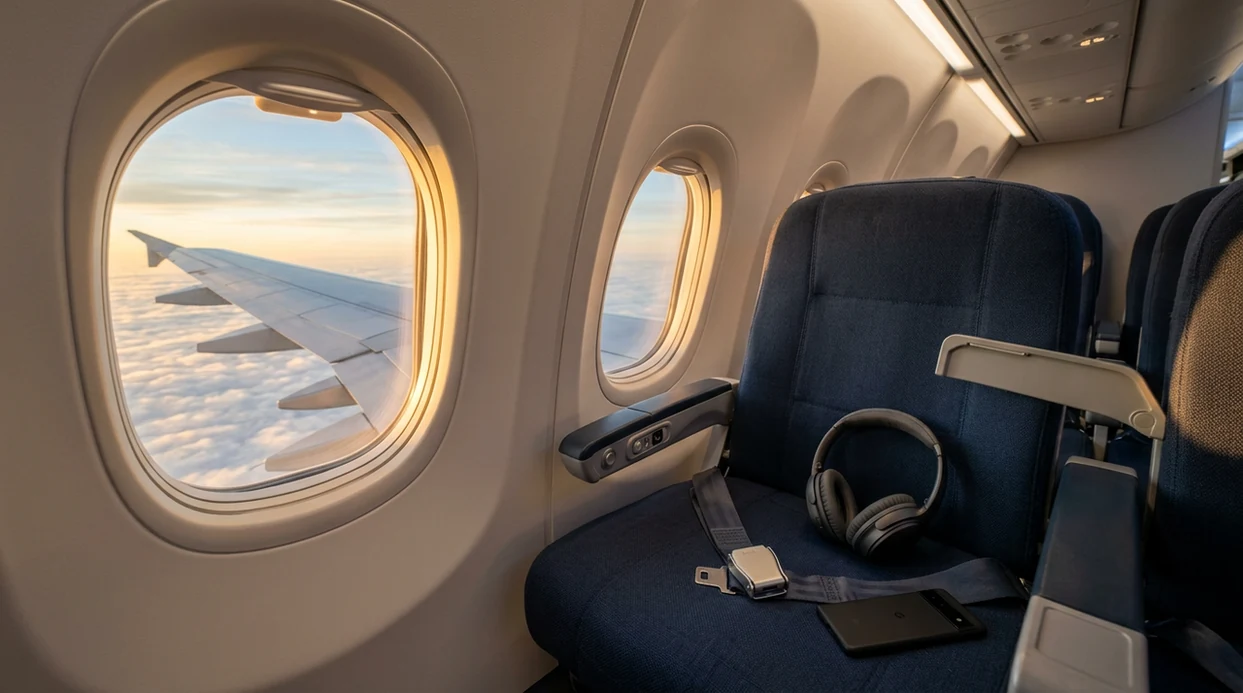


Flight anxiety tips work best as a combination of calming skills, realistic flight-safety education, gradual exposure, and professional support when fear becomes disabling. The aim is not to remove every anxious thought before boarding. It is to make takeoff, turbulence, and landing more manageable while reducing the avoidance that keeps fear going. Breathing and grounding are useful parts of that plan, especially when practiced before travel day.
MindTastik offers guided meditation, sleep audio, breathing exercises, and self-hypnosis sessions for adults seeking support with rest, anxiety, and everyday calm. These tools can provide a familiar routine before or during a flight, but they are not medical treatment. Severe panic, trauma symptoms, or persistent flight avoidance call for licensed mental health care rather than self-help alone.
The essentials
- Fear of flying is common, but it often improves with breathing, grounding, education, and repeated practice.
- Use a flight-day routine: sleep well, reduce caffeine, download calming audio, breathe slowly, and focus on one small step at a time.
- For severe panic, trauma, or phobia symptoms, pair self-help tools with a licensed mental health professional instead of relying on alcohol or unprescribed sedatives.
2021 flight anxiety quick facts
- Flight anxiety is common, and it does not mean you are broken, irrational, or automatically unsafe to fly.
- In a 2021 Gallup survey, 40% of U.S. adults reported some fear of flying, and about 12% reported extreme fear news reference: americans fear flying rises pandemic.aspx.
- The National Comorbidity Survey Replication found that situational specific phobia, a category that can include fear of flying, affects 6.5% of U.S. adults at some point in life.
- Relaxation skills, mindfulness, and gradual exposure can reduce symptoms when practiced before the airport, not only in row 24.
- Improvement is usually gradual. One smoother takeoff, one calmer gate wait, one flight you do not cancel.
A useful plan treats fear as a trainable response. The person checking the departure board with a tight chest needs repeatable steps, not a lecture about “just relaxing.”
How flight anxiety works
Flight anxiety works as a fear loop: the brain notices a cue, the body sounds an alarm, the mind predicts danger, and avoidance teaches the system to stay afraid. The loop can feel urgent even when the plane is operating normally.
A typical cycle looks like this:
- Notice a trigger, such as turbulence, engine changes, cabin dings, takeoff pressure, or the feeling that you cannot step outside.
- Feel the body alarm: adrenaline, faster breathing, tight chest, sweating, nausea, or a racing heart.
- Interpret those sensations catastrophically: “Something is wrong,” “I will panic,” or “No one is in control.”
- Avoid or escape by canceling, gripping the armrest, scanning faces, drinking to cope, or refusing future flights.
Turbulence, unfamiliar sounds, and limited control feel threatening because the nervous system prefers predictable movement and easy exits. Anxiety sensations are real and uncomfortable, but they are not evidence of danger by themselves. Breathing slows the alarm, grounding interrupts threat scanning, education corrects false meanings, and gradual exposure teaches your brain that the cues can be tolerated.
Flight anxiety symptoms in the nervous system
Flight anxiety is a nervous-system alarm pattern in which fight-or-flight sensations, catastrophic thoughts, and avoidance reinforce each other even when a flight is objectively low risk.
Here is how flight anxiety works: the brain reads takeoff, turbulence, cabin noises, enclosed seating, and loss of control as possible threats. The body answers with adrenaline, faster breathing, a pounding heart, tense muscles, and scanning for danger. Then the mind adds “What if this means something is wrong?” That loop makes symptoms feel convincing.
Anxiety symptoms are uncomfortable, but they are not proof of danger. U.S. commercial air travel fatality risk has been estimated at about 1 death per 16 million flights, though no statistic can instantly calm a panicked body.
Education gives the thinking brain better data. Body-based skills help regulation. Together, they give you something to do when the seatbelt sign dings and your shoulders climb toward your ears. When worry disrupts attention, meditation for anxious concentration offers a gentle way to practice returning to one task.
Flight-day anxiety routine before takeoff and landing
Use this routine as a phone-friendly checklist from the night before travel through landing. Keep it simple enough to follow in a noisy terminal.
- Set your baseline the night before: pack early, reduce late caffeine, dim your phone, and choose sleep over doom-scrolling flight stories.
- Download calming audio before boarding, including MindTastik meditation, breathing, or sleep sessions, so spotty airplane Wi-Fi does not break your plan.
- Breathe at the gate for two minutes, using a longer exhale while your bag sits between your feet.
- Ground during takeoff by pressing both feet into the floor and naming five neutral things you can see.
- Reframe turbulence as movement through changing air, then return to your breath instead of checking every face around you.
- Repeat the landing routine: loosen your jaw, lower your shoulders, and count three slow exhales before the wheels touch.
For a shorter practice, a 5 minute meditation for anxiety can fit between boarding groups.
Breathing and grounding techniques for flight anxiety symptoms
Breathing and grounding techniques help by giving the body a clear “stand down” signal. They work best when practiced before flight day, not for the first time during turbulence.
Slow breathing: Breathe in gently, then make the exhale longer than the inhale. A longer exhale can cue the parasympathetic nervous system, the body’s braking system.
Box breathing: Inhale for four, hold for four, exhale for four, hold for four. Use shorter counts if holding your breath feels tense.
Belly breathing: Let the lower ribs widen instead of lifting the chest. It may feel awkward at first.
Progressive muscle relaxation: Tighten, then release the jaw, shoulders, hands, and legs. The contrast teaches your body what “less tense” feels like.
A Cochrane review found relaxation training reduced anxiety symptoms compared with no or minimal intervention Cochrane review.
A 60-second breathing reset
Inhale for four, exhale for six, and repeat five times.
A cabin-seat grounding exercise
Use 5-4-3-2-1: name five things you see, four you feel, three you hear, two you smell, and one steady breath.
Guided meditation routine for flight anxiety
Guided meditation can support flight anxiety self-care, but it should not replace therapy, medical advice, or emergency support. Use it as one part of a wider plan. For a compassionate way to acknowledge anxious feelings, try RAIN meditation for anxiety in a quiet setting before travel.
Before leaving home: Choose a guided session that matches the moment. Some people need reassurance; others need a body scan because their neck is already tight.
At the gate: Play breathing audio with earbuds in. One side may be slightly tangled around a charging cable. Still usable.
During cruise: Try calming self-hypnosis or a guided session with eyes open if closing them feels too vulnerable.
After arrival: Use sleep audio to help your system settle, especially after late flights and hotel check-in stress.
Offline access matters because airplane Wi-Fi often fails right when you want the track. Meditation tools such as MindTastik, Calm, and Headspace can support everyday calm, but they do not replace care for severe panic, trauma symptoms, or phobia. A broader meditation app for anxiety support plan can help between trips.
Flight safety facts for anxious thoughts
Safety facts are not meant to shame fear. They give the thinking brain better information when anxiety starts writing disaster scripts.
| Anxious thought | Aviation fact | Reframe to practice |
|---|---|---|
| “That noise means danger.” | Aircraft make routine sounds from flaps, landing gear, engines, and airflow. | “A sound is not the same as a warning.” |
| “Turbulence means the plane is unsafe.” | Turbulence is usually uncomfortable air movement, not structural danger. | “Bumps are not proof of failure.” |
| “No one is in control.” | Pilots train for normal and abnormal events, with air traffic control support. | “There are trained people managing this.” |
| “One problem would be catastrophic.” | Aircraft use maintenance checks and redundant systems. | “Planes are built with backups.” |
| “Flying is too risky.” | Bureau of Transportation Statistics data has estimated U.S. commercial fatality risk at about 1 death per 16 million flights. | “My fear is loud, but risk is low.” |
During takeoff, try: “My body is reacting to acceleration. The plane is doing what planes do.”
Gradual exposure plan for long-term flight anxiety progress
Can gradual exposure help fear of flying? Yes, gradual exposure means practicing with flight-related cues in small, planned steps until the nervous system learns they are tolerable.
A simple ladder might look like this: imagine booking a flight, watch airport videos, listen to cabin sounds, visit an airport, sit near gates, take a short flight, then try longer flights. The point is not to flood yourself. The point is repetition at a level you can handle.
An internet-based CBT trial with exposure for flying phobia showed large reductions in fear of flying that were maintained at 12-month follow-up PubMed research: 21381811. Clinicians typically recommend exposure-based CBT for specific phobias when fear causes major avoidance or life disruption.
Total avoidance can keep fear strong because the brain never gets new evidence. Gradual exposure usually works best when steps are planned and repeated, while professional support fits people with panic attacks, trauma, or severe avoidance.
When calming routines become a condition for flying
Breathing or audio can help with distress, but requiring them to prevent a feared disaster can turn them into a safety behavior. The distinction is their purpose: support while anxiety is present, rather than proof that flying is possible only with a particular ritual. The NHS Inform panic self-help guide explains how safety behaviors can keep fear going. During treatment, a clinician can help make coping routines less rigid.
Some travelers fear the panic sensations themselves as much as the aircraft: a racing heart, dizziness, or breathlessness becomes the predicted emergency. Treatment may therefore address both flight-related avoidance and fear of bodily sensations. Scottish NHS guidance on CBT for panic describes interoceptive exposure, which deliberately brings on feared sensations as part of treatment. This is a structured therapeutic exercise, not an instruction to provoke symptoms during a flight.
Medication, alcohol, and supplement safety for flight anxiety
Medication decisions for flight anxiety belong with a licensed healthcare professional who knows your health history, other medications, and travel details. Do not copy another passenger’s plan.
Mixing sedatives with alcohol can be dangerous. It may impair breathing, judgment, balance, and memory, and it can create safety problems during boarding, emergencies, or connecting flights. Alcohol can also fragment sleep and make next-day anxiety worse. The “quick fix” can become the rough landing.
Supplements deserve caution too. Natural does not always mean safe, especially with other medications or medical conditions.
Meditation, breathing, and professional care can often be paired safely for many people. For in-flight calming, meditation for flight anxiety can be part of that non-medication toolkit.
Short audio sessions for the gate and cabin
MindTastik’s breathing exercises suit travelers who want a familiar set of instructions during gate waits or before takeoff. Guided meditations offer another option when racing thoughts make an unguided practice difficult. Choose a session before travel day and practice it in a quieter setting first.
These sessions are support tools, not treatment for a flying phobia. Travelers who repeatedly cancel flights, experience severe panic, or have trauma-related symptoms should prioritize professional assessment and treatment rather than relying on audio alone. If family patterns also shape your anxiety, the Certificate of Release for Family Cycles offers a separate reflection resource.
When flight anxiety needs more than self-help
Self-help tips can help many anxious flyers, but they are not enough for every situation. Be honest about what you need.
- Meditation apps and self-help tips are not substitutes for licensed medical or mental health care.
- Severe phobia, panic disorder, trauma symptoms, OCD, and complex anxiety are reasons to seek professional support.
- Not every technique works equally well for everyone; box breathing helps some people and irritates others.
- Safety education alone does not switch off the body’s fear response.
- Prescription medication for flight anxiety must be guided by a clinician.
- If you use alcohol to board a plane, that is a sign to get safer support.
- If fear makes you cancel work, family, or medical travel, consider exposure-based therapy or CBT.
- If grounding makes you focus harder on symptoms, shift to external tasks like reading, puzzles, or a movie.
At 2:13 a.m., checking the lock screen and realizing you are still awake can make tomorrow’s flight feel bigger. That is exactly when extra support matters.
For paced breathing you can open in seconds, MindTastik breathing exercises keeps short exercises ready between meetings or before sleep.
Flight anxiety questions
How can I reduce flight anxiety before boarding?
Practice a short breathing or grounding routine before travel day, then use the same routine at the gate. Keep the plan simple rather than searching for a perfect technique while tense. If fear repeatedly leads to canceled flights, add professional support and a gradual exposure plan instead of relying only on last-minute calming.
What should I do if I panic on a plane?
For a familiar panic episode, slow the breathing and remind yourself that the attack will pass. NHS guidance recommends remaining in the situation when possible rather than immediately escaping. New, unusual, or medically concerning symptoms should not automatically be labeled anxiety; alert the cabin crew and seek appropriate help.
How do I cope with anxiety during takeoff or turbulence?
Use one familiar task, such as gentle breathing with a longer exhale or naming neutral cabin details. The aim is to manage distress, not to make every anxious thought disappear. Practice before flying so the routine is familiar. Persistent fear of these moments may need gradual exposure with professional guidance.
Does exposure therapy work for fear of flying?
Research supports exposure-based treatment for flight anxiety. In a randomized trial of 49 participants, both virtual-reality exposure and standard exposure performed better than a wait-list control. At six months, 93% of participants in each active-treatment group had flown. That result supports treatment, but it does not guarantee the same outcome for every person.
Why am I afraid of having a panic attack more than the flight itself?
Panic-related fear can center on bodily sensations, such as a racing heart or dizziness, and the belief that they signal danger. CBT can address those interpretations as well as avoidance. Some treatment plans include supervised exercises that bring on feared sensations, helping reduce fear of the sensations themselves.
How long does it take to overcome flight anxiety?
There is no single timetable. Improvement often begins with less avoidance rather than complete calm, and repeated practice matters. A fear-of-flying trial found treatment benefits still present at one year. The pace depends on the fear pattern and treatment plan; persistent panic or canceled travel is a reason to seek professional support.