
4-7-8 Breathing Technique: A Practical Guide for Calm and Sleep
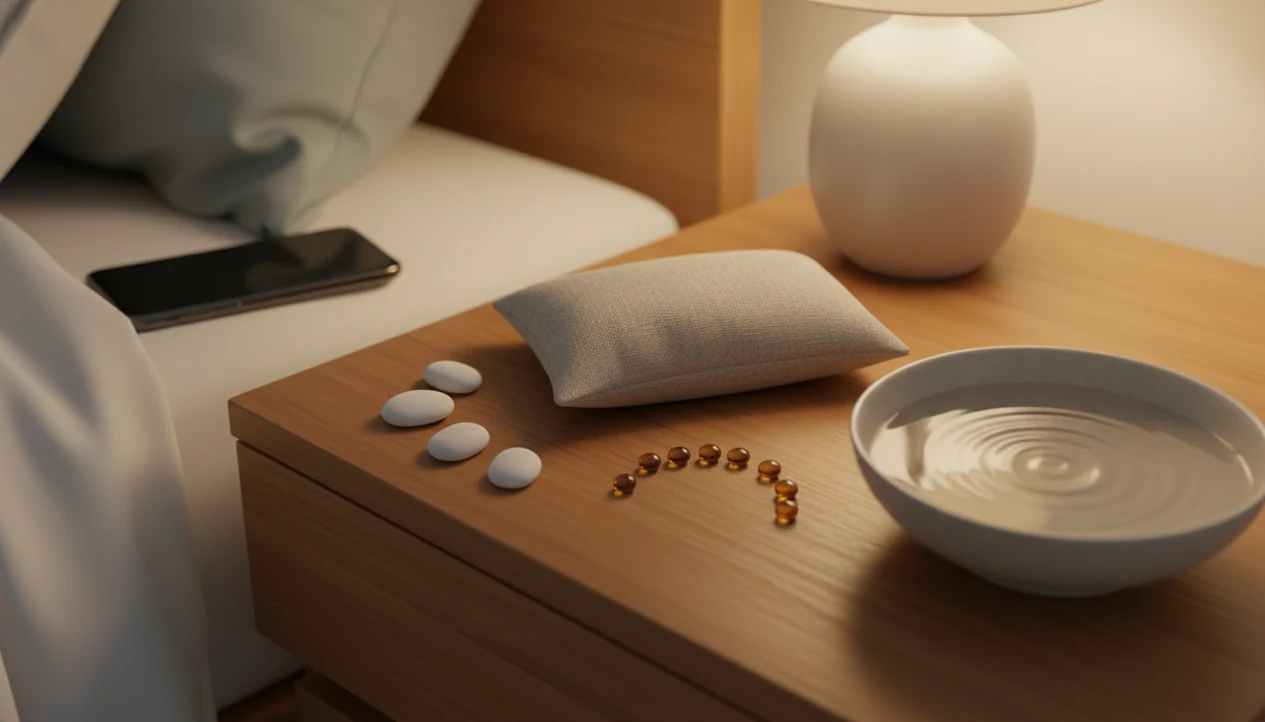


The 4-7-8 breathing technique is a paced breathing exercise: inhale through the nose for 4 counts, hold for 7, then exhale slowly through the mouth for 8. It comes from pranayama, a yogic breath-control tradition. People use the pattern before sleep, during mild stress, or as a brief pause because it slows breathing and gives attention a repeatable rhythm.
A gentle starting point is 3 or 4 cycles, followed by normal breathing. Counts need not be full seconds, and a strained hold should be shortened rather than forced. The aim is a comfortable calming practice, not the deepest possible breath. It may support relaxation and a bedtime routine, but it does not replace medical care, anxiety treatment, or assessment of persistent sleep problems.
The essentials
- Use a 4-count inhale, 7-count hold, and 8-count exhale for 3-4 gentle cycles.
- The ratio matters more than exact seconds, so beginners can count faster or shorten the hold.
- 4-7-8 breathing may support stress, anxiety, and sleep routines, but it is not a replacement for medical or mental health care.
Practice 4-7-8 with a pacer
Breathe in through the nose for 4, hold for 7, and breathe out through the mouth for 8.
This interactive tool needs JavaScript enabled.
What the 4-7-8 Breathing Technique Is
The 4-7-8 breathing technique means inhaling for 4 counts, holding for 7 counts, and exhaling for 8 counts. It comes from pranayama, a yogic breath-control tradition, and is now used in sleep, stress, anxiety support, and beginner meditation routines.
You can practice it sitting upright, lying in bed, or safely at a desk. The key word is safely. Don’t use it while driving, standing on a crowded train platform, or doing anything that needs full alertness.
A restless middle-of-the-night wake-up can feel familiar.
At bedtime, many people try it while settling the body, letting the shoulders soften, and following the breath cycle without pressure. Suggested image caption: “A simple 4-7-8 breathing cycle: inhale 4, hold 7, exhale 8.”
How the 4-7-8 Breathing Technique Works
Slow breathing works by changing the pace of your breath and lengthening the exhale. A longer exhale can act like a safety signal to the nervous system, nudging the body away from high-alert mode.
- Paced breathing: 4-7-8 gives the mind a clear rhythm to follow, which reduces the need to “figure out” how to calm down.
- Longer exhale: The 8-count out-breath slows the breathing rhythm and may help soften physical tension.
- Parasympathetic activity: This is the “rest and digest” side of the nervous system. In plain language, it helps the body downshift.
- HRV marker: Slow controlled breathing has been shown to increase heart rate variability, or HRV, a marker linked with rest-and-digest activity in a 2017 study NIH research: PMC5455070.
- Evidence nuance: Research is stronger for slow breathing in general than for the exact 4-7-8 pattern.
For anxious nights, slower breathwork can pair well with breathing exercises for anxiety at night.
How to Use the 4-7-8 Breathing Technique
Use 4-7-8 breathing gently, especially the first time. Beginners usually do well with 3-4 cycles, then return to normal breathing and notice how the body feels.
- Set a safe seated or lying position where you won’t fall, drive, or need to respond quickly.
- Place your tongue lightly behind your upper front teeth if comfortable. If it feels awkward, relax your tongue instead.
- Inhale through your nose for 4 counts, keeping the breath quiet and easy.
- Hold for 7 counts without strain. Shorten the hold if your chest tightens.
- Exhale through your mouth for 8 counts with a soft whoosh, then repeat for 3-4 cycles.
Don’t chase a dramatic feeling. A small shift counts.
If the 7-count hold feels too long, speed up your count or try fewer cycles. The goal is a supportive practice, not a breath-holding test.
4-7-8 Breathing Technique Benefits for Stress, Anxiety, and Sleep
The most realistic benefits of 4-7-8 breathing are short-term calming, anxiety support, and sleep routine support. It is best understood as a self-regulation tool, not a guaranteed sleep switch.
- Stress relief: Slowing the breathing rhythm gives your body a repeatable cue to settle.
- Anxiety support: A 2023 meta-analysis of randomized controlled trials found breathwork was associated with lower self-reported anxiety than control conditions, although study methods varied (nature reference: s41598 022 27247 y). Understanding how anxiety can begin in childhood may add context when current symptoms feel connected to longstanding patterns.
- Sleep support: Slow breathing may help when it is part of a predictable wind-down routine, especially alongside low light and less scrolling.
- Focus reset: Counting the breath can interrupt a stress loop before returning to work or study. For attention difficulties alongside anxious thoughts, mindfulness meditation for ADHD anxiety offers a related approach to explore beyond breath counting.
- Evidence boundary: Studies support slow breathing broadly, but direct clinical evidence for the exact 4-7-8 breathing technique remains limited.
For mild anxious rumination, a short breath practice may fit before a 5 minute meditation for anxiety.
Best Times to Practice the 4-7-8 Breathing Technique
When should you use the 4-7-8 breathing technique? Use it when you are safe, still, and able to give your breath about one minute of attention.
Bedtime is the most common starting point. It can help mark the shift from planning tomorrow to beginning a wind-down routine. That half-empty water glass by the bed becomes part of the cue: breathe, settle, lights down.
During the day, try it before a difficult conversation, exam, presentation, or work task. Feet planted on office carpet, one hand resting on the chair arm, three cycles only. That’s enough for a reset. For tense situations, mindfulness for stressful moments can offer another way to pause and respond with care.
For early anxiety spikes, 4-7-8 can help some people. During intense panic, however, breath holding may feel too forceful. Gentler grounding or panic attack meditation support may be a better fit. Avoid it while driving, swimming, operating equipment, or standing where faintness could cause injury.
Best For and Not For 4-7-8 Breathing Technique Use
The 4-7-8 breathing technique is best for calm, low-risk moments where slowing down is useful. It is not appropriate when breath holding, reduced alertness, or faintness could create danger.
| Best for | Not for |
|---|---|
| Bedtime wind-down before sleep | Driving or riding a bike |
| Mild stress during the day | Swimming or underwater activities |
| Pre-meeting nerves | Severe breathlessness |
| Beginner meditation routines | Medical emergencies |
| Short focus resets | Replacing therapy, sleep care, or medical treatment |
Clinicians typically recommend extra caution with breath-holding exercises if you have significant respiratory disease, uncontrolled cardiovascular issues, or severe panic symptoms. Ask a qualified professional if you’re unsure.
For work pressure, 4-7-8 breathing usually fits best as a brief pause before a longer meditation for work stress routine.
4-7-8 Breathing Technique Tips for Beginners
Beginners should keep the ratio gentle and flexible. The 4:7:8 pattern matters more than perfect seconds, so you can count faster or modify the shape while you learn.
- The faster count: Count “1, 2, 3, 4” at a comfortable pace instead of using full seconds.
- The 3-5-6 version: Try inhale 3, hold 5, exhale 6 if the standard hold feels strained.
- The stop signal: Stop if you feel lightheaded, tingly, breathless, or uncomfortable. Return to normal breathing.
- The low-cycle start: Use 2-4 cycles at first. More is not automatically better.
- The practice window: Try it when calm, not only when thoughts get loud.
One common need is simple: a calm audio guide to follow when the mind feels too busy to settle on its own. Guided tools such as Calm and Headspace can help with timing cues, sleep routines, and anxiety SOS-style sessions without making you count alone.
A no-hold alternative when seven counts feel uncomfortable
Breath holding is not required for every calming breathing exercise. The NHS breathing exercise for stress uses gentle, regular breathing without a prescribed hold. Its guidance is to let the breath move comfortably into the abdomen without forcing it, breathe in gently through the nose and out through the mouth, and use counting only if helpful.
That NHS exercise recommends at least five minutes of comfortable practice, rather than the few cycles used when starting 4-7-8. It offers a different option, not a target to push through discomfort. For people who become anxious about breath sensations, NHS inform’s panic guidance supports slowing and focusing on breathing without huge breaths or prolonged holds. Worsening panic or dizziness is a reason to stop and return to normal breathing. If breath awareness feels unsettling after difficult experiences, learning about mindfulness and trauma may help you approach practice more gently.
MindTastik Support for 4-7-8 Breathing Technique Habits
Guided audio can make 4-7-8 breathing easier because you don’t have to track every count in your head. You can follow a voice cue, keep the screen dim, and let the routine become familiar.
MindTastik offers guided practices, sleep audio, breathing exercises, and self-hypnosis sessions for adults looking for support with rest, anxiety, focus, and everyday calm. It can fit into bedtime routines, grounding pauses, focus resets, breathing practice, meditation, and self-hypnosis sessions.
Good meditation app support for sleep anxiety and everyday calm should deliver clear timing, repeatable routines, and gentle choices, not medical promises or pressure to perform.
For people comparing sleep routines, MindTastik may be useful when consistency is the main problem. Helpful, yes. A cure or treatment replacement, no.
Guided audio for counting and bedtime practice
MindTastik’s breathing exercises are an option for adults who find spoken guidance easier to follow than counting alone. Its guided meditations, sleep stories, and soundscapes also offer ways to continue a bedtime routine without extending the breath-holding practice.
Someone comfortable counting independently may need no app. Anyone whose anxiety worsens with attention to breathing may prefer a sleep story or soundscape instead. These sessions support a routine; they are not medical treatment or a substitute for help with persistent anxiety or insomnia. If distraction becomes a persistent way to avoid difficult feelings, consider how addiction to escaping reality differs from a restful break.
Limits of 4-7-8 breathing and the seven-count hold
The 4-7-8 breathing technique has real limits, and those limits matter. Use it as a supportive practice, not as proof that you should handle everything alone.
If shortness of breath, chest pain, fainting, or panic symptoms are new, severe, or worsening, seek medical or mental health advice rather than relying on breathwork alone.
- Direct clinical research on the exact 4-7-8 pattern is limited.
- Many benefits are extrapolated from broader slow-breathing research, not from 4-7-8-only trials.
- Beginners may feel lightheaded, tingly, or uncomfortable, especially during the 7-count hold.
- It is not a cure for anxiety disorders, depression, trauma, chronic insomnia, sleep apnea, chronic pain, or medical conditions.
- People with significant respiratory disease, uncontrolled cardiovascular issues, or severe panic symptoms should ask a clinician before breath-holding exercises.
- It is not safe while driving, swimming, operating machinery, or standing where faintness could cause injury.
- If breath focus makes anxiety worse, switch to grounding, open-eye meditation, or professional support.
For ongoing anxiety patterns, a meditation app for anxiety support can be one piece of a broader care plan.
When to Get Professional Help for Anxiety or Sleep Problems
Get professional help when anxiety or sleep problems feel unsafe, persistent, or bigger than a short breathing practice can hold. Breathing exercises can support regulation, but they are not emergency care or a substitute for diagnosis, therapy, or medical treatment.
Some symptoms should not be managed with 4-7-8 breathing alone, especially chest pain, fainting, severe breathlessness, or panic that is becoming more intense, more frequent, or harder to recover from. Chronic insomnia also deserves evaluation when poor sleep lasts for weeks, disrupts daily functioning, or keeps returning despite a steady wind-down routine. Suspected sleep apnea needs medical attention too, especially if there is loud snoring, gasping, witnessed pauses in breathing, morning headaches, or heavy daytime sleepiness.
- Stop the exercise if symptoms feel severe, frightening, or physically unsafe.
- Seek urgent medical care for chest pain, fainting, severe breathlessness, or emergency-level distress.
- Contact a licensed doctor, sleep specialist, therapist, or other qualified mental health professional for ongoing anxiety, worsening panic, chronic insomnia, or possible sleep apnea.
- Use breathwork as a supportive tool alongside appropriate care, not as the whole plan.
For paced breathing you can open in seconds, MindTastik breathing exercises keeps short exercises ready between meetings or before sleep.
4-7-8 breathing questions
How many rounds of 4-7-8 breathing should a beginner do?
Start with 2 to 4 gentle cycles, then return to normal breathing. More rounds are not automatically more helpful. The hold and exhale should remain comfortable throughout. Stop earlier if dizziness, tingling, air hunger, chest discomfort, or increasing anxiety appears.
Do the 4-7-8 counts have to be seconds?
No. A comfortable counting pace can be faster than one count per second. The pattern provides a rhythm, not a test of breath-holding ability. If the seven-count hold feels strained, shorten it or choose gentle breathing without a hold rather than forcing the full sequence.
Can 4-7-8 breathing help with sleep?
It may help focus attention away from bedtime worries and make a wind-down routine more repeatable. NHS sleep guidance includes four rounds of the pattern as an option. It is not a guaranteed way to fall asleep, and persistent insomnia deserves assessment rather than increasingly long breathing sessions.
Why does 4-7-8 breathing make me dizzy?
Dizziness can occur when breathing becomes uncomfortable or forced. It is a stop signal, not evidence that the exercise is working. Return to normal breathing and remain seated or lying down. Fainting, significant breathing difficulty, or new, severe, or unexplained chest pain requires urgent medical assessment.
Is 4-7-8 breathing good for panic attacks?
Some people find a breathing rhythm calming, but holding the breath can worsen panic when bodily sensations already feel threatening. Gentle breathing without a hold may be easier to tolerate. Avoid huge breaths or forced counting, and seek professional help when panic is becoming more frequent, intense, or difficult to recover from.
Who should get medical advice before trying 4-7-8 breathing?
People with respiratory or cardiovascular disease, pregnancy-related breathing problems, a tendency to faint, or panic triggered by breathing sensations should seek individualized advice about breath-holding exercises. The technique should not be practiced while driving, in water, or anywhere faintness could cause injury.
Should I take a very deep breath during 4-7-8 breathing?
No. The inhale should be quiet, gentle, and comfortable rather than a maximal breath. The usual pattern uses the nose for the inhale and the mouth for the exhale. If either phase feels forced or causes air hunger, stop and return to normal breathing.
Is 4-7-8 breathing proven to reduce anxiety?
Research on breathing exercises suggests potential benefits for relaxation and anxiety symptoms, but techniques and study quality vary. Direct clinical research on the exact 4-7-8 pattern is limited. Feeling more relaxed also does not necessarily mean anxiety has decreased, and no single breathing pattern is established as universally effective.