
Mindfulness for Stressful Moments: A Practical Guide
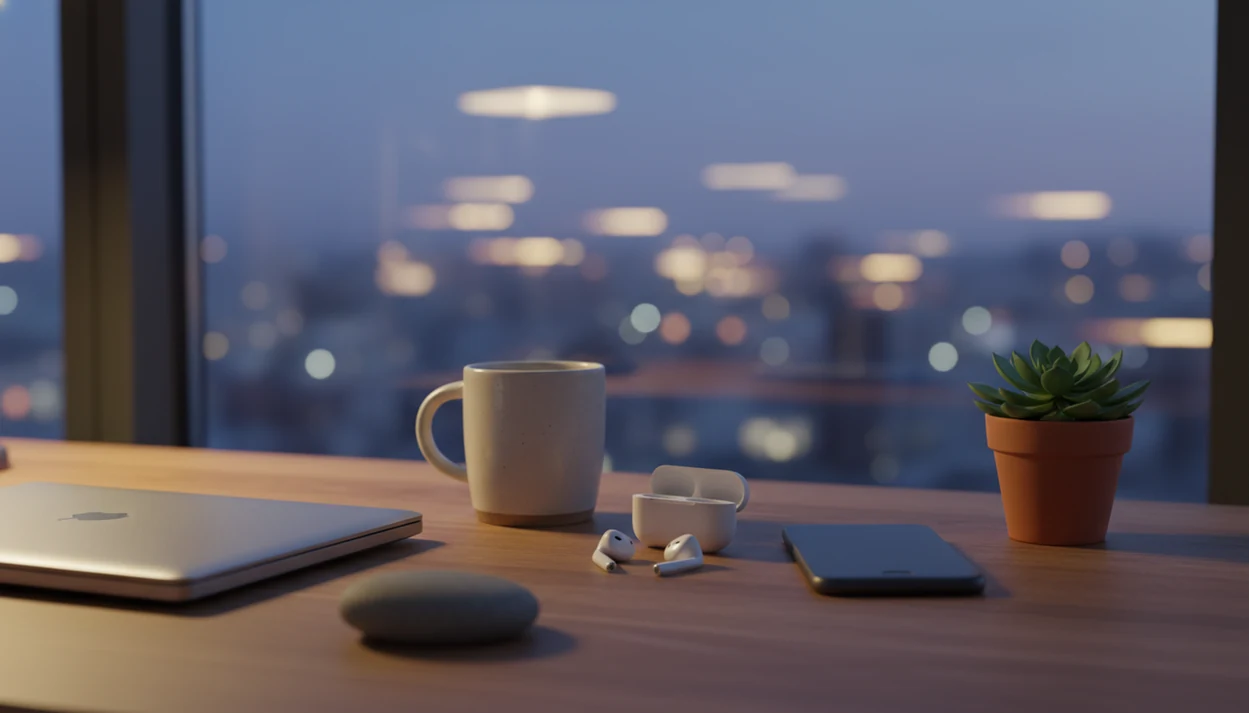


Mindfulness for stressful moments means paying nonjudgmental attention to breath, body sensations, thoughts, or surroundings before reacting. It creates a small pause between a stress trigger and the next action, rather than forcing instant calm. That pause might involve 60 seconds of gentle breathing, noticing the feet on the floor, or following a short guided exercise when choosing what to do feels difficult.
The same approach can fit work pressure, a tense conversation, an anxiety spike, or bedtime worry. An empty mind is not required: noticing a thought and returning to an anchor is part of the practice. Brief daily practice can make these steps more familiar, but mindfulness does not remove the underlying stressor or replace care for persistent or severe symptoms.
The essentials
- Use mindfulness to create a small pause between a stress trigger and your next action, not to force instant calm.
- The most practical tools are slow breathing, sensory grounding, brief body scans, and guided audio when your mind is too busy to self-direct.
- Short daily practice makes in-the-moment mindfulness easier during work stress, arguments, anxiety spikes, and sleepless nights.
60-Second Mindfulness for Stressful Moments Quick Answer
Mindfulness for stressful moments is present-moment attention without judgment, used right when stress starts to pull you into automatic reaction. The goal is not instant relaxation; it is a short pause that gives you one clearer next choice.
Use it when work pressure builds, a conversation becomes tense, anxiety tightens in your chest, or early-morning restlessness leaves you wide awake. A 60-second practice may be enough to steady your breathing, feel your feet on the floor, and name what is happening.
For beginners, guided practices can help because they remove the need to remember each step. When worry starts crowding your attention, a calm voice can guide you back to breath, sound, or the feeling of body contact. For people who also struggle with attention regulation, mindfulness meditation for ADHD anxiety offers a more specific perspective on practice.
Small pause. Real difference.
Breath, Thoughts, and Body Signals in Mindfulness for Stressful Moments
Mindfulness means noticing thoughts, feelings, body sensations, and surroundings as they are, without trying to edit them first. It does not require an empty mind.
Attention will wander. That is normal. The practice is the return, not staying perfectly focused. You might feel your feet on the floor, breathe slowly twice, and say, “Stress is here. My shoulders are tight. I am thinking about the meeting.” If striving for flawless focus adds pressure, understanding the hidden costs of perfectionism can help you soften that expectation.
That is different from suppression, where you shove the feeling away. It is also different from distraction, where you leave the moment entirely. Positive thinking can be useful sometimes, but mindfulness does not ask you to argue yourself into feeling fine. When distraction becomes a repeated way to avoid difficult feelings, addiction to escaping reality may offer useful context.
For stressful moments, a simple anchor works better than a big plan. For more work-specific examples, our meditation for work stress guide uses the same pause-and-return approach in meetings, deadlines, and tense messages.
Brain and Body Stress Loops in Mindfulness for Stressful Moments
Mindfulness for stressful moments works by interrupting the stress loop: a trigger starts a body alarm, anxious thoughts amplify it, and an automatic reaction follows. Attention anchors give the brain something steadier to track.
- Fact 1: A stressful email, sharp comment, or sudden worry can trigger faster breathing, muscle tension, and threat scanning.
- Fact 2: Rumination keeps the loop running because the mind replays the problem without choosing an action.
- Fact 3: Breath, sound, sight, and body contact are attention anchors. They bring awareness back to what is happening now.
- Fact 4: Mindfulness trains response flexibility, which means you can notice the urge to react before following it.
- Fact 5: Research shows small to moderate improvements in stress, anxiety, and depression for many people, though results vary.
The practical version is plain: notice the alarm, anchor attention, then choose. Clinicians typically recommend using mindfulness as a supportive skill, not as a replacement for mental health care when symptoms are severe or unsafe.
2014 JAMA Evidence Behind Mindfulness for Stressful Moments
The strongest research supports mindfulness as helpful for many people, but not as a cure or guaranteed fix. Benefits depend on practice consistency, the person, and the severity of distress.
- 2014 JAMA Internal Medicine: A meta-analysis of 47 randomized clinical trials found moderate improvements in anxiety and depression and small improvements in stress from mindfulness-based meditation programs JAMA Internal Medicine study: 1809754.
- 2013 JAMA Psychiatry: An 8-week mindfulness-based stress reduction program was associated with reduced anxiety symptoms among people with generalized anxiety disorder JAMA Internal Medicine study: 1687465.
- 2016 randomized trial: Mind-body interventions, including mindfulness meditation, have been studied for perceived stress reduction, but effects vary by program design, population, and follow-up length NIH research: PMC4940234.
- NCCIH review: The National Center for Complementary and Integrative Health describes mindfulness benefits as small to moderate in many studies NCCIH mindfulness overview: mindfulness meditation what you need to know.
- Bottom line: Mindfulness may support stress regulation, but care needs change when distress is intense, persistent, or risky.
For people with anxiety spikes, brief practice often works best when paired with simple daily repetition because the skill is easier to find under pressure. Understanding why anxiety can start in childhood may help explain why certain stressful situations feel familiar or especially intense.
What brief-practice research says about immediate relief
Research on a brief pause is different from research on a full mindfulness course. A large trial involving 2,239 participants at 37 sites compared four brief meditation practices with an audiobook attention-control condition. Preregistered analyses found moderate reductions in immediate anxiety. The trial, summarized in a peer-reviewed review of brief meditation research, supports short-term emotional regulation, but does not establish lasting benefits for chronic stress, insomnia, or clinical anxiety.
Longer-term app studies also involve more than a single stressful moment. A systematic review of 28 randomized app trials found intervention periods of 7 to 56 days, with a median of 28 days; prescribed practice commonly involved 10 minutes daily. These findings do not establish an optimal dose or show that a 60-second exercise produces the same results. A short pause is a practical starting point, not an equivalent to a studied course.
5-Step Mindfulness Routine for Stressful Moments
Use this routine when stress is active and you need something concrete. It fits a desk, hallway, bedroom, parked car, or quiet bathroom stall.
- Pause and name the stress cue. Say silently, “Stress is here,” “I feel pressure,” or “My body is alarmed.”
- Set a 30- to 90-second window. Do not demand full calm. Give yourself one short reset before the next action.
- Anchor attention with something specific. Feel your feet, notice your hands, count three breaths, or listen for the farthest sound.
- Notice thoughts without arguing. Let “I can’t handle this” be a thought, not an instruction.
- Choose one next action. Reply later, lower your voice, stand up, drink water, or return to bed without opening another app.
For acute anxiety, a short guided option such as a 5 minute meditation for anxiety can make the steps easier to follow. The most useful stressful-moment routine is brief enough to use while life is still happening.
5 Fast Mindfulness Techniques for Stressful Moments
Fast mindfulness techniques work because they give attention a job. They are realistic during parenting, commuting, conflict, and workdays when a long meditation is not available.
60-Second Breathing Reset
Breathe in gently, then make the exhale slightly longer than the inhale. Try four seconds in and six seconds out for five rounds. If counting irritates you, just soften the out-breath.
5-4-3-2-1 Sensory Grounding
Name five things you see, four things you feel, three things you hear, two things you smell, and one taste. This is useful when internal focus feels too intense.
Mini Body Scan
Move attention from forehead to jaw, shoulders, and hands. Notice tension without forcing it to leave. Hands unclench after a video call sometimes before the mind catches up.
Two more quick options help when you need variety: count breaths from 1 to 10, or ground externally by describing the room in neutral detail. For nighttime stress, breathing exercises for anxiety at night can give the mind a repeatable track to follow.
Best and Not Best Stress Scenarios for Mindfulness
Mindfulness is best for changing your relationship to stress, not for removing every stressor. It can help you meet the moment more steadily, but it cannot erase debt, caregiving demands, conflict, or unsafe conditions.
| Scenario | Mindfulness fit | Practical note |
|---|---|---|
| Everyday stress | Good fit | Use breath or sensory grounding before the next task. |
| Racing thoughts | Good fit | Name thoughts as thoughts, then return to an anchor. |
| Tension before meetings | Good fit | Try 60 seconds with feet grounded before joining. |
| Mild anxiety spikes | Often helpful | Keep the practice short and concrete. |
| Bedtime worry | Often helpful | Breath counting or guided audio may reduce rumination. |
| Focus resets | Good fit | Use a timer and one clear work block. |
| Severe depression, PTSD, psychosis, self-harm risk | Not standalone care | Seek professional support. |
| Repeated panic attacks | Use with caution | External grounding may be safer than inward focus. |
For panic-specific safety notes, use panic attack meditation support rather than relying on general stress advice.
When to Seek Professional Help for Stress or Anxiety
Seek professional help when stress or anxiety feels unsafe, keeps repeating, or starts taking over sleep, work, relationships, or basic daily care. Mindfulness can support steadier moments, but it is not a substitute for treatment when symptoms are intense or persistent.
Warning signs need prompt support: thoughts of self-harm, feeling you might hurt yourself or someone else, feeling unsafe at home, hearing or seeing things others do not, or being unable to function. Repeated panic attacks, trauma symptoms such as flashbacks or dissociation, and insomnia that lasts for weeks also deserve care, especially when you are avoiding life or relying on alcohol, drugs, or constant reassurance to get through the day. For trauma-related distress, learning about mindfulness and trauma can help explain why present-moment attention may sometimes feel difficult.
- Contact a licensed clinician if anxiety, panic, trauma symptoms, depression, or sleep problems keep returning.
- Use a crisis line if you feel at risk, overwhelmed, or unsure you can stay safe in the next few hours.
- Call emergency services or go to an emergency department if there is immediate danger or self-harm risk.
- Keep mindfulness supportive by using grounding, breath, or guided audio alongside, not instead of, professional care.
MindTastik App Workflows for Mindfulness for Stressful Moments
Does an app help when stress makes self-guided mindfulness hard? Yes, guided audio can be useful when your mind is too busy to choose a starting point.
MindTastik offers guided meditation, sleep audio, breathing exercises, and self-hypnosis sessions for adults seeking support with sleep, anxiety, and everyday calm. The practical workflows are simple: short anxiety support tracks for a fast reset, breathing exercises for body alarm, sleep audio for bedtime rumination, self-hypnosis sessions for habit support, and focus timers for returning to one task.
A 2017 workplace study found that an 8-week mindfulness meditation app program was associated with reduced self-reported stress compared with a wait-list control group PubMed research: 28860106. That does not make apps medical treatment. It does suggest that structured practice can help people repeat the skill.
Apps such as MindTastik, Calm, and Headspace can help when someone wants a steady voice to follow as worry begins to take over.
Desk and Bedside Image Guide for Mindfulness for Stressful Moments
Use an image that feels ordinary, not staged like a spa brochure. A strong visual would show a person sitting at a desk or bedside with one hand on the chest, both feet grounded, and a phone nearby with the screen dimmed.
The caption should say: “A 60-second pause using breath, body contact, and sensory grounding for mindfulness for stressful moments.”
Alt text should include the primary keyword naturally, such as: “Person practicing mindfulness for stressful moments with feet grounded and one hand on chest.”
Avoid medical imagery, crisis scenes, dramatic crying, or unrealistic candlelit perfection. A phone resting beside a simple chair, with a paused breathing session ready to resume, can feel more honest than a flawless studio setup.
Guided breathing when choosing a practice feels difficult
MindTastik’s guided meditations and breathing exercises suit moments when stress makes it hard to remember instructions. A brief session with simple cues can provide a starting point before returning to a task or conversation. Sleep stories or soundscapes are another option for bedtime listening. People who find inward attention distressing may prefer looking around the room and naming visible objects instead. Persistent anxiety, repeated panic, or trauma symptoms need professional support, not an app alone.
When inward attention makes stress worse
Mindfulness has real limits, and naming them makes the practice safer.
- Mindfulness is not a quick fix for severe mental health conditions.
- It should not replace professional treatment for major depression, PTSD, panic disorder, psychosis, or self-harm risk.
- Some people feel worse when focusing inward during panic, dissociation, or trauma flashbacks.
- External grounding, such as naming objects in the room, may be safer than body scanning during intense distress.
- Benefits vary by consistency, teacher quality, app design, sleep, stress load, and personal history.
- Mindfulness does not remove external stressors such as debt, work demands, caregiving, housing pressure, or conflict.
- A wandering mind does not mean failure. Returning attention is the practice.
- If symptoms are persistent, impair daily life, or feel unsafe, professional support matters.
For ongoing anxiety routines, calming meditation for anxiety support may help as a supportive practice. But support is not the same as treatment.
When Worry Spikes
When worry spikes, the goal is not to win an argument with every thought; it is to create a little room before the next reaction. A steady breath, a shoulder drop, and one counted exhale can be enough to interrupt the rush for a moment. Small pauses are useful because they ask less from an anxious mind than a full reset.
If your nervous system needs something faster than a full sit, try MindTastik breathing exercises for guided breath pacing.
Mindfulness during stress: common questions
How can I use mindfulness in a stressful moment?
Pause briefly, feel the feet against the floor, and notice one concrete detail, such as a sound or an object nearby. Name what is happening without arguing with it: “Stress is here.” Then choose one next action, such as delaying a reply or returning to a single task.
How long should a mindfulness pause last?
A 30- to 90-second window is a practical starting point during active stress. The aim is enough space to notice what is happening before acting, not complete relaxation. Research on repeated practice often uses longer sessions over several weeks, so a brief pause should not be treated as equivalent.
Can mindfulness stop a panic attack?
Mindfulness is not a guaranteed way to stop panic. A short, concrete grounding exercise may be more manageable than a body scan when inward attention feels overwhelming. Repeated panic attacks deserve assessment and treatment. The goal of a brief practice is to support the moment, not replace that care.
How do I practice mindfulness during a tense conversation?
Keep the practice small: notice the feet on the floor, release the shoulders, and take a few gentle breaths while looking at a neutral object. Use the pause to choose the next response, such as lowering the voice or replying later. Mindfulness does not make an unsafe situation safe.
What should I do when thoughts keep interrupting mindfulness?
Notice the thought, name it briefly, and return to the chosen anchor. “I am thinking about the meeting” is enough; the thought does not need to be disproved or pushed away. Wandering attention is part of the practice. Success means returning, not maintaining uninterrupted focus.
Can mindfulness help with stress that keeps me awake?
Breath counting or guided audio may help create some distance from bedtime worry, but sleep benefits are inconsistent. Mindfulness research does not clearly establish benefits for every person with chronic insomnia. Insomnia lasting for weeks deserves care, particularly when it affects daytime functioning, rather than repeated attempts to force sleep through meditation.