
Mindfulness Meditation for ADHD Anxiety: A Practical Guide
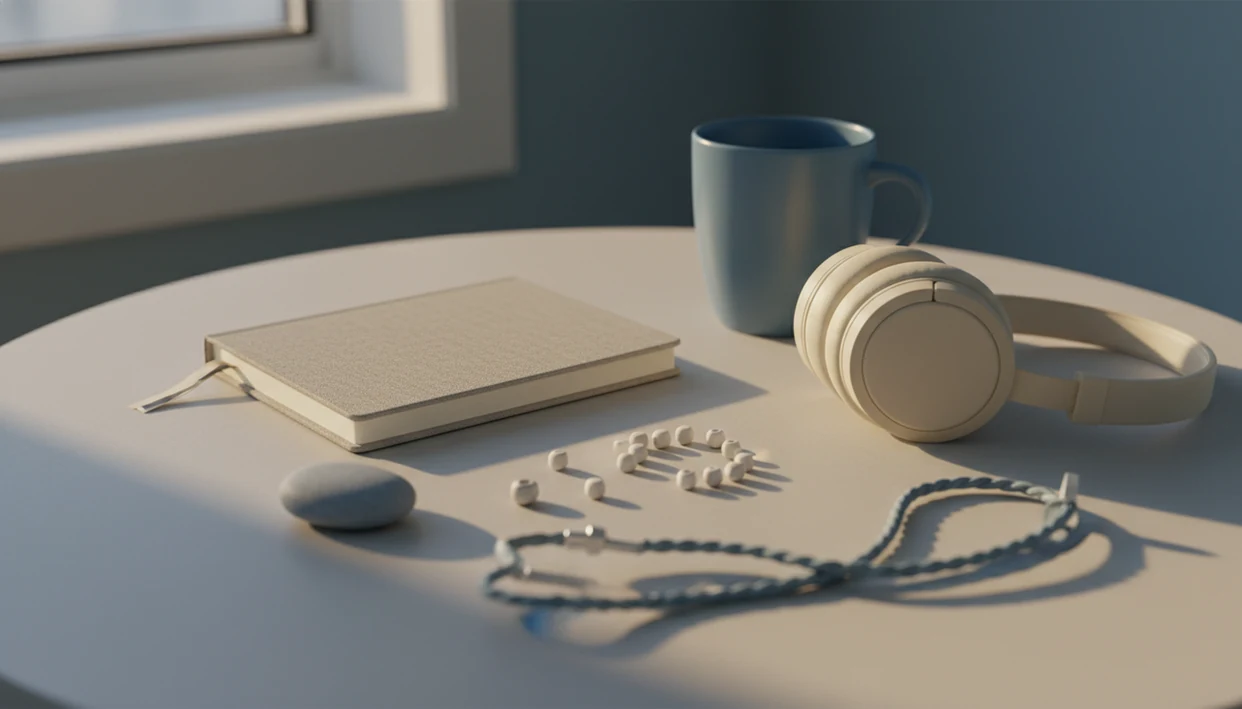


Mindfulness meditation for ADHD anxiety is a short attention practice that can help reduce stress reactivity by giving racing thoughts a steady point of return. It involves noticing breath, body sensations, sounds, or thoughts in the present moment, then gently returning attention when it wanders. The aim is not an empty mind or perfect stillness, but a repeatable way to pause before distraction or worry takes over.
A practical starting point is a 3 to 10 minute guided session, using sound or movement if sitting still or focusing on breathing feels uncomfortable. Mindfulness works best as a support skill alongside appropriate ADHD and anxiety care, not as a cure or replacement for treatment. Benefits generally require repeated practice rather than one long session.
The essentials
- Start with 3-10 minute guided sessions rather than long silent meditation.
- Use breath, body scan, sound, or movement as attention anchors when sitting still feels hard.
- Treat mindfulness as a support skill alongside appropriate medical or mental health care, not a replacement.
Mindfulness Meditation for ADHD Anxiety: Quick Evidence Snapshot
- Mindfulness-based interventions show promising evidence for ADHD symptoms, especially attention, impulsivity, and emotional regulation. One systematic review reported attention improvements and reduced hyperactivity or impulsivity among participants who completed training PMC research article: PMC4403871. - Anxiety research is also encouraging. A meta-analysis of randomized trials found moderate anxiety reduction from mindfulness-based therapy across anxiety disorders PubMed research: 24395196. - Results are gradual. Most people need repeated practice over weeks, not one intense session during a restless night. - Mindfulness works better when it feels doable: short audio, one anchor, a shoulder drop, and fewer rules. - Mindfulness is a complement to medication, therapy, ADHD coaching, sleep routines, or clinical care when those are needed. ADHD care should remain in place when mindfulness is added; NCCIH guidance describes mindfulness as an additional therapy for anxiety disorders, not a replacement for established treatment.
For adults with ADHD anxiety, short guided mindfulness is often easier than silent meditation because it gives attention something concrete to follow.
Anxiety evidence does not establish an ADHD treatment
Research on anxiety relief should not be read as proof that meditation treats core ADHD symptoms. A 2014 review of 47 randomized trials found moderate evidence of anxiety improvement at eight weeks, with smaller improvement at three to six months. It evaluated standardized mindfulness programs, not a particular app or a brief recording. Those findings support realistic expectations for anxiety relief, but do not establish an ADHD-specific benefit.
App evidence is a separate question. A 2023 review of 45 randomized trials involving 6,082 participants found a small average reduction in anxiety with mindfulness apps compared with controls. The authors called for better-quality trials and longer follow-up. This supports treating an app as an accessible practice aid, not assuming it matches a structured clinical program or replaces established ADHD or anxiety care.
Brain and Body Mechanisms in Mindfulness Meditation for ADHD Anxiety
Mindfulness meditation works through repeated attention training: you notice the mind has moved, then return to a chosen anchor without turning the moment into a personal failure. That loop is the practice.
For ADHD, the useful mechanism is not “emptying the mind.” It is practicing cognitive control in small reps. Breath, sound, or body sensations become the place you come back to when attention jumps. Mindfulness can help with noticing early signs of anxiety, such as a tight jaw, racing thoughts, shallow breathing, or repeatedly replaying a stressful conversation. If tension and fatigue persist, consider whether your body is reaching its limit and needs rest alongside appropriate care.
Nonjudgment matters too. If the second thought is “I’m bad at this,” stress doubles. A calmer label, such as “worrying” or “planning,” can reduce that extra layer. Practicing mindfulness for perfectionism can help you respond to self-critical thoughts without demanding a flawless meditation session.
Not magic. Just repetition.
Mindfulness may support ADHD anxiety by making distraction and worry easier to notice before they take over behavior.
5 ADHD-Friendly Meditation Anchors for Anxiety
ADHD-friendly meditation anchors give attention a clear place to land, especially when silent breath practice feels too vague. Choose the anchor that feels least annoying today.
- Breath anchor: Use three slow breaths for a short reset before a call, class, or task switch. If breath focus increases anxiety, switch anchors.
- Body scan: Move attention from forehead to feet. This often fits bedtime, especially when earbuds sit on the nightstand, one side tangled around a charging cable.
- Sound anchor: Notice nearby sounds without naming them too much. A fan, traffic, or white noise can hold restless attention.
- Movement mindfulness: Walk slowly, stretch, or feel each footstep. Sitting still is not required for mindfulness. Understanding chronic stress and exercise can help you choose gentler movement when demanding workouts feel harder than usual.
- Guided audio cues: A voice can keep the sequence clear when attention scatters. For a quick option, a 5 minute meditation for anxiety can be more realistic than a long session.
5 Daily Steps for Mindfulness Meditation for ADHD Anxiety
Use mindfulness meditation for ADHD anxiety as a repeatable routine, not a test of stillness. Track whether you showed up, not whether your mind stayed quiet.
If inward focus makes anxiety sharper, use an external anchor first: sound, a visible object, walking, or the feeling of your feet on the floor. That still counts as mindfulness.
1. Set a tiny timer
- Set a 3 to 10 minute timer and stop before the practice feels like punishment.
2. Choose one anchor
- Pick one anchor before starting: breath, body scan, sound, movement, or guided audio.
3. Follow guided cues
- Use guided meditation when attention feels scattered, especially during anxiety spikes or bedtime worry.
4. Return without criticism
- Notice wandering and return gently because the return is the attention-training rep.
5. Repeat at one daily trigger
- Link practice to one trigger, such as waking, work transitions, the evening commute, or dimming the phone screen before sleep. Learning about stress and sleep through Sapolsky's research can help explain why evening worry may interfere with rest.
A small notebook beside a meditation cushion can help, but don’t turn notes into another performance score. The hidden costs of perfectionism can include turning a helpful practice into another source of pressure.
Real-Life Tips for Mindfulness Meditation With ADHD Anxiety
How do you meditate when ADHD makes stillness feel impossible? Start shorter, repeat more often, and let the practice look a little imperfect.
Try eyes open if closing them makes thoughts louder. Use walking meditation when your body wants motion. Hold a smooth stone, hoodie cuff, or fidget object if that helps you stay present without drifting into scrolling. Some people do better with sound-based practice because the anchor is outside the body.
Reminders can help, but streaks can get weird. If a missed day turns into “I failed,” remove the streak and keep a plain checklist instead. The pocket check is real.
Keep one rescue practice for acute worry: three breaths, feel both feet, name one sound, unclench the shoulders. For nighttime anxiety, structured audio and breathing exercises for anxiety at night can be easier than trying to reason with thoughts in the dark.
Best-Fit and Poor-Fit Cases for Mindfulness Meditation With ADHD Anxiety
Mindfulness fits best when ADHD anxiety needs practical attention support, emotional regulation practice, and a calmer routine. It is a poor fit when someone needs urgent clinical help or expects meditation to replace treatment.
| Fit type | Best for | Not ideal for |
|---|---|---|
| Attention support | Adults wanting better task transitions and less reactivity | People expecting instant focus on day one |
| Anxiety support | Short breath, sound, or body practices during worry | Severe panic without extra support |
| Sleep preparation | Body scans, sleep audio, and gentle wind-down routines | Using audio while ignoring serious insomnia symptoms |
| Structure preference | Guided, app-based, or teacher-led sessions | Long unguided inward practice after trauma |
| Clinical boundary | Support alongside care plans | Replacing prescribed ADHD medication or anxiety treatment |
Clinicians typically recommend using mindfulness as a supportive skill, while medication, therapy, coaching, or assessment may be needed for moderate-to-severe impairment; the National Institute of Mental Health describes evidence-based anxiety treatments here: nimh reference: anxiety disorders.
If anxiety escalates, functioning drops sharply, or self-harm thoughts appear, professional help matters more than another meditation track. For acute episodes, panic attack meditation support should stay safety-focused.
When to Get Professional Help for ADHD Anxiety
Get professional help when anxiety, panic, insomnia, or ADHD symptoms start disrupting daily life, safety, work, school, relationships, or basic self-care. Mindfulness can support a care plan, but it does not diagnose ADHD, diagnose anxiety, or treat a disorder by itself.
- Notice impairment early if worry keeps you from leaving home, panic attacks repeat, sleep stays broken for days or weeks, or ADHD symptoms make responsibilities feel impossible.
- Contact a qualified professional such as a primary care clinician, psychiatrist, psychologist, therapist, or ADHD-informed clinician when symptoms are escalating or hard to interpret.
- Keep taking prescribed medication as directed unless your clinician tells you otherwise. Do not stop ADHD or anxiety medication suddenly because symptoms, withdrawal effects, or side effects can become harder to manage.
- Seek urgent help now if you have thoughts of self-harm, feel unable to stay safe, cannot function, are not sleeping at all, feel out of control, or someone close to you is worried about your safety.
- Bring meditation reactions to care including panic during practice, dissociation, mood shifts, worse insomnia, or sudden symptom changes. Those details can help a clinician adjust support.
MindTastik Guided Meditation Support for ADHD Anxiety, Sleep, and Focus
For readers who want app-based structure, MindTastik provides guided meditation, sleep audio, breathing exercises, and self-hypnosis sessions for adults seeking sleep, anxiety, and everyday calm support. For adults with ADHD, spoken instructions provide a clear next step and a cue to return when attention wanders.
App-based guidance can help when you are choosing between a 5-minute breathing exercise and a 20-minute body scan. It also reduces the blank-page feeling of “just sit and breathe.” Use cases include bedtime anxiety, a short focus reset, a breathing exercise before a tense conversation, or a everyday calm break between tasks.
Tools like MindTastik, Calm, Headspace, and Mindful can support a routine, but they should not be treated as therapy, diagnosis, or a substitute for prescribed care. If work stress is the main trigger, a meditation for work stress reset may be a cleaner starting point than a general library browse.
Guided cues for restless attention
MindTastik’s guided meditation library can provide spoken cues for returning to an anchor when attention wanders. A brief guided practice suits a task transition or worry break; a body scan may suit bedtime if attention to body sensations feels comfortable.
People who find inward attention distressing may prefer walking or an external sound anchor instead. Persistent panic, serious sleep disruption, or ADHD symptoms that interfere with daily life call for professional care, not a larger audio library. MindTastik is not a medical treatment.
What mindfulness can and cannot do for ADHD anxiety
Mindfulness meditation for ADHD anxiety has real promise, but the limits are important.
- ADHD mindfulness studies are still relatively small and varied, so results may not apply to every person.
- Mindfulness alone usually does not fully control moderate-to-severe ADHD or anxiety.
- Benefits often take weeks of consistent practice, not one session during a crisis.
- Some people feel more anxious when attention turns inward, especially with trauma history or panic symptoms.
- Long silent meditation can frustrate ADHD users and make avoidance more likely.
- Not all apps, teachers, or audio tracks are evidence-informed or well matched to ADHD.
- Sleep audio may help wind-down, but it does not replace medical evaluation for persistent insomnia.
- Do not stop medication, therapy, or coaching without guidance from a qualified clinician.
If practice makes symptoms feel sharper, shorten the session, switch to an external anchor, or pause and ask for professional support.
Three short practices for task anxiety and restlessness
| Technique | Best for | Minutes |
|---|---|---|
| 4-count exhale reset | racing thoughts before a task | 3 min |
| shoulder drop body scan | physical tension and restlessness | 5 min |
| short guided breath count | building a repeatable one-week habit | 7 min |
When you need a body-first reset before meditation, MindTastik breathing exercises offers simple breathing patterns you can follow along.
Questions about mindfulness with ADHD anxiety
Can mindfulness help when ADHD and anxiety occur together?
Mindfulness may help reduce anxiety and provide a structured way to practice returning attention. Evidence for anxiety relief is stronger than the evidence described here for core ADHD symptoms. It is best used alongside appropriate care, particularly when distractibility, worry, or impulsivity interferes with daily responsibilities.
Can I meditate with ADHD without sitting still?
Yes. Walking, gentle stretching, or noticing the contact of feet with the floor can serve as mindfulness anchors. Keep the task simple: notice a sensation, recognize when attention has moved elsewhere, and return. Movement is a practical alternative when sitting still makes a session harder to repeat.
Why does focusing on my breathing make anxiety worse?
Inward attention can increase distress for some people, particularly with panic symptoms or a trauma history. Breath focus is not required. Try an external sound or visible object instead, or stop the session. Worsening panic, intrusive memories, or persistent distress is a reason to seek professional advice.
Can mindfulness replace ADHD medication or anxiety therapy?
No. The evidence described here does not justify replacing prescribed ADHD medication or established anxiety treatment with meditation. Mindfulness can be an additional skill for managing stress and practicing attention. Treatment changes should be discussed with the prescribing clinician, especially when symptoms are persistent, severe, or disruptive.
How quickly does mindfulness reduce anxiety?
A short session may provide a pause, but lasting improvement should not be expected immediately. Research on structured mindfulness programs found anxiety benefits over weeks, including at eight weeks. Individual results vary, and those findings do not guarantee the same effect from a particular recording or occasional app use.
Can meditation help with ADHD-related bedtime anxiety?
A brief body scan, sound-based practice, or guided wind-down can support a bedtime routine when worry makes settling difficult. Choose an external anchor if body awareness increases anxiety. Meditation is not a substitute for assessing persistent insomnia, and worsening sleep during practice is a reason to stop and seek advice.