
Stress Relief Meditation for Everyday Calm
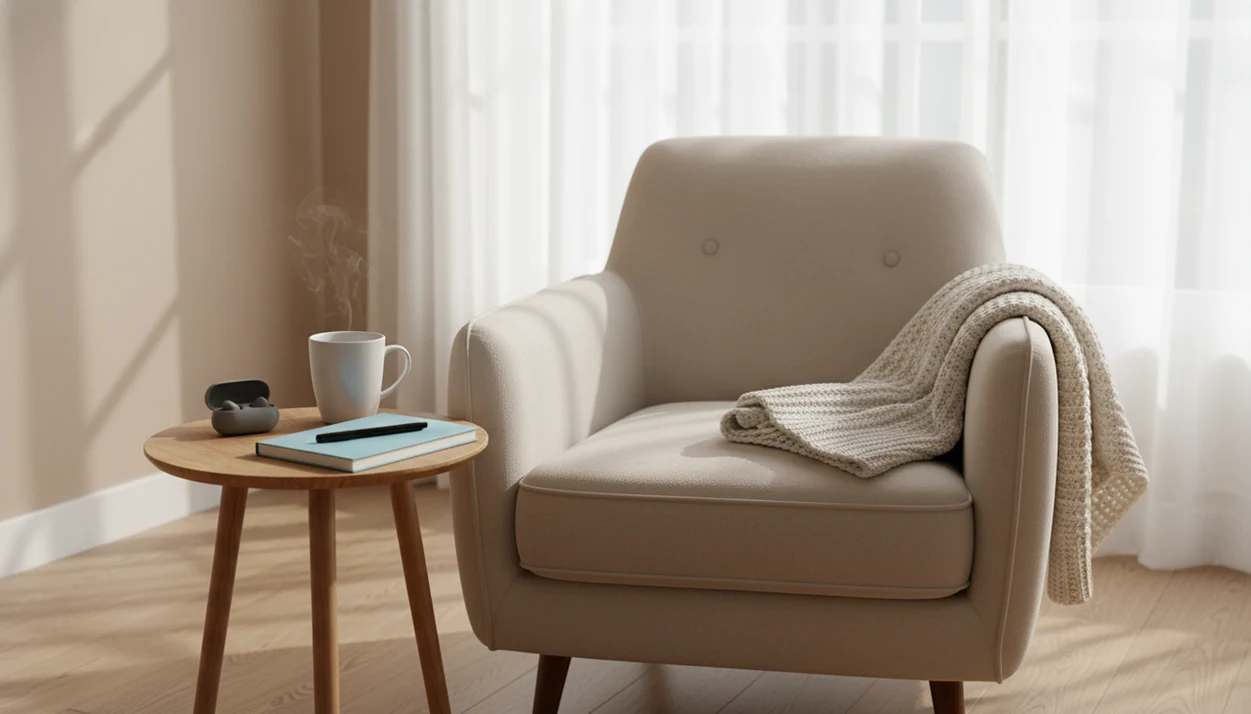


Stress relief meditation is a short, repeatable practice that uses breathing, body relaxation, and gentle attention to support everyday calm. It can be done quietly or with guided audio during a work break, after arriving home, or before sleep. The aim is not to empty the mind or remove stress completely, but to notice tension and return attention to a simple anchor.
A useful starting routine needs few decisions: one familiar cue, one practice, and a manageable length. Breathing exercises, body scans, and guided sessions offer different ways to begin. When negative thinking keeps stress going, noticing those patterns can complement the practice. Meditation is everyday support, not a substitute for medical or mental health care.
The essentials
- Stress relief meditation works best when it is short, realistic, and repeated often.
- Breathing, body scans, and guided audio are beginner-friendly ways to settle tension.
- Meditation can support stress and anxiety symptoms, but it is not a substitute for medical or mental health care.
Stress Relief Meditation for Everyday Calm: The Simple Answer
Stress relief meditation for everyday calm is a practical routine that helps you pause, breathe, relax your body, and return attention to the present moment. It can be guided by audio or done quietly on your own.
The aim is not to empty the mind. Thoughts still show up. A useful session gives you one simple anchor, such as breathing, body sensations, or a calm phrase, then asks you to return when attention wanders.
That return is the practice.
For a busy person, the most useful format is often brief and repeatable. Three minutes before opening email may help more than a 30-minute session you never start. If stress rises at work, a meditation for work stress reset can give the practice a clear place in the day.
Stress Relief Meditation Definition for Everyday Life
Stress relief meditation is a guided or self-led practice that uses attention, breathing, and body awareness to settle tension and support everyday calm. Understanding how stress affects the body can clarify why physical tension often accompanies a busy or demanding day.
Common formats include a breathing practice, body scan, mantra, walking meditation, or guided meditation for stress support. Some people sit upright with their feet planted. Others start by relaxing the jaw and letting the shoulders soften before bed. The setting matters less than the repeatable cue.
Thoughts still happen during meditation. You might remember a deadline, replay a text, or notice irritation in the first minute. That does not mean you failed.
For most beginners, stress relief meditation works better as a small self-care habit than a one-time fix. A short reset after lunch, after a commute, or before sleep gives the body a familiar signal: slow down now.
Five Facts About Guided Meditation for Stress Support
- Short sessions are often easier to maintain than long sessions, especially for beginners with full schedules.
- Slow breathing is one of the easiest entry points because it needs no equipment and can be done almost anywhere.
- The goal is to return attention to an anchor, not to stop every thought from appearing.
- Guided audio helps people who want structure, timing, and a calm voice to follow.
- Meditation can support wellness routines, but it is not clinical treatment for severe stress, panic, depression, trauma, or insomnia.
Someone looking for a calm voice to follow when worry starts circling may do better with guided audio than silent practice at first. For a shorter starting point, a 5 minute meditation for anxiety support can keep the first step manageable.
Keep it boring enough to repeat.
Stress Relief Meditation Effects in the Body and Mind
Stress relief meditation works by shifting attention from stress loops to a neutral anchor, such as breath, sound, or body sensation. In plain terms, it gives the mind somewhere steadier to land. For more context on these patterns, learn how stress affects the brain and its responses to everyday demands.
Slow breathing can reduce the felt urgency of stress. You are not forcing the body to relax. You are giving it a slower rhythm to follow. Body scanning adds another layer by helping you notice held tension in the jaw, shoulders, chest, or stomach and soften it without arguing with it. Learning about the effects of stress on the body can help put these physical sensations in context.
NCCIH says meditation may help reduce stress and anxiety and may improve some depression and sleep symptoms (NCCIH mindfulness overview: meditation and mindfulness effectiveness and safety). A 2014 JAMA Internal Medicine meta-analysis found moderate evidence for meditation programs on anxiety, depression, and pain, with stronger evidence for stress (JAMA Internal Medicine study: 1809754). The American Heart Association has also noted possible benefits for stress, anxiety, and blood pressure, though evidence varies (ahajournals reference: JAHA.117.002218).
Clinicians typically recommend professional support when symptoms are severe, persistent, or impair daily life.
What research says about brief meditation and stress
Research supports a modest average benefit, not a guaranteed reset. A 2021 meta-analysis of mindfulness meditation app trials found reduced perceived stress across 15 studies, with an effect size of 0.46. Results differed substantially between studies. This is evidence about the apps and programs studied, not proof that every commercial meditation app produces the same result or that every person will notice a change.
The research also separates immediate relief from lasting improvement. A peer-reviewed review describing a large brief-meditation trial reports that four brief practices reduced immediate anxiety compared with an audiobook control. That finding does not establish lasting benefits for chronic stress or clinical anxiety. In a review of 28 app trials, programs lasted 7 to 56 days and commonly prescribed 10 minutes daily. A single calming session and a sustained change in stress are different outcomes.
How to Use Stress Relief Meditation for Everyday Calm
Use stress relief meditation by tying a short practice to a moment that already happens in your day. The easier it is to repeat, the more useful it becomes when stress rises. For a broader introduction to building this habit, explore meditation for stress relief and daily ease.
- Choose one daily cue. Attach the practice to lunch, your commute, the first few minutes after work, or bedtime so you are not deciding from scratch each time.
- Pick one simple format. Use slow breathing, a body scan, walking meditation, or guided audio depending on what feels easiest to begin today.
- Start with 3 to 10 minutes. Let the session be short enough that you can do it again tomorrow, even on a crowded day.
- Return to the same anchor. When attention drifts to emails, arguments, or tomorrow’s list, gently come back to the breath, footsteps, body sensations, or the guide’s voice.
- Finish by naming one physical sensation. Before standing up or checking the phone, notice softer shoulders, a slower exhale, warmer hands, or a little less tightness.
That final check helps the practice land before the day speeds up again.
3-to-10-Minute Breathing Routine for Everyday Calm Meditation
Use this everyday calm meditation routine when you need a short reset, not a major production. A bathroom stall, parked car, or quiet-enough bedroom can work.
- Set a timer for 3 to 10 minutes. Choose the length you will actually repeat tomorrow.
- Sit or stand in a stable position. Let your feet touch the floor and loosen your shoulders.
- Breathe slowly and comfortably. Do not force deep breaths; aim for easy, steady breathing.
- Choose one anchor. Follow the breath at the nose, chest, or belly.
- Return when thoughts wander. Notice the thought, then come back without making it a problem.
- Close by naming one physical sign. Look for softer shoulders, a slower exhale, or a little less pressure in the chest.
For nighttime tension, breathing exercises for anxiety at night may fit better than a daytime focus session.
Best Stress Relief Meditation Routines for Busy Days
The best stress relief meditation routine is the one that fits the moment you are actually in. Consistency usually matters more than session length because the habit needs to survive normal days.
| Routine | Best use case | Time needed |
|---|---|---|
| Slow breathing | Quick stress support before a task | 3 to 5 minutes |
| Body scan | Physical tension in jaw, neck, or shoulders | 5 to 10 minutes |
| Guided audio | Beginners who want a voice to follow | 5 to 15 minutes |
| Walking meditation | Restless energy or screen fatigue | 5 to 10 minutes |
| Bedtime meditation | Wind-down routine before sleep | 10 to 20 minutes |
App-based routines can help with structure, reminders, and choosing a starting point. The active ingredient is still the practice itself.
If you compare apps, look for plain session lengths, clear stress or sleep categories, and easy replay of the same routine. Calm, Headspace, and Insight Timer are common alternatives people may also compare for guided stress support.
Best For and Not For: Everyday Calm Meditation Expectations
Everyday calm meditation is best for adults who want a short calming habit during work, home life, transitions, or bedtime. It is also a good fit for beginners who like guided structure.
Best for: - Workday resets: A short session after muted Slack pings can create a cleaner pause between tasks. - Home transitions: Breathing before dinner, childcare, study, or chores can lower the rush. - Bedtime wind-downs: A slow breath in a dark bedroom gives the mind a cue to shift down. - Guided beginners: A voice-led practice removes the pressure to “know what to do.”
Not ideal for: - Replacing therapy, medication, crisis care, or medical evaluation. - Severe, persistent, or trauma-linked stress as the only support. - Situations where stillness increases distress without guidance.
If symptoms feel intense or frightening, panic attack meditation support should be paired with safety guidance and professional care when needed.
MindTastik Guided Meditation for Stress Support
MindTastik offers guided sessions, sleep audio, breathing practices, and self-hypnosis for adults seeking support with rest, anxiety, and everyday calm. A structured tool like MindTastik can make practice easier to return to because the next session is already laid out.
Guided meditation gives you a voice to follow. Breathing exercises create a short reset when the body feels keyed up. Sleep audio can support a wind-down routine, and self-hypnosis sessions may help some users practice calm attention around habits and bedtime.
The app does not diagnose, treat, or cure stress or anxiety. It is a structure aid. Reminders, saved sessions, and a clear library can reduce the small decision load of choosing between a 5-minute breathing exercise and a 20-minute body scan.
Image caption idea: App screen showing a guided stress relief meditation for everyday calm, with breathing, sleep audio, and short reset options.
Common Stress Relief Meditation Mistakes for Beginners
A common beginner mistake is expecting the mind to go blank. Most people notice more thoughts at first because they finally stop moving long enough to hear them.
Another mistake is judging a session as failed because worries appeared. The practice is the return, not the absence of thought. Fidgeting hands in a lap, an itchy cheek, or a sudden grocery reminder all count as normal.
Session length can also get in the way. A 25-minute body scan may sound impressive, but a 4-minute breathing practice is easier to repeat on a stressful Tuesday. Forcing deep breaths is another trap; slow and comfortable usually works better than dramatic inhaling.
Using meditation only during peak stress can make it feel harder. Build the habit during low-pressure moments, then use it when the day gets louder. For broader worry patterns, calming meditation for anxiety support may offer a gentler entry point.
Guided audio for work breaks and bedtime worry
MindTastik’s guided meditation library suits adults who prefer a voice to follow when racing thoughts make a self-led practice feel like another task. Breathing exercises offer another option for a short work break, while sleep stories and soundscapes suit a bedtime wind-down.
Adults who prefer silence can use the same breath or body anchor without an app. Those seeking treatment for severe anxiety, trauma symptoms, or persistent insomnia need professional support rather than an audio library. MindTastik is not a medical treatment.
What a short stress meditation cannot promise
Meditation can be useful, but it has limits. Honest stress support should name those limits clearly.
- Meditation is not a substitute for diagnosis, therapy, medication, emergency care, or medical treatment.
- Benefits are modest on average and are not guaranteed for every person or every style.
- Some people find stillness uncomfortable, frustrating, or emotionally activating.
- Severe stress, panic, depression, trauma symptoms, or persistent insomnia need professional support.
- App-based meditation can support consistency, but the practice itself matters more than the app.
- Claims that meditation cures stress or works instantly are overhyped.
- A guided session may feel helpful one day and irritating the next; that does not mean you did it wrong.
- If symptoms worsen during practice, stop and choose grounding, movement, or qualified support.
A wakeful stretch in the middle of the night can feel isolating. Meditation may help you place your feet on the floor, take one steady breath, and choose a calmer next step, but it should not carry the whole load.
If your nervous system needs something faster than a full sit, try MindTastik breathing exercises for guided breath pacing.
Stress relief meditation questions
Does meditation actually reduce stress?
Meditation can reduce perceived stress, but average benefits are modest and results vary. Research on mindfulness apps supports a benefit across studied programs, not a guarantee for every app or person. A calmer moment after a session is useful, but it does not establish lasting relief from chronic stress.
What should I focus on when stressful thoughts keep coming back?
Choose one neutral anchor, such as the breath at the nose, the feet touching the floor, or the voice in a guided session. When a worry appears, notice it and return to that anchor. The goal is not to suppress thoughts or solve every problem during the session.
Is breathing meditation or a body scan better for stress?
Breathing offers a simple focus before a task or between meetings. A body scan may fit better when tension in the jaw, shoulders, or stomach is most noticeable. Neither is best for everyone. Choose the method that feels manageable, and keep breathing comfortable rather than forcing unusually deep breaths.
Can stress relief meditation help me sleep?
Meditation can be part of a bedtime wind-down, and some research reports improved sleep outcomes. Findings are inconsistent, especially in chronic insomnia populations. A breathing practice or body scan can provide a quiet transition before bed, but persistent sleep problems need assessment rather than reliance on meditation alone.
When is the best time to meditate for everyday stress?
There is no single best time established for everyone. Pick a repeatable moment, such as before opening email, after lunch, after arriving home, or before bed. The practical advantage is a familiar cue that reduces daily decision-making. A work break and a bedtime session can serve different needs.
How can I meditate for stress relief at work?
Take a short pause at your desk or in a quiet space. Keep your eyes open if preferred, notice your feet on the floor, and let your breathing stay natural. When work thoughts appear, gently return to physical sensations. Even a brief practice can create space before your next task.
Is guided meditation better than silent meditation for stress?
Neither approach is best for everyone. Guided meditation offers structure and reminders, which may help beginners or people who feel distracted. Silent meditation allows more flexibility and less outside input. Try both in similar situations, then choose the approach that feels easier to return to regularly.
Can I practice stress relief meditation without sitting still?
Yes. Walking meditation is one option if sitting feels uncomfortable or restless. Walk at a comfortable pace in a safe place, noticing each step and the sensations in your feet. You can also practice mindful stretching. Keep your attention on movement without trying to force thoughts away.