
Stress Regulation Techniques for the Body
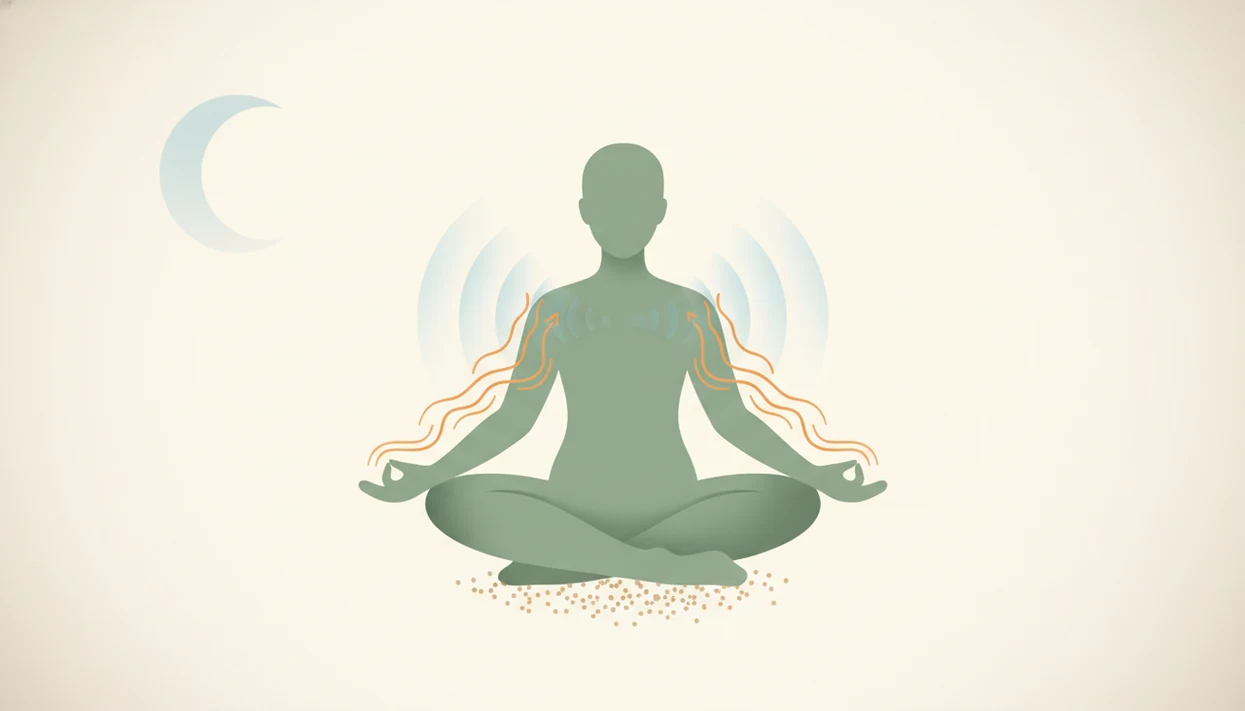


Stress regulation techniques for the body use breathing, muscle relaxation, posture, movement, and sensory grounding to help the nervous system recover from stress. These body-based practices can ease the shift from fight-or-flight toward a calmer state, but they do not work like an instant switch. Common starting points include gentle belly breathing, progressive muscle relaxation, body scans, stretching, and noticing the surroundings.
A useful approach is to practice a short sequence daily, then return to familiar tools during work stress, anxiety spikes, or bedtime wind-downs. Start with comfortable breathing and add muscle relaxation or a body scan if internal sensations feel manageable. Guided audio can support regular practice, but these methods are not a replacement for medical or mental health care.
The essentials
- Start with slow breathing, then add a body scan or progressive muscle relaxation.
- Practice before you are overwhelmed so your body learns the calm-down pattern.
- Use apps like MindTastik as guided support for sleep, anxiety, focus, and everyday calm, not as a replacement for medical or mental health care.
Stress Regulation Techniques for the Body: 5 Essential Practices
- Body-based regulation starts below the neck. It uses breath, muscle tone, posture, movement, and the senses to send calmer signals through the body.
- The target is the parasympathetic nervous system. That “rest-and-digest” side helps slow arousal after stress, though it does not work like an instant switch.
- Common options are simple. Belly breathing, progressive muscle relaxation, body scans, gentle stretching, and grounding are the usual starting points.
- Regular practice matters. For most beginners, five quiet minutes on an ordinary Tuesday teaches the body more than a desperate try at 2:13 a.m.
- Support is not a cure. These methods can be part of anxiety and stress care, but severe symptoms need professional guidance.
For beginners, slow breathing plus muscle relaxation is often easier than silent meditation because the body has a clear task to follow.
Nervous System Mechanisms Behind Body-Based Stress Regulation
Body-based stress regulation works by giving the nervous system physical cues of safety through slower breathing, relaxed muscles, steady posture, and sensory orientation. In plain terms, it helps the body stop acting as if every demand is an immediate threat. Understanding why your brain panics under pressure can help explain why physical cues of safety sometimes take practice.
Fight-or-flight prepares you to react. Rest-and-digest helps you recover. Slow breathing can influence heart rate, muscle tone, and the feeling that you have a little more room inside the moment. Body scans and progressive muscle relaxation build interoception, which means noticing internal body signals. You learn where your jaw locks, where your shoulders rise, and where tension softens.
Not magic. Still useful.
These techniques do not erase the cause of stress. They change the body’s response enough that the next choice may feel more manageable.
Before You Start: Choose a Safe Stress Regulation Practice
Choose a practice that feels steady, easy to stop, and appropriate for your body today. The safest starting point is usually short, gentle, and boring enough that your nervous system does not have to defend against it.
- Start seated or lying down in a place where you can open your eyes, change position, or stop without explaining yourself.
- Set a five-minute timer so the practice has edges. Knowing it will end can make the exercise feel less like a trap.
- Skip breath holds if they create air hunger, dizziness, panic, or pressure in your chest. Use a normal breath with a slightly longer exhale instead.
- Choose grounding or gentle movement if closing your eyes or focusing inside your body feels too intense. Look around the room, feel your feet, or stretch slowly.
- Respect your current limits if you have pain, injury, pregnancy, respiratory concerns, fainting history, or medical restrictions. When in doubt, keep it mild and ask a clinician.
5 Body-Based Stress Regulation Steps for Beginners
Use this beginner routine for 5 to 10 minutes. It fits before work, after a hard conversation, or when tomorrow’s meeting keeps looping at midnight. Before a demanding test, meditation for exam stress can provide a structured pause alongside these gentle body practices.
- Set a short timer for 5 minutes if you are new, or 10 minutes if you already know the routine.
- Lower your breathing pace by inhaling gently through the nose and exhaling a little longer than you inhale.
- Scan your body from forehead to feet, naming tight areas without trying to fix all of them.
- Relax one muscle group at a time by gently tensing, releasing, and noticing the difference.
- Record what helped in one sentence, such as “longer exhale helped” or “stretching worked better than breathing.”
The most common way to build a reliable stress regulation habit is short daily practice combined with a brief note about what changed.
6 Body-Based Stress Regulation Options by Situation
Different stress regulation techniques fit different moments. A breathing exercise that helps before opening messages may feel wrong during high panic, so compare your options and track your response. For demanding moments, learning how to stay calm under pressure can help you choose a manageable response.
| Technique | Best for | Not ideal for |
|---|---|---|
| Belly breathing | General tension, bedtime, mild anxiety | Anyone who feels air hunger or discomfort when focusing on breath |
| Box breathing | Work pauses, focus resets, pre-meeting nerves | People who dislike breath holds |
| Progressive muscle relaxation | Tight jaw, shoulders, restless body | Acute pain areas or injury without guidance |
| Body scan | Sleep wind-down, body awareness | Moments when internal sensations feel overwhelming |
| Grounding | Anxiety spikes, dissociation, crowded spaces | Deep relaxation goals when you need sleep |
| Gentle stretching | Physical tension, long sitting, study breaks | Sharp pain or medical movement restrictions |
Personal response varies. If work stress is the main trigger, a short meditation for work stress reset can pair well with grounding or stretching. When money worries drive tension, meditation for financial stress can complement grounding and a short daily routine.
Daily Body-Based Stress Regulation Routine for Sleep and Anxiety
A daily routine works better than crisis-only use because the body learns the calm-down pattern before it is flooded. Keep the routine small enough that you’ll actually repeat it.
- Morning anchor: Take three slow breaths before checking notifications. Notice your feet, your shoulders, and your jaw. - Midday reset: Use a 2 to 3 minute practice after a call, commute, or study block. The quiet exhale before opening messages counts. - Bedtime wind-down: Try 10 minutes of belly breathing, a body scan, or guided relaxation with the screen brightness lowered to minimum. If the room is dark and your chest still feels buzzy, keep your eyes open, feel the sheet under your hands, and make the exhale just one count longer than the inhale.
For people with nighttime anxiety, breathing exercises for anxiety at night can make the routine more specific.
Research Evidence on Body-Based Stress Regulation Techniques
- Stress is common. About 27.8% of U.S. adults reported feeling stressed most days in recent CDC survey data CDC guidance: anxiety and depression.htm.
- Anxiety is also common. The NIMH estimates that 31.1% of U.S. adults experience an anxiety disorder at some point in life nimh reference: any anxiety disorder.
- Mindfulness evidence is moderate, not absolute. A 2014 JAMA Internal Medicine meta-analysis found moderate improvements in anxiety and depression, and small improvements in stress or distress JAMA Internal Medicine study: 1809754.
- Apps may help some users. A 2018 review of mindfulness-based mobile app interventions found promising but limited evidence for short-term stress and anxiety support, with study quality varying across trials frontiersin reference.
- Sleep is relevant. CDC data indicate that about one in three U.S. adults report not getting enough sleep CDC guidance: adults sleep facts and stats.html.
Clinicians typically recommend relaxation and breathing as supportive skills, especially when they sit alongside sleep habits, therapy, medication, or medical care when needed.
What breathing studies show, and what they do not
Breathing research supports a narrower claim than “resetting the nervous system.” A 2018 systematic review of slow breathing examined 15 eligible studies, primarily involving healthy participants. It found associations with changes in heart-rate variability and reported reductions in arousal and anxiety. Those findings help explain why breathing can feel calming, but they do not establish that a change in heart-rate variability alone treats an anxiety disorder.
A 2024 review of breathing exercises included 19 studies: 12 reported significant improvements in anxiety and nine reported significant improvements in stress. The authors still identified a shortage of large randomized controlled trials. Separately, the slow-breathing literature found that greater relaxation did not always come with a significant reduction in anxiety. Feeling less tense can be a useful outcome without meaning that worry or panic has fully resolved.
MindTastik Support for Body-Based Stress Regulation Practice
Guided tools can help when you know the skill you want to practice but do not want to design every step yourself. MindTastik offers guided sessions for meditation, sleep support, breathing practice, and self-hypnosis, giving adults a simple way to support rest, anxiety relief, and everyday calm.
A useful app gives structure. You might choose a 5-minute breathing exercise when your shoulders feel tense or a 20-minute body scan when your whole body needs a slower reset. When worry starts taking over, guided audio can give your attention one clear place to rest.
Apps such as MindTastik, Calm, Headspace, and mindful.org can support consistency, but they are not treatment plans. For anxiety-specific structure, a meditation app for anxiety support may help you compare starting points.
Over time, personalization is simple: repeat the sessions that leave your body softer, steadier, or more ready for sleep.
Common Body-Based Stress Regulation Mistakes
Are body-based stress regulation techniques just placebo? No, not in the usual sense. Breathing pace, muscle tension, posture, and sensory attention can change measurable arousal signals, even when the shift feels small.
One failed breathing session does not mean breathing cannot help. Maybe the pace was too slow. Maybe breath focus made you more aware of tightness. Maybe your body needed grounding, walking, or progressive muscle relaxation instead.
Do not force deep breathing if it increases discomfort. Try a softer exhale, open your eyes, feel your chair, or name five objects in the room. Reset the plan.
Consistency over weeks is usually more informative than one attempt during a hard night. If panic symptoms are part of the picture, panic attack meditation support should be used with clear safety boundaries.
When to Seek Professional Help for Stress
Seek professional help when stress starts interfering with sleep, work, relationships, or basic daily functioning. Body practices can be useful support, but they are not a diagnosis, crisis plan, or substitute for medical or mental health care.
Use a clear safety line rather than waiting until you are completely overwhelmed.
- Contact a mental health professional if stress feels persistent, unmanageable, trauma-related, or keeps pulling you out of normal life.
- Seek urgent support now if you have thoughts of harming yourself, might harm someone else, or feel unable to stay safe.
- Call a clinician or urgent medical service for chest pain, fainting, severe shortness of breath, new breathing concerns, or symptoms that feel medically alarming.
- Use therapy, medication, or medical care alongside breathing, grounding, apps, or relaxation exercises when symptoms need more than self-guided practice.
- Treat apps as supportive tools for structure and consistency, not as tools that can evaluate your health, rule out illness, or decide what treatment you need.
Getting help is not a failure of regulation. It is part of using the right level of support.
Guided breathing for tense moments and bedtime
MindTastik’s guided breathing exercises suit adults who want spoken direction for a short work break or bedtime wind-down. Guided meditations offer another option when choosing each step feels difficult. The useful role is prompting a familiar practice, not promising to stop anxiety on demand.
People whose panic worsens with breath attention may prefer external sensory grounding or gentle movement instead. Persistent anxiety, trauma-related distress, or symptoms that disrupt daily life call for professional support rather than relying on an app. MindTastik is not a medical treatment.
What body-based stress practices cannot treat
Body-based stress regulation is helpful for many people, but it has real limits. The honest version matters.
- These practices are support tools, not cures for anxiety, insomnia, trauma, depression, or medical conditions.
- Benefits may be modest for some people, especially when stressors are ongoing or severe.
- Effects can fade if practice stops, just like flexibility fades when stretching disappears.
- Severe anxiety, trauma symptoms, psychosis, fainting, chest pain, heart concerns, or respiratory concerns may need clinical guidance.
- Breathwork can feel uncomfortable for some people; grounding or gentle movement may be safer starting points.
- Apps should not delay medical or psychological assessment when symptoms are serious, unsafe, or worsening.
- Some people need therapy, medication, social support, workload changes, or sleep treatment in addition to body-based practice.
If a technique makes you feel less safe in your body, stop and choose a steadier support.
If your nervous system needs something faster than a full sit, try MindTastik breathing exercises for guided breath pacing.
Body-based stress regulation questions
What is the simplest body-based technique for stress?
Gentle breathing is a practical starting point when attention to the breath feels comfortable. Sit in a supported position, breathe without forcing a deep inhalation, and let the pace settle. If breath focus increases distress, try noticing the chair, the floor, or objects in the room instead.
How can I release tension in my jaw and shoulders?
Progressive muscle relaxation uses gentle tension followed by release to make the difference easier to notice. Start with one comfortable muscle group rather than the whole body. Avoid deliberately tensing painful or injured areas without guidance. A shoulder drop or gentle stretch may be a more workable starting point.
How long should I practice stress regulation each day?
Five minutes is a reasonable starting point for comfortable breathing or a short body-based routine. NHS breathing guidance recommends practicing for at least five minutes. The aim is a manageable practice that can be repeated on ordinary days, rather than a long session used only when stress becomes overwhelming.
Is anxiety actually stored in the body?
Not as a substance that an exercise can remove. Anxiety involves psychological processes and bodily responses, including changes in breathing, heart rate, and muscle tension. Body-based practices can affect arousal and attention to sensations. That is different from proving that stretching or breathwork releases stored anxiety or memories.
Can body-based stress regulation help at bedtime?
Gentle breathing, a body scan, or muscle relaxation can provide a bedtime wind-down when tension and worry make settling difficult. Breath holds are optional, not a requirement for relaxation. These practices are support tools rather than a cure for insomnia. Persistent sleep problems deserve assessment, especially when they affect daytime functioning.
When should physical stress symptoms get medical attention?
Anxiety can cause trembling, dizziness, chest pressure, and changes in breathing, but those symptoms should not automatically be attributed to stress. New, severe, or unexplained chest pain, fainting, significant breathing difficulty, or neurological symptoms require urgent medical assessment. A relaxation exercise is not a way to rule out a medical problem.