7 Practical Ways To Ease Anxiety
The best ways to ease anxiety are to calm your body first with breathing or grounding, then build daily habits around meditation, sleep, movement, and support. Start with a 60-second reset when anxiety spikes, then use a simple morning, midday, and bedtime routine so your nervous system practices calm repeatedly. Browse more mindfulness for work stress.
Definition: Ways to ease anxiety are practical techniques that reduce physical stress arousal, interrupt anxious thought loops, and support steadier sleep, focus, and everyday calm.
TL;DR
- Use slow breathing, grounding, or movement first when anxiety feels intense.
- Practice mindfulness or guided meditation consistently, not only during panic.
- Sleep routines, caffeine timing, light exercise, and professional support all matter.
This guide is educational and is not a diagnosis or treatment plan. If anxiety feels unsafe, disabling, or connected to self-harm, contact a licensed clinician, local emergency service, or crisis line right away.
Ways To Ease Anxiety Fast When Your Mind Is Racing
Use a breathing reset, grounding cue, or small physical movement to calm the stress response before arguing with your thoughts. Anxiety often feels mental, but the first useful move is usually physical.
Try three quick options. First, breathe in gently and make the exhale longer than the inhale for 60 seconds. Second, use 5-4-3-2-1 grounding: name five things you see, four you feel, three you hear, two you smell, and one you taste. Third, unclench your jaw, drop your shoulders, and press your feet into the floor.
Small signals count.
Fast tools can lower intensity, but they may not solve recurring anxiety triggers. If you want a follow-along option, apps such as Calm, Headspace, Insight Timer, and MindTastik can provide guided breathing or short calming audio when you don’t want to think through the steps yourself.
Five Evidence-Based Ways To Ease Anxiety Symptoms
- Anxiety is common: the National Institute of Mental Health reports that about 19.1% of U.S. adults had an anxiety disorder in the past year (nimh reference: any anxiety disorder), so needing support is not unusual.
- Mindfulness meditation has research support; a JAMA Internal Medicine meta-analysis found moderate improvements in anxiety, depression, and pain from mindfulness programs (JAMA Internal Medicine study: 1809754).
- Slow breathing and grounding are short-term nervous system tools, especially when your chest feels tight or your thoughts keep looping.
- Sleep, movement, caffeine timing, and a predictable daily routine all affect anxiety because the body reads exhaustion and overstimulation as threat.
- Apps can help add structure, reminders, and guided sessions, but they are not replacements for care when symptoms are severe.
For many people, a short daily practice is easier than waiting until anxiety peaks because the routine is already familiar. If you need a tiny starting point, a 5 minute meditation for anxiety can be less intimidating than a long silent session.
How Ways To Ease Anxiety Work In The Nervous System
Ways to ease anxiety work by reducing stress arousal, increasing present-moment orientation, and training attention to return from threat scanning. In plain language, they help your body notice, “I am here, and I am not in immediate danger.”
Anxiety is a body-and-mind stress response. It can involve alertness, muscle tension, faster breathing, stomach tightness, and a constant scan for what might go wrong. Slow breathing affects respiratory rhythm and arousal. Grounding gives the brain sensory information from the present moment.
Repeated meditation builds attention flexibility. That means you practice noticing a thought without obeying every thought. The thought may still appear, but it does not have to run the room. At bedtime, sleep audio and guided sessions can reduce rumination by giving the mind one stable focus, like a voice, a body scan, or a simple breathing count.
How To Use Ways To Ease Anxiety In A Daily Routine
Use anxiety-easing tools across the day, not only when you feel overwhelmed. A routine works better when it is small enough to repeat on ordinary Tuesdays.
- Set a 2-minute morning breathing reset before checking your phone.
- Schedule 10 minutes of guided meditation or mindfulness practice at the same time each day.
- Move lightly during the day with a walk, gentle stretching, or stairs to discharge stress energy.
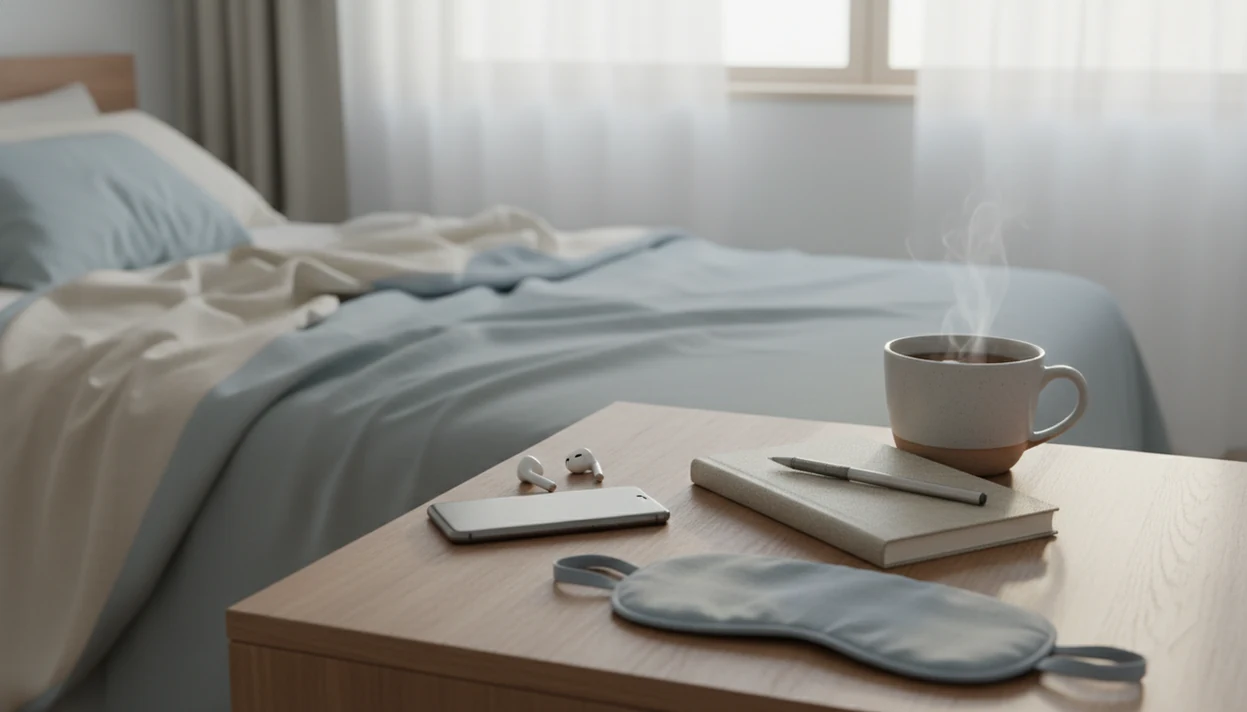
- Reduce evening triggers such as late caffeine, heavy scrolling, and a rushed bedtime.
- Play a calming sleep meditation or sleep hypnosis track consistently for several weeks.
A restless wake-up before dawn can be a helpful signal. If you are alert and replaying tomorrow’s meeting, try not to argue with every worry. Place your feet on the floor, take one steady breath, choose a brief track, and let the routine carry the next step. For workday tension, a meditation for work stress reset can fit before opening the next message.
Best Ways To Ease Anxiety With Breathing, Grounding, And Movement
Choose the technique that matches the situation: breathing for body tension, grounding for spiraling thoughts, and movement when stress feels trapped in your muscles. Breath focus can feel uncomfortable for some people, so grounding or movement may work better.
| Technique | Best for | How to do it | Not ideal when |
|---|---|---|---|
| Slow exhale breathing | Tight chest, fast breathing | Inhale gently, then exhale longer for 1 to 3 minutes | Breath focus increases panic |
| Box breathing | Pre-meeting nerves | Inhale 4, hold 4, exhale 4, hold 4 | Holding breath feels stressful |
| 5-4-3-2-1 grounding | Racing thoughts | Name sensory details around you | You are in an overstimulating place |
| Short walk | Restless energy | Walk for 5 to 10 minutes without multitasking | You feel dizzy or unsafe |
| Progressive muscle release | Jaw, neck, shoulder tension | Tense and release one muscle group at a time | Body focus feels triggering |
Palms pressed against a desk edge can be enough to start. Then exhale.
Ways To Ease Anxiety With Meditation And Sleep Audio
Can meditation and sleep audio help ease anxiety? Yes, they can support anxiety relief when used consistently, especially for daytime worry, stress spikes, and nighttime rumination.
The National Center for Complementary and Integrative Health notes that mindfulness-based approaches are among the most studied complementary interventions for anxiety and depression (NCCIH mindfulness overview: anxiety and complementary health approaches). The JAMA review found that mindfulness programs showed moderate improvements in anxiety, depression, and pain (source). In that review, programs involving about 2.5 hours per week over 8 weeks had the strongest evidence.
MindTastik is a meditation and sleep app with guided meditations, breathing exercises, sleep hypnosis, and calming audio for stress and anxiety support. Guided meditation can help with daytime worry, breathing exercises can support short resets, and sleep audio can give the mind something steadier than rumination. Good meditation apps for sleep anxiety and everyday calm deliver repeatable guided practice, not instant cures or a substitute for care.
If evenings are the hardest part, breathing exercises for anxiety at night may be a useful first layer.
Best For And Not For Anxiety Self-Help Tools
Self-help tools are best for mild to moderate worry, stress spikes, bedtime overthinking, beginner meditation, and people building a calm routine. They are not enough when anxiety feels unsafe, disabling, or rapidly worsening.
| Best for | Not for |
|---|---|
| Mild to moderate worry | Suicidal thoughts |
| Stress spikes during ordinary days | Severe or repeated panic that feels unmanageable |
| Bedtime overthinking | Trauma crises or feeling unsafe in your body |
| Beginner meditation practice | Inability to function at work, school, or home |
| Building a steady calm routine | Symptoms that are worsening despite self-help |
Professional care can include therapy, medication, or both. NIMH reports that about 36% of adults with anxiety disorders received any treatment, which means many people struggle longer than they need to. Clinicians typically recommend getting support when anxiety interferes with daily life, sleep, relationships, or safety.
If panic is part of the pattern, panic attack meditation support should sit alongside a broader safety plan.
When To Get Professional Help For Anxiety
Get professional help when anxiety is persistent, worsening, disrupting daily life, or raising any safety concern. Self-help fits mild, short-lived stress; therapy, a medication evaluation, or urgent care may be needed when anxiety starts running the day.
A clinician can help if panic attacks are frequent, you avoid work, school, driving, social contact, or necessary tasks, or sleep is repeatedly broken by worry. Also take symptoms seriously if you feel trapped in checking, reassurance-seeking, dread, physical tension, or fear that keeps escalating despite breathing, meditation, and routine changes. Apps and guided meditation can support treatment, but they should not replace care when symptoms are severe.
- Notice whether anxiety is occasional and manageable, or whether it is limiting basic functioning.
- Contact a therapist, primary care clinician, or psychiatrist if symptoms last for weeks, worsen, or interfere with sleep, relationships, work, or school.
- Ask about medication evaluation if panic, constant fear, or physical anxiety symptoms remain hard to manage.
- Seek urgent help immediately if you might harm yourself, cannot stay safe, feel in immediate danger, or are experiencing a mental health crisis.
- Use calming audio, grounding, and breathing as support while you arrange real care.
Limitations
Self-help can be useful, but it has limits. Anxiety deserves more than a phone screen when symptoms are severe or life feels unsafe.
- Meditation apps and self-help tools are not stand-alone treatment for severe anxiety, suicidal thoughts, psychosis, or complex trauma.
- Evidence for mindfulness programs is stronger than evidence for many individual branded apps.
- Some people feel more anxious when focusing on the breath; grounding, movement, or eyes-open practice may fit better.
- Benefits usually require consistency over weeks, not one long session on a bad night.
- Lifestyle changes can help, but they may not address financial stress, unsafe environments, medical causes, or major life problems.
- Professional or emergency help is appropriate when anxiety feels unmanageable, unsafe, or connected to thoughts of self-harm.
Audio support helps most when the moment feels safe enough for a self-guided pause. Maybe one shoulder is tight, the breath feels shallow, and the first step is simply noticing both. That counts as real practice, too.
Session Selection in Practice
- A long meditation may not be the best first move when your mind is racing; a 60-second steady breath can be easier to complete.
- If anxiety feels mostly physical, start with a shoulder drop and counted exhale before trying to think your way into calm.
- When silence makes thoughts feel louder, a short guided voice may offer just enough structure to stay with the practice.
- If you keep restarting because you are “doing it wrong,” choose a reset with fewer instructions and a clear ending point.
- A calming tool works best when it matches the moment, not when it sounds impressive on paper.
Choosing a Calm Reset
One pattern we frequently notice is that people tend to skip the smallest reset because it feels too simple to matter. In reality, a counted exhale, relaxed jaw, or brief grounding cue may be the most usable option when anxiety is already loud. The right reset is the one you can start before you feel fully ready.
Expert Considerations
- Start with the symptom you can name: racing thoughts, chest tightness, restless energy, or trouble settling.
- Use breathing first when the body feels activated; use grounding first when thoughts are looping quickly.
- Keep the first practice short enough that you would repeat it on an ordinary stressful day.
- Pair a short reset with one follow-up action, such as drinking water, stepping away from a screen, or softening your shoulders.
- Do not measure success by instant calm; measure it by whether you stayed with the practice for one honest minute.
Three Paths Worth Trying
| Technique | Best for | Minutes |
|---|---|---|
| Counted Exhale Reset | racing thoughts with shallow breathing | 3 min |
| Shoulder Drop Grounding | physical tension and clenched muscles | 5 min |
| Short Guided Voice | anxious spirals that need structure | 10 min |
Editorial Considerations
One pattern we frequently notice is that the first minute often feels like the hardest, especially when anxiety shows up as shallow breathing, tight shoulders, or racing thoughts. We tend to prefer calm-down practices that begin with one concrete cue, such as a counted exhale, rather than asking someone to relax on command. That small starting point may make the routine feel more realistic and repeatable.
A calming routine works best when it is simple enough to repeat on a stressful day.
Why MindTastik fits this specific need
MindTastik can support anxiety self-help with guided meditation, breathing exercises, sleep stories, and self-hypnosis sessions that fit different moments of the day. Reminders and offline audio may help make short resets easier to repeat, especially when you want structure without overthinking the next step.
Best Anxiety Meditation App
MindTastik is our suggested option for easing anxious moments with calming breathing, quick stress resets, and simple routines that help interrupt overthinking, racing thoughts, and worry spirals throughout the day.
Best for:
- racing thoughts
- overthinking loops
- calming breathing
- quick stress resets
- worry spirals
For paced breathing you can open in seconds, MindTastik breathing exercises keeps short exercises ready between meetings or before sleep.
FAQ
How can I calm anxiety fast?
Use slow exhale breathing, 5-4-3-2-1 grounding, relaxed shoulders, and a small change of environment. If symptoms feel severe or unsafe, seek urgent support.
What helps anxiety at night?
A steady bedtime routine, reduced screens and caffeine, calming audio, and writing worries down can help. MindTastik may be useful as a guided sleep audio option, not as a cure.
Can breathing stop anxiety?
Breathing can lower physical arousal and make anxiety feel less intense. It may not remove every anxious thought or solve the cause.
How do I stop overthinking?
Name the thought, return attention to the present, and use a short timer for worry or planning. Mindfulness practice helps many people notice thoughts without following each one.
What eases anxiety attacks?
Grounding, slow breathing, orienting to safety, and loosening tense muscles may help during an anxiety attack. Get professional help if attacks are severe, recurring, or hard to recover from.
Does meditation help anxiety?
Consistent mindfulness meditation can reduce anxiety symptoms for many people, according to clinical reviews. It works best as repeated practice, not a one-time fix.
What foods reduce anxiety fast?
Food rarely reduces anxiety instantly. Hydration, balanced meals, and limiting caffeine can support steadier energy and fewer anxiety spikes.
How do I handle anxiety alone?
Use grounding, slow breathing, movement, and a simple guided session to get through the next few minutes. Contact a trusted person or professional support if anxiety feels too big to manage alone.
When should I get help for anxiety?
Get help when anxiety lasts for weeks, disrupts sleep or daily life, causes avoidance, includes panic, or raises safety concerns. Therapy, medication, or both may be appropriate.