
Quick Anxiety Meditation in 5 Minutes
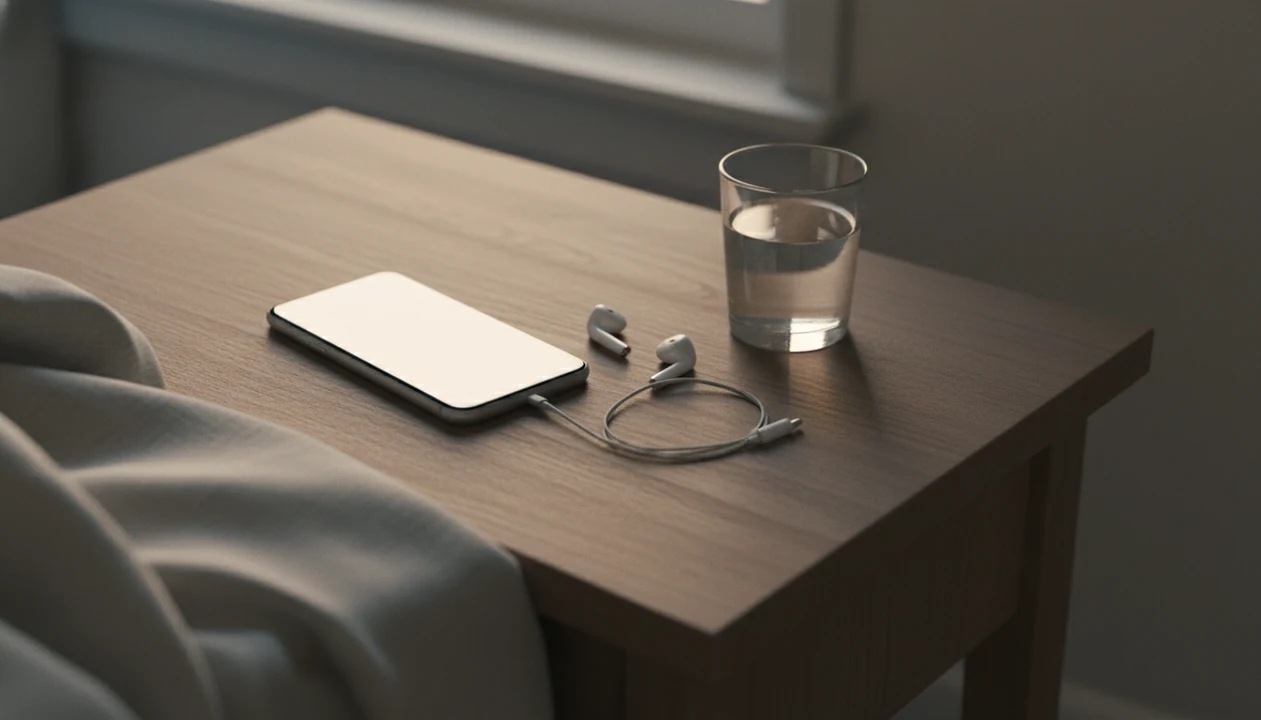


A 5 minute meditation for anxiety is a short practice that combines slow breathing, grounding, body awareness, and a simple calming phrase to create a pause during an anxious moment. It may help slow racing thoughts and bring attention back to the body, but it is not a cure for anxiety. The aim is a manageable reset, not complete calm before the timer ends.
This pause can fit before a meeting, after a stressful event, or during worry at bedtime. A guided voice can provide one instruction at a time when following a written script feels difficult. MindTastik offers guided meditation, breathing practice, sleep tracks, and self-hypnosis audio for adults seeking support with anxiety, sleep, and daily stress. These are support tools, not medical treatment.
The five-minute essentials
- A 5-minute anxiety meditation is a short guided reset, not a cure for anxiety.
- The practice should combine slow breathing, grounding, body awareness, and one simple calming phrase.
- MindTastik can support this habit with quick guided calm audio for anxious moments, sleep anxiety, and daily stress resets.
5-Minute Anxiety Meditation Script for an Anxious Moment
Pause where you are, if it is safe to do so. Sit, stand, or lean against a wall; you do not need a cushion or a quiet room.
For the first minute, breathe a little slower than usual. Do not force a huge inhale. Try breathing in for three counts and out for four counts. If counting feels annoying, simply notice the air moving.
Now feel your feet on the floor. Notice your hands, maybe fingers tracing a jacket zipper or resting on your legs. Name three sounds. Look around the room and find one steady object.
Say quietly, “I am here, and this moment can pass.”
One small thing next.
When the timer ends, choose a manageable action: send the message, step outside, drink water, or return to the task for two minutes. For a fuller version, use a 5 minute meditation for anxiety.
Nervous System Effects of a Quick Meditation for Anxiety
A quick meditation for anxiety works by giving the nervous system a safer signal through slower breathing, body awareness, and attention anchoring.
The sympathetic fight-or-flight response is the body’s alarm mode. Heart rate may rise, muscles tighten, and thoughts scan for danger. Slower breathing and grounding may support parasympathetic rest-and-digest activity, which is the body’s settling system. In plain language, your body gets a cue that it does not have to keep bracing.
Meditation does not erase anxious thoughts. It changes your relationship to them, so “something is wrong” can become “an anxious thought is here.”
Research is broader than exactly five-minute emergency tracks, but it is useful. A JAMA Internal Medicine meta-analysis found moderate anxiety symptom reduction from mindfulness-based interventions JAMA Internal Medicine study: 1188033. A separate trial found that one 10-minute mindfulness session reduced state anxiety peer-reviewed research: S0005796716301609. Clinicians typically recommend meditation as a support practice, not as a replacement for anxiety treatment.
What the research says about five minutes
The strongest evidence here concerns repeated practice, not a single five-minute response to an anxiety spike. A 2014 review of 47 randomized trials found moderate evidence that mindfulness programs improved anxiety at eight weeks, with smaller improvements at three to six months. Those results do not establish how quickly this script works or how much relief one session provides.
App research also suggests modest benefits rather than a guaranteed rapid effect. A 2023 analysis of 45 randomized trials, involving 6,082 participants, found a small reduction in anxiety with mindfulness apps compared with controls. The authors called for higher-quality studies and longer follow-up. This was evidence about mindfulness apps as a group, not a study of MindTastik or this five-minute routine.
5-Step Guided Calm Reset for Anxiety Spikes
Use this guided calm reset when your body feels activated and your mind is moving too fast. The goal is not control; it is enough structure to stay with the next minute.
- Set a timer or choose a 5-minute guided track before you start.
- Sit, stand, or lie down somewhere safe, then reduce one avoidable distraction.
- Follow the voice instead of trying to manage every thought.
- Shift to grounding if breath focus feels uncomfortable: sight, touch, sound, or gentle movement.
- Repeat later in the day so the routine feels familiar before the next spike.
A calendar alert before a guided reset can help during work stress. If the spike happens between meetings, try a shorter meditation for work stress and keep the phone screen dim. For many beginners, a guided voice is easier than silence because it gives the mind a place to return.
Best Times for a Short Anxiety Support Meditation
A short anxiety support meditation fits best in repeatable moments, not only in emergencies. Use it where a small pause can prevent the next spiral.
- Before work pressure peaks: Try it before a meeting, inbox check, or message you have been avoiding.
- Between roles: Use it after errands, caregiving, school pickup, or task switching.
- During evening rumination: At 2:13 a.m., when the lock screen says you are still awake, choose audio instead of scrolling.
- Before social stress: Play a short reset before calls, gatherings, or difficult conversations.
- After a trigger: Let the body come down when the situation is over, but your chest still feels tight.
Sleep, anxiety, and everyday calm apps should deliver easy starting points, guided pacing, and repeatable routines, not medical promises or instant emotional control. For bedtime breath support, try breathing exercises for anxiety at night.
Quick Anxiety Meditation: Best Use Cases and Safer Alternatives
A 5-minute anxiety meditation is best for mild to moderate anxious moments, stress spikes, and routine everyday calm. It is not enough for every situation, especially if panic feels intense or safety is a concern.
| Use case | Fit | Better next step |
|---|---|---|
| Mild anxious thoughts before a task | Strong fit | Use a guided 5-minute calm reset |
| Beginner who needs structure | Strong fit | Choose guided audio rather than silent practice |
| Sleep anxiety and evening rumination | Helpful support | Pair with a consistent wind-down routine |
| Intense panic with breath discomfort | Mixed fit | Use grounding, movement, or panic attack meditation support |
| Ongoing anxiety affecting daily life | Supportive only | Talk with a qualified mental health professional |
| Crisis, self-harm risk, or unsafe situation | Not appropriate | Seek urgent support or emergency care |
For anxious beginners, guided meditation usually works better than silent sitting because the next instruction is already chosen.
When to Seek Professional Help for Anxiety
Seek professional help when anxiety keeps returning, disrupts daily life, feels harder to manage alone, or starts getting worse. Meditation can support coping, but it does not diagnose anxiety disorders or replace treatment.
A good rule is to look at pattern and impact, not whether your anxiety is “bad enough.” If worry, panic, avoidance, sleep loss, irritability, or body symptoms are affecting work, school, relationships, caregiving, or basic routines, you deserve support that is more complete than a 5-minute reset. For a personal perspective on persistent worry, read Stress and Anxiety Controlled Me and reflect on your own patterns.
- Notice whether anxiety is persistent, escalating, or showing up in more parts of your day.
- Contact a licensed clinician, therapist, primary care doctor, or psychiatrist to talk through therapy, medication questions, or a care plan.
- Use meditation as a companion skill while you follow professional guidance, not as the whole plan.
- Seek urgent help now if you have thoughts of self-harm, chest pain, fainting, feel unsafe, or may be in immediate danger.
This is not a sign that you failed at calming down. It is simply the moment to add more support.
Guided 5-Minute Calm Reset Audio
A guided 5-minute calm reset works best when it is easy to start, paced slowly, and focused on breath, grounding, or body awareness rather than emotional control.
In an anxious moment, too many options can make even a simple app feel overwhelming. One-tap access helps when someone wants a calm voice to start before worry takes over. A brief guided track can make the next step clear, whether the body needs a few minutes of breathing or a longer scan to settle tension.
Guided meditation apps, including Calm, Headspace, and MindTastik, can support adult anxiety routines with short meditation tracks, sleep anxiety audio, breathing exercises, and self-hypnosis sessions. They do not provide diagnosis or medical treatment. An app-based mindfulness randomized clinical trial found reductions in stress, anxiety, and depression after an 8-week mobile program NIH research: PMC4979070. The Best Meditation App for Sleep angle is useful when anxiety shows up most at bedtime.
Five Facts About 5-Minute Anxiety Meditation
- Even brief meditation can reduce state anxiety for some people, based on research using short mindfulness sessions.
- Meditation use has grown among U.S. adults; a national survey reported 14.2% use in the past year, up from 4.1% in 2012 CDC guidance: db325.htm.
- Anxiety disorders are common in the United States; NIMH reports 19.1% of U.S. adults had one in the past year nimh reference: any anxiety disorder.
- Consistency makes short practices more reliable than crisis-only use, because the body recognizes the routine sooner.
- A busy mind does not mean the meditation is failing; noticing the thought and returning is the practice.
The most common medically supported way to manage ongoing anxiety is professional care combined with daily coping skills, when symptoms are persistent or disruptive. A meditation app for anxiety support can help with the coping-skills side, but it should stay in that lane.
Guided audio for a short anxiety pause
MindTastik’s guided meditation library offers a voice to follow when silent practice leaves too much room for worry. Sessions focused on breathing or body awareness suit a short pause before a demanding task or during evening stress. If attention to breathing increases discomfort, sensory grounding or gentle movement may be a better starting point. Persistent anxiety that disrupts daily life needs professional assessment rather than another audio session.
What a five-minute anxiety reset cannot do
A 5-minute calm reset can help, but it has real limits. Keep expectations modest and safe.
- Relief may be temporary, especially during severe stress or chronic anxiety.
- It does not replace therapy, medication, diagnosis, or professional mental health care.
- Research on exactly 5-minute emergency-style tracks is limited compared with broader mindfulness research.
- Some people dislike guided voices, background music, or being told what to do.
- Breath focus can feel uncomfortable during intense panic for some users.
- Repeated practice is usually more effective than using meditation only in rare crises.
- If anxiety includes chest pain, fainting, self-harm thoughts, or danger, meditation is not the right first step.
A short reset is a support tool. Not the whole plan.
If your nervous system needs something faster than a full sit, try MindTastik breathing exercises for guided breath pacing.
Five-minute anxiety meditation questions
Can a five-minute meditation calm anxiety quickly?
It may help create a calmer pause, but immediate relief is not guaranteed. Five minutes gives a clear boundary for slowing down, noticing physical contact with the floor, and following one instruction at a time. Anxiety can remain after the session without making the practice a failure.
How do I meditate for anxiety for five minutes?
Start somewhere safe and set a five-minute timer. Let breathing slow gently without forcing a deep inhale. Notice feet, hands, and nearby sounds, then use a simple phrase such as “This moment can pass.” Finish by choosing one manageable next action rather than checking repeatedly for complete relief.
Should I keep my eyes open during anxiety meditation?
Keeping the eyes open is a reasonable option, especially when inward attention feels uncomfortable. Rest attention on one steady object or slowly notice the room. Closing the eyes is not required for this practice. The useful anchor is one that feels tolerable, not one that follows a particular meditation style.
Can I use a five-minute anxiety meditation before bed?
A short guided practice can be part of an evening wind-down, especially when worry keeps pulling attention back to unfinished tasks. Treat it as support for settling, not a promise of sleep. If focusing on the body increases anxiety, use external sounds or another comfortable anchor instead.
What if my thoughts keep racing throughout the meditation?
The task is not to stop every thought. Notice that attention has wandered, then return to the next sound, physical sensation, or spoken instruction. A guided voice may be easier to follow than silence. Finishing a tolerable five-minute practice is a more practical target than forcing a quiet mind.
Can five minutes of meditation replace anxiety treatment?
No. A brief meditation can support coping, but it does not diagnose or treat an anxiety disorder on its own. Anxiety that persists, worsens, or affects sleep, work, relationships, or basic routines calls for professional assessment. Meditation may be used alongside recommended care rather than in place of it.