
Anxiety Relief Meditation Support for Calm Moments
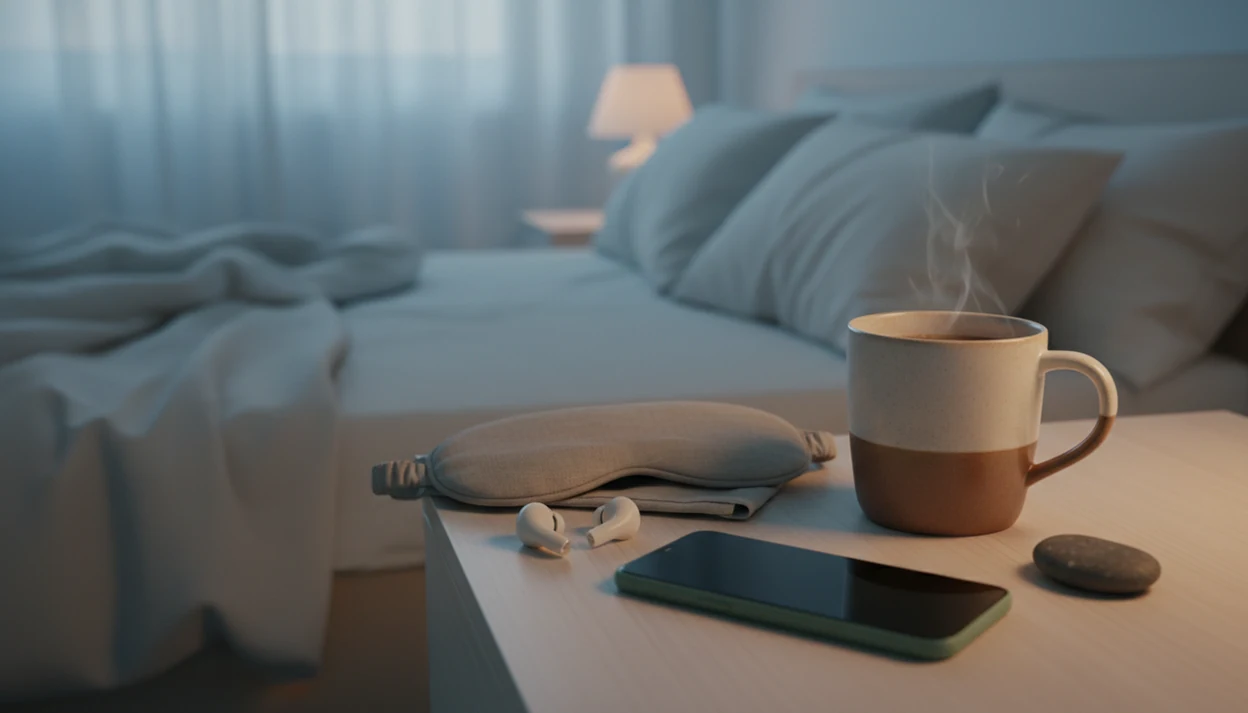


Anxiety relief meditation uses guided breathing, grounding, body relaxation, and calm audio to help settle anxious arousal, without claiming to cure anxiety. It can offer a simple task when thoughts race: follow a voice, notice a sound, or release tension in the shoulders. Short sessions can support manageable anxious moments, bedtime worry, and everyday stress, but they do not replace therapy, medication, or crisis care.
MindTastik offers guided meditations, sleep audio, breathing exercises, and self-hypnosis sessions for adults seeking everyday support with rest and stress. The practical choice is a track that feels manageable, not necessarily the longest one. Gentle pacing and permission to stop matter, especially when attention to breathing or body sensations makes anxiety stronger rather than quieter.
The essentials
- Use anxiety relief meditation as supportive self-management, not as a substitute for professional mental health care.
- Short, regular sessions usually work better than waiting until anxiety feels overwhelming.
- Choose calm audio with gentle pacing, clear safety boundaries, and options to stop or switch tracks.
Anxiety Relief Meditation Support in Plain Terms
Anxiety relief meditation support means using guided meditation, calm audio, breathing exercises, and grounding practices to steady anxious moments without treating meditation as a cure. It gives the mind something simple to follow when worry gets loud.
People often use it for racing thoughts, bedtime worry, mild panic feelings, work stress, or a daily emotional reset. That may look like choosing between a 5-minute breathing exercise and a 20-minute body scan in an app library.
The support matters, but the boundary matters too. Meditation may help reduce stress and anxiety symptoms for some people, especially with regular practice. It is not a replacement for therapy, medication, diagnosis, or urgent care. If anxiety is moderate, severe, worsening, or disrupting sleep, work, relationships, or basic routines, a licensed mental health professional is the right next step.
Five Facts About Guided Meditation for Anxiety Support
- About 19.1% of U.S. adults had an anxiety disorder in the past year, per NIMH data, which helps explain why accessible self-support tools matter (nimh reference: anxiety disorders).
- A JAMA Internal Medicine systematic review of 47 trials found moderate evidence that mindfulness meditation programs can improve anxiety symptoms compared with nonspecific controls (JAMA Internal Medicine study: 1809754).
- Mental health apps are commonly used for anxiety or stress management, but usage estimates vary by survey population; include a specific survey URL if you keep a percentage.
- Regular practice usually matters more than one long session during a high-anxiety moment. For anxious beginners, a realistic 5 minute meditation for anxiety support may be easier to repeat.
- Some people feel more aware of uncomfortable sensations at first, so gentle pacing and the option to stop are safety features, not extras.
The pocket check is real.
A person might reach for calming anxiety audio before sunrise, notice the body is still tense, and wish for something easy to follow. In that moment, simple support matters more than a long explanation.
What app research can say about anxiety relief
A 2023 meta-analysis of 45 randomized trials, involving 6,082 participants, found that mindfulness apps reduced anxiety compared with control conditions, but the average benefit was small. The authors called for higher-quality trials and longer follow-up. That finding supports apps as a possible source of help, not a promise that a particular recording will stop an anxious episode.
The evidence also needs to match the product. Research on a structured mindfulness program does not establish that every breathing track, sleep story, or self-hypnosis session has the same effect. These findings do not establish effectiveness for MindTastik specifically. For persistent or disabling anxiety, an app should sit alongside appropriate care, not stand in for assessment, clinician-delivered therapy, or medication when indicated.
How Anxiety Relief Meditation Works in the Body and Mind
Anxiety often involves threat scanning, faster breathing, muscle tension, and repetitive worry loops. Anxiety relief meditation works by giving attention a safer, simpler task to follow.
Slow guided breathing can support steadier arousal by lengthening the breath and reducing the sense of rushing. In plain language, the body gets a rhythm cue. Grounding shifts attention away from abstract “what if” thoughts toward present-moment sensory cues, such as the chair under you or the sound of a fan. For a structured sensory exercise, try the 5 4 3 2 1 grounding technique at a comfortable pace.
Body relaxation works differently. It asks you to notice tension, soften what can soften, and stop forcing calm. That distinction matters. For many people, trying to “relax harder” only adds pressure.
Clinicians typically recommend meditation as a coping skill that may complement evidence-based care, not as a stand-alone treatment for impairing anxiety. For nighttime worry, pairing calm audio with sleep hygiene and breathing exercises for anxiety at night is often more useful than scrolling in the dark.
How to Use Breathing Meditation for Anxious Moments
Breathing meditation for anxious moments works best when the steps are short, safe, and easy to repeat. A 3-minute or 7-minute session may be more realistic than a long meditation when worry is already high.
- Choose a safe place where you can pause without needing to drive, supervise risk, or make urgent decisions.
- Select a short guided track with clear breath cues and a calm voice.
- Lower expectations by aiming to stay with one breath, not to erase anxiety.
- Follow the breath cues gently, letting the exhale be slow but not strained.
- Ground with the environment by naming one sound, one color, and one solid surface.
- Stop if distress increases and switch to eyes-open grounding, movement, or professional support if needed.
Practice at calmer times too. The skill is easier to find when anxiety rises if your body has heard the same cues before. Fingers tracing a jacket zipper can become the reminder: breathe, look around, continue.
Best Anxiety Relief Meditation Sessions for Different Moments
The best anxiety relief meditation session is the one someone can actually complete consistently. Match the format to the moment instead of choosing the longest or most intense track.
| Situation | Better session type | Why it fits |
|---|---|---|
| Bedtime worry | Sleep-oriented calm audio | Gives the mind a wind-down routine when calendar worries show up in the dark |
| Racing thoughts at work | Grounding audio | Pulls attention toward the room, the chair, and the next practical step |
| Morning dread | Short breathing meditation | Creates a low-pressure start before the day gets crowded |
| Mild panic sensations | Gentle breath and grounding track | Offers structure without demanding stillness or closed eyes |
| General daily stress | Body scan or repeatable everyday calm session | Helps notice tension before it becomes the whole mood |
For racing thoughts between meetings, a meditation for work stress reset can be more useful than trying to push through with a clenched jaw.
Calm Anxiety Audio and App Features
Apps can help when they make the next small step obvious. A meditation app may offer guided meditation, sleep audio, breathing exercises, and self-hypnosis sessions for adults seeking sleep, anxiety, and everyday calm support.
Useful features include:
- Short guided tracks: Better for anxious moments when attention is jumpy.
- Calming voices: Helpful when someone says, “I just need something to play when my thoughts get loud.”
- Bedtime audio: Supports a wind-down routine without asking users to invent one at night.
- Repeatable routines: Makes practice easier to return to after a stressful day.
- Beginner-friendly pacing: Gives clear cues without assuming meditation experience.
Tools like MindTastik, Calm, Headspace, and resources from mindful.org are most helpful when they fit ordinary life, not perfect meditation habits. A quiet chair, feet on the floor, and a short guided voice can still be enough to begin.
Best For and Not For Anxiety Relief Meditation
Anxiety relief meditation is best for everyday stress and manageable anxious spirals. It is not appropriate as the only support during emergencies, severe symptoms, or immediate danger.
| Best for | Not for |
|---|---|
| ✅ Everyday stress | ❌ Suicidal thoughts or self-harm plans |
| ✅ Mild anxious spirals | ❌ Psychosis, medical emergencies, or immediate danger |
| ✅ Bedtime worry | ❌ Severe panic that feels unsafe or recurring |
| ✅ Pre-meeting nerves | ❌ Untreated trauma symptoms that intensify during stillness |
| ✅ Building a everyday calm habit | ❌ Anxiety that prevents basic functioning |
Meditation can complement therapy, medication, sleep routines, movement, and other coping skills. It should not be used to avoid every difficult feeling or situation. For some people, reaching for an app every time anxiety appears may reinforce avoidance patterns.
For someone with pre-event nerves, breathing meditation usually works best when practiced before the stressful day, while grounding audio fits people who need help rejoining the present moment quickly.
When to Seek Professional or Crisis Help
Seek professional or crisis help when anxiety feels unsafe, unmanageable, or tied to symptoms that need human support now. Meditation can be useful, but it is not the right tool when safety is uncertain.
- Call local emergency services or go to the nearest emergency department if there are suicidal thoughts, a self-harm plan, psychosis, medical danger, violence, or any immediate risk.
- Contact a crisis line or trusted local crisis service if you are not sure you can stay safe, or if you are supporting someone whose behavior feels unpredictable or frightening.
- Reach out to a licensed mental health professional when anxiety keeps returning, worsens over time, disrupts sleep, work, relationships, school, or basic routines, or leads to avoidance that shrinks daily life.
- Use meditation as an add-on to therapy, medication, skills practice, sleep care, or medical guidance when those are part of your plan.
- Stop the session if inward attention makes symptoms sharper, memories feel overwhelming, or panic rises. Open your eyes, orient to the room, move your body, and choose human support instead of forcing stillness. If you feel detached from yourself or your surroundings, learn about depersonalization and derealization and grounding support.
What to Look For in a Guided Meditation for Anxiety Support App
What should you look for in a guided meditation for anxiety support app? Look for gentle pacing, clear instructions, short session options, sleep support, breathing practices, grounding choices, and transparent safety boundaries.
A good app should plainly say it is not crisis care or a therapy replacement. It should also make practical use easy: offline calm audio, favorites, beginner tracks, and repeatable routines help when you do not want to search through a huge library under stress.
Many commercial anxiety apps have mixed evidence, and not every calming track has randomized controlled trial support. Judge the app by fit, safety language, and structure rather than assuming every feature is clinically validated.
If you are comparing options more broadly, a meditation app for anxiety support guide can help you weigh session length, price, privacy, offline access, and crisis boundaries before you rely on one tool.
MindTastik sessions for racing thoughts and bedtime worry
MindTastik's guided meditations provide a voice to follow when racing thoughts make silent practice difficult. Its breathing exercises offer another structured option, while sleep stories and soundscapes may suit bedtime worry when breath-focused practice feels uncomfortable. These are wellness supports, not medical treatment. People whose anxiety disrupts basic functioning, whose panic feels unsafe, or whose symptoms worsen during meditation should seek professional care rather than rely on an app.
When anxiety meditation is not enough or makes symptoms worse
Anxiety relief meditation support has real limits. Those limits should be visible before someone depends on an app during a hard moment.
- It is not a crisis tool for suicidal thoughts, self-harm plans, psychosis, medical emergencies, or immediate danger.
- It does not replace therapy, medication, diagnosis, or care from a licensed mental health professional.
- Some people with trauma histories or severe anxiety may feel worse when focusing on internal sensations.
- Evidence for many commercial mental health apps is mixed, and not all apps have randomized controlled trial support.
- Meditation cannot solve underlying drivers of anxiety, such as unsafe housing, financial stress, relationship danger, or untreated medical conditions.
- Using an app to escape every anxious situation may strengthen avoidance patterns for some users.
- If anxiety is persistent, worsening, or interfering with sleep, work, relationships, or daily function, professional support is appropriate.
Meditation and mindfulness can cause unwanted effects in some people and should not delay appropriate medical or mental health care, according to NCCIH's guidance on meditation effectiveness and safety.
If symptoms feel intense or confusing, step away from the track and get human help. For intense panic-specific guidance, panic attack meditation support should be framed with extra safety boundaries.
Feeling anxious afterward does not mean meditation failed
Myth: meditation has failed if you still feel anxious.
Reality: anxiety relief meditation is better judged by whether it helps you pause, breathe, or soften tension a little. A useful session may not remove anxiety, but it can support a steadier next step.
Myth: longer sessions are automatically better.
Reality: a two-minute counted exhale can be the better choice during a busy or stressful moment. The most helpful practice is often the one you can use before anxiety has built too far.
Myth: you need a perfectly quiet mind.
Reality: the goal is usually to notice the mind wandering and return to the breath, voice, or body cue. Returning is the practice, not a sign that you are doing it wrong.
If your nervous system needs something faster than a full sit, try MindTastik breathing exercises for guided breath pacing.
Anxiety relief meditation questions
Does meditation actually help anxiety?
Meditation can reduce anxiety symptoms for some people. Reviews of structured mindfulness programs and mindfulness apps show benefits, though app effects are generally small. It is better understood as supportive practice than a cure. Persistent, severe, or disabling anxiety still needs assessment and appropriate treatment.
How long should I meditate for anxiety?
A brief guided session of 2 to 5 minutes is a reasonable starting point when attention is unsettled. There is no single session length that works for everyone. Choose a duration that feels manageable and repeatable, rather than forcing a long session during intense worry.
Can meditation help with anxiety at bedtime?
Calm audio, sleep-oriented guidance, or gentle body relaxation can support a wind-down routine when worry becomes louder at night. They do not guarantee sleep or address every cause of nighttime anxiety. If inward attention increases distress, use an external sound instead. Persistent anxiety or insomnia warrants professional advice.
Is it normal to feel more anxious after meditation?
Some people notice more anxiety when they sit quietly because thoughts and body sensations become easier to notice. Try a shorter session, keep your eyes open, or focus on sounds around you. If meditation repeatedly increases distress, pause the practice and speak with a qualified mental health professional.
Can I meditate with my eyes open for anxiety relief?
Yes. Keeping your eyes open can help you stay connected to your surroundings, especially if closing them feels uncomfortable. Rest your gaze on a neutral object without staring intensely. Notice the support of your chair or the floor beneath your feet, and gently return attention whenever your mind wanders.
Can walking meditation help when I feel too restless to sit?
Walking meditation can be a useful alternative when sitting still feels difficult. Walk at a comfortable pace in a safe place, paying attention to your feet touching the ground and the movement of your legs. You do not need to slow down dramatically or force yourself to feel calm.
Is morning or evening meditation better for anxiety?
Neither time is consistently best for everyone. Morning meditation may help you approach the day with more awareness, while an evening practice can provide a transition from daily demands. Choose a time you can maintain comfortably, and adjust if practicing at that hour makes you feel more unsettled.
Can meditation ease muscle tension caused by anxiety?
Meditation may help you notice tension and respond without automatically tightening further. A gentle body scan can bring attention to your jaw, shoulders, hands, and other tense areas without forcing them to relax. Persistent pain or new, severe physical symptoms should be medically assessed rather than assumed to be anxiety.