
Feelings Wheel for Anxiety and Stress Support
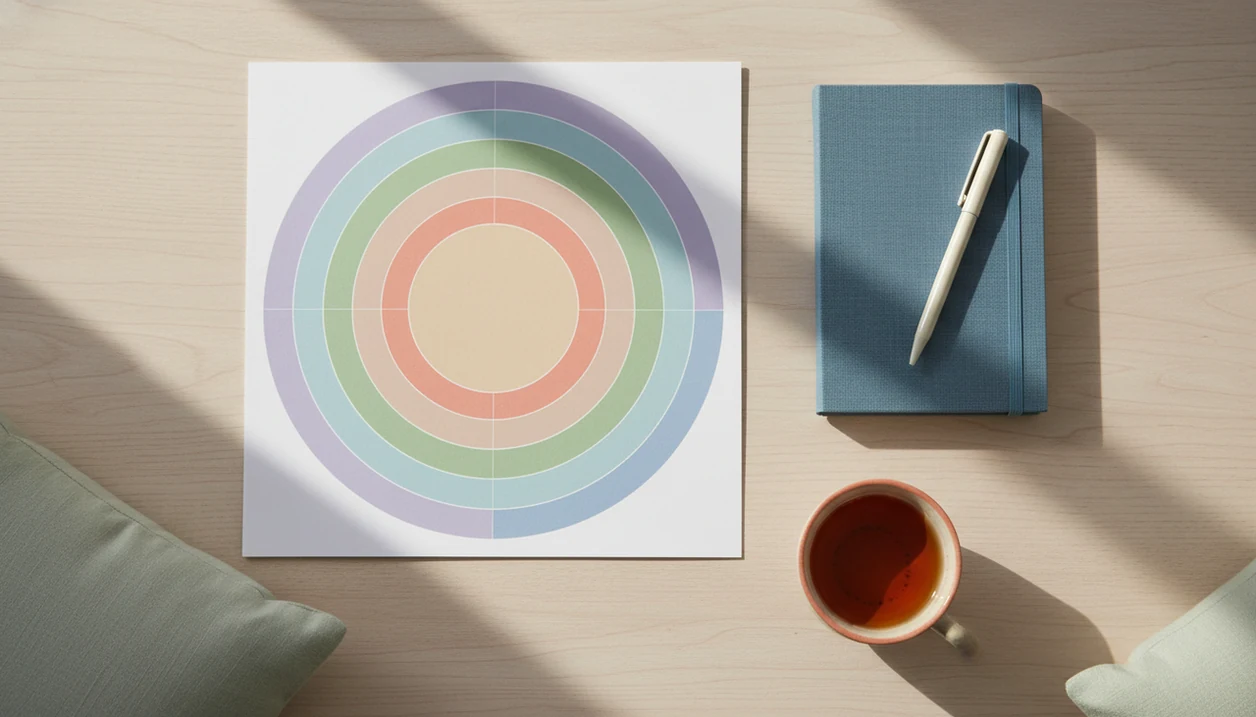


A feelings wheel for anxiety and stress is a visual chart that helps name emotions before meditation, journaling, breathing, or sleep support. It starts with broad core emotions and expands into more specific words, such as worried, overwhelmed, lonely, hopeful, or peaceful. When “stressed” feels too vague, a closer label can make it easier to decide what support fits the moment.
The aim is not to find a perfect word or make the feeling disappear. A short check-in can lead to a body scan, breathing exercise, journal prompt, or guided meditation. The wheel supports self-awareness, not diagnosis or treatment. Persistent, severe, or unsafe distress calls for professional help rather than more time spent searching the chart.
The essentials
- Use a feelings wheel when “stressed” or “anxious” feels too vague and you need more precise words.
- Pair emotion labeling with a short body scan, breathing exercise, journal prompt, or guided meditation for everyday calm support.
- Treat the tool as emotional awareness support only; persistent, severe, or crisis-level distress deserves professional help.
Feelings wheel meaning for anxiety and stress support
A feelings wheel is a visual emotion chart that helps people move from broad states like “bad” or “stressed” into more exact feeling words. Dr. Gloria Willcox created the original feelings wheel in 1982 to help people identify, express, and process emotions. Source: Willcox described the tool in the Transactional Analysis Journal in 1982: doi reference: 036215378201200411.
The wheel usually works from the inside out. The center names broad emotions, such as sad, angry, fearful, happy, strong, or peaceful. The outer rings add more specific words, such as overwhelmed, insecure, resentful, hopeful, lonely, or calm.
That extra precision matters when your jaw is tight against the pillow and “anxious” feels too general. You may be worried, overstimulated, guilty, or afraid. Each label points toward a different next step.
MindTastik uses this concept only as self-awareness support before meditation and everyday calm practices. It can support journaling, sleep routines, breathing, and meditation, but it does not diagnose or treat mental health conditions.
Five facts about a feelings wheel for stress
- A feelings wheel helps people move from vague labels like stressed or anxious to more precise words, such as pressured, panicky, disappointed, or overstimulated.
- Emotion labeling can make a meditation, breathwork, or journal session more targeted because the practice starts from what is actually present.
- The tool includes difficult emotions and positive emotions, so it can name content, proud, safe, curious, or peaceful too.
- People can choose more than one emotion and revise the label after reflecting; mixed feelings are normal, especially during stress.
- A feelings wheel supports emotional literacy, but it cannot diagnose anxiety, depression, trauma, PTSD, or any other condition.
For many people, “I’m stressed” is a starting point, not the full answer. The more useful question is, “What kind of stressed?” Pressured before a deadline feels different from lonely after a quiet evening. For everyday calm tools that focus on workday stress, mindfulness practices at work can pair well with this kind of labeling.
How a feelings wheel works as an emotion labeling tool
A feelings wheel works by turning a body state into language, then using that label to choose a response. The basic process is simple: notice a state, select a broad emotion, narrow it into a specific label, then choose what would help next.
Research on affect labeling, which means putting feelings into words, suggests that naming negative emotions can reduce amygdala activity and emotional distress in some lab settings (Lieberman et al., Psychological Science, 2007: doi reference: j.1467 9280.2007.01916.x). In plain language, the brain may react differently when a feeling becomes something you can name. The emotion does not vanish. It gets easier to recognize.
Small shift. Big difference.
Emotional intelligence research also links better emotional awareness with lower distress and stronger communication. That does not mean a chart fixes anxiety. It means repeated labeling may help you catch patterns earlier, speak more clearly, and choose a supportive practice before stress spills into the rest of the night.
For anxious beginners, naming the feeling often works better than starting meditation cold because the practice can match the actual emotional state. Once you name the feeling, explore meditation for anxiety and stress as a next step in your daily routine.
Naming an emotion does not always reduce distress
Research supports emotion labeling, but not a promise of relief every time. In four experiments published in 2011, people who named feelings while viewing negative images reported less distress than those who watched without labeling. Those tasks did not test a feelings wheel during everyday anxiety. The findings support putting feelings into words as one possible aid, not proof that choosing a word will settle a stressful moment.
Context also matters. A 2022 experiment on emotion labeling found reduced distress under high-intensity aversive stimulation but increased distress under low-intensity conditions. This does not mean a wheel is the right tool during severe panic. A practical approach is to name the feeling briefly, then move to a supportive action. If searching for finer distinctions adds distress, stopping the check-in is reasonable.
How to use a feelings wheel before meditation
How to use a feelings wheel before meditation: pause, notice your body, choose a core emotion, move outward to a precise word, then pick a calming response. Keep the check-in short. Two to five minutes is enough before a MindTastik guided session. A meditation reminder app can help you repeat this brief emotional check-in before your daily calming practice.
- Pause before opening the meditation and take one slow breath.
- Scan your body for the strongest cue, such as tight shoulders, shallow breathing, a heavy chest, or restless legs.
- Choose one core emotion from the center of the wheel, such as fear, sadness, anger, joy, disgust, surprise, or peace.
- Move outward to a closer label, such as overwhelmed, worried, insecure, panicky, lonely, or overstimulated.
- Select a response that fits the label, such as breathing, a grounding meditation, journaling, sleep audio, or a body scan.
If your fidgeting hands stay busy in your lap, do not force stillness first. Label what is happening, then choose the smallest practice that feels manageable.
Best feelings wheel uses before sleep, journaling, and breathing
A feelings wheel is most useful when it helps you choose the next supportive action, not when it becomes another task to complete. Use the label as a signpost before sleep, journaling, breathing, or meditation. An everyday calm routine checklist can help you organize emotion labeling, breathing, and meditation into a repeatable daily practice.
| Feeling label | Supportive practice | Why it may fit |
|---|---|---|
| Overwhelmed | Grounding meditation | Helps narrow attention to one steady anchor |
| Worried | Breathwork | Gives the mind a simple rhythm to follow |
| Lonely | Journaling prompt | Creates space to name what feels missing |
| Restless | Sleep audio | Supports a softer wind-down routine |
| Tense | Body scan | Brings attention to muscles and release cues |
Tools like MindTastik, Calm, and Headspace can help adults choose guided meditation, sleep audio, breathing exercises, and self-hypnosis sessions for sleep, anxiety, and everyday calm support.
If you are comparing options, free meditation apps for sleep can be a practical next filter.
Best-fit and not-fit uses for feelings wheel anxiety support
A feelings wheel fits mild, everyday emotional check-ins better than high-intensity mental health situations. It can help you name feelings before a supportive practice, but it should not carry the full weight of care.
| Best for | Not ideal for |
|---|---|
| Mild stress check-ins | Diagnosing anxiety, depression, PTSD, or trauma |
| Meditation preparation | Crisis situations or fear of immediate harm |
| Journaling prompts | Severe panic or trauma flashbacks |
| Building emotional vocabulary | Replacing therapy or medical care |
| Communication with a partner, coach, or support person | Changing, stopping, or avoiding medication decisions |
| Naming patterns before everyday calm routines | Managing self-harm thoughts alone |
Clinicians typically recommend professional assessment and evidence-based care when distress is persistent, severe, unsafe, or interferes with daily function. This review of brief anxiety interventions addresses short-term support, not diagnosis or treatment of an anxiety disorder; persistent or impairing symptoms need professional assessment. A feelings wheel can help you prepare language for that conversation, which is useful. But it is not the conversation itself.
If you want a broader comparison of naming tools, the emotion wheel guide explains related formats.
Common feelings wheel mistakes during stressful moments
A feelings wheel is not only for children. Adults use emotion labeling in therapy, coaching, workplace reflection, meditation preparation, and communication practice.
One common mistake is assuming that naming a feeling will always make it worse. Affect labeling research suggests the opposite may happen for many people: putting negative emotions into words can reduce emotional intensity. Still, the timing matters. During severe panic or crisis, scanning dozens of words may feel like too much.
Another mistake is forcing one perfect label. Stress rarely arrives cleanly. You might feel worried, embarrassed, and tired at the same time. Let the first label be a draft.
The gentler version works better: pick one or two words, breathe, and move on. If your Slack pings are muted for a reset, do not spend ten minutes debating “irritated” versus “resentful.” Choose the closer word, then try a short reset. For work settings, how to practice mindfulness at work can make the next step easier to repeat. Try a calm routine between meetings to turn your emotion label into a brief, practical workday pause.
Visible feelings wheel prompts for anxious check-ins
How do I use a feelings wheel when I feel anxious? Start with the body, choose a broad emotion, then move toward a more precise word that can guide your next ten minutes.
Try these prompts before meditation, breathing, sleep wind-down, or journaling:
- What is the strongest body sensation right now?
- Which core emotion fits best: fear, sadness, anger, disgust, surprise, joy, or peace?
- Which outer word feels closer: worried, panicky, insecure, overwhelmed, lonely, or overstimulated?
- Is there another feeling beside the first one?
- What would help in the next ten minutes: breathe, write, stretch, listen, rest, or ask for support?
In the dark, noticing you have been awake for a while can make every feeling run together. Put your feet on the floor, name one emotion, and choose the next gentle step.
Suggested image caption
A visual feelings wheel for anxiety and stress support, showing broad emotions in the center and more specific feeling words around the edge.
When to seek professional help
Seek professional help when distress is severe, persistent, unsafe, or getting in the way of basic life tasks. A feelings wheel can help you describe what is happening, but it should not be the only support when safety or functioning is at risk.
Use the wheel as a language aid, not a gatekeeper. If you bring words like panicky, numb, hopeless, trapped, or unable to sleep to a clinician, that can make the conversation clearer. The next step may be therapy, a primary care visit, medication discussion, crisis support, or emergency care depending on urgency.
- Call 988 in the U.S., or your local emergency number, if you have thoughts of self-harm, fear you may hurt yourself or someone else, or feel in immediate danger.
- Seek urgent crisis services if you cannot stay safe, cannot calm down enough to function, or feel detached from reality.
- Contact a therapist or licensed mental health professional when anxiety, panic, low mood, trauma symptoms, or sleep disruption keeps returning.
- Tell a primary care clinician if symptoms are new, worsening, linked with medication, or affecting work, school, eating, or sleep.
- Bring your feeling words, body cues, and timing patterns so the professional has clearer starting points.
Matching an emotion label to a short guided practice
MindTastik’s guided meditations and breathing exercises can provide a next step after a feelings-wheel check-in. A breathing session may suit worried, racing thoughts; a guided meditation can offer a focus after naming several mixed feelings. The label is a starting point, not a prescription. People who prefer writing can use a journal instead. Those with persistent anxiety, severe panic, or safety concerns need professional support, not an app as their main source of care.
What a feelings wheel cannot assess or treat
A feelings wheel is a self-awareness tool, not a mental health assessment. Use it carefully, especially when emotions feel intense, confusing, or unsafe.
- A feelings wheel cannot determine whether someone has an anxiety disorder, depression, PTSD, trauma symptoms, or another condition.
- It cannot replace therapy, medical care, medication guidance, crisis support, or a safety plan.
- It may feel overwhelming during severe panic, trauma flashbacks, dissociation, or intense crisis.
- People who disconnect from body sensations may mislabel emotions or need professional guidance.
- Affect labeling research supports possible calming effects, but it does not prove that a feelings wheel treats mental illness.
- Persistent distress, inability to function, self-harm thoughts, or fear of immediate harm should prompt licensed professional, crisis, or emergency support; in the U.S., call or text 988 for the Suicide & Crisis Lifeline: 988lifeline reference.
- The wheel may be less useful if someone feels pressured to find the “right” word instead of a workable word.
A supportive practice should feel steady enough to use. If the chart makes things sharper or scarier, stop and use stronger support.
Choosing a practice for fear, frustration, or racing thoughts
- If the feelings wheel points to fear, start with a short guided voice and one steady breath cue rather than a long silent session. For a brief daily practice, try Just for Today Meditation after naming the feeling that needs attention.
- If the word you choose is frustration, pair it with a shoulder drop and a counted exhale before deciding what to do next.
- If several emotion words seem true at once, choose the one linked to the strongest body signal; the body often gives the clearest starting point.
- If your anxiety feels like racing thoughts, use the wheel only long enough to name one feeling, then move into a 3- to 5-minute breathing exercise.
- If you feel numb or unsure, pick a broad word first, such as uneasy or tense; precision can come after the nervous system settles.
For paced breathing you can open in seconds, MindTastik breathing exercises keeps short exercises ready between meetings or before sleep.
Feelings wheel questions for anxious moments
How do I use a feelings wheel for anxiety?
Start with a brief pause and notice a body cue, such as tight shoulders or restlessness. Choose a broad emotion, then look outward for a closer word, such as worried or overwhelmed. Use that label to choose one next action, such as breathing, journaling, resting, or asking for support.
Can a feelings wheel reduce anxiety?
It may help some people put distress into words and choose a response. Experiments on emotion labeling have found benefits in some settings, but effects vary with context and intensity. A feelings wheel is not a treatment for an anxiety disorder, and naming an emotion does not guarantee relief.
What if none of the words on a feelings wheel fit?
Use a broad or approximate word rather than forcing precision. Uneasy, tense, or unsure can be enough to begin a check-in. A body sensation can also be a starting point. The purpose is to describe what is present well enough to choose support, not to complete the chart correctly.
Can I choose more than one emotion on a feelings wheel?
Yes. Stress can include several feelings at once, such as worry, frustration, and loneliness. Choose the words that fit now, and revise them later if needed. For a short check-in, one or two labels may be enough before deciding what would help next.
Should I use a feelings wheel during a panic attack?
Scanning many emotion words may be too demanding during severe panic. The wheel can wait until choosing a label feels manageable. It should not delay care when distress is severe or safety is uncertain. Recurrent panic or symptoms that disrupt daily functioning deserve professional assessment rather than reliance on a chart.
How can I use a feelings wheel before bed?
Keep the check-in brief: name one feeling and choose a wind-down activity. Worried may point toward a breathing exercise, tense toward a body scan, and restless toward sleep audio. If examining emotions turns into prolonged analysis, leave the chart aside rather than making it another bedtime task.
Can naming feelings make anxiety worse?
Sometimes. Emotion-labeling research does not show a benefit in every situation, and one experiment found increased distress under low-intensity conditions. Repeatedly examining a feeling is not necessary. If the check-in adds distress, stop and choose another form of support. Persistent or escalating anxiety warrants professional help.