
Breathing Exercises at Work for Calm Resets
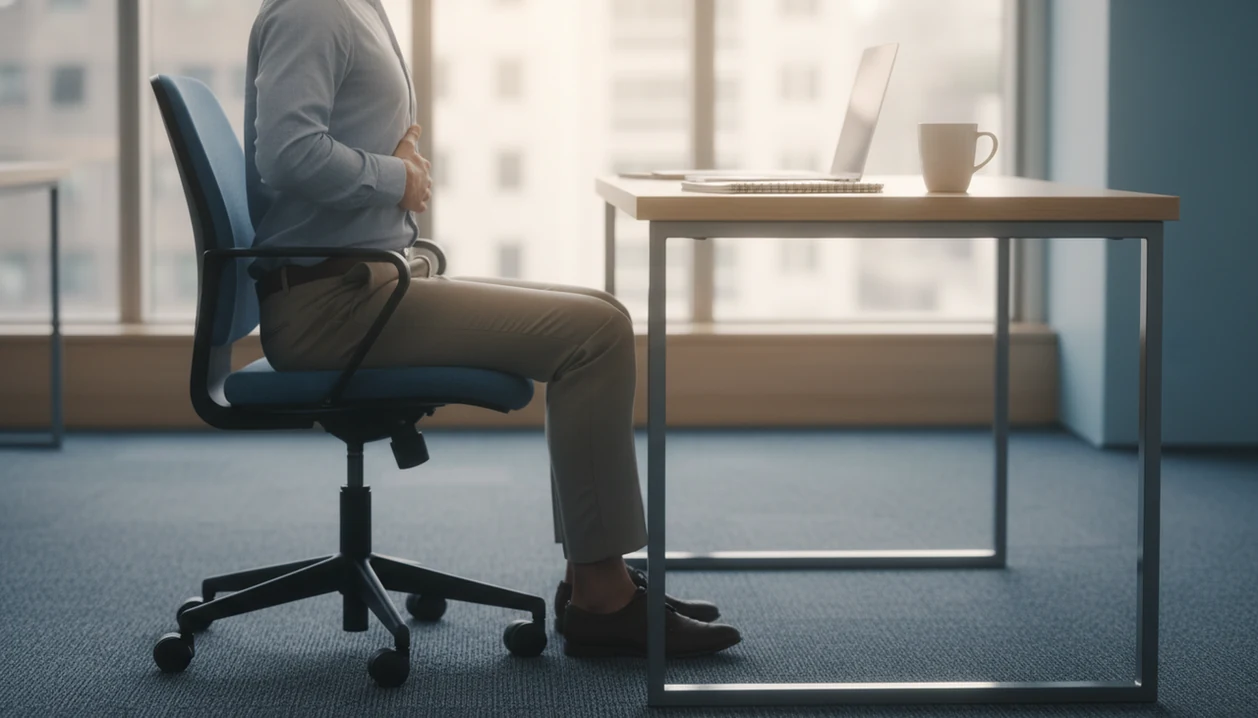


Breathing exercises at work are short, quiet breathing patterns used at a desk, before meetings, or between tasks to reduce stress intensity and support focus. Belly breathing, box breathing, longer exhales, and slow paced breathing offer different ways to pause without leaving the workplace. These practices aim to encourage parasympathetic activity, the part of the nervous system associated with rest, rather than forcing a large or unusually deep breath.
A useful workday reset is gentle, discreet, and easy to stop. One to five minutes can fit between tasks, while a longer scheduled break allows more time for slow pacing. MindTastik’s guided breathing sessions can provide a pattern to follow, but a comfortable rhythm matters more than completing a count. Breathing supports a pause; it does not resolve the source of workplace stress.
Workday essentials
- Use belly breathing, box breathing, extended-exhale breathing, or slow paced breathing for quick workplace resets.
- The main mechanism is parasympathetic activation, which helps counter the body’s stress response.
- MindTastik can pair workday breathing resets with guided meditation, sleep audio, and everyday calm routines.
Desk-friendly breathing pacer
Silent mode works well in an office.
This interactive tool needs JavaScript enabled.
Best breathing exercises at work for quick calm
| Exercise | Best for | Time needed | Discreetness | Not for |
|---|---|---|---|---|
| Belly breathing | General tension | 1 to 5 minutes | High | Breath-focus discomfort |
| Box breathing | Meeting nerves | 1 to 3 minutes | Medium | Lightheadedness with holds |
| Extended-exhale breathing | Anxiety spikes | 1 to 4 minutes | High | Forced deep breathing |
| Slow paced breathing | Scheduled calm breaks | 5 to 15 minutes | Medium | Rushed moments |
The best breathing exercises at work are quiet, seated, and equipment-free, so they fit between calendar blocks without becoming a project. Feet planted on office carpet. One minute is enough to begin.
Simple tools matter because workplace stress is common. The American Psychological Association reports that 65% of U.S. employees say work is a significant source of stress APA research: workforce. Good calm tools deliver a repeatable pause, not a promise to fix the whole job.
Image caption suggestion: A desk-friendly breathing reset can be done quietly between meetings or focused work sessions.
How We Chose the Best Breathing Exercises at Work
We chose the best breathing exercises at work by asking one practical question: can someone use this quietly during a real workday without gear, privacy, or a long setup? Techniques made the list when they were simple enough to remember under pressure and specific enough to match common workplace moments.
- Prioritize patterns that work seated at a desk, in work clothes, and without special equipment.
- Favor easy counts, such as balanced holds, longer exhales, or slow pacing, because stressed workers may not want a complex script.
- Exclude techniques that require loud breathing, dramatic movement, lying down, or anything likely to draw attention in a shared office.
- Flag safety concerns, especially breath holds, dizziness, panic sensitivity, tingling, or any urge to force a deep breath.
- Match each exercise to a clear use case, such as meeting nerves, anxiety spikes, general tension, or a scheduled calm break.
That is why the list leans toward quiet, repeatable resets instead of performance-style breathwork.
Five facts about workplace breathing exercises
- Breathing exercises mainly work by shifting the body toward parasympathetic calm, the “rest and digest” side of the nervous system.
- Many workplace breathing techniques can be done silently in 1 to 5 minutes, even at a desk or before joining a call.
- Slow breathing is associated with reduced stress and anxiety in clinical research, including trials of paced breathing. A 2023 meta-analysis of breathwork interventions found small-to-medium improvements in stress and anxiety outcomes nature reference: s41598 022 27247 y.
- Consistency matters more than intensity; a daily 2-minute reset often beats one strained 20-minute session.
- Breathing can support everyday calm, but it does not fix burnout, unsafe culture, poor management, or unmanageable workload.
Anyone dealing with back-to-back meetings may find MindTastik useful because it can turn a short reset into a named routine, instead of another vague “take a break” reminder.
What workplace studies do, and do not, show
Workplace research provides support for mindfulness programs, but it does not establish that every brief breathing pattern has the same effect. A 2019 review of 23 randomized controlled trials found benefits for stress, anxiety, psychological distress, well-being, and sleep after workplace mindfulness training. Those findings concern training programs, not a direct comparison of box breathing, belly breathing, and longer exhales during a one-minute desk pause.
Session length also matters when interpreting the evidence. In a randomized trial involving 238 employees, the mindfulness app used guided meditations lasting 10 to 20 minutes, several times per week. Participants reported improvements in well-being, distress, job strain, and perceived workplace social support compared with a wait-list group. A shorter breathing reset is a practical adaptation, not the protocol studied in that trial, and should not be presented as producing identical results.
How breathing exercises at work calm the nervous system
Breathing exercises at work calm the nervous system by slowing the stress response and encouraging parasympathetic activation. In plain language, the body gets a signal that it does not need to stay on high alert.
When stress rises, breathing often moves into the upper chest. Diaphragmatic breathing shifts more movement toward the belly and lower ribs. A slower exhale can feel like a safety cue because it reduces the sense of urgency in the body. Shoulders tense against a chair back before a presentation can soften a little after several slower rounds.
Research on 0.1 Hz paced breathing, about 6 breaths per minute, found that five minutes significantly increased heart rate variability in healthy adults frontiersin reference. Heart rate, blood pressure, and heart rate variability can respond to breathing, though no single breath pattern guarantees a result. For many workers, the practical benefit is clearer thinking before a meeting, presentation, or decision.
How to use breathing exercises at work during a busy day
Use breathing exercises at work by attaching them to moments that already happen, not by waiting for the “right” quiet time. Calendar alert before a guided reset. That tiny prompt helps.
- Choose a trigger such as opening the laptop, before a meeting, or after a tense call.
- Sit upright with relaxed shoulders, and place one hand near the belly if you have privacy.
- Inhale gently through the nose and let the belly expand without pushing.
- Exhale slowly without forcing, holding strain, or chasing a huge breath.
- Repeat for 1 to 5 minutes and stop if you feel dizzy, uncomfortable, or more panicked.
For teams building a broader calm habit, how to practice mindfulness at work can sit alongside breathwork. MindTastik fits this routine because reminders and guided sessions make the reset easier to repeat.
Belly breathing at your desk for work stress
Belly breathing is the foundational workplace breathing technique because it teaches slower, lower breathing without needing a script. It works well when your chest feels tight from rushing through emails or sitting too long.
- Best for general tension: Use it when your body feels braced but you still need to stay present.
- Best for shallow chest breathing: Try a 4-count inhale and a 6-count exhale.
- Best for a mid-day reset: Keep your face neutral and let the movement stay small.
- Not for breath-sensation anxiety: If focusing on the breath makes you feel worse, use a grounding cue instead.
Quiet nasal breathing makes this discreet in an open office. For workers who want a softer awareness practice, mindfulness practices at work can pair well with belly breathing.
Box breathing before meetings and presentations
Box breathing is a structured pattern: inhale, hold, exhale, hold, each for the same count. A gentle 4-4-4-4 rhythm is common, but shorter counts are fine.
- Best for pre-presentation nerves: The count gives your mind something specific to follow.
- Best for meeting transitions: Use one or two rounds before unmuting.
- Best for regaining composure: It can help after a sharp comment or surprise question.
- Not for breath-hold discomfort: Skip the holds if you feel lightheaded.
For people who need structure before speaking, MindTastik can support box breathing because a guided session removes the need to remember the pattern under pressure. It does not eliminate anxiety. It gives you a calm reset before the next sentence.
Extended-exhale breathing for workplace anxiety spikes
Extended-exhale breathing means making the exhale longer than the inhale. It is often easier than deep breathing because the goal is not a giant inhale. The goal is a slower release.
- Best for anxious spikes: Try it when a message lands badly or your pulse jumps.
- Best for tense emails: Take three rounds before replying.
- Best for difficult conversations: Use it before walking into the room.
- Best for post-meeting decompression: Let the exhale lengthen after the call ends.
- Not for aggressive over-breathing: Keep it gentle.
A simple pattern is a 3-count inhale and a 6-count exhale, through the nose or softly through the mouth. Fingers tracing a jacket zipper can add a grounding cue when counting feels thin.
Slow paced breathing for focus and everyday calm
Slow paced breathing usually means breathing around 6 times per minute. That often feels like a 4- to 5-second inhale and a 5- to 6-second exhale, adjusted for comfort.
- Best for scheduled breaks: Use it at lunch, between focus blocks, or before leaving work.
- Best for end-of-day transition: It helps mark the shift from work mode to home mode.
- Best for habit building: Repeating the same pace makes it easier to return to.
- Not for rushed crisis moments: Counting can feel irritating when pressure is already high.
A 2017 randomized trial found reduced state anxiety after 15 minutes of slow breathing at 6 breaths per minute PubMed research: 29288530. For office workers, slow paced breathing tends to work best when scheduled, while extended-exhale breathing fits sudden stress spikes. MindTastik can guide paced breathing alongside meditation and sleep audio.
How MindTastik fits into a work stress breathing routine
MindTastik offers guided practices for adults looking for everyday support with rest, stress, breathing, and calm routines. At work, that can look like a brief grounding exercise before the day begins, a breathing reset between tasks, an evening transition out of work mode, and sleep support later on.
For employees who want a calm voice to follow when the mind feels crowded, MindTastik can feel easier than staring at a blank timer. Best Meditation App for Sleep can also help with the other side of the stress cycle, when work tension lingers after hours and makes it harder to settle.
App guidance helps with reminders, structure, and consistency. It is not therapy, medical care, or a fix for workplace culture. If naming emotions helps you choose the right reset, an emotion wheel can add useful language.
Honest cons of breathing exercises at work
Breathing exercises at work are useful, but they can feel awkward. Some employees feel self-conscious sitting still at a desk, especially in open offices or shared workstations.
Counting can also feel irritating during high pressure moments. After a tense call, a numbers-based technique may feel like one more task. In that case, extended exhales without exact counting may be easier.
Benefits may be subtle unless practiced consistently. One rushed round before a stressful presentation might help, but it may not feel dramatic. Breathing exercises also cannot repair workload, leadership, pay, discrimination, or toxic culture issues. That responsibility cannot sit only on employees.
Some people need professional mental health support beyond self-guided breathing. Tools like calm.com, headspace.com, mindful.org, and MindTastik can support practice, but none replace qualified care.
Guided breathing for a short desk pause
MindTastik’s guided breathing exercises suit adults who prefer a voice to follow during a desk pause or before a meeting. Guided meditation and focus sessions offer another option when a scheduled break leaves more time. The app is most relevant when choosing and remembering a pattern feels like extra work.
Silent breathing may be a better choice when audio would distract from the next task. If attention to breathing increases anxiety, sensory grounding is an alternative. Persistent panic or harmful working conditions need support beyond an app.
When workplace breathing needs a different kind of support
Breathing exercises are supportive tools, not medical treatment. Seek urgent medical care for chest pain, fainting, severe shortness of breath, or symptoms that feel medically unusual. For persistent panic, trauma symptoms, or work-related harassment, use breathing only as a short-term support while getting qualified help. Use them gently and keep these limits in view.
- Breathing exercises are not a substitute for emergency care, therapy, medication, or medical treatment.
- Evidence is stronger for short-term stress and anxiety reduction than for long-term burnout prevention.
- People with respiratory or cardiovascular conditions should practice gently and ask a clinician if unsure.
- Stop if breathing exercises cause dizziness, chest discomfort, panic, tingling, or worsening symptoms.
- Workplace breathing should not shift all responsibility for stress from employers to employees.
- App-based routines depend on adherence; reminders help, but they do not guarantee consistency.
- Breath holds may not suit everyone, especially during panic, pregnancy, illness, or respiratory discomfort.
- If work stress is tied to harassment, unsafe conditions, or impossible workload, breathing is not enough.
For daily consistency, MindTastik is most useful when you want one routine that connects a brief work reset with an evening wind-down and bedtime audio from Best Meditation App for Sleep.
Between Meetings
- Use a breathing reset when you have a calendar gap that is too short for a walk but long enough to close your laptop for two minutes.
- Skip the longest technique when the next meeting starts soon; a simple extended exhale tends to be easier to repeat under time pressure.
- A desk pause works best when it has a clear end point, such as three slow rounds before reopening the meeting agenda.
- If a meeting reset feels awkward, keep your eyes open and soften your gaze toward the desk rather than forcing a meditation posture.
- Breathing practice may not be the right tool if you need to solve a scheduling conflict, send a decision, or step away from a tense conversation.
Choosing a breathing pattern before the next task
Mistake: choosing box breathing when you already feel rushed.
Box breathing can feel too structured during a tight turnaround. Try a longer exhale instead, because counting only the out-breath may reduce mental load during a quick desk pause.
Mistake: using belly breathing right before speaking if it makes you self-conscious.
A visible hand-on-belly cue is not always ideal before a presentation or team check-in. Use quiet nasal breathing with relaxed shoulders so the reset stays discreet and repeatable.
Mistake: treating every work stress moment as the same.
A meeting reset, a post-email pause, and a late-afternoon focus dip may need different breathing rhythms. Match the technique to the next task, not just to the stress level.
When you need a body-first reset before meditation, MindTastik breathing exercises offers simple breathing patterns you can follow along.
Breathing at work questions
What is a simple breathing exercise to do at a desk?
Sit with feet supported and shoulders relaxed. Inhale gently, then let the exhale last a little longer without pushing the air out. Repeat for a few comfortable rounds. Keep the movement small; a hand on the belly is optional, not necessary for a discreet desk pause.
Which breathing exercise is best before a meeting or presentation?
Box breathing can suit people who find a repeated count helpful before speaking. Use equal, comfortable counts for inhaling, holding, exhaling, and holding again. If holds cause discomfort or lightheadedness, skip them and use gentle breathing with a slightly longer exhale. No pattern guarantees that presentation nerves will disappear.
How long should a breathing break at work last?
One to five minutes is a practical starting point between tasks. Three gentle rounds may be easier when a meeting is about to begin. Longer scheduled breaks allow time for slow paced breathing. These short pauses are not equivalent to the longer mindfulness sessions used in some workplace trials.
Can breathing exercises help after a stressful email or conversation?
A few unforced breaths with longer exhales can create a pause before replying or returning to work. Exact counting is optional, especially if it feels like another demand. Breathing may help reduce immediate tension, but it cannot settle a disagreement, make a decision, or address harassment.
Can breathing exercises be done without coworkers noticing?
Quiet nasal breathing with small movements can be discreet at a desk. Keep eyes open and rest the gaze on the desk rather than adopting a special posture. There is no need to put a hand on the belly. A brief pause between tasks may be less conspicuous than a counted routine during conversation.
Is it safe to practise breathing exercises while driving for work?
Do not practise structured breathing or meditation while driving, cycling in traffic, operating equipment, or handling an immediate safety responsibility. Save the exercise for a stopped, safe break. Eyes-closed practice is inappropriate during travel that requires attention, and any exercise should stop if dizziness, tingling, panic, or worsening symptoms occur.
Can breathing exercises prevent burnout or replace therapy for work stress?
Breathing exercises are supportive tools, not medical treatment or a substitute for therapy. Evidence is stronger for short-term stress and anxiety reduction than for long-term burnout prevention. Persistent panic, trauma symptoms, or harmful working conditions need qualified support and practical action, not simply more breathing practice.