
Mindfulness for Commuting and Travel
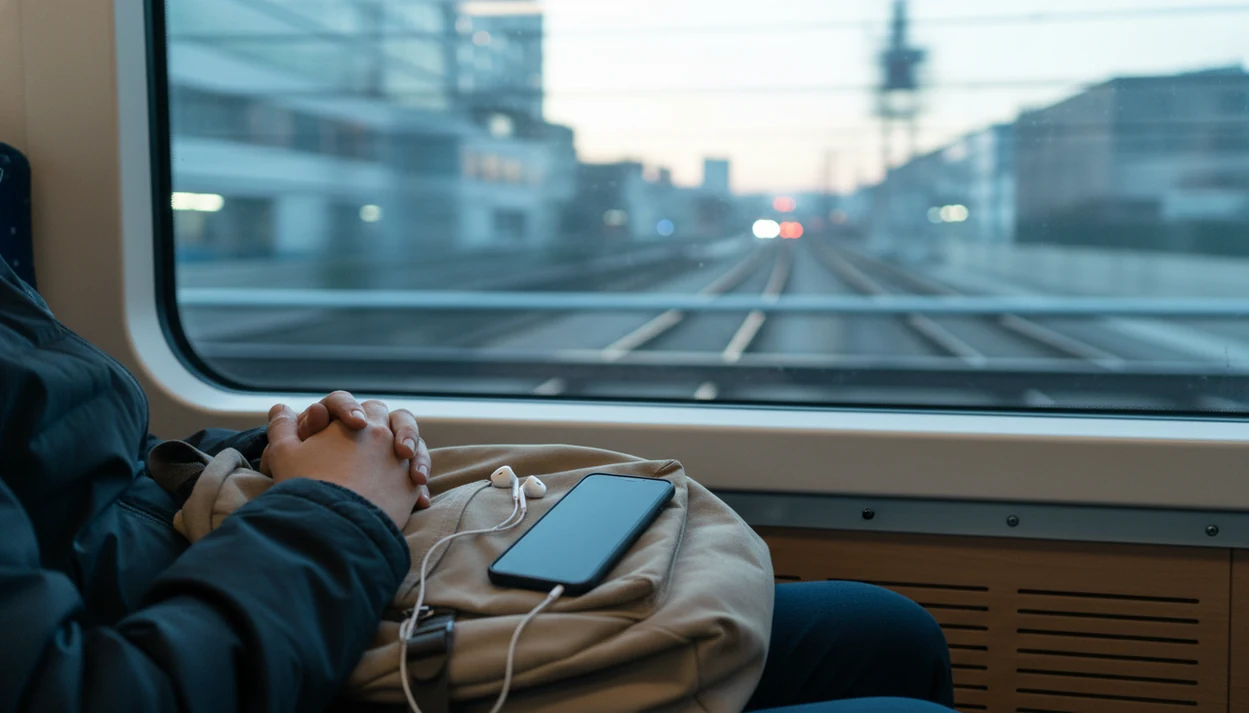


Mindfulness for commuting and travel means paying attention to the body, breath, and surroundings without zoning out or compromising safety. For drivers, that means ordinary, eyes-open awareness of posture, grip, and road conditions, not a guided meditation or controlled breathing exercise. Passengers on trains, buses, and flights have more room for guided audio, short body scans, and grounding practices, provided they can still hear announcements and respond to their surroundings.
The practice can help with everyday travel stress, but it cannot fix delays, crowded vehicles, or unsafe routes. Saved audio can be useful where Wi-Fi is unreliable. Severe panic or flight phobia needs more than a calming session, and mindfulness does not replace medical or mental health care.
Travel safety essentials
- Driver-safe mindful commuting means staying alert with eyes open, using breath and sensory awareness rather than eyes-closed meditation.
- Passengers on trains, buses, and flights can use guided audio, body scans, grounding practices, and offline downloads when Wi-Fi is unreliable.
- Travel mindfulness can reduce perceived stress and support anxiety management, but it does not replace medical or mental health care for severe panic or phobia.
Mindfulness while commuting: quick safety-first answer
Mindful commuting is present-moment awareness during travel, not deep meditation in a moving vehicle. Keep eyes open and attention on the route when driving, cycling, crossing traffic, or moving through a station.
The simplest version is noticing breath, posture, grip, sound, and the space around you. A driver might soften their shoulders at a red light. A train passenger can use a guided session or short body scan. A flight passenger can practice grounding before takeoff.
Safety comes first.
Many workers experience commuting as stressful. A global workplace report found that 28% of full-time workers describe their commute as a significant source of stress owllabs reference. Mindfulness can give that time a cleaner shape, but it should never make you less alert.
Mindful commuting mechanisms for stress, traffic, and delays
Mindful commuting works by shifting attention away from rumination, irritation, and doom-scrolling toward breath, body, and sensory cues. That shift gives the mind a specific job during traffic, late trains, gate changes, or crowded platforms. A meditation app for overthinkers can provide structured practice when repetitive thoughts make it hard to refocus.
Slower breathing can support nervous-system downshifting. Nonjudgmental labeling, such as “tight jaw,” “loud station,” or “worried thought,” helps separate the event from the spiral around it. The lay version is simple: name what is happening, then come back to one steady anchor.
Evidence is stronger for mindfulness in general than for commuting alone. A meta-analysis of 47 randomized controlled trials found mindfulness-based interventions produced moderate reductions in anxiety and depression symptoms JAMA Internal Medicine study: 1809754. Stress-response studies also suggest possible cortisol benefits, PubMed research: 25579413 though that should not be treated as direct proof for traffic stress.
For anxious commuters, breath labeling is often easier than silent meditation because it works with noise instead of fighting it.
What the app research says, and what it does not
A 2018 randomized trial involving 238 employees at two United Kingdom companies studied a mindfulness app with 10 to 20-minute guided meditations. Compared with a wait-list group, participants assigned to the app reported improvements in well-being, distress, job strain, and perceived workplace social support. This supports guided practice as a workplace stress-management option, but the trial was not a test of meditation during travel.
The distinction matters when choosing a commute routine. A one-minute platform reset or five-minute bus session is a practical adaptation, not the same protocol studied in that trial. The findings do not establish that a particular travel session will prevent panic, ease turbulence fears, or make driving safer. Choose the practice around the demands of the trip, rather than treating a studied session length as a target to complete in transit.
How to use commute meditation in 5 travel steps
Use commute meditation as a short travel routine, not another task to perform perfectly. Start before the trip, keep it simple during movement, and close it before entering work, home, or sleep mode.
- Set one intention before leaving. Choose a phrase like “arrive steady” or “stay alert and kind.”
- Choose the right practice for the setting. Use eyes-open awareness for driving, guided audio for passengers, and a flight-safe grounding practice once seated.
- Anchor attention to one cue. Pick breath, posture, feet, hands, or sound, then return when the mind wanders.
- Reset after interruptions. Treat announcements, traffic, delays, and seat changes as part of the practice.
- Close with a transition ritual. Take three breaths before opening email, entering the house, or starting bedtime audio. Try grounding before a difficult conversation if you need a calmer transition from travel stress to a sensitive discussion.
After a long travel day, the mind may keep circling back to a missed connection or a gate change while the seat-back pocket is finally empty. A brief closing practice can signal that the trip is over. If worries continue at bedtime, a meditation app for nighttime worry can help you settle after travel.
Mindful commuting practices for cars, trains, buses, and flights
The safest commute meditation depends on whether you are responsible for movement or riding as a passenger. Choose the lowest-risk practice first, then add audio only when your setting allows it.
| Travel setting | Safer mindfulness practice | Avoid |
|---|---|---|
| Driving | Eyes-open breath awareness, relaxed grip, posture checks, noticing road conditions | Eyes-closed meditation, trance-like audio, body scans that reduce alertness |
| Train or bus | Guided audio, body scan, sound labeling, phone-down practice | Blocking awareness so much that you miss stops or safety cues |
| Flight | Boarding breath routine, turbulence grounding, in-seat body awareness | Using mindfulness as the only support for severe flight panic |
| Waiting areas | 30- to 90-second grounding at gates, platforms, and transfers | Expecting calm in noisy spaces to feel silent or controlled |
If you bring headphones packed in a work bag, download one short practice and one longer option. Think: one earbud loose on a train platform, suitcase handle in one hand, announcement noise overhead, and a saved three-minute session already queued so you are not searching while boarding. For arrival stress, pair the commute with mindfulness practices at work so the reset continues after you sit down.
Five facts about travel mindfulness and commute stress
- Mindful commuting is awareness, not zoning out; the goal is to notice travel clearly while staying responsive.
- Most U.S. commuters drive. Census data reports that 76.4% commute by car, truck, or van, so alertness must come first census reference: your commute to work isnt longer than you think.html.
- Commuting is a significant stress source for many workers; one global report puts that share at 28% of full-time workers.
- Mindfulness evidence supports moderate anxiety reduction, but it is not a cure for panic disorder, trauma symptoms, or flight phobia.
- Offline audio matters for subways, airplanes, tunnels, and rural routes where signal drops at exactly the wrong moment.
Commute meditation usually works best when it is brief and repeatable, while longer guided sessions fit passengers who can safely close their eyes or relax attention. A simple approach to meditation streak building is repeating the same short practice on regular commuting days.
Offline travel mindfulness routines for planes, subways, and tunnels
Offline downloads help when travel removes the conditions apps usually assume: stable Wi-Fi, quiet rooms, and time to browse. Planes, subways, tunnels, international roaming, and crowded terminals all make a saved session more reliable.
Useful download lengths:
- 1 minute: A quick breathing reset before boarding, merging into traffic, or entering a station.
- 3 minutes: A compact grounding practice for a platform, shuttle, or rideshare wait.
- 5 minutes: A passenger-friendly guided session for trains, buses, and short flights.
- 10 minutes: A body scan, sleep audio, or self-hypnosis session when you are seated and not responsible for safety.
Apps such as MindTastik, Calm, Headspace, and mindful.org resources can support guided meditation, breathing exercises, sleep audio, and travel routines.
For MindTastik specifically, the travel-friendly use case is saving short breathing, guided meditation, and sleep audio sessions before leaving home. That matters most when the commute moves through airplane mode, subway tunnels, roaming limits, or low-signal rural routes.
Mindful commuting use cases and safety red flags
Mindful commuting fits everyday stress and transition moments, but it is not a substitute for safe travel conditions or professional care. Use it as a supportive practice, then adjust if anxiety rises instead of settles.
Best for
| Use case | Why it fits |
|---|---|
| Daily commute stress | Short breathing and sensory anchors make repeated delays feel less consuming. |
| Transition rituals | A two-minute reset can separate work mode from home mode. |
| Public transit anxiety | Sound labeling and grounded posture give the mind a steady task. |
| Flight nerves | In-seat breathing can support coping before takeoff or during turbulence. |
| Phone overuse | A phone-down practice reduces automatic scrolling during spare minutes. |
Not for
| Red flag | Better next step |
|---|---|
| Replacing driving attention | Keep eyes open and prioritize road safety. |
| Severe panic, trauma, or phobia | Consider professional support alongside mindfulness tools. |
| Unsafe routes or harassment | Focus on practical safety planning, not calming yourself through danger. |
If naming feelings helps, an emotion wheel can make “I’m stressed” more specific before the trip starts.
Image caption for mindfulness while commuting or traveling
Suggested caption: A commuter practices mindfulness while commuting with calm, eyes-open awareness on public transit, using breath, posture, and sound as simple anchors. Audio-friendly routines can support passengers in trains, buses, flights, gates, platforms, and waiting areas when it is safe to listen.
Avoid images that show a driver meditating with eyes closed, wearing isolating headphones, or appearing detached from the road. The safer visual is ordinary and alert: one hand around a bag strap, feet planted, gaze relaxed, shoulders lowered. Not dramatic. Just usable.
For app comparison context, readers choosing between downloads can also compare free mindfulness apps before saving travel audio. If you prefer personalized prompts, compare options for the best AI meditation companion app before choosing travel audio.
Guided audio for passenger time, not driving
MindTastik’s guided meditation library suits seated passengers who want a short practice on a train, bus, or flight. A brief guided session can give attention a clear focus without requiring a quiet room. Saved audio is useful for routes with unreliable reception.
Drivers and cyclists should choose ordinary eyes-open awareness instead of guided audio. Sleep stories and self-hypnosis belong in settings where reduced alertness is safe, not during active travel decisions. People with severe panic or flight phobia should seek professional support rather than rely on an app alone.
What mindfulness cannot fix during a commute
Mindfulness can make travel feel more workable, but it has real limits.
- Eyes-closed and trance-like meditation are unsuitable for driving, cycling, walking through traffic, or moving through busy stations.
- Commute meditation does not remove long travel times, unreliable transit, fuel costs, delays, unsafe routes, or crowded vehicles.
- Direct research on mindfulness while commuting is thinner than broader mindfulness research.
- Travel mindfulness may reduce anxiety, but it does not cure flight phobia or panic disorder.
- Some people feel more anxious when focusing closely on breath, heartbeat, or body sensations.
- People with severe anxiety, trauma symptoms, panic attacks, or phobia should consider support from a qualified clinician.
- Results vary. Some users feel calmer in one ride, while others notice modest or inconsistent effects.
Clinicians typically recommend professional evaluation when panic, avoidance, trauma symptoms, or phobia interfere with daily life. Mindfulness can sit beside that care, not replace it.
When to skip travel audio and stay fully alert
- Driving, cycling, crowded walkways, and unfamiliar stations require full attention, not closed-eye meditation.
- If you are already late and rushing, choose a 30-second breath reset instead of starting a longer routine you may resent.
- If the environment requires decisions, directions, or quick reactions, use simple sensory noticing rather than a guided voice.
- If travel noise feels overwhelming, a shorter grounding practice may fit better than trying to force deep relaxation.
- If you feel drowsy behind the wheel, mindfulness is not a substitute for stopping, resting, or choosing a safer travel option.
If your nervous system needs something faster than a full sit, try MindTastik breathing exercises for guided breath pacing.
Commuting and travel mindfulness questions
Is it safe to meditate while driving?
Driving requires continuous attention to the road. Do not use eyes-closed meditation, self-hypnosis, sleep audio, or breathing exercises while driving. Ordinary awareness of posture and grip is different from a meditation session. If a practice competes with driving decisions or reduces alertness, stop it.
How do I practice mindfulness on a crowded train?
Use a simple external anchor: contact with the seat, feet on the floor, or nearby sounds. Keep eyes open and remain aware of stops and announcements. A guided session is optional. If crowding requires frequent movement or attention to belongings, quiet sensory noticing is the better fit.
Can mindfulness help with flight anxiety?
Grounding and gentle, unforced breathing may support coping with ordinary flight nerves. Once seated, notice contact with the seat and identify visible objects or sounds. Mindfulness does not cure flight phobia or panic disorder. Severe or recurring anxiety calls for professional support, not just an in-flight recording.
What can I do about anxiety in traffic?
While driving, keep attention on traffic rather than starting a breathing exercise or guided session. Notice unnecessary tension in the hands or shoulders without distracting from road conditions. A calming practice can wait until safely parked. If anxiety makes safe driving difficult, pull over where safe and seek appropriate support.
How long should a commute meditation last?
Choose a length that fits the available passenger or waiting time. A one to three-minute reset can suit a short wait; a five-minute guided session can fit a bus or train ride. These are practical options, not proven minimum doses. End the session before boarding, changing stops, or making travel decisions.
Should I close my eyes during meditation on a bus or plane?
Eyes-open grounding is the safer default during travel. It leaves attention available for announcements, changes around the seat, and instructions from staff. A seated passenger has more flexibility than a driver, but closing the eyes is not necessary for mindfulness. Keep the practice easy to interrupt.
What if focusing on breathing makes travel anxiety worse?
Stop the breathing exercise if it causes dizziness, tingling, panic, or worsening symptoms. Shift attention outward to visible objects, surrounding sounds, or contact with the seat, without trying to control the breath. Repeated or severe symptoms deserve medical or mental health advice rather than a more demanding meditation technique.
How can I use guided meditation without Wi-Fi while traveling?
Save a suitable session before leaving, where offline downloads are available. Choose audio short enough for the passenger portion of the trip, and keep announcements audible. Stop playback before moving through a station or boarding. Lack of reception does not prevent a simple eyes-open grounding practice without audio.