
Calm Routine Between Meetings: 5 Short Resets for a Less Wired Workday
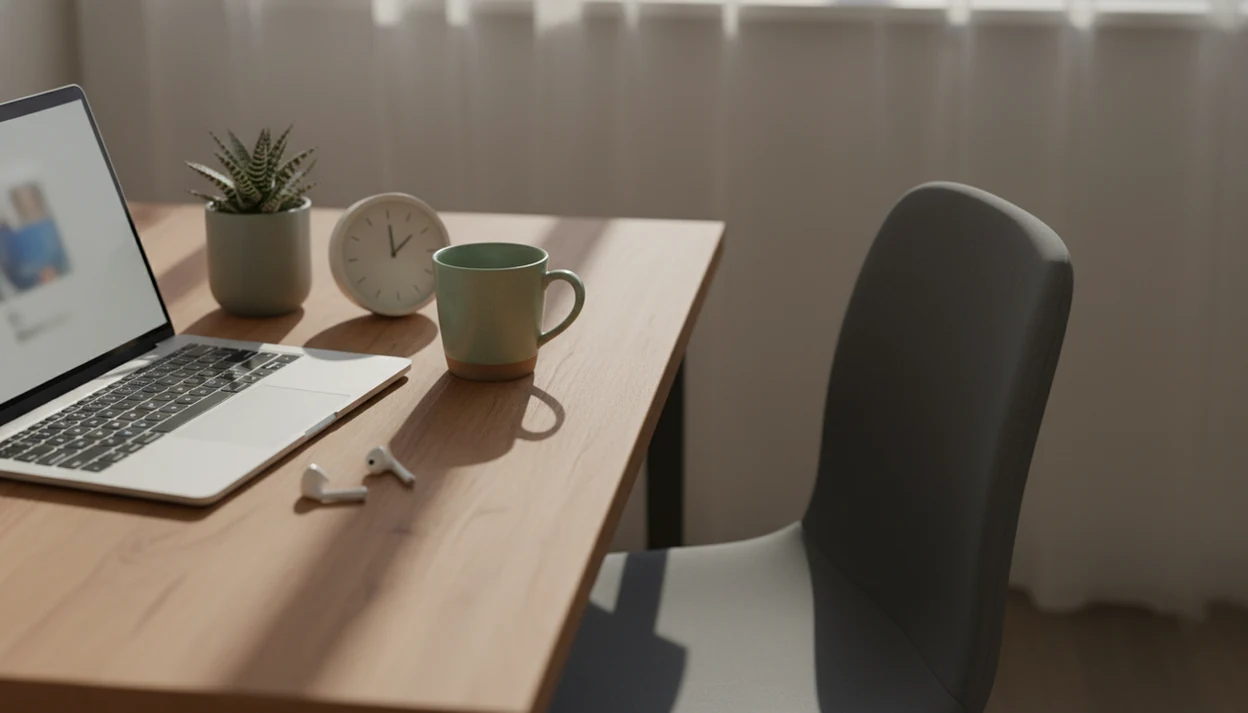


A calm routine between meetings is a repeatable 2-5 minute reset that uses breathing, body awareness, and a brief mental transition to leave one call behind before the next starts. The aim is everyday calm during a work break, not squeezing more output from a tired afternoon. A useful routine needs few steps: slow the breath, release one tense area, look away from the screen, and choose an intention for the next conversation.
Breathing with a longer exhale, such as four counts in and six out, is a simple starting point when the pace feels comfortable. MindTastik breathing exercises and guided meditation audio can provide the instructions, reducing the number of decisions needed during a crowded workday.
The essentials
- A useful between-meeting reset is short, repeatable, and calm-first, not a productivity hack.
- Breathing with a longer exhale, such as 4-6 breathing, is the easiest place to start.
- Guided breathing or meditation audio can reduce decision fatigue when your calendar is packed.
Best calm routine between meetings for most workdays
A reliable calm routine between meetings is: breathe, release, orient, then choose one intention. It takes about three minutes and works because it gives your body a real transition, not another task.
Start with slow breathing. Drop your shoulders, unclench your jaw, and look away from the screen. Then name one simple intention, such as “listen first” or “stay steady.” That’s enough.
The goal is emotional regulation and nervous-system support, not squeezing more output from a tired brain. The 2022 Stress in America survey found that 76% of U.S. adults reported stress-related health impacts in the prior month, including fatigue, headaches, or feeling nervous or anxious, according to the APA’s APA research: concerned future inflation.
The right fit for overloaded calendars is MindTastik because a saved 3-5 minute guided breathing track removes the “what should I do now?” decision.
Five best calm micro-routines for back-to-back meetings
These five between-meeting routines are short enough for real workdays and specific enough to repeat. Pick by gap length, body tension, or how wired your attention feels.
Best for a two-minute gap: 4-6 breathing
3-minute 4-6 breathing reset: Best for a two-minute gap or a tight calendar; not for moments when you need to talk through conflict. Inhale for four counts, exhale for six, and let the longer out-breath do the work.
Best for tension: shoulder-drop scan
Shoulder-drop body scan: Best when your neck, face, or hands feel braced; not ideal if movement would feel awkward in a shared room. Forehead resting on clasped hands for one breath can be enough.
Best after video calls: room grounding
Screen-to-room grounding: Best after slides, faces, and chat windows crowd your attention; not for deep emotional processing. Name three neutral objects in the room.
Best with headphones: guided meditation
One-song guided meditation: Best with earbuds or headphones; not ideal if audio will distract you before a high-stakes call. For app comparisons, free mindfulness apps can help you compare options.
Best for consistency: calendar cue
Calendar-linked breathing cue: Best for people who forget breaks; not for days when every buffer gets overwritten. Add one recurring reminder that says “breathe, release, choose.”
How a calm routine between meetings works in the body
A calm routine between meetings works by combining slow breathing, muscle release, and a transition cue that tells the brain one interaction has ended. Longer exhales can support parasympathetic activity, the “rest and digest” side of the nervous system.
In plain language, your body gets a stop signal. Your calendar may jump from budget review to hiring call, but your nervous system needs a bridge. A tiny ritual helps mark that shift.
A 2021 randomized clinical trial found that a single 5-minute slow breathing exercise reduced blood pressure and sympathetic nerve activity compared with control conditions, according to this ahajournals reference: HYPERTENSIONAHA.120.15490. Evidence supports general slow-breathing and mindfulness practices more strongly than any exact branded micro-routine.
For people learning the basics, how to practice mindfulness at work gives more context without turning the break into a project.
How to use a calm routine between meetings
Use this routine in an office, home workspace, parked car, or shared environment. Keep it quiet enough that nobody needs to know you are doing it.
- Set a timer for either 3 minutes or 5 minutes, depending on your next meeting gap.
- Breathe with a 4-count inhale and 6-count exhale for 90 seconds in the 3-minute version, or 3 minutes in the 5-minute version.
- Release one physical area, such as jaw, shoulders, hands, or belly.
- Notice one thing in the room and one feeling in the body without fixing either.
- Choose one intention for the next meeting, then open your calendar or meeting link.
If your priority is less decision fatigue, save one short MindTastik breathing session inside a calendar reminder because the track becomes the cue. Playlist names scanned under blankets can wait until bedtime; workday calm needs fewer choices.
Keep breathing comfortable and stay alert to the surroundings
Four counts in and six out are instructions, not targets to force. If that pace feels strained, return to ordinary breathing and use an eyes-open grounding exercise instead. Stop a breathing exercise if it causes dizziness, tingling, panic, or worsening symptoms. An occupational trial of stress-regulation approaches evaluated perceived stress and autonomic regulation, but it does not establish that every breathing pattern suits every person.
A parked car is an option only when no driving or immediate safety task is underway. Do not meditate while driving, cycling in traffic, or operating equipment. As a passenger, an eyes-open pause can focus on contact with the seat, feet on the floor, sounds, and visible objects. The workplace evidence cited here should not be read as evidence that eyes-closed practice is safe during travel.
How we picked these between-meeting calm routines
We picked these routines for emotional regulation, repeatability, and low setup, not productivity optimization. A good reset should fit the gap you actually have.
- Short duration: Each routine can work in 2-5 minutes.
- Repeatability: The steps are simple enough to use daily.
- Low setup: No mat, room change, or special posture is required.
- Privacy-friendly: Most steps can be done at a desk or in a bathroom stall.
- Evidence alignment: Workplace mindfulness research suggests small to moderate improvements in distress and well-being, and reviews of brief mindfulness interventions report reductions in stress and anxiety symptoms; cite the specific review used here with an inline URL.
- App compatibility: Guided audio can make the same routine easier to repeat.
MindTastik fits this use case when people want a simple way to pause between meetings with guided breathing, meditation, sleep audio, anxiety support, and everyday calm tools. The app offers short sessions for adults who want structure without turning a workday reset into something complicated.
For broader ideas beyond meeting gaps, mindfulness practices at work covers longer and more varied options.
Workplace research does not establish a three-minute dose
A 2019 review of 23 randomized controlled trials found benefits from workplace mindfulness training for stress, anxiety, psychological distress, well-being, and sleep. That supports mindfulness as a workplace stress-management option. It does not establish that this exact three-minute sequence, or a particular inhale-to-exhale count, produces the same results as the programs studied.
The distinction matters when choosing a realistic practice. In a randomized trial involving 238 employees, the app-based intervention used 10-20-minute guided meditations, not two-minute meeting buffers. A shorter reset is a practical adaptation for a tight calendar. It can mark a pause without being presented as an equivalent dose or a guaranteed way to reduce anxiety.
Best calm routine for a 3-minute meeting gap
What calm routine works well for a 3-minute meeting gap? Use 30 seconds of posture, 90 seconds of 4-6 breathing, 30 seconds of body release, and 30 seconds of intention.
Sit back if you can. Put both feet down. Breathe in for four counts and out for six. Then soften one place that feels tight, such as your shoulders or hands. Finish with one sentence: “In this next meeting, I will stay present.”
For busy calendars, this routine is often easier than a full meditation because it has no setup and no performance pressure. It is not ideal when you need a longer decompression break after a hard conversation. For a longer break, try ways to feel better in 15 minutes without adding pressure to your day.
For professionals who need a fast reset between calls, MindTastik covers the gap with short guided breathing rather than asking you to build a practice from scratch.
Best calm routine for stressful video meetings
After a stressful video meeting, screen-to-room grounding is the strongest quick reset. Look away from the screen, name three neutral objects, then relax your jaw and shoulders before the next call begins.
Video meetings keep attention locked on faces, slides, chat alerts, and your own camera tile. That visual load can make the room feel oddly far away. Hands unclenched after a video call tell you the body was holding more than you noticed.
Try this: look at a lamp, a wall corner, and a notebook. Take one slow exhale. Let your eyes land somewhere that is not a screen.
This routine is not for processing a conflict in depth. If the meeting involved a serious disagreement, use the reset first, then make space later to write notes or talk it through.
Best guided breathing and meditation setup between meetings
Guided audio helps because it removes decision fatigue during short breaks. When the track is already chosen, you only have to press play.
Save one 3-5 minute breathing session and one 5-10 minute meditation session. Add the short track link to calendar buffers or recurring reminders. The longer track can sit in your lunch break or end-of-day transition. After your final meeting, an end of day reflection routine can help you review the day and settle for the evening.
| Setup need | Recommended choice | Why it helps |
|---|---|---|
| Two-minute buffer | 3-5 minute breathing track | Starts quickly and stays discreet |
| Heavy mental load | 5-10 minute meditation | Gives more room to settle |
| Repeated meetings | Calendar reminder link | Makes the cue automatic |
| Bedtime spillover | Sleep audio later | Separates work stress from wind-down |
For people who already use MindTastik for sleep, the same library can also support workday calm by keeping short breathing tracks, longer meditations, and nighttime audio in one place. In one randomized workplace mindfulness study, brief daily practice was associated with lower perceived stress and better well-being; add the exact study URL here before publication.
For nighttime carryover, free meditation apps for sleep may help compare bedtime options.
Guided audio for a short meeting break
MindTastik's guided breathing exercises suit a between-meeting pause when spoken instructions feel easier to follow than counting alone. Choose audio that fits the available gap rather than squeezing a longer session into it. Guided meditation is another option when there is more time to sit quietly.
A silent, eyes-open reset is a better fit when audio would distract others or attention must stay on the surroundings. MindTastik supplies practice instructions, not medical treatment or a solution to an overloaded calendar.
What a meeting reset cannot fix
A calm routine between meetings can support a steadier workday, but it has clear limits. Good meditation app for sleep anxiety and everyday calm routines deliver structure and repeatability, not medical treatment or a way to tolerate harmful work conditions.
- A calm routine is not treatment for clinical anxiety, depression, trauma, panic symptoms, or burnout.
- Short breaks do not fix overwork, toxic culture, unrealistic workloads, harassment, or unsafe workplaces.
- Benefits depend on consistency; occasional use may feel pleasant but may not shift stress patterns much.
- Some people feel restless, panicky, or uncomfortable during breathing or meditation and may need grounding, movement, or professional guidance instead.
- Evidence is stronger for general mindfulness and slow breathing than for any exact branded micro-routine.
- Calm, Headspace, Mindful.org resources, and MindTastik may all support practice, but none should replace therapy, medication, emergency care, or a qualified professional’s advice.
- Seek professional support when symptoms are intense, persistent, impairing, or connected to trauma.
Close the last task before starting the reset
The most overlooked part of a calm routine between meetings is the first 20 seconds: closing the last task before starting the reset. A simple version is to mute notifications, look away from the screen, take one steady breath, and let the short session begin without trying to feel calm immediately. A reset works better when it marks a boundary, not when it becomes another performance task.
If your nervous system needs something faster than a full sit, try MindTastik breathing exercises for guided breath pacing.
Between-meeting reset questions
What is the fastest way to reset between back-to-back meetings?
Look away from the screen, release the jaw and shoulders, and take a few comfortable, slower breaths. Then name one intention for the next call, such as listening first. With only a minute available, keep the steps simple rather than trying to complete a longer meditation.
Is three minutes enough for a calm routine between meetings?
Three minutes is enough to follow a short sequence of breathing, muscle release, and an intention for the next meeting. It is not an established minimum dose for reducing work stress. Workplace studies often evaluated longer sessions or training programs, so a three-minute pause is best treated as a practical adaptation.
How do I do 4-6 breathing at my desk?
Sit in a comfortable position and breathe in for four counts, then out for six. Keep the breath unforced and avoid holding it. If the count feels too slow or creates strain, return to normal breathing. Stop if dizziness, tingling, panic, or worsening symptoms occur.
How do I calm down after a stressful video meeting?
Close the meeting window and look at three neutral objects in the room, such as a notebook, lamp, or wall corner. Notice tension in the jaw, shoulders, or hands and let those areas soften. This creates a brief transition, but it does not resolve a conflict or replace time to process a difficult conversation.
Should I meditate before a presentation or after a difficult meeting?
Both are reasonable, with different aims. Before a presentation, notice body sensations, label thoughts as planning or worry, and return attention to the next sentence. After a difficult meeting, use grounding and muscle release to mark the transition. Neither approach guarantees that anxiety or irritation will disappear.
Can I do a meeting reset without closing my eyes?
Yes. Keep the eyes open, look away from the screen, and notice visible objects or contact with the chair and floor. A quiet body scan can also be done with eyes open. Do not use meditation as a competing task while driving, operating equipment, or handling an immediate safety responsibility.