
Gentle Alarm and Meditation Morning Routine for Everyday Calm
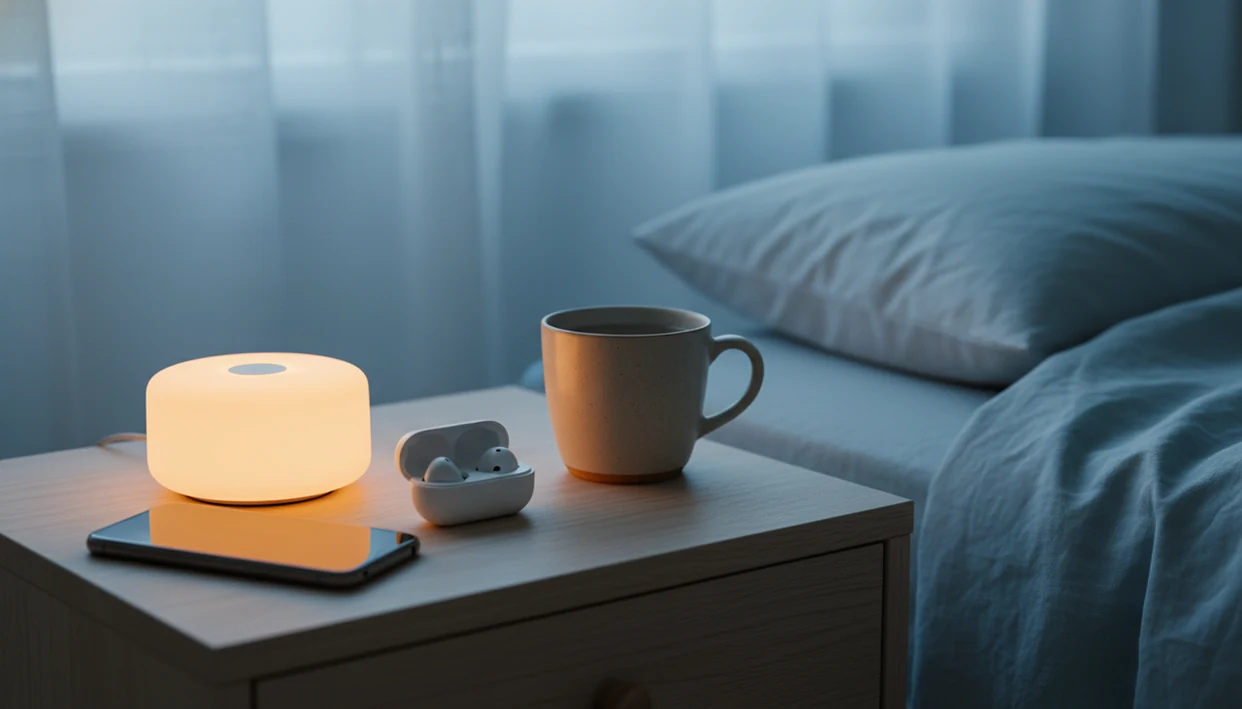


A gentle alarm and morning meditation routine pairs a soft wake-up cue with a brief meditation immediately after waking, ideally before checking notifications. The cue can be sound, light, or vibration; the meditation can be breathing, grounding, or a guided session lasting 3 to 10 minutes. The aim is to make the alarm a prompt to pause rather than a prompt to start scrolling.
A useful setup must still wake the sleeper reliably. Choose the cue and first meditation the night before, then keep that pairing for a week before adjusting it. For an app-based routine, one selected MindTastik track can provide the next step after the alarm without requiring a morning search through the library.
The morning plan
- Use a gradually increasing alarm, soft tone, vibration, or sunrise light instead of a jarring sound.
- Start with a short guided meditation, ideally 3-10 minutes, before opening messages or social apps.
- Keep the same cue and same first track for at least one week so the routine becomes automatic.
4 Gentle Alarm Meditation Routine Options for Calm Mornings
Choose the routine that matches how you actually wake up, not the one that sounds most peaceful on paper. Wake reliability, sleep anxiety, household noise limits, and available time matter more than aesthetics.
- Soft-sound plus breathing: Use a low, rising tone, then sit up for five slow breaths. This works well if sound wakes you without jolting you. For a more structured breathing option, try box breathing with equal counts for inhaling, holding, exhaling, and pausing.
- Sunrise-light plus body scan: Pair gradual light with a short scan from jaw to shoulders to stomach. It helps people who wake tense.
- Vibration plus gratitude: Use a watch or phone vibration, then name one thing you can handle today. Quiet rooms stay quiet.
- MindTastik guided track after alarm: Stop the alarm, dim the screen, and press one saved everyday calm track.
For people who feel stuck after the alarm ends, MindTastik can act as the guided meditation layer by removing the “what should I start with?” choice. A phone with guided audio in a quiet room keeps the first step simple.
Brain Science Behind a Gentle Alarm Meditation Routine
A gentle alarm meditation routine works by turning waking into a cue-routine-reward loop: the alarm is the cue, meditation is the routine, and a steadier body state is the reward. In plain terms, your brain starts to learn, “When this sound happens, I breathe first.”
Gradually increasing sound may also soften sleep inertia, the groggy lag that can follow sudden waking. Experimental awakening research found that rising sound intensity reduced sleep inertia compared with abrupt alarms PubMed research: 29223498. That does not mean every quiet alarm is enough for every sleeper.
Still, consistency matters. The same tone, same posture, and same first track teach the morning system that waking does not have to mean immediate stress.
5 Steps to Use a Gentle Alarm Meditation Routine with MindTastik
Use this setup tomorrow morning if you want the least friction. The key is deciding everything the night before, when you are not half-awake and bargaining with the snooze button.
- Set your alarm tone and volume before bed, choosing a soft sound that still wakes you.
- Place the phone across the nightstand or room, with Do Not Disturb already on.
- Open a specific MindTastik breathing, anxiety-support, or everyday calm track before sleeping. An evening meditation habit can make your preselected track part of a calming bedtime routine as well.
- Start that guided session immediately after stopping the alarm, before checking notifications.
- Repeat the same cue and track for seven mornings before changing the routine. Use a mindfulness habit tracker to record each morning session and notice patterns in your consistency.
For people who need a calm first minute, MindTastik fits because the saved-track workflow moves straight from alarm to guided audio. No library browsing at 6:42 a.m. If your workday is the stressful part, carry the same reset into how to practice mindfulness at work.
5 Selection Criteria for Gentle Alarm Meditation Routine Setups
The right setup should wake you reliably, keep the first phone touch boring, and move you into a guided session quickly. Judge the routine by these five facts.
- Wake reliability: Very soft alarms may fail for heavy sleepers, so use a backup alarm when timing matters.
- Calmness: The cue should feel steady, not startling. A rising tone often works better than a sharp beep.
- Setup friction: The fewer taps after waking, the more likely the habit repeats.
- App compatibility: Pick a flow that opens directly into a guided meditation, timer, or saved favorite.
- Beginner friendliness: A clear voice prompt beats a blank timer for most new meditators.
A 2018 review of mindfulness-based mobile apps found that app-based mindfulness programs showed promise for stress, mood, and well-being outcomes, though study quality and app features varied PMC research article: PMC5792706. For beginners, MindTastik works as a starting point because breathing and everyday calm sessions are easier to follow than silent meditation.
Gentle Alarm Meditation Routine for Sleep Anxiety
Does a gentle alarm meditation routine help sleep anxiety in the morning? It may support a calmer transition by pairing a soft alarm with a guided anxiety-support meditation or breathing exercise before the day starts demanding answers.
The first minutes matter. Avoid email, news, and social feeds until after the session, because those feeds can turn waking into scanning for problems. Try this five-minute sequence: sit up, exhale slowly, scan the body from face to feet, name one manageable next step, then stand.
A 2014 JAMA Internal Medicine meta-analysis found mindfulness meditation programs produced small to moderate reductions in anxiety compared with control conditions JAMA Internal Medicine study: 1809754. That is supportive evidence, not a cure claim. If the priority is waking without immediately bracing for the day, MindTastik covers the handoff from alarm to anxiety-support audio through a preselected guided session. A feelings wheel can also help name the mood after the session.
3-Minute Gentle Alarm Meditation Routine for Busy Beginners
A three-minute routine is often better than a 30-minute plan you abandon by Wednesday. Short sessions are easier to repeat, and repetition is what turns a morning idea into a morning habit.
Try this mini-routine: alarm, sit up, three slow breaths, press play, stand after the final cue. That is enough structure to interrupt scrolling without pretending your morning is empty. The couch-posture uncertainty many beginners feel is less of a problem when the instruction is simple: sit upright and listen.
For busy beginners who need a low-pressure start, MindTastik fits because a 3-minute or 5-minute guided session gives a clear beginning and ending. The most useful morning meditation is often the one you will repeat tomorrow because it fits the real morning you have. If cost is part of the choice, compare free meditation apps for sleep.
What helps a morning meditation habit last
The evidence for attaching meditation to a routine is more direct than the evidence for this exact alarm-plus-meditation combination. In a 2021 randomized trial of meditation anchors, participants received reminders to meditate for at least 10 minutes daily for eight weeks. The fixed-anchor group had higher odds of daily practice during the intervention. Morning anchors were especially common among the strongest adherers, but the study did not establish that a gentle alarm itself improves persistence.
Keeping the session short can make it easier to fit into a morning, but it does not guarantee better adherence. A 2023 study comparing shorter and longer meditation assignments found that the groups completed averages of 8.43 and 7.55 sessions out of 14, respectively. That difference was not statistically significant. Three minutes is therefore a practical starting choice, not a proven solution to missed practice.
Plan for interruptions as well as ordinary mornings. In the anchoring trial, the odds of daily meditation declined over time despite reminders. A practical response is to decide what happens after a missed day: return to the usual wake-up cue and a manageable session at the next opportunity. This restart plan is an inference from the adherence findings, not a separately tested intervention. An alarm can prompt practice; it cannot guarantee it.
Gentle Alarm Meditation Routine for Groggy Wake-Ups
For groggy wake-ups, use gradually increasing sound or light, then meditate seated rather than lying down. Calm waking should make you less startled; it should not keep you half-asleep under the blanket.
Per the CDC, 36% of adults reported short sleep duration of less than 7 hours in at least one state, and short sleep is linked with impaired daily functioning CDC guidance: mm6506a1.htm. A calm routine cannot replace enough sleep. It can only make the transition gentler.
Choose a track with clear verbal prompts, breath counting, or morning intention setting. Ceiling shadows at 2 a.m. are one kind of problem; dragging yourself through a too-short night is another. On days your body feels slow but you still need structure, MindTastik helps because morning guided tracks keep you seated, listening, and lightly engaged.
Phone App Drawbacks in a Gentle Alarm Meditation Routine
Phone-based routines are convenient, but they can fail when the alarm turns into a notification check. The safeguard is to make the meditation easier to reach than the inbox.
| Drawback | What can go wrong | Practical safeguard |
|---|---|---|
| Notification temptation | You stop the alarm and start scrolling | Turn on Do Not Disturb |
| Alarm too soft | Deep sleepers miss the wake cue | Use a backup alarm |
| Too many app choices | You browse instead of meditate | Save one MindTastik track |
| Research gap | The exact alarm-plus-meditation combo has less direct evidence | Treat it as a habit support, not medical treatment |
| Household limits | Sound may disturb a partner or child | Use vibration or sunrise light |
Calm, Headspace, and mindful.org all offer useful mindfulness education or audio, but the practical issue is the first tap after the alarm. For people who wake and drift into apps, MindTastik works only if the track is preselected and notifications stay hidden.
Guided audio for the first few minutes awake
MindTastik’s breathing exercises, guided meditations, gratitude sessions, and focus sessions offer several possible follow-ups to a gentle alarm. A breathing session suits a simple pause; a gratitude or focus session suits a morning that needs one clear intention. Choose one session in advance from the guided meditation library rather than browsing after waking.
People who tend to check messages as soon as they touch their phone may prefer a separate alarm and an unguided breathing practice. MindTastik is not a medical treatment for persistent sleep or anxiety problems.
What a gentle alarm cannot fix
A gentle alarm meditation routine is a supportive practice, not a fix for every sleep or anxiety problem. Keep these limits in view before you build the routine around it.
Seek support from a licensed clinician if morning anxiety includes panic attacks, persistent insomnia, thoughts of self-harm, or symptoms that interfere with work, caregiving, or basic daily functioning.
- It cannot compensate for chronically insufficient sleep or an irregular sleep schedule.
- It is not a treatment replacement for severe insomnia, depression, panic, or clinical anxiety disorders.
- Some people need louder or redundant alarms for work, caregiving, safety, or medication timing.
- Smartphone routines can backfire if notifications, messages, and social feeds are not controlled.
- Benefits vary by consistency, stress level, bedtime habits, meditation preference, and wake-up time.
- Evidence is stronger for mindfulness meditation and gradual alarms separately than for the exact combined routine.
- A soft alarm may be wrong for anyone who repeatedly sleeps through important wake cues.
If mornings stay difficult despite enough sleep and a steady routine, consider broader sleep hygiene changes. Mindfulness while commuting can help extend the calm cue beyond the bedroom.
When caregiving or shift work leaves no quiet wake-up window
A gentle alarm meditation routine is not the best choice if your morning requires immediate action, such as caregiving, shift work, or a tightly timed commute. It works better when you can protect a short session after the wake-up cue, even if that means only three minutes of steady breath and a guided voice before the day starts. The calmest routine is the one that fits the real morning, not the ideal morning.
If your nervous system needs something faster than a full sit, try MindTastik breathing exercises for guided breath pacing.
Gentle alarm and morning meditation questions
What counts as a gentle alarm?
A gentle alarm uses a softer wake-up cue, such as a gradually increasing tone, vibration, or sunrise light, rather than an abrupt sound. It still needs to wake the sleeper reliably. The useful distinction is not simply quiet versus loud, but a tolerable cue that works at the required time.
How long should meditation last after the alarm?
Three to ten minutes is a practical starting range for this routine, not an established minimum effective dose. Choose a duration that fits between waking and the first obligation. Shorter assignments do not necessarily produce better adherence, so consistency and a workable schedule matter more than choosing the shortest possible track.
Should I meditate in bed or sit up after waking?
For a groggy morning, sit upright rather than staying under the covers. Use clear prompts, breath counting, or a brief body scan so the session has a defined task and ending. If remaining in bed leads to snoozing, move the practice to a chair before starting the audio.
What if a gentle alarm does not wake me up?
Wake reliability comes before softness. Adjust the cue or use a backup alarm when getting up on time matters. A vibration or very quiet tone is not suitable if it is regularly missed. Meditation can follow a reliable alarm; there is no need to risk oversleeping to preserve a calm-sounding setup.
Can morning meditation help with anxiety on waking?
It can serve as a supportive pause before messages, news, or daily demands, but this exact alarm-and-meditation routine has limited direct evidence. Try slow breathing, a body scan, and one manageable next step. Persistent anxiety, panic attacks, insomnia, or difficulty with daily functioning calls for clinical support rather than relying on the routine alone.
How can I use my phone for meditation without checking messages?
Choose the session before bed and turn on Do Not Disturb so messages are not the first task after the alarm. Keep the sequence simple: stop the alarm, sit up, and start the selected audio. If touching the phone repeatedly leads to scrolling, use a separate alarm and practice without an app.
What should I do if I miss a morning meditation?
Resume at the next planned cue rather than making the next session longer to compensate. Practice often declines even when reminders are provided, so a missed morning is not unusual. A restart plan is a practical response to those findings, although restarting without compensatory practice has not been directly tested as a separate intervention.