
Audio Meditation for Stress Support
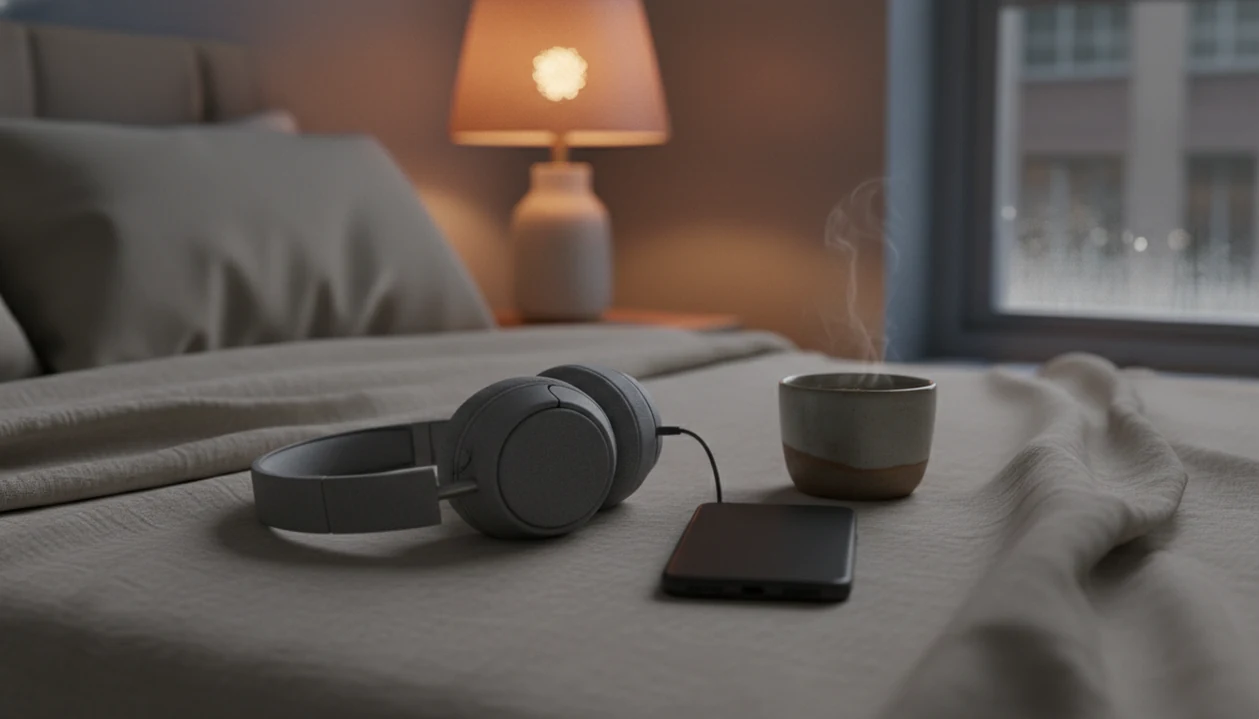


Audio meditation for stress is spoken guidance for breathing, body scans, grounding, or sleep wind-downs that can be followed without watching a screen. A steady voice gives attention a simple task when thoughts race or muscles feel tense. The format suits work breaks, anxious moments, and bedtime, with short breathing sessions for a pause and longer body scans for physical tension.
MindTastik offers adults guided meditation, sleep-focused audio, breathing exercises, and self-hypnosis sessions for rest and everyday calm. These are support tools, not medical treatment. Research on mindfulness generally examines repeated sessions rather than a single recording, so immediate relief should not be confused with lasting improvement. A useful routine starts with a manageable track and leaves room for other support when stress persists.
The essentials
- Audio-only meditation gives adults calming guidance without bright screens, making it useful before sleep or during stressful moments.
- The most evidence-aligned formats include breath pacing, body scans, grounding exercises, and short guided mindfulness sessions.
- Benefits are usually strongest with regular practice over several weeks, not from a single session. A meditation reminder app can provide a daily prompt when building a consistent practice feels difficult.
Best audio meditation formats for stress support
The best audio meditation format depends on what stress feels like in the moment: tense, restless, panicky, overthinking, tired, or trying to sleep. A good starting point is to match the track to the body signal, not to the longest session in the library. An emotion wheel can help you name what you feel before choosing a calming practice.
- Guided breathing: Useful when stress feels fast or jumpy. A voice counts the inhale and exhale so you have one simple task.
- Body scan: Better when shoulders, jaw, or legs feel tight. The guidance moves attention through each body area.
- Grounding meditation: Helpful for anxious overthinking. It brings attention back to sounds, contact points, and the room. A feelings wheel can help clarify anxious emotions when overthinking makes them hard to name.
- Sleep wind-down: Best when the day keeps replaying under the blanket.
- Self-hypnosis-style relaxation: A fit for listeners who like repeated calming suggestions and a slower pace.
A useful low-stimulation library should group tracks by need, such as sleep, breathing, body scans, grounding, and everyday calm, so the choice feels less random. For broader app shopping, compare free mindfulness apps by format, cost, and daily use.
How audio meditation works for stress signals
Audio meditation supports stress regulation by using voice guidance, breath cues, attention training, and body awareness to interrupt threat loops. In plain terms, it gives your mind something steady to follow when stress is trying to run the whole room.
The mechanism is not magic. Slower breathing can support nervous-system downshifting, which means the body may move away from high-alert reactivity toward a calmer baseline. A review of breathing exercises reported improvements in anxiety and sleep quality, but combined different techniques and study designs: review of breathing exercises in adults. Attention training also matters. When the voice says, “notice the chair beneath you,” the brain gets a present-moment target instead of another worry chain.
Good meditation audio delivers guidance and repetition, not a cure or a promise. Therapists and mental-health guidelines commonly recommend mindfulness-style practices as supportive tools for stress, anxiety, and emotional regulation, but not as replacements for care when symptoms are severe or persistent.
For adults who want a quiet starting point, MindTastik keeps the path simple by organizing sessions around sleep, breathing, relaxation, and everyday calm. Sitting upright with feet on the floor and letting the first shoulder drop be the cue can be enough to begin. An everyday calm routine checklist can help you turn a quiet starting point into a repeatable daily habit.
Five facts about guided meditation audio and stress
- Meditation use has grown among U.S. adults; the CDC reported that about 17% used meditation in the past 12 months in 2022, up from 4.1% in 2012 CDC guidance: db325 h.pdf.
- A meta-analysis of 47 randomized trials found mindfulness meditation programs produced moderate improvements in anxiety and depression and small improvements in stress or distress JAMA Internal Medicine study: 1809754.
- Audio-only delivery is especially useful for bedtime and anxiety routines because it avoids visual stimulation and lets the listener keep eyes closed.
- Short sessions can help when practiced consistently, especially 3 to 10 minutes for a reset and 10 to 20 minutes for deeper settling.
- Evidence-aligned audio uses techniques such as breath pacing, body scans, grounding, and mindful awareness. Generic background noise may feel pleasant, but it is not the same thing.
Good meditation app for sleep anxiety and everyday calm should deliver repeatable guidance, not dramatic promises.
Guided practice and background sound have different evidence
A recording that teaches a meditation practice is not the same intervention as a track of white noise or soft background sound. A systematic review of 34 studies on auditory stimulation, involving 1,103 participants, found no clear overall evidence that these audio interventions reliably improve sleep. A sound can feel soothing without having a proven, consistent effect on sleep.
The evidence for mindfulness also needs a timing distinction. A review of mindfulness trials in people with sleep disturbance examined interventions delivered across multiple treatment sessions, with sleep assessed before and after treatment. Those findings support mindfulness as a possible addition to care, not an instant insomnia treatment. Neither this evidence nor the auditory-stimulation review establishes that one recording rapidly resets the brain.
How to use audio meditation during stressful moments
Use audio meditation during stress by choosing a short track, reducing distractions, and letting the voice do most of the structure. The goal is not to perform meditation well. It is to stay with one manageable cue.
- Choose a 3 to 10 minute breathing or grounding session for quick support, or a 10 to 20 minute body scan for deeper practice.
- Pick headphones when the space is noisy, or use a low speaker volume if you need to stay aware of your surroundings.
- Settle into a posture you can hold, such as feet on the floor, back against a chair, or lying down before sleep.
- Start before stress peaks when possible, such as before opening tense messages or walking into a presentation.
- Return to the voice when thoughts wander, without scolding yourself.
- Repeat the same session for a week if decision fatigue makes the library feel too big. Try Just for Today Meditation when focusing on one day's practice feels more manageable than planning a long routine.
The guidance on how to practice mindfulness at work also recommends short practices that fit into a repeatable workday routine.
If the track makes you more keyed up, stop, lower the volume, or switch to a shorter grounding exercise later.
Best audio meditation sessions for bedtime stress
Can audio meditation help with bedtime stress? Yes, it can support a wind-down routine by giving the mind a calm track to follow without bright visuals, scrolling, or written instructions.
Sleep wind-downs, body scans, slow breathing, and calming narration are the strongest bedtime formats. The screen-free part matters. When the room feels too alert for rest, checking the time can turn into another stress cue. Audio lets you set the phone aside, soften the eyes, and follow the guidance without debating what to do next.
When racing thoughts at night are the issue, MindTastik fits adults who need a guided wind-down because sleep audio and bedtime sessions are organized around listening rather than visual interaction.
Best for wired-but-tired adults. Not for urgent medical or mental health needs.
Best guided breathing audio for sudden anxiety
Short guided breathing audio is often the easiest format during sudden anxiety because it gives the listener a count, a pace, and a next breath. That structure can interrupt spiraling long enough to create a small gap.
Paced breathing tracks usually guide the inhale, pause, and exhale. Some add grounding cues, like noticing feet on the floor or the sound nearest you. Knees still under a cafe table, one quiet exhale before opening messages. That is the real use case.
For adults who want a steady voice to follow when worry starts crowding in, MindTastik offers sudden stress support through short breathing exercises with simple start points. The mechanism is specific: choose a brief session, follow the count, and return to the cue when attention jumps.
Best for manageable stress spikes and anxious overthinking. Not a substitute for crisis help, emergency support, or professional care when anxiety is severe, persistent, or unsafe.
Best body scan meditation audio for physical tension
What is body scan meditation audio? Body scan meditation is guided attention through body areas, usually with gentle noticing, softening, and release cues from head to feet or feet to head.
Audio is a natural fit because the listener can lie down, close the eyes, and follow the sequence without watching a screen. A chair cushion beneath a stiff back is enough for a short version. A bed works well for a longer one.
Body scans are also evidence-aligned stress practices, similar to the breathing and body-awareness audio guides offered in NHS-style mental wellbeing resources. They work best when the guidance is clear and slow, not when the track is only ambient sound.
People looking for physical tension support may prefer MindTastik because body-focused sessions sit near breathing and sleep options, making it easier to choose between a 5-minute breathing exercise and a 20-minute body scan. However, body scans may not suit people with discomfort, trauma history, or body-focused anxiety.
How we picked low-stimulation meditation audio
Low-stimulation meditation audio should be judged by technique, pacing, sound design, and real-world repeatability. Nice music is not enough if the track gives no usable guidance.
| Selection criterion | What we looked for | Why it matters |
|---|---|---|
| Evidence-aligned technique | Breathing, body scan, grounding, mindfulness cues | Keeps the session more than background noise |
| Calm narration | Clear voice, slow pacing, minimal performance | Reduces effort when stressed |
| Low-stimulation sound | Soft music, no sudden volume changes | Helps bedtime and anxiety use |
| Session length options | 3 to 10 minutes and 10 to 20 minutes | Fits quick resets and deeper practice |
| Offline listening | Downloaded sessions | Supports travel, commuting, and weak signal areas |
| Sleep-friendly use | Dim-screen starts, bedtime categories | Reduces visual stimulation |
Compare MindTastik with Calm for broad sleep libraries, Headspace for structured mindfulness courses, Insight Timer for free teacher-led tracks, and mindful.org for non-app mindfulness guidance. Claims about any specific app should be interpreted cautiously unless that app itself has been directly studied.
Image caption suggestion: headphones beside a bed showing audio meditation for stress support in a screen-free wind-down routine.
Audio Meditation Apps and Alternatives Compared
The best audio meditation choice depends on the job: sleep, breathing, body tension, or everyday mindfulness. MindTastik is a low-stimulation fit for sleep anxiety and everyday calm, while Calm, Headspace, Insight Timer, and non-app resources each solve a different problem.
- Choose MindTastik if you want guided sleep audio, breathing tracks, body scans, and self-hypnosis-style relaxation in one simple listening library. Its cost model is app-based, and the main limit is that branded-app evidence is usually thinner than evidence for meditation programs as a category.
- Use Calm when sleep stories, nature soundscapes, and polished bedtime audio matter most. It is generally subscription-led, strong on sleep audio, and less focused on minimal decision-making.
- Pick Headspace for structured mindfulness courses and beginner lessons. It is usually subscription-based, strong on general mindfulness libraries, but may feel more like a curriculum than a quick reset.
- Try Insight Timer for a large free library of teacher-led breathing tracks, body scans, and talks. The tradeoff is uneven pacing and quality across creators.
- Keep non-app options, such as mindful.org-style guidance, saved audio files, or therapist-recommended recordings, for screen-free practice without another subscription. They can be practical, but library depth and personalization are limited.
When to Seek Professional Help for Stress or Anxiety
Seek professional help when stress or anxiety is intense, persistent, unsafe, or starts shrinking daily life. Audio meditation can support coping, but it cannot diagnose a condition, replace therapy, or stand in for medical treatment.
Watch for red flags: panic attacks that feel unmanageable, thoughts of self-harm, feeling unsafe, severe depression, trauma flashbacks, insomnia that keeps repeating, substance use to get through the day, or trouble working, parenting, studying, driving, eating, or leaving home. If symptoms keep returning for weeks, or if bedtime audio becomes the only thing holding the night together, it is time to add human support.
- Contact a licensed clinician, primary care doctor, therapist, or psychiatrist for persistent anxiety, depression, trauma symptoms, or sleep problems.
- Describe what is happening clearly, including frequency, triggers, panic symptoms, sleep loss, and any safety concerns.
- Use meditation as a bridge skill while you wait for care, not as the whole plan.
- Call local emergency services or a crisis hotline right away if you might hurt yourself or someone else, feel unable to stay safe, or are in immediate danger.
- Check government or clinical resources such as NIMH, SAMHSA, NHS, CDC, or your local health service for mental-health guidance.
MindTastik sessions for daytime stress and bedtime tension
MindTastik's guided breathing exercises suit adults who want spoken cues during a short daytime pause. Guided meditations offer another option for everyday practice, while sleep stories and self-hypnosis audio suit listeners who prefer narration during a bedtime wind-down. Adults who find voices distracting may prefer soundscapes or quiet practice. Persistent anxiety, recurring insomnia, or trauma-related symptoms call for professional support rather than relying on an audio library alone.
What stress meditation audio cannot treat or guarantee
Audio meditation can be a supportive practice, but it has clear limits. Research supports mindfulness and meditation generally more than any single branded app, including MindTastik.
- Audio meditation is not a standalone treatment for severe anxiety disorders, major depression, trauma-related symptoms, or crisis situations.
- Results usually depend on regular practice over several weeks, not one session after a hard day.
- Not all audio tracks are evidence-based; some are simply music, affirmations, or generic relaxation content.
- People with hearing difficulties may need captions, vibration cues, or non-audio options.
- Attention difficulties can make longer sessions frustrating, so shorter tracks may be more realistic.
- Noisy homes, shared bedrooms, and commuting environments can make subtle guidance hard to hear.
- Some people feel worse with inward attention, especially during body scans or silence-heavy sessions.
- Meditation can complement therapy, medication, sleep hygiene, and stress planning, but it should not replace needed care.
If naming feelings is part of the stress pattern, an emotion wheel can help before choosing a session.
When you need a body-first reset before meditation, MindTastik breathing exercises offers simple breathing patterns you can follow along.
Audio meditation for stress: common questions
Can audio meditation reduce stress straight away?
A short recording can provide a manageable breathing or grounding task during a stressful moment, but immediate relief is not guaranteed. Research generally evaluates repeated sessions or longer intervention periods. Feeling calmer after one track is different from showing a lasting reduction in stress, anxiety, or sleep problems.
How long should a stress meditation recording be?
A 3 to 10 minute breathing or grounding track is a practical starting point for a work break. A 10 to 20 minute body scan leaves more time for noticing physical tension. These are session choices, not proven minimum doses. A manageable recording is more useful than one that is difficult to repeat.
Is guided meditation or calming music better for stress?
Guided meditation provides instructions, such as following the breath or noticing contact with a chair. Music provides sound without necessarily teaching a practice. The better fit depends on whether spoken cues help or distract. Evidence for mindfulness practice should not be treated as proof that every calming music or noise track works.
What audio meditation helps with racing thoughts at night?
Sleep wind-downs, body scans, and gentle breathing recordings offer a steady sequence to follow instead of returning to worries. The aim is a quieter bedtime routine, not forcing sleep. Mindfulness sleep studies generally involve repeated practice, so a single night without improvement does not establish that the approach is ineffective.
Do I need headphones for guided meditation?
No. A speaker at a comfortable low volume can work in a quiet room, especially when awareness of the surroundings matters. Headphones may make speech easier to follow in a noisy space. For bedtime listening, avoid earbuds that cause pain or pressure and use a timer rather than leaving playback running all night.
Is 4-7-8 breathing the best audio exercise for anxiety?
It is not established as the best option. One trial found lower anxiety scores after 4-7-8 breathing in patients recovering from bariatric surgery, but that result does not prove superiority for everyday stress or sleep. Other breathing methods have also been studied. A comfortable, manageable pace matters more than treating one count as essential.
Can audio meditation replace therapy for anxiety?
No. Audio meditation can support coping, but it cannot diagnose anxiety or replace therapy or medical treatment. Professional help is appropriate when symptoms persist, panic feels unmanageable, sleep problems keep returning, or stress interferes with work and daily life. Thoughts of self-harm or feeling unsafe require urgent human support.