
Midday Meditation Reset for Everyday Calm
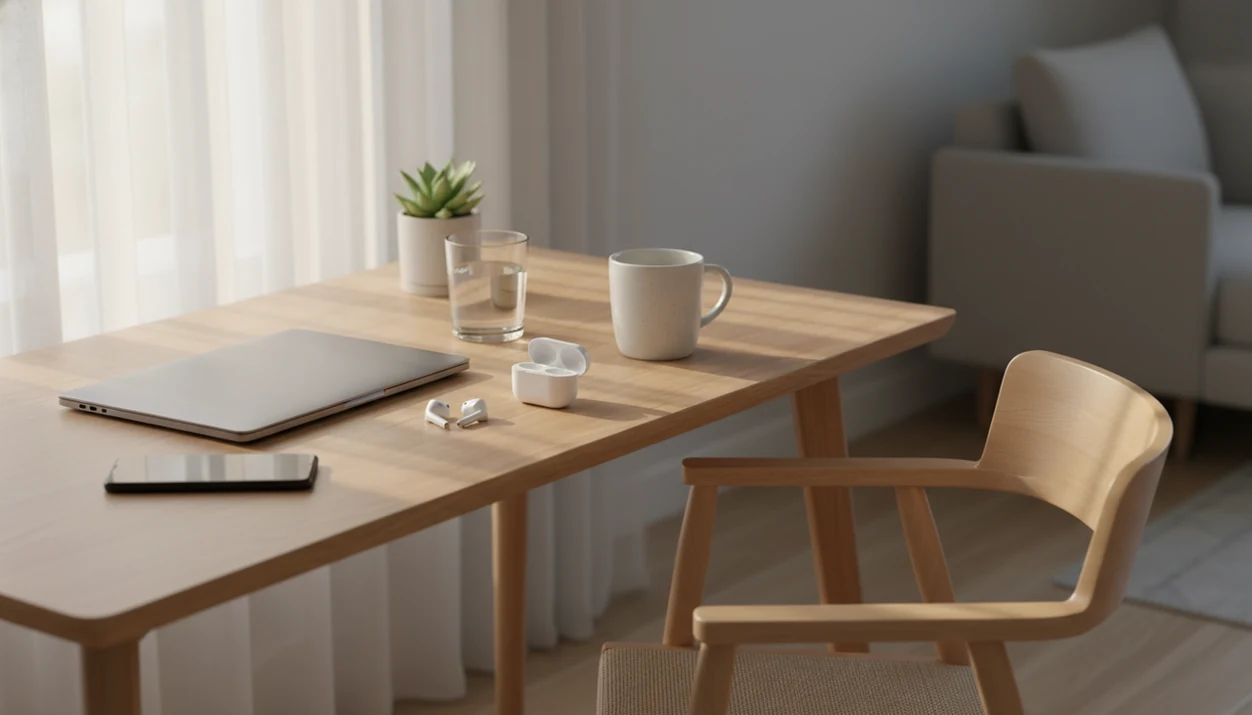


A midday meditation reset is a brief, intentional pause, usually 3 to 10 minutes, for settling attention, noticing tension, and easing the transition into the next part of the day. It can use guided breathing, a body scan, sensory grounding, or a short walking meditation. The aim is not an empty mind or instant relief. It is a manageable break from the task or conversation that has been taking up attention.
Lunch, a gap between meetings, or work shutdown can provide a repeatable cue. Choose a practice that fits the available time and privacy, then return to the next activity. Guided audio can reduce the need to decide what to do during a crowded workday.
The essentials
- Use a 3-10 minute reset at the same cue each day, such as lunch, a meeting break, or work shutdown.
- Choose simple practices: guided breathing, a body scan, sensory grounding, or a short walking meditation.
- MindTastik can help turn the reset into a daily app habit that connects workday calm with evening sleep and anxiety support.
Best midday meditation reset options for workday calm
The best midday meditation reset depends on your cue, your privacy, and what you need afterward: steadier focus, less tension, or a cleaner transition out of work mode.
Desk breathing reset: Best for emails, task switching, and stress spikes when you cannot leave your chair. A 3-minute guided session can fit between calendar blocks.
Lunch body scan: Best for separating the first half of the day from the second. You scan the body slowly, then return to work with less clenched energy.
Pre-meeting focus reset: Best before presentations, interviews, or tense calls. Breath counting or sound awareness gives attention one place to land.
Work-to-home transition reset: Best when work is technically over but still running in your head. A 10-minute reset can happen in the car, on a walk, or before opening the front door.
MindTastik fits these moments because guided audio removes decision fatigue. Good meditation apps deliver a clear next step, not another menu to manage.
Midday meditation reset comparison table for common transitions
Use the table below to match the reset to the moment you actually have, not the ideal version of your day. The right option is the one you’ll repeat when the inbox is full and your next meeting starts soon.
| Reset type | Best for | Time needed | Where to do it | Not for |
|---|---|---|---|---|
| Desk breathing reset | Email stress, task switching, quick tension | 3 minutes | Desk, quiet corner, parked car | People who need movement first |
| Lunch body scan | Midday tension, jaw tightness, mental fatigue | 5 minutes | Lunch table, break room, bench | People uncomfortable with body focus |
| Pre-meeting focus reset | Presentations, complex work, emotional meetings | 8 minutes | Empty room, headphones at desk, hallway seat | Moments when you’re already late |
| Work-to-home transition reset | Shutting down work mode and entering home mode | 10 minutes | Car, walk, porch, bedroom chair | Situations needing immediate caregiving or action |
For deeper workplace options, compare this with practical mindfulness practices at work.
How a midday meditation reset works in the nervous system and habit loop
A midday meditation reset works by anchoring attention to one simple target, such as the breath, body sensation, sound, or a visible object, while giving the stress response a short interruption.
That does not mean your mind goes blank. It means you notice the drift, then return to the anchor. Again and again. That repetition trains attentional control in plain terms: you practice coming back.
The habit part matters just as much. A stable cue, like closing lunch, ending a meeting, or shutting the laptop, becomes the trigger. The routine is the same guided session. The reward is the felt shift afterward, even if it is small.
Brief mindfulness studies have found attention and mind-wandering benefits after short practices, but effects depend on the study design and participant group. A brief mindfulness-breathing study reported better sustained attention in beginners, while a separate mindfulness-training study reported less mind-wandering and improved working-memory capacity. For beginners, the repeatable cue-routine-reward loop often matters more than finding a long session.
How to use a midday meditation reset in MindTastik
Use MindTastik as a simple repeatable routine, not a productivity test. The goal is to choose once, press play, and let the guidance carry the next few minutes.
- Set a cue that already happens daily, such as finishing lunch, joining a meeting five minutes early, or closing your laptop.
- Choose one short session in MindTastik, such as a breathing reset, body scan, or focus meditation. A tool that can guide breathing exercises can provide spoken cues when you prefer not to count breaths yourself.
- Use headphones if possible, or sit with a quiet posture and dim the phone screen before starting.
- Rate calm or focus afterward with a simple 1-5 check, without judging the session.
- Repeat for a week before changing the practice, so the habit has time to feel familiar.
The right fit for people who forget to pause is MindTastik because the same guided session can become the named routine after lunch or before meetings. Best Meditation App for Sleep is also relevant if you want midday calm to connect with an evening wind-down routine.
Evidence behind short midday meditation resets
Short midday meditation resets have some supportive evidence for stress, attention, and mind-wandering, but they do not prove that a few minutes will cure anxiety, insomnia, or burnout. The strongest takeaway is modest: brief practice can help some people create a calmer pause when it is repeated consistently.
Workplace mindfulness research is best read as stress-support evidence. Studies and reviews often look at perceived stress, distress, attention, or workday wellbeing, and results vary by program length, job setting, and study quality. That is different from making clinical claims about anxiety disorders or insomnia, where care may involve therapy, medication, sleep assessment, or other professional support.
For beginners, consistency usually matters more than session length because the brain learns the cue through repetition. A 3-minute reset after lunch that happens five days a week is more useful than a 20-minute plan you keep postponing. Use the evidence practically:
- Pick one daily transition you can protect.
- Repeat the same short practice for at least a week.
- Notice small shifts in breath, tension, focus, or reactivity.
- Keep expectations modest and supportive.
Benefits are incremental, not medical treatment.
Best for desk stress: 3-minute breathing reset
A 3-minute breathing reset is the fastest option when you need to stay seated and still look like you’re working. Sit with both feet down, soften your shoulders, and follow the breath without forcing it.
Count one inhale and one exhale as a cycle. When the mind jumps to the email you forgot, return to the next breath. That return is the practice, not a failure.
Hands unclench after a video call. Sometimes that is the whole win.
This reset is useful for emails, task switching, and quick stress spikes. It is not ideal if your body is too activated to sit still. In that case, a short walk or standing stretch may be a better starting point. If your work setting is noisy or public, the practical guide to how to practice mindfulness at work may help you adapt the reset.
Best for lunch breaks: 5-minute body scan reset
A 5-minute body scan reset helps mark lunch as a real transition, not just food eaten beside a screen. Start at the shoulders, then notice the jaw, hands, chest, stomach, and feet.
Lunchtime is a strong habit cue because it repeats on most workdays. You do not have to create a new life event. You attach the reset to one that already exists.
Workplace mindfulness evidence is promising but mixed: a systematic review of mindfulness-based workplace interventions reported reductions in perceived stress and psychological distress in several studies, while noting variation in program length, workplace setting, and study quality (NIH research: PMC5443484). That does not mean one lunch reset fixes a hard job, but it supports a steadier pattern.
For workers who carry tension into the afternoon, MindTastik fits because a 5-minute guided body scan gives clear instructions without needing a quiet studio. Not everyone likes body attention, however. If scanning the stomach or chest feels uncomfortable, choose breath, sound, or a simple sensory grounding practice instead.
Best for meetings: 8-minute focus meditation reset
An 8-minute focus meditation reset is useful before work that needs attention and emotional steadiness. Try breath counting, or listen to one repeating sound and return to it whenever the mind moves.
Short single-session mindfulness studies, including sessions around 8-15 minutes, have found improvements in attention and reductions in mind-wandering in experimental settings. The point is not to become unshakable before a meeting. It is to enter with one practiced anchor.
Use this before presentations, complex writing, interviews, or emotionally charged meetings. The clock matters, though. If you are already late, take one slow breath and move.
Anyone dealing with meeting dread may find MindTastik useful because a guided focus session turns the waiting window into a specific routine. If emotions are hard to name afterward, an emotion wheel can help separate irritation, worry, and fatigue.
Best for work-to-home transition: 10-minute everyday calm reset
A 10-minute work-to-home reset helps close work loops before you enter the next part of the day. End work, breathe, release the role you were carrying, then choose one home action.
That action might be greeting your family, changing clothes, starting dinner, or sitting quietly for two more minutes. Small and specific beats vague and noble.
Options include a parked-car meditation, a walking reset, or sitting before entering the house. If you commute, mindfulness while commuting can turn that in-between time into a calmer handoff. If you travel as a passenger, breathing exercises while commuting offer another option for the transition home.
If your priority is linking workday calm with evening sleep support, MindTastik covers the bridge because daytime resets can lead into bedtime guided audio and anxiety support routines later. This is supportive practice, not a fix for burnout, conflict, chronic overwork, or relationship stress. For a structured evening breathing practice, try 4-7-8 breathing before bed, keeping the pace comfortable rather than forcing each breath.
How we picked midday meditation reset practices for beginners
We picked beginner-friendly midday reset practices using five practical filters. Advanced techniques can be useful, but most people need something they can repeat on a normal Tuesday.
- Short duration: Sessions had to fit inside 3-10 minutes, so the practice does not compete with the whole workday.
- Repeatable cue: Each reset attaches to lunch, a meeting break, task switching, or work shutdown.
- Low privacy requirement: The practice can work at a desk, in a parked car, or on a short walk.
- Simple instruction: Breath, body, sound, and sensory grounding are easier than layered visualization.
- Transition fit: Each reset has a clear “before and after” moment.
Per the CDC/NCHS, 14.2% of U.S. adults reported using meditation in the past 12 months in 2017, up from 4.1% in 2012 (CDC guidance: db325.htm). This page prioritizes daily-use app habits over advanced meditation techniques. For people comparing structured options, free mindfulness apps can be a useful next step.
Shorter sessions do not automatically become stronger habits
A three-minute reset is easier to fit into a calendar, but short duration alone does not guarantee regular practice. In a 2023 randomized study of meditation duration, participants assigned shorter practices completed an average of 8.43 of 14 sessions, compared with 7.55 in the longer-practice group. The difference was not statistically significant. This study does not establish an ideal length for a lunch break; it cautions against treating brevity as a complete habit plan.
Pair the chosen duration with a specific event, such as putting away lunch, and decide what happens when that event is disrupted. In a 2021 randomized trial of meditation anchors, the fixed-anchor group had higher odds of daily practice, although daily meditation declined over time despite reminders. A practical response is to keep a backup pause and resume at the next planned cue after a missed day. That restart advice is an inference from adherence findings, not a directly tested intervention.
Honest cons of a midday meditation reset habit
A midday reset can feel too small when stress is intense. If the calendar is overloaded or a conflict just happened, three quiet minutes may not feel like enough.
Some users also get frustrated because they expect instant calm. Meditation often works more like a small shift than a switch. The forehead resting on clasped hands after a hard call may still be there. The breath just gives you one place to begin.
Open offices, parenting demands, shift work, and packed calendars can also make consistency difficult. Too many different routines create another task, which defeats the point.
For beginners who want less choosing, MindTastik works better when you pick one cue and one favorite session for a full week. Calm, Headspace, and mindful.org can also offer useful education, but choice overload is real when you are already tired.
Guided breathing for a predictable workday pause
MindTastik's guided meditations, focus sessions, and breathing exercises suit a lunch break or a pause before a meeting when spoken instructions are helpful. Reusing one session keeps the choice simple rather than making each break a search through the library.
A silent practice or short walk may fit better when audio is distracting, headphones are impractical, or sitting still feels uncomfortable. MindTastik is not a medical treatment, and a session cannot replace action on an excessive workload.
What a midday reset cannot fix
A midday meditation reset is useful, but it has real limits. Keep the practice supportive, modest, and connected to appropriate care when needed.
- A midday reset is not a replacement for professional treatment for clinical anxiety, depression, trauma, or severe insomnia.
- It will not solve toxic workloads, harassment, chronic overwork, unsafe environments, or a manager who ignores boundaries.
- Some people feel uncomfortable sitting quietly or noticing body sensations, especially during periods of high stress.
- Benefits are usually incremental and depend on consistency, not one dramatic session.
- Very long or complex sessions can reduce adherence for beginners because they feel hard to start.
- People in acute distress should seek appropriate professional, crisis, or emergency support.
- If meditation increases distress, stop the session and choose grounding, movement, or support from another person.
MindTastik is a supportive everyday calm tool, not medical care. Best Meditation App for Sleep can support a wind-down routine, but severe sleep problems deserve qualified guidance.
When food, movement, or a work boundary comes first
- If you need food, water, or movement first, meditation may feel frustrating; basic body needs often deserve the first reset slot.
- If you are operating equipment, driving, or responsible for immediate safety, wait until you can pause without divided attention.
- If the workday issue requires a boundary or a direct conversation, a meditation reset can support steadiness but should not replace the needed action.
- If closing your eyes feels uncomfortable in a shared space, use an eyes-open breathing exercise with a neutral focal point instead.
- If you only have one minute, do not abandon the habit; one slow breath cycle can preserve the routine until a longer pause is realistic. For a similarly brief bedtime option, consider a 10-second brain reset before bed as part of your evening routine.
If your nervous system needs something faster than a full sit, try MindTastik breathing exercises for guided breath pacing.
Midday meditation reset questions
How long should a midday meditation reset last?
A practical range is 3 to 10 minutes: three minutes for seated breathing, five for a body scan, or a longer pause before a meeting or after work. These are scheduling options, not proven minimum doses. Choose a length that fits the actual break without creating pressure to rush afterward.
Should I meditate before or after lunch?
Either can serve as a cue. Finishing lunch is useful because it marks a clear transition into the afternoon. If hunger is making it hard to settle, eat first. The important choice is a recognizable point in the routine, rather than a particular clock time or a supposedly ideal order.
How can I meditate at my desk with my eyes open?
Keep both feet on the floor, soften the shoulders, and rest the gaze on a neutral object. Notice ordinary breathing without making it deeper or slower. When attention moves to email or nearby conversation, return to the next breath. A quiet room and closed eyes are not required for this version.
What if I feel too restless to sit through a meditation?
Start with a short walk or standing stretch rather than forcing stillness. Movement may be a better first step when the body feels highly activated. If attention to breathing or body sensations feels uncomfortable, use an external anchor, such as a visible object or surrounding sounds, or stop the practice.
Why do work thoughts keep coming up during meditation?
A short pause does not switch off unfinished tasks or worries. Noticing that attention has moved, then returning to a breath, sound, or sensation, is part of the practice. There is no need to finish each thought or judge the session by how long the mind stayed quiet.
Can a midday meditation reset help with work anxiety?
It can provide a brief pause and a steady point of attention during a stressful day, but relief is not guaranteed. A short reset is not treatment for an anxiety disorder. Persistent or severe anxiety deserves professional support, and workplace problems may also require boundaries, a direct conversation, or changes to working conditions.
Can I do a meditation reset while commuting?
Do not use a meditation that divides attention while driving, operating equipment, or handling an immediate safety task. A parked-car session is an option only after stopping safely. A walking reset can focus on movement and surroundings, but it should not reduce the attention needed for traffic, crossings, or other hazards.
What should I do if I miss my lunchtime meditation?
Resume at the next planned cue rather than making the missed session another obligation. A shorter backup pause can keep the routine manageable on a crowded day. Research shows that meditation adherence often declines over time; restarting without compensating with a longer session is practical advice, not a separately proven intervention.