
Two-Minute Calm Reset for Fast Everyday Calm
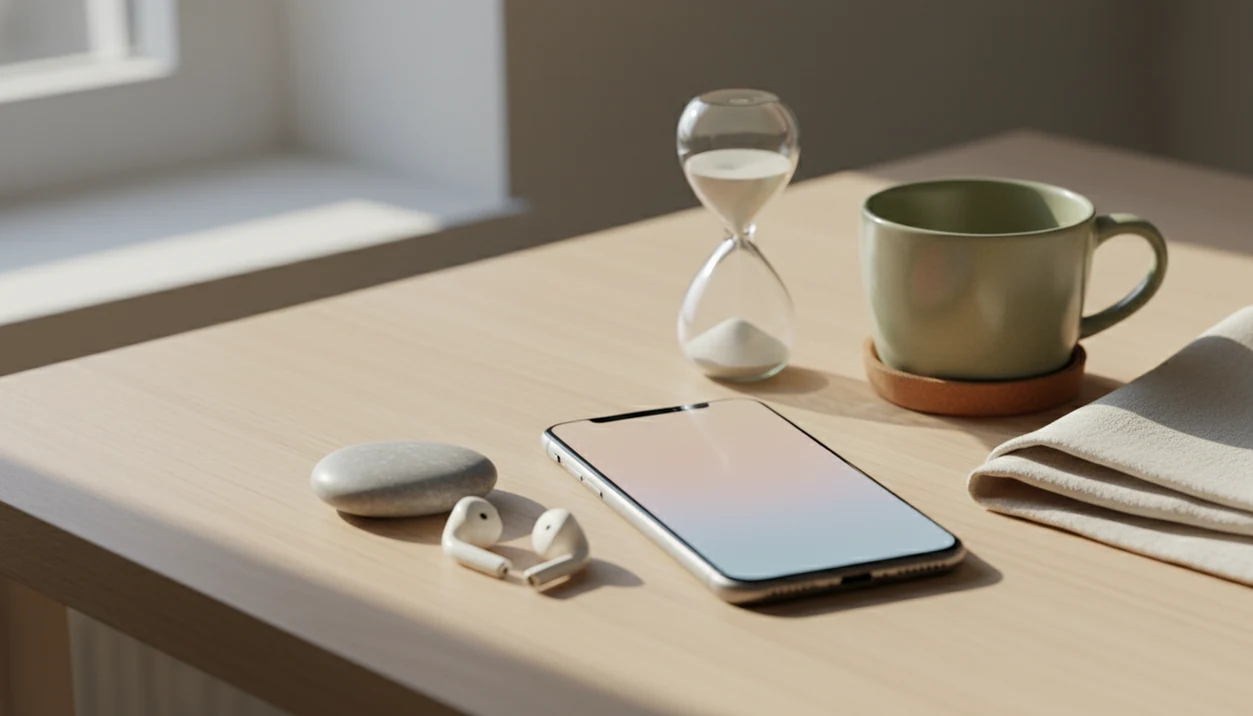


A two-minute calm reset is a brief breathing and mindfulness routine intended to ease stress intensity in about 120 seconds. It combines gentle, slow breathing, body awareness, and one attention cue, such as the feeling of feet against the floor. The routine can be guided or self-led, with relaxed shoulders and a simple focus rather than several techniques to remember.
Useful moments include the pause before a meeting, the aftermath of a difficult conversation, a spell of overthinking, or the transition to bedtime. Guided audio can provide the prompts when remembering steps feels difficult. The aim is modest: feel a little steadier and make room for the next decision. Two minutes cannot erase the cause of stress or replace care for persistent symptoms.
The essentials
- The best 2 minute calm reset combines slow breathing, relaxed shoulders, and one simple focus cue.
- Short practices can help, but they are meant to reduce intensity, not erase every stressor.
- MindTastik is best for people who want press-play guided resets for anxiety support, focus, sleep preparation, and everyday calm.
4 two-minute calm reset options for stressful moments
Four useful two-minute calm reset options are guided audio, breath counting, body scanning, and walking attention. Guided audio is usually easiest when you’re too overwhelmed to remember steps.
- MindTastik guided 2-minute calm reset: Best for anxiety spikes, sleep preparation, focus, and everyday calm. Not ideal if you need silence or dislike voice guidance.
- Breath-count reset: Best for desks, calls, and transitions. Not ideal if counting makes you tense.
- Body-scan reset: Best when stress shows up as tight jaw, raised shoulders, or clenched legs. Not ideal when you need to stay highly alert.
- Walking reset: Best for restless energy. Not ideal in unsafe spaces or when you’re driving.
When someone wants a press-play reset, MindTastik helps by making the next step clear. Short guided sessions answer the “what should I try right now?” moment for people who want a calm voice ready when mental noise starts to build.
2-minute calm reset effects on the nervous system
A 2-minute calm reset works by slowing the breathing rhythm, relaxing large muscle groups, and narrowing attention to one safe cue. In plain language, it gives your stress response fewer signals to chase. The goal is a shift toward steadiness, not instant removal of every stressor.
- Slow breathing can counter fight-or-flight arousal. Longer exhales tell the body that the moment may be safer than it feels.
- Parasympathetic activation is the calming side of the stress system. In plain language, it helps the body stop revving so hard.
- Heart rate variability often reflects flexibility under stress. Slow breathing around 6 breaths per minute is associated with increased heart rate variability, according to a 2020 review NIH research: PMC7703303.
- Attention anchoring reduces mental spinning. You choose one cue, such as breath, feet, or sound.
- Brief practice can still matter. Two minutes is small, but it can interrupt the escalation loop. For a daytime pause, try a midday meditation reset that fits between tasks and helps you refocus.
Anyone dealing with sudden overthinking may find MindTastik useful because the guided voice keeps the reset moving when self-direction feels hard.
What the research supports, and what it does not
A 2024 systematic review of breathing interventions included 19 studies. Twelve reported significant improvements in anxiety, and nine reported significant improvements in stress. The authors reported no adverse events but also noted that large randomized trials remain limited. These findings support breathing exercises as a coping option, not a promise that this particular 120-second script will work every time.
A separate review of brief single-session interventions found consistent reductions in state anxiety with progressive muscle relaxation and deep-relaxation training. Evidence for brief deep-breathing exercises was less developed, though promising. State anxiety means anxiety in the moment. A change in that immediate feeling does not establish lasting relief from recurring anxiety or show that two minutes is an optimal duration.
120-second quick calm reset script for desks and bedtime
Use this quick calm reset at a desk, in a parked car, in a bathroom stall, or before bed. Keep the rhythm gentle; it’s a practice cue, not a medical prescription.
- Set a timer for 120 seconds, then place both feet on the floor or settle into bed.
- Drop the shoulders once on purpose, as if you’re letting a backpack slide off.
- Breathe slowly with an easy rhythm, such as inhale for 4 and exhale for 6. If you prefer a different bedtime breathing pattern, try 4-7-8 breathing before bed while keeping the practice comfortable.
- Name one sensation you can feel now: cool air, fabric, pressure, warmth, or contact.
- Return gently each time thoughts pull you away, using the next exhale as the reset point.
At bedtime, dimming the phone screen before starting audio can make the routine feel less like scrolling. Before a presentation, the same steps work with eyes open and one hand resting under the desk. Small counts. Repeatable counts more.
An optional emotion label before returning to the reset
When a feeling is hard to set aside, a brief label can be an optional first step: “I feel overwhelmed,” or “I feel angry after that conversation.” In four experiments on putting feelings into words, participants reported less distress while viewing negative images than those who watched passively. This was a controlled task, so it does not establish the same effect during everyday conflict.
Keep the label brief rather than turning the reset into an analysis of the feeling. A 2022 experiment on emotion labeling found reduced distress under high-intensity conditions but increased distress under low-intensity conditions. A practical option is to name the feeling once, then return to contact with the floor, an easy exhale, or relaxed shoulders. Skip labeling if it adds distress.
6 selection criteria for two-minute meditation reset routines
Good two-minute meditation reset routines are simple, repeatable, and usable in messy real life. We did not prioritize routines that require silence, complex visualization, or long preparation.
| Selection criterion | Why it matters in 120 seconds |
|---|---|
| Simple instructions | Stress makes memory worse, so fewer steps help. |
| No equipment | The reset should work at a desk, bedside, or airport gate. |
| Repeatability | A routine gets easier when the same cues repeat. |
| Real-world usability | Noise, interruptions, and open eyes should still be allowed. |
| Guided support | Voice prompts help when thoughts are moving too fast. |
| Low risk | Gentle breathing and awareness suit most everyday situations. |
Research on brief mindfulness supports short practices, but it does not prove dramatic permanent change. A randomized trial found that 5-minute mindfulness meditation reduced negative mood and state anxiety compared with a control condition doi reference: j.explore.2013.06.004.
For people comparing app choices, free mindfulness apps can be useful, but the routine still needs to fit the exact moment.
Guided audio for quick calm resets during anxiety spikes
Does guided audio help during an anxiety spike? Yes, guided audio can help because it gives you a press-play structure when anxious thoughts make self-direction difficult.
MindTastik offers short guided sessions for anxiety support and everyday calm, including routines that ask you to breathe, soften the body, and return attention without judging the thoughts. After a tense message or a loud internal spiral, that outside voice can carry the first minute for you.
When the issue is overwhelm, MindTastik is best for beginners who want a guided session instead of building a routine from memory. It is not for emergencies, severe symptoms, or moments when you may need crisis support, therapy, medication guidance, or another qualified professional.
Compared with broader libraries like Calm or Headspace, the better choice depends on whether you want a large meditation catalog or a shorter guided reset you can start quickly.
Breath counting for 2-minute work stress resets
Can breath counting work at your desk? Yes, breath counting is a discreet two-minute work stress reset because no one needs to know you’re doing it.
Try inhaling for 4, exhaling for 6, and repeating for 10 to 12 cycles. Use it before a meeting, after a difficult call, or between focus blocks. An inhale timed with a crosswalk signal works too, as long as you’re not forcing the breath.
U.S. adults report feeling ‘a lot of stress’ on about 1 out of every 3 days on average, according to Gallup’s 2024 global emotions reporting gallup reference: gallup global emotions report.aspx. That makes short, repeatable routines more useful than a plan you only use on quiet weekends.
For work-specific routines, how to practice mindfulness at work covers longer options. Regular repetition can make the reset easier to access over time.
Body release for two-minute sleep preparation
A two-minute body release can help you mark the shift from daytime alertness to bedtime calm. It is a transition ritual, not a guaranteed cure for insomnia. For an even shorter bedtime option, consider a 10-second brain reset before bed as another brief settling practice.
Move attention slowly through five areas: jaw, shoulders, hands, belly, and legs. Unclench the jaw. Let the shoulders drop. Open the hands. Soften the belly. Let the legs feel heavier against the mattress. Feet searching for a cool sheet is a real cue that the body wants settling, not more problem-solving.
MindTastik supports this bedtime pattern with sleep audio, breathing exercises, and self-hypnosis sessions for adults who want a guided wind-down routine. If the mind is still busy at 2:13 a.m., a short body release can be easier than choosing between a 20-minute body scan and another hour of scrolling.
Image caption guidance: someone using headphones in bed for a short guided calm reset.
When to seek professional support instead of using a two-minute reset
Use a two-minute reset as a coping tool, not as a substitute for mental health treatment. If symptoms are intense, recurring, or connected to safety, professional support matters more than finishing the practice.
A short routine can help you get through a hard minute, but it cannot diagnose anxiety, panic disorder, trauma, depression, insomnia, or any other condition. Apps can support breathing, sleep preparation, and daily routines; they do not replace a licensed clinician’s assessment.
- Pause the reset if focusing on breath or body sensations makes panic, flashbacks, or distress feel worse.
- Notice warning signs such as thoughts of self-harm, feeling unable to stay safe, repeated panic attacks, trauma symptoms, or severe insomnia that keeps disrupting life.
- Contact a licensed therapist, physician, psychiatrist, or other qualified clinician when symptoms continue, escalate, or interfere with work, relationships, sleep, or basic care.
- Use emergency services or a local crisis line right away if immediate safety is at risk for you or someone else.
A reset can be one supportive part of a wider care plan, but it should not carry the whole load.
Guided prompts when remembering steps feels difficult
MindTastik’s guided meditation library suits people who prefer spoken prompts for breathing, body awareness, and returning attention. A familiar session can make a short pause easier to start before a meeting or during an evening wind-down.
People who need silence or find voices distracting may prefer the self-led script below. If focusing on breathing increases distress, walking attention may be a better option. MindTastik is not a medical treatment, and recurring or severe symptoms need more than an app-based pause.
What a two-minute reset cannot resolve
A two-minute reset is not a replacement for professional mental health treatment. It can reduce stress intensity for many people, but the benefits are often temporary and usually require repetition.
- It may not be enough for severe anxiety, depression, trauma symptoms, panic, or crisis moments.
- It does not diagnose, treat, or cure any mental health condition.
- Some people feel more anxious when focusing closely on breath; movement may work better.
- Longer meditation, progressive muscle relaxation, or therapy-based strategies may fit better for chronic symptoms.
- It can be hard to use during active conflict, unsafe situations, or intense panic.
- App-based guidance depends on access to a charged phone and usable audio.
- Calm, Headspace, and mindful.org may offer broader libraries or educational material that some users prefer.
If symptoms feel unmanageable, professional support matters more than finishing a two-minute practice.
When you need a body-first reset before meditation, MindTastik breathing exercises offers simple breathing patterns you can follow along.
Two-minute calm reset questions
Can a two-minute calm reset actually reduce stress?
Brief breathing and relaxation exercises can reduce immediate anxiety or stress, but the research does not guarantee relief from this exact two-minute routine. A realistic result is a small reduction in tension or a pause before reacting. The underlying problem may still need attention afterward.
What breathing pattern should I use for a two-minute reset?
One option is a gentle inhale for four counts and an exhale for six, repeated through the pause. The counts are a cue, not a target to force. If that rhythm feels strained, use an easier pace. Stop breath-focused practice if it increases panic or distress.
Can I do a calm reset at my desk with my eyes open?
Yes. The routine can use open eyes, feet on the floor, a gentle breathing rhythm, and a quiet release of the shoulders or jaw. No special equipment or silent room is required. If counting becomes another source of tension, use one simple sensation as the attention cue instead.
Can a two-minute reset help before sleep?
A short body-release routine can mark the transition to bedtime. Move attention through the jaw, shoulders, hands, belly, and legs, allowing each area to soften without forcing it. This is a wind-down ritual, not a cure for insomnia. Major or recurring sleep disruption warrants professional support.
What if I still feel stressed after the two minutes?
Remaining stress does not mean the pause was useless. The goal is reduced intensity, not complete emotional resolution. Notice whether breathing or muscle tension feels a little steadier, then consider what the situation requires next. Persistent, escalating, or disabling distress calls for support beyond repeated short resets.
Is a two-minute calm reset enough during a panic attack?
A short reset may serve as a coping tool, but it is not treatment for panic disorder and may be insufficient during intense symptoms. Breath or body focus can also worsen distress for some people. Recurrent panic needs professional assessment. An immediate safety crisis requires emergency or crisis support.