Mindfulness at work means deliberately paying attention to the task, conversation, breath, or body sensation happening now, rather than moving on autopilot between emails, meetings, and notifications. It can be as ordinary as noticing tense shoulders before a call or listening to a colleague without preparing a reply. The aim is not an empty mind, forced calm, or higher output.
Short pauses make this practice possible during a busy day: one breath before email, a brief body scan between tasks, or attention to footsteps on a break. These are ways to practice returning attention, not proven two-minute treatments for stress. Workplace research mainly evaluates repeated practice over several weeks. A useful starting point is one familiar workday cue and one small, repeatable pause. For more ways to fit these pauses into your day, explore mindfulness practices at work.
What Mindfulness at Work Actually Means (and What It Does Not)
Mindfulness at work means paying attention on purpose to the present task, conversation, breath, or body sensation. It is not a demand to become calm on command.
Three misconceptions make workplace mindfulness feel harder than it is. First, you do not have to clear your mind completely. A wandering mind is normal; the practice is noticing it and coming back. Second, you do not need a quiet room, a cushion, or a 20-minute break. A single breath before opening email counts. Third, mindfulness is not a productivity hack. It may help attention, but the main goal is calmer awareness during a real workday.
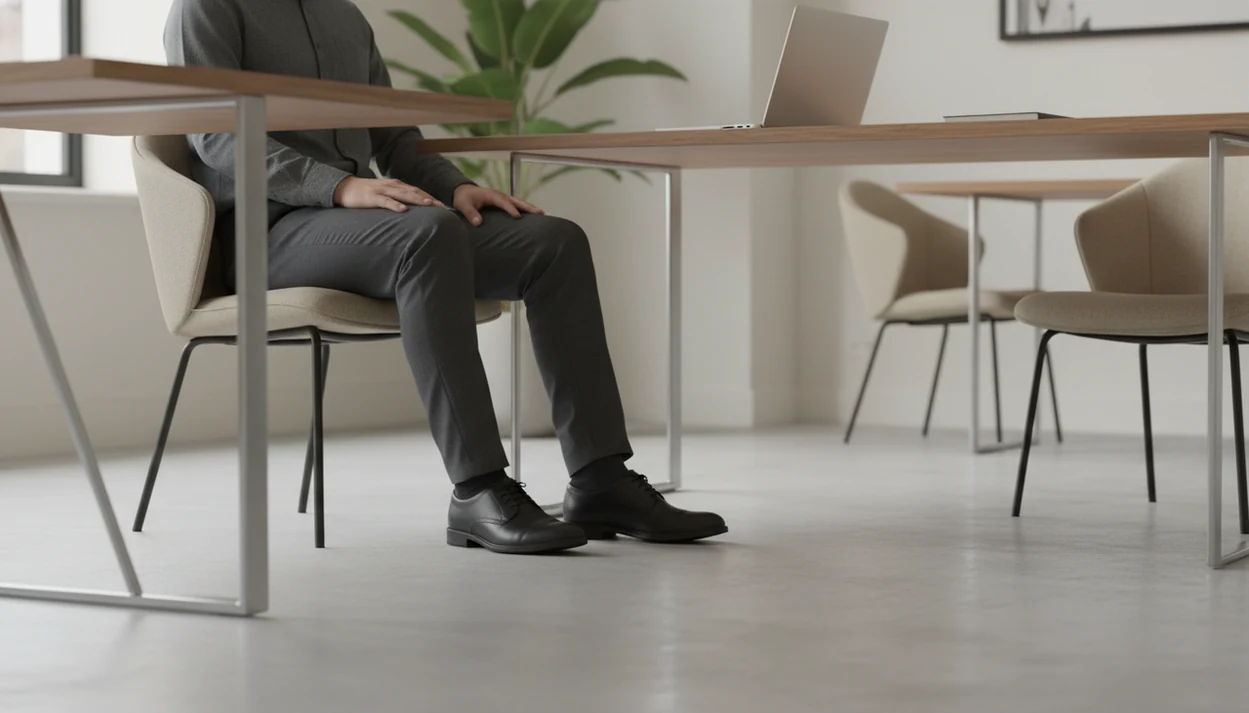
A conference room chair between meetings is enough.
Mindfulness is already familiar to many adults. An NIH survey found that 10.3% of U.S. adults used mindfulness meditation in the previous year, and 14.2% used meditation overall, according to the same NCCIH mindfulness overview: meditation mindfulness and mantra use adults.
How Workplace Mindfulness Works: The Calm-Attention Mechanism
Workplace mindfulness works by interrupting the stress-reactivity loop: notice what is happening, pause briefly, then choose the next response. That pause matters because attention is limited, and constant task-switching spends it quickly. The American Psychological Association notes that task switching carries measurable mental costs, especially when people move repeatedly between complex tasks: APA multitasking research summary.
The light technical term is attentional control. In plain language, it means you practice steering attention back instead of letting every ping, tab, and tense message decide where your mind goes. A 60-second reset will not erase pressure, but it can create enough space to answer carefully instead of firing back.
Benefits are usually cumulative. One short practice may feel small, especially on a packed day. Over weeks, repeated pauses can become a calmer default. In a 2020 randomized clinical trial, an 8-week mindfulness program reduced self-reported anxiety, with a mean difference of, 0.33 versus the control group on the anxiety scale, according to this NIH research: PMC7500415.
Under-2-minute practices still matter because they train the same pause-and-reset pathway in miniature.
What Research Says About Mindfulness at Work
Research suggests mindfulness at work can support stress awareness, anxiety reduction, and attention regulation, but it does not guarantee instant calm. The best reading is modest and practical: repeated practice may make it easier to notice pressure and respond with more choice.
It helps to separate two evidence streams. Formal mindfulness meditation programs, often practiced over several weeks, have stronger research behind them than single 30-second desk resets. Those programs are where evidence is clearer for anxiety symptoms and attention skills. Micro-practices are more like small repetitions of the same skill: useful, low-friction, and plausible for a real workday, but less often studied as stand-alone interventions.
A realistic way to use the evidence is:
- Treat short practices as training reps, not one-time fixes.
- Repeat the same cue daily, such as before email or after meetings. To practice before work, build a morning meditation habit around a consistent cue you already notice.
- Track whether your attention, reactivity, or transition stress changes over weeks.
- Adjust the anchor if breathing feels wrong; try feet, hands, walking, or single-tasking.
The pattern matters more than any single pause.
What an eight-week study says about brief workday practice
A 2017 randomized pilot study of stressed employees evaluated an eight-week program built around brief mindfulness practices integrated into the workday. The intervention group showed significant reductions in perceived stress and increases in mindfulness compared with baseline. This is relevant to desk pauses because the practices were part of working life, rather than reserved entirely for a separate meditation period.
The important distinction is the schedule: the study evaluated a program over eight weeks, not the effect of one isolated pause. A practical adaptation is to choose a single cue, such as sitting down after lunch, and repeat the same short attention exercise on workdays. That routine is a suggested way to begin, not the study’s exact protocol. The research does not establish a minimum effective duration for every desk exercise.
Five Must-Know Facts About Mindful Work Practices
Five facts make mindful work practices easier to use during a normal workday.
- Thirty seconds to 2 minutes is enough to begin. Workplace mindfulness works best as a short reset you can repeat, not a long session you keep postponing.
- Single-tasking improves attention quality. For scattered desk workers, one focused block is often easier than meditation because the task itself becomes the anchor.
- Breathing is the most discreet entry point. Three slow breaths can happen with noise-canceling headphones at a desk, in a parked car, or before a hard call.
- Cue-based habit stacking helps the practice stick. Attach mindfulness to opening email, joining a meeting, locking your screen, or placing your bag down after commuting. You can also pair waking up with a gentle alarm and meditation morning routine before checking work messages.
- Wandering thoughts are part of the practice. The skill is noticing the drift and returning, not staying perfectly focused.
The NIH reported that 10.3% of U.S. adults used mindfulness meditation in the previous year, and 14.2% used meditation overall, according to its 2017 adult meditation survey.
How to Practice Mindfulness at Work in 5 Scenario Steps
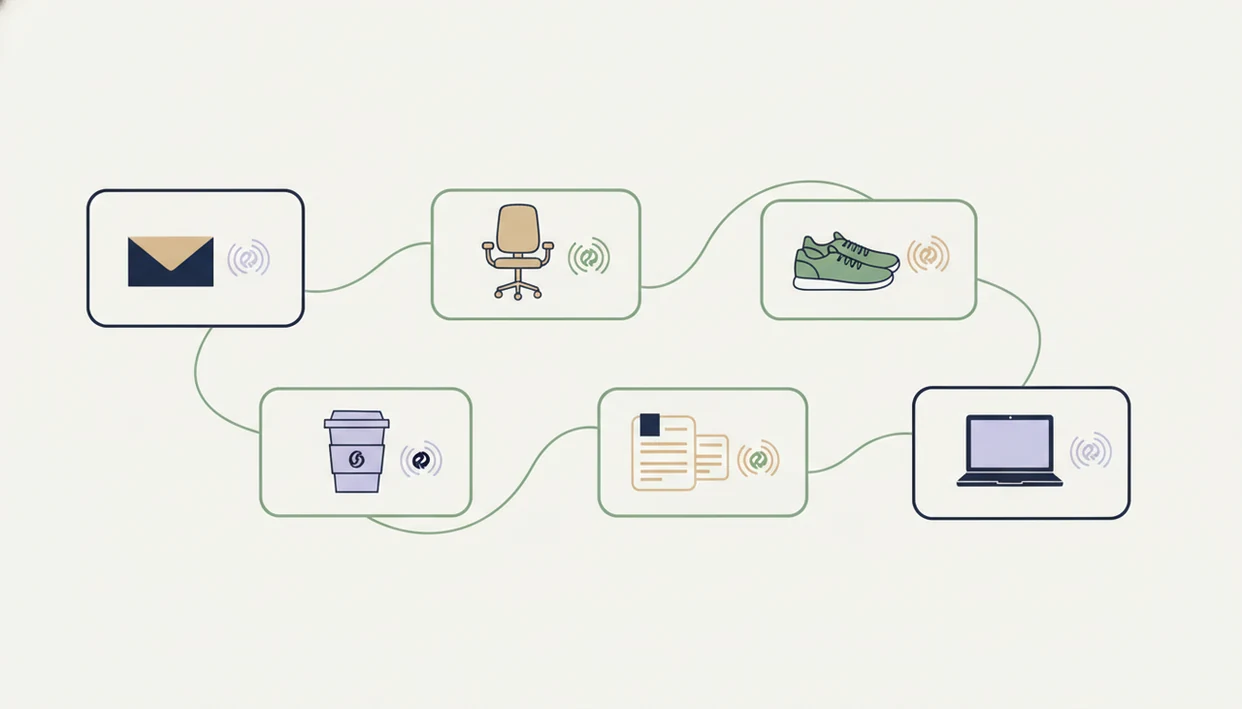
Use these five steps as a practical loop for mindfulness during workday pressure. Keep each one tied to a trigger, so you do not rely on memory when your calendar is already full.
Step 1: Reset With One Breath Before Email
- Pause before opening email or Slack for 10 to 30 seconds. Inhale once, exhale slowly, then notice the first message without rushing to react.
Step 2: Single-Task One Focused Block
- Choose one focused block for 10 to 25 minutes. Close extra tabs, silence notifications, and work on one document, ticket, or reply.
Step 3: 60-Second Body Scan Between Tasks
- Scan your body between tasks for 60 seconds. Notice jaw, shoulders, hands, and feet before starting the next item.
Step 4: Mindful Listening in Meetings
- Listen for the first 2 minutes of a meeting without rehearsing your reply. Feel your feet on the floor and track the speaker’s main point.
Step 5: 30-Second Wind-Down Before Leaving Work
- End the workday with a 30-second gratitude or tension-release pause. Name one completed thing, loosen your shoulders, then close the laptop.
For longer examples, our guide to mindfulness practices at work expands these same cues into repeatable routines.
Best-For and Not-For: Who Workplace Mindfulness Helps Most
Workplace mindfulness helps most when the problem is scattered attention, stress reactivity, or too many transitions. It does not fix every work problem, and pretending it does can feel insulting.
Best for
- Desk workers who feel pulled between email, chat, meetings, and unfinished tasks.
- Anxious commuters who need a quiet reset before stepping into work. A morning calm routine can help you make space for a quiet pause before the commute begins.
- People in back-to-back meetings who want a calmer transition between conversations.
- Beginners who have never meditated but want a calm-first entry point.
Not ideal for
- Replacing therapy for severe anxiety, panic attacks, trauma symptoms, or depression.
- Solving systemic burnout, toxic management, understaffing, or impossible workloads.
- Forcing calm when a workplace problem needs a boundary, policy change, or direct conversation.
For anxious workers, under-2-minute mindfulness is often easier than a long meditation because it fits inside the moment that caused the stress.
Mindfulness During Workday: Trigger-Based Cheat Sheet
The easiest mindful work practices are tied to moments that already happen. Use the trigger first, then choose the smallest practice that feels realistic.
| Workday trigger | Under-2-minute practice | Why it works |
|---|---|---|
| Calendar reminder appears | Take 3 slow breaths | Creates a pause before the next task |
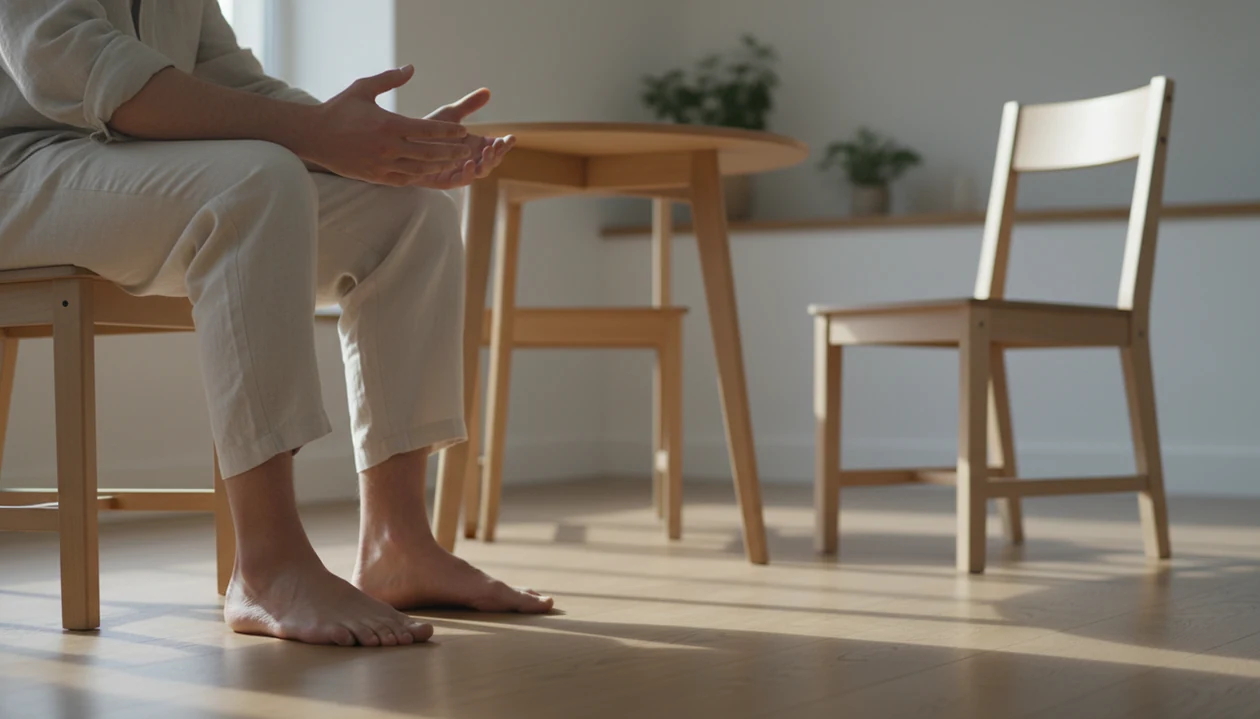
| Waiting for a call to connect | Feel both feet on the floor | Grounds attention without looking unusual |
| Walking to a conference room | Notice each step for 60 seconds | Turns transition time into practice |
| After a difficult Slack message | Place hands on desk, use a 4-count exhale | Slows the reply impulse |
| Commute by car or transit | Count 10 quiet breaths or focus on ambient sound | Supports arrival without extra screen time |
| End of lunch break | Name one sensation, one task, one next action | Reduces the “where was I?” feeling |
Silent practices work well in open-plan offices and shared desks. Nobody needs to know you are doing them.
If commute stress is your main trigger, mindfulness while commuting may be a better starting point than desk practice.
Commute mindfulness: separate passenger time from driving
A commute is not automatically a safe setting for meditation. Driving, cycling in traffic, operating equipment, and any role involving immediate safety require full attention to the surroundings. Do not add breath counting, guided meditation, or inward-focused exercises during those activities. Save the reset for a parked vehicle or a seated passenger break, and keep eyes open when the setting requires awareness.
As a seated passenger, a simple option is noticing contact with the seat, feet on the floor, and nearby sounds without trying to change breathing. Stop a breathing exercise if it causes dizziness, tingling, panic, or worsening symptoms. The workplace smartphone meditation trial studied employee well-being using guided sessions, not meditation while driving. Evidence for stress support should not be treated as evidence of safety behind the wheel.
Common Mistakes With Mindfulness at Work Practices
The most common mistake is making workplace mindfulness too big. Trying to meditate for 20 minutes at a desk can feel awkward, visible, and easy to abandon.
Another mistake is turning mindfulness into a performance score. If the goal becomes “I must be calmer so I can produce more,” the practice starts to feel like one more demand. Keep the aim simple: notice, pause, return.
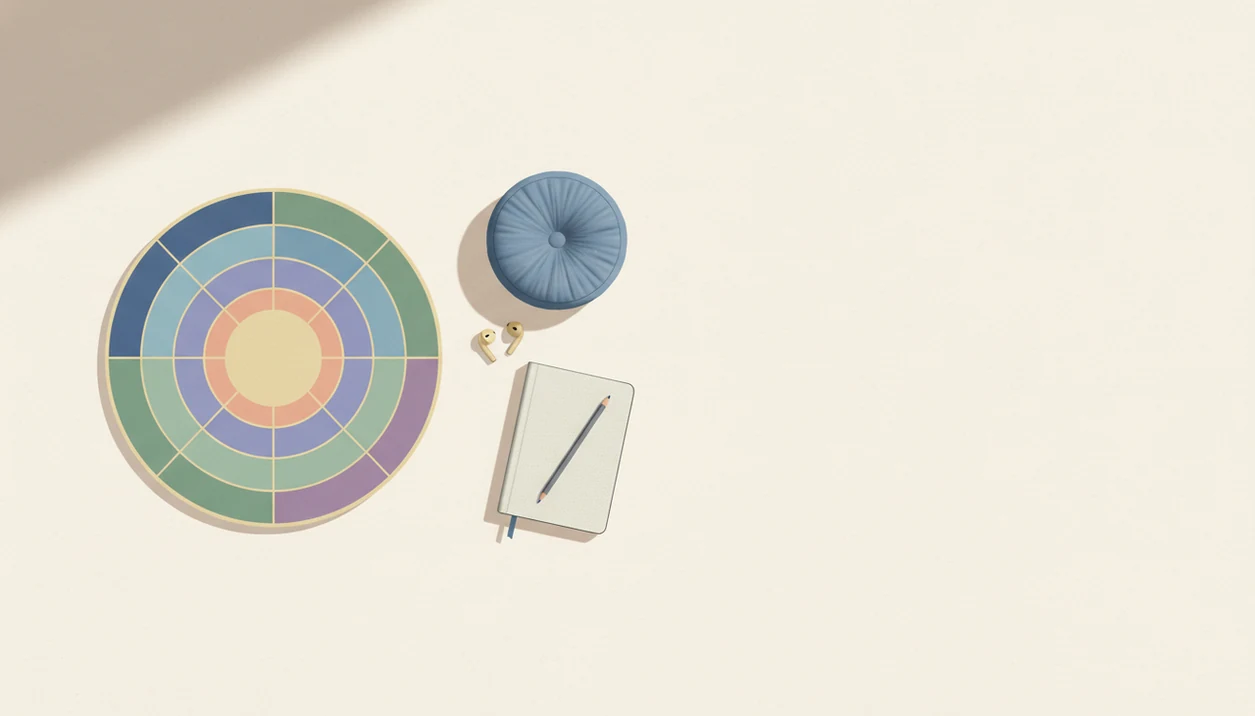
Some people try only breathing and quit when it does not click. Breathing is useful, but it is not the only option. Single-tasking, body scans, mindful walking, and emotion labeling can work better for different nervous systems. If you need language for what you are feeling after a hard message or meeting, an emotion wheel can help.
Results also take repetition. One good exhale may soften a tense moment, but the bigger shift comes from returning to the practice across days.
Skip the cue, and it disappears.
How MindTastik Supports Mindful Work Practices
Apps are not required for workplace mindfulness, but guided audio can make a short reset easier to follow. MindTastik offers guided meditation, sleep audio, breathing exercises, and self-hypnosis sessions for adults looking for support with rest, anxiety, and everyday calm. For a more tailored starting point, try an AI personalized meditation routine based on your needs.
Short guided breathing exercises can fit before email, between meetings, or after a tense message. Sleep and anxiety audio may help with post-work wind-down, especially when the workday follows you home. Self-hypnosis sessions for everyday calm can also be used during a commute, as long as you are not driving and need full attention.
Good meditation app for sleep anxiety and everyday calm options deliver guided structure and repeatable routines, not medical treatment or a guarantee that stress disappears.
If you are comparing MindTastik with Calm, Headspace, or Insight Timer, focus on whether you need short workplace breathing sessions, sleep audio for post-work recovery, or a larger free meditation library.
Guided breathing for gaps between work tasks
MindTastik’s guided breathing exercises suit a desk pause or a gap between meetings when spoken instructions are easier to follow than counting alone. Its guided meditations and focus sessions offer other options for a longer break. No app is necessary for noticing feet on the floor or listening closely to a colleague. People who find breath attention uncomfortable can choose an eyes-open sensory practice instead; persistent anxiety or panic needs support beyond an audio session.
What desk mindfulness cannot fix
Mindfulness at work is useful, but it has real limits. Treat it as a supportive practice, not a fix for every job stressor.
- It cannot repair toxic management, unrealistic workloads, understaffing, or structural burnout.
- Evidence supports stress and anxiety reduction for many people, but results vary by person, consistency, and practice fit.
- Short micro-practices may not be enough for severe anxiety, panic symptoms, trauma responses, or clinical sleep disorders.
- Some workplace mindfulness content overhypes results. Benefits are usually modest and cumulative, not one-session magic.
- Not everyone responds to the same technique. Breathing may help one person, while movement or single-tasking works better for another.
- Mindfulness is not a replacement for professional therapy, medication, medical care, or urgent mental health support.
- Calm-first practice should never be used to pressure employees into tolerating harmful work conditions.
Clinicians typically recommend professional support when anxiety, panic, or sleep problems interfere with daily functioning, safety, or relationships.
Between Meetings
- If you only have a calendar gap, close the laptop for 60 seconds and let your eyes land on one neutral object before opening the next agenda.
- A desk pause works best when it has a clear ending; set one breath, one stretch, or one sip of water as the finish line.
- If mindfulness becomes another task to complete perfectly, you are probably using it as pressure rather than a reset.
- Try a meeting reset after tense calls: unclench the jaw, drop the shoulders, and name the next useful action in plain language.
- The smallest useful practice is the one that keeps you from carrying the last meeting into the next one.
An end-of-work transition before the evening starts
Workday mindfulness can include the moment work ends, especially when unfinished tasks keep drawing attention back to the inbox. A practical transition is to record the next action for unfinished work, reduce work notifications where the role allows, and take a short walk or quiet pause before evening activities. This creates a clear stopping point without requiring every work problem to be resolved.
During that pause, notice physical sensations or take several comfortable, unforced breaths. The purpose is to acknowledge that work has stopped, not to guarantee sleep later. A 2019 meta-analysis of 23 workplace mindfulness trials found a smaller benefit for sleep than for stress or anxiety. That finding concerns workplace training overall; it does not prove that this particular end-of-day routine treats insomnia.
When a workday pause helps, and when practical support matters
- Mindfulness at work may help you notice stress signals sooner, but it should not be treated as a substitute for workload changes, boundaries, or support.
- If a breathing exercise makes you feel more trapped, switch to an eyes-open practice like noticing colors, sounds, or the contact of your feet with the floor.
- A sign you are using it incorrectly is expecting a desk pause to erase a genuinely difficult conversation.
- Use mindfulness to create a little more choice, not to talk yourself out of valid frustration.
- When the environment is unsafe, unfair, or overwhelming, the next step may be practical help rather than another technique.
Mindfulness at work questions
How can I practice mindfulness at a shared desk without drawing attention?
Keep eyes open and use an ordinary point of contact: feet on the floor, hands resting on the desk, or the feel of sitting in the chair. Notice that sensation briefly, then return to the task. Headphones, closed eyes, and a visible meditation posture are not required.
Is one minute of mindfulness at work enough?
One minute is enough to practice noticing distraction and returning attention. It is not a proven dose for treating stress or anxiety. Most workplace studies evaluate repeated practice within programs lasting several weeks. A short pause can be a manageable starting point, with longer practice added if it fits.
How do I practice mindfulness during a meeting?
Use listening as the anchor. Notice when attention shifts toward rehearsing a reply, checking messages, or judging the conversation, then return to the speaker’s words. Before speaking, take one comfortable breath if useful. This is attention practice, not a requirement to stay silent or accept an unreasonable request.
What if focusing on my breathing makes me anxious?
Stop the breathing exercise rather than forcing it. Try an eyes-open practice, such as noticing visible objects, nearby sounds, or contact between feet and the floor. Breathing is only one possible anchor. If panic or other symptoms persist or worsen, seek appropriate support rather than relying on workplace mindfulness alone.
Can single-tasking count as mindfulness at work?
Yes, when it includes deliberate attention to the current task and noticing when the mind wanders. Choose one document, reply, or other task, reduce avoidable interruptions, and return attention when it drifts. Simply closing extra tabs is not the whole practice; noticing and returning are the important parts.
Does mindfulness at work help with anxiety?
Workplace mindfulness training has reduced anxiety in pooled randomized-trial evidence, but individual results vary. Those findings mostly concern repeated training, not a single desk pause. Brief practices may support coping during ordinary pressure, but they do not replace assessment or treatment for severe anxiety, panic attacks, or trauma symptoms.
Can mindfulness help with burnout from an excessive workload?
It may help someone notice exhaustion or stress sooner, and workplace programs have shown benefits for some burnout-related outcomes. It cannot remove excessive demands, understaffing, or unsafe management. When workload is the problem, changes to responsibilities, boundaries, staffing, or other practical support matter more than adding another personal coping task.